


Press 'Print' to get a house

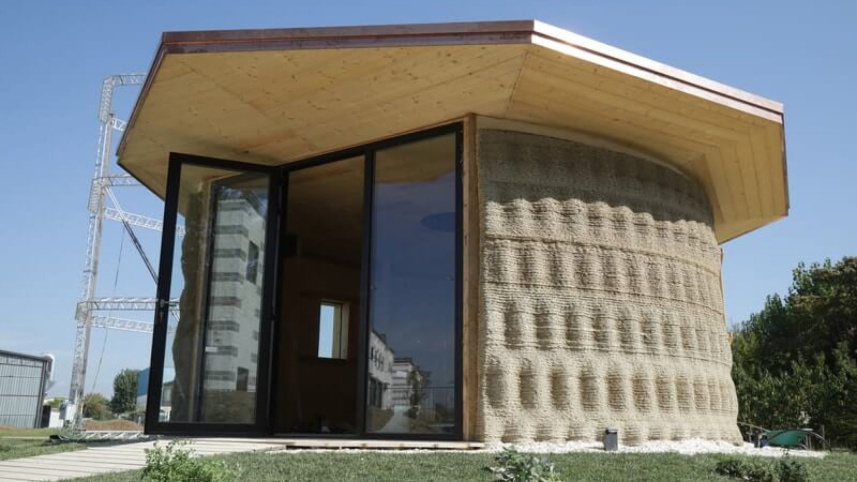
3D-printed houses are full-size dwellings built by an additive manufacturing process. A large industrial printer follows a digital blueprint (CAD design) and deposits a cement-like material layer by layer until the walls (and sometimes floors/roofs) are complete. These printers often use special concrete or bio-resins (e.g. clay, wood flour with binder) as “ink.” Critically, 3D printing can assemble a house in hours or days rather than months, with very little on-site labor. The homeowner only adds the usual inserts (windows, doors, wiring and plumbing) after printing. This efficiency has driven rapid growth – one U.S. analysis forecasts around 23.5% annual growth in construction 3D-printing over the coming decade. Now, even NASA is funding research to 3D-print structures on the Moon.
Why Are They Gaining Attention?
Builders and buyers alike are excited because 3D printing can dramatically cut cost, time and waste compared to traditional methods. For example, the World Economic Forum notes that printed homes use up to 45% less money than conventionally built ones[8]. Labour needs are slashed too: a Reuters report on ICON’s Texas project explains that one printer and crew can do the work of several framing teams. Faster builds also reduce financing and disruption; in Melbourne, a four-bedroom 3D-printed home is being finished in just 5 weeks vs. the usual year-long timeline.

Another big advantage is sustainability. Printing only deposits material where needed, so debris is minimal. In the lab, these homes perform just as well as normal houses over years of testing. Overall, experts say 3D-printed construction “reduces the amount of labour needed, the level of waste, and allows for all the building materials to be prefabricated in a controlled environment.” Some estimates suggest up to 99% less waste on certain projects. In Dubai, authorities now plan for 25% of new buildings to be 3D printed by 2030, largely to cut waste and speed up housing development.
In short, 3D-printed housing promises affordability, speed and novel designs all at once, which is why it has become a world-famous construction innovation in just a few years.
Notable 3D-printed homes worldwide
Building on the promise of speed, cost savings and design freedom, several high-profile projects have demonstrated the technology’s range.
House of Cores, Houston, USA: The first two-storey 3D-printed house in the US. A 12-ton printer produced a 4,000 ft² concrete shell in roughly 330 hours, with traditional wood framing used for the second floor.
Wolf Ranch, Georgetown, Texas : a planned 100-home subdivision where ICON’s Vulcan printer builds three-bedroom shells in about three weeks. Reuters calls it the world’s largest 3D-printed neighbourhood.
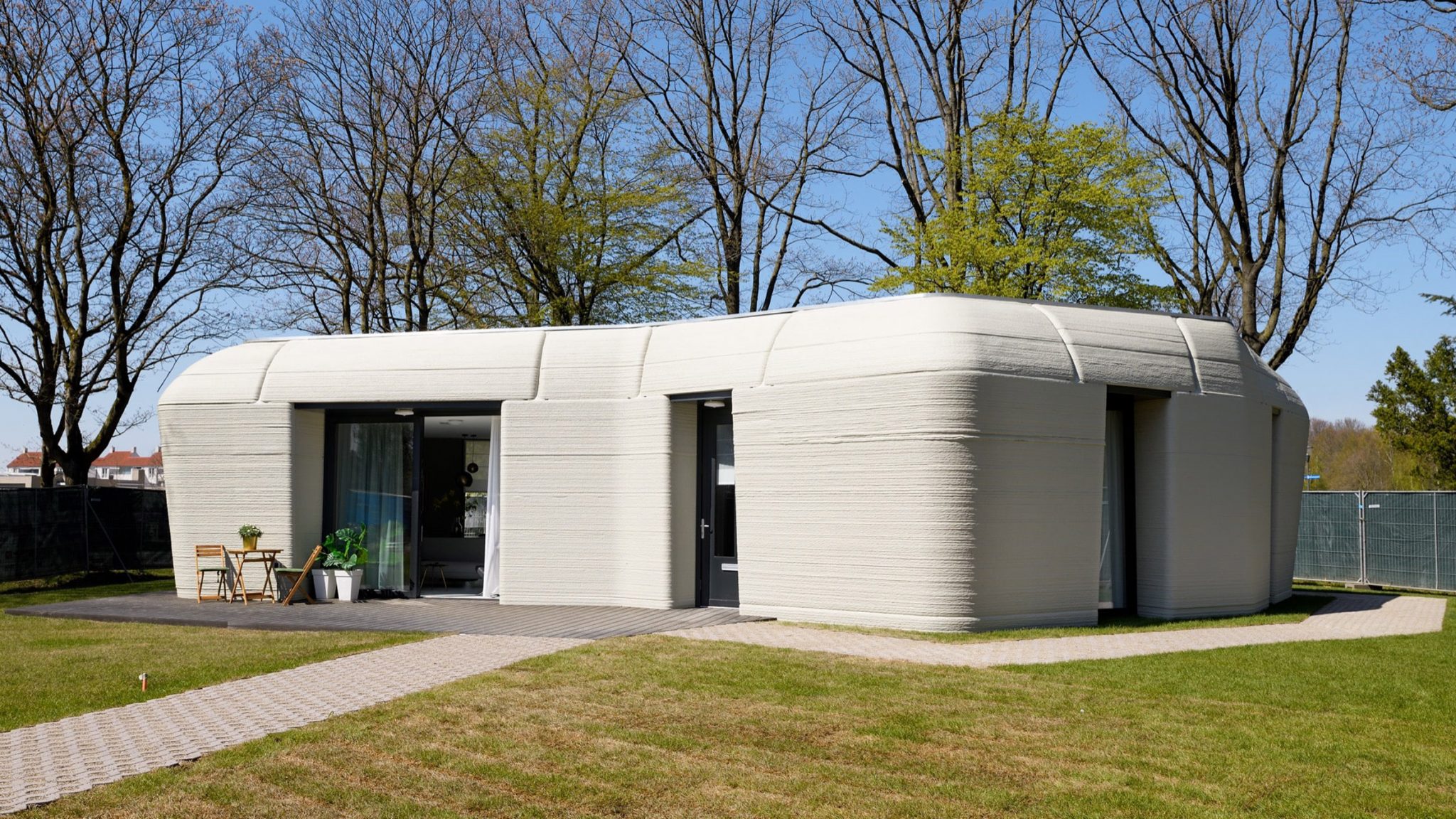
Project Milestone, Eindhoven, Netherlands :
A five commercially sold 3D-printed homes completed in 2021. Each 1,011 ft² house printed on site in about 120 hours, meeting building codes and connecting to the local heat grid.
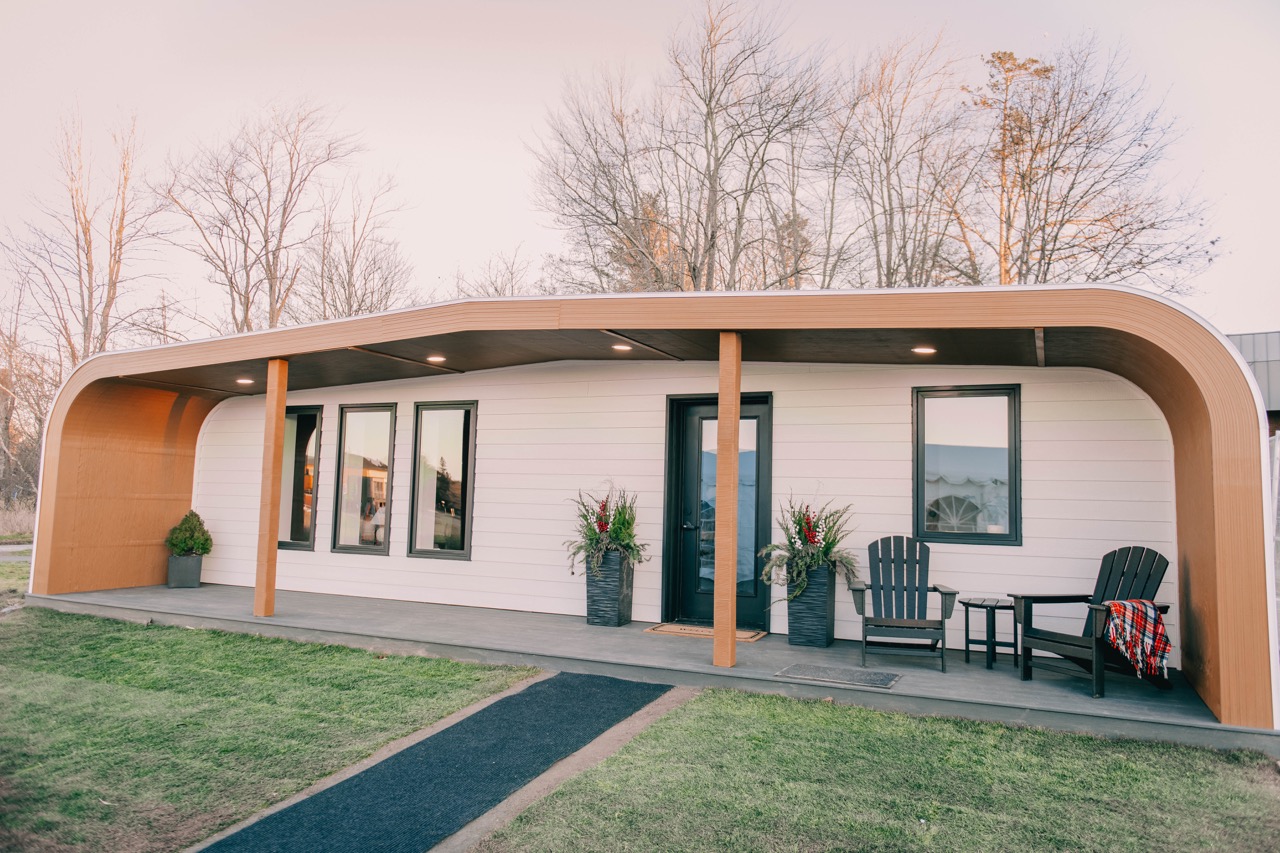
BioHome3D, University of Maine :
A 600 ft² cabin printed from recycled wood fibre and biobinder using a large polymer printer. Walls, floors and roof segments were printed in about 96 hours and are designed to be recyclable.
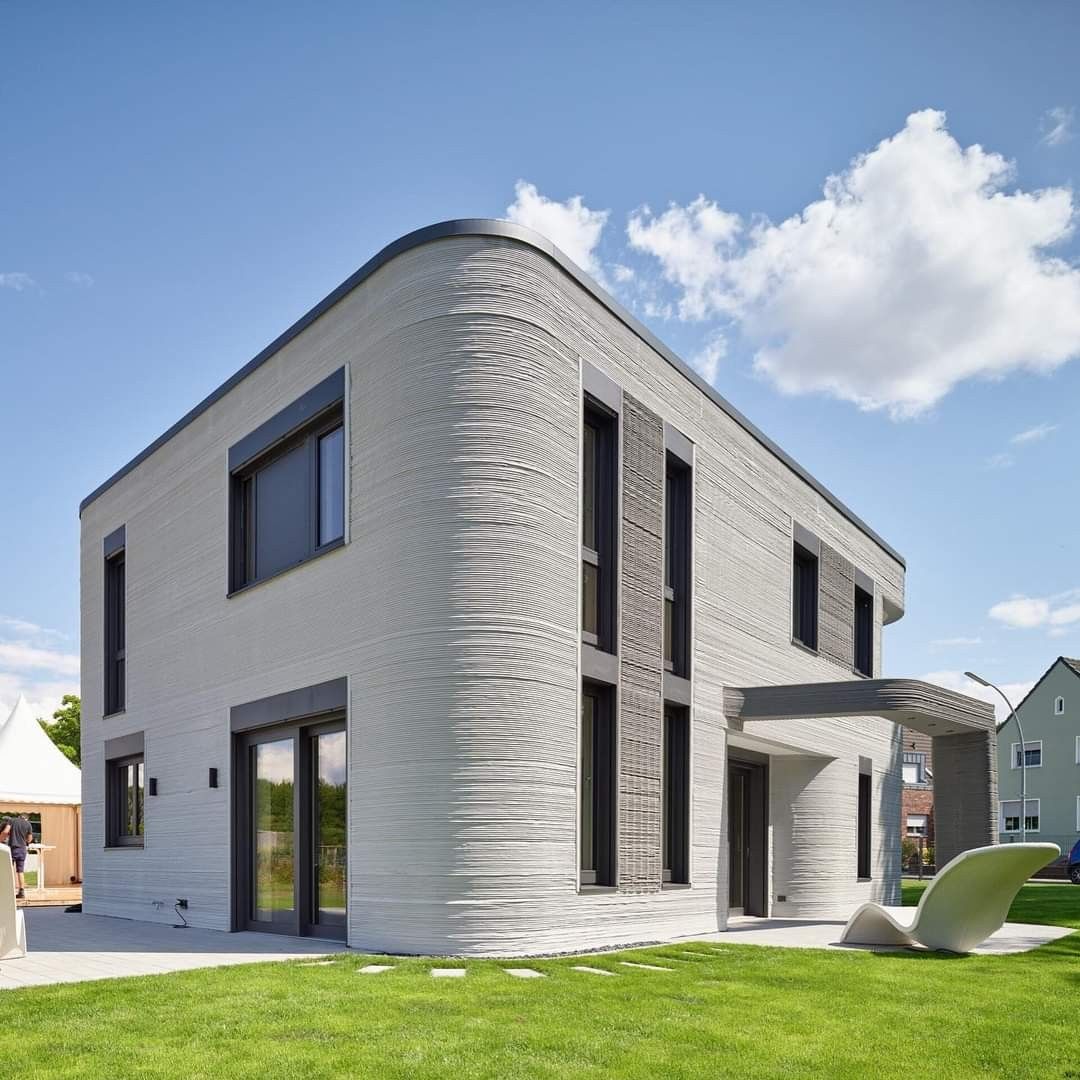
Mense-Korte House, Beckum, Germany:
The first 3D-printed home fully certified under a national building code. The two-storey, 1,722 ft² concrete house was printed in about 100 hours and proved regulatory compliance is achievable.
Wyndham, Melbourne, Australia:
A four-bedroom, two-storey home being printed by Luyten. The frame is printed in three weeks, with total completion under five weeks and quoted savings of 25 to 30 percent compared with conventional bids. New South Wales has also used 3D printing to speed social housing projects.
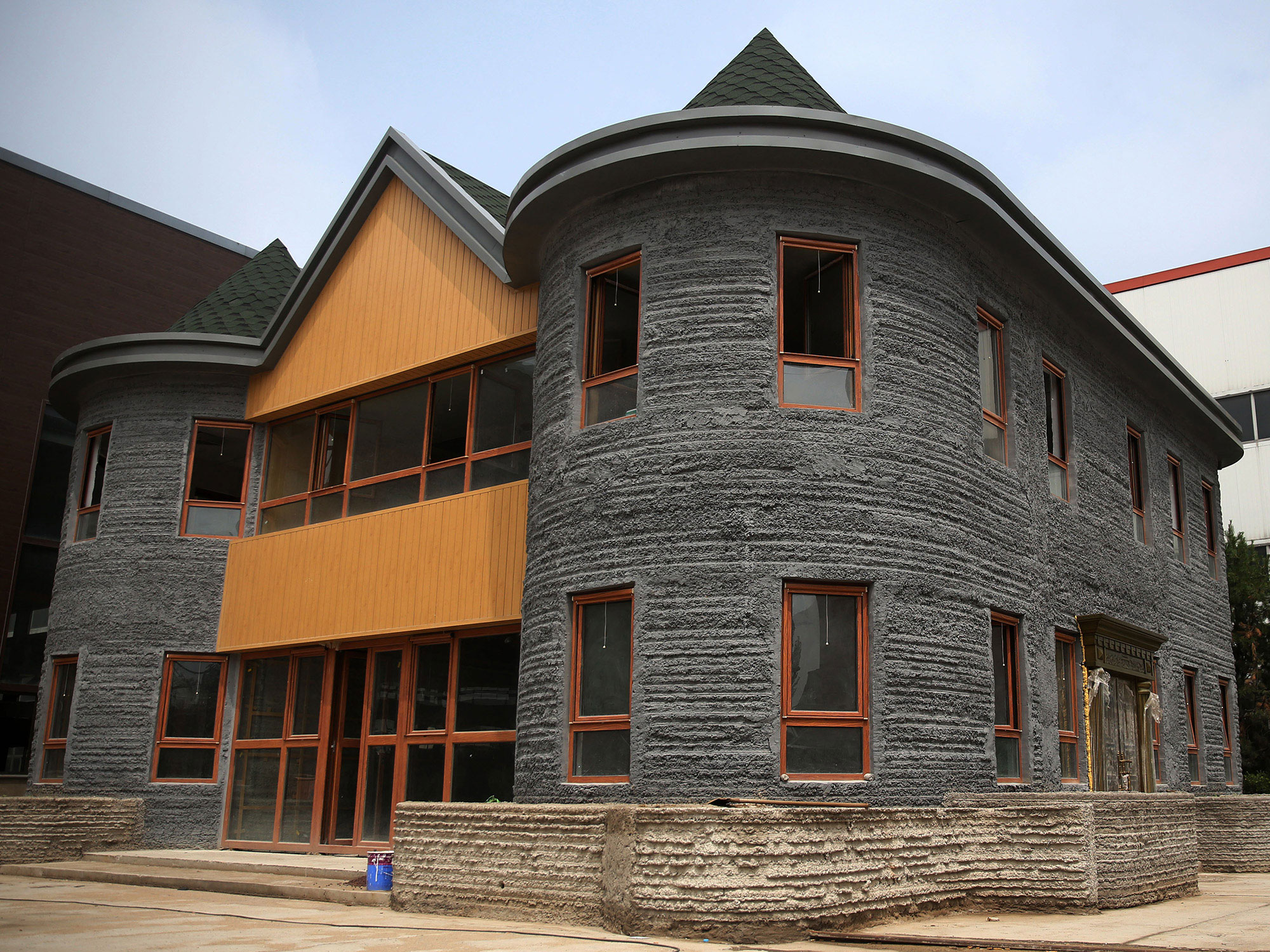
Other examples include China’s WinSun multi-storey blocks, Dubai’s Office of the Future, hurricane-resistant printed barns in Florida, and rapid low-cost homes by New Story and ICON in disaster-affected regions. From single experimental cabins to full neighbourhoods, 3D printing is moving from prototypes toward practical applications. These cases show how printing is scaling across markets and construction needs.
The Future of 3D-Printed Construction
Experts say 3D-printed housing is still at an early stage, but momentum is building. In 2020 there were fewer than 40 printed building projects and the method accounted for under 0.01 percent of construction spending. Since then, governments and builders have ramped up activity. Dubai and Abu Dhabi aim for a large share of printed stock by 2030, partnerships such as ICON–Lennar are planning whole printed communities, and Australia and the Netherlands fund social housing pilots.
Research highlights shows strong potential for faster, cheaper and more sustainable builds, though studies caution that material manufacture and transport still affect the net impact. Officials have called printed homes a gamechanger for speed and cost. Innovation continues as larger, faster printers, bio-based material mixes, and hybrid approaches that pair printed walls with conventional roofs.
Barriers remain. Codes and financing must catch up, printers are bulky to move, and internal trades like plumbing still need skilled labor. Most experts expect 3D printing to start with targeted use cases such as affordable housing and disaster relief, then scale as costs fall and standards mature.
 For all latest news, follow The Daily Star's Google News channel.
Comments