


Policy and technology are reshaping commercial vehicles
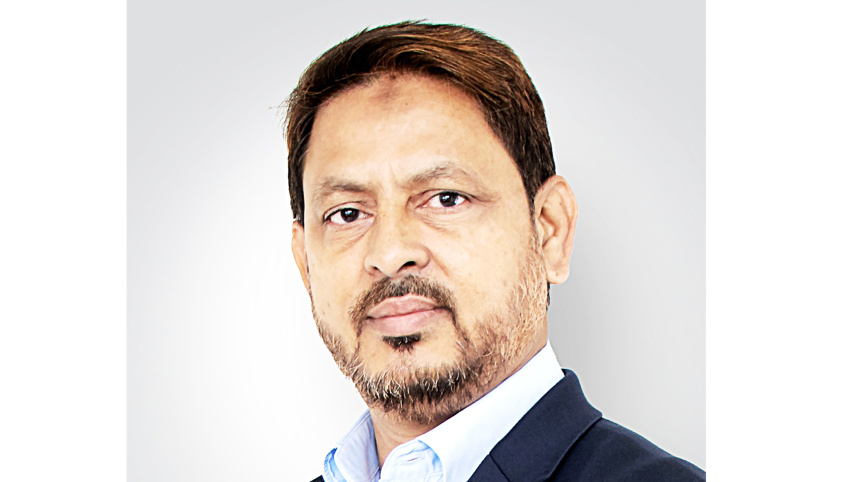
Md Feroz Kabir
Senior General Manager,
Marketing and Sales, Runner Motors Limited

Prompt after-sales service is essential in this business. Nearby service and parts availability are critical to reducing downtime.
Runner Motors Limited is expanding its highway service network and digital fleet tools as Bangladesh’s logistics market changes. Md Feroz Kabir, Senior General Manager of Marketing and Sales at Runner Motors Ltd, discusses the policies shaping demand, vehicle financing, local sourcing and fleet technology in an interview with The Daily Star.
The Daily Star (TDS): Where are you currently seeing the strongest demand in Bangladesh’s commercial vehicle market?
Md Feroz Kabir (FK): The below-one-ton segment remains the largest because these vehicles complete last-mile deliveries. The 1.5-ton payload truck is the second-largest segment. We have also seen sharp growth in medium-duty trucks, which expanded by almost 30 percent. The market was once dominated by conventional 16-ton trucks, but operators are increasingly moving towards medium-duty models.
TDS: What has driven that shift, and how important is government policy?
FK: Policy often shapes this market more strongly than general customer demand. A government rule allows a six-wheel truck a maximum gross vehicle weight of 22 tonnes. Traditional 16-ton trucks have a higher self-weight, limiting the payload they can legally carry. Medium-duty trucks are lighter but can carry a similar legal payload, improving operators’ earning potential while remaining compliant. The slab-based income tax system has also helped: larger trucks pay more, while medium and smaller vehicles pay less.
TDS: Runner Motors delivered over 300 vehicles in June. Was that seasonal or part of a longer trend?
FK: June is traditionally strong as buyers purchase before possible budget-related changes and companies close their financial year. However, this June was substantially stronger than last year, suggesting longer-term demand also contributed. Agriculture remains a major driver, while services and industry also support demand. Without recent fuel and gas shortages, growth could have been stronger.
TDS: How do the priorities of individual transporters and corporate buyers differ?
FK: Individual transporters and small fleet owners focus primarily on mileage and payload. Their income depends on carrying as much as possible while controlling fuel costs. Corporate buyers prioritise performance, timely delivery and dependable after-sales support because vehicles serve their internal supply chains. They may carry lighter loads, but they cannot afford delays or prolonged downtime.
TDS: How are high interest rates affecting vehicle purchases?
FK: Current interest and profit rates make five-year instalment plans difficult for small-capital buyers and have pushed many SME customers out of the market. Formal SME loans are also hard to access. Requirements such as a trade licence and three years of banking records exclude many driver-buyers. Documentation for vehicle finance needs to be simplified. Some buyers use NGO financing, but its complexity and high cost can undermine the vehicle’s profitability.
TDS: How developed is Bangladesh’s local parts-supplier ecosystem?
FK: It is not yet fully mature, although local suppliers can provide batteries, leaf springs, plastic components and wiring harnesses. Local tyre production has also emerged, but quality is crucial. Fuel represents roughly 60 to 65 percent of a commercial vehicle’s running cost, and tyres are the second-largest expense. A full set can cost Tk 250,000 or more, so high-load tyres must last long enough for operators to recover that investment.
TDS: How is Runner strengthening after-sales support?
FK: Prompt service is essential in this business. We have 42 service touchpoints along national highways and in major commercial hubs, covering key routes towards the north, Chattogram, Sylhet and the south-west. We also have a nationwide network of 350 spare-parts dealers. Trucks can remain far from their home base for weeks, so nearby service and parts availability are critical to reducing downtime.
TDS: What digital technologies are being introduced for fleet owners?
FK: Our My Eicher application provides customers with a free fleet-management system and has more than 3,000 active users. Its complaint-management system escalates unresolved service issues to senior management. The Eicher Pro 3000 and Pro 6000 series also include built-in telemetry that records distance travelled, peak speed, engine idling and fuel-tank openings. Fleet owners can compare these records with driver reports and manage fuel consumption more effectively.
The vehicles also have on-board diagnostics. Service teams can identify faults electronically instead of spending hours dismantling components. The dashboard alerts drivers to engine issues, while technicians can use video calls to guide them through minor fixes. When a truck reaches a workshop, an existing diagnosis can substantially shorten repair time.
 For all latest news, follow The Daily Star's Google News channel.
 TDS: What are Runner Motors’ priorities for the next five years, and what policy changes does the sector need?
FK: We aim to expand across commercial vehicle segments by introducing newer, technology-led products. We are prepared to offer vehicles meeting Euro 4 and even Euro 6 emission standards, but that transition depends on government policy and the availability of suitable high-grade diesel. Our next generation of vehicles is undergoing trials ahead of launch.
Registration and financing rules also require reform. During an instalment contract, a vehicle may remain registered in the automobile company’s name, creating complications after accidents, theft or other legal disputes. Ownership documents should identify the actual buyer while protecting the financier’s interest. Banks, leasing companies and manufacturers that finance purchases also need effective legal mechanisms to address defaults and recover assets. Without that protection, financing will contract and constrain logistics-sector growth.
Comments