


How technology is reshaping freight
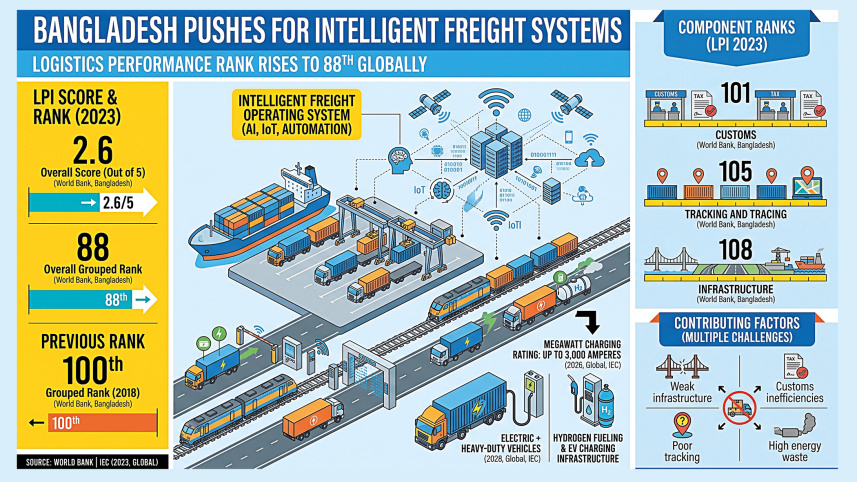
Artificial intelligence, telematics, electric drivetrains and digital freight platforms are turning trucks into connected operating systems. For Bangladesh, the opportunity is not merely to adopt new vehicles, but to build safer, more efficient logistics around the data they generate.
For generations, freight transport was defined by heavy steel, manual labour and paper schedules. In 2026, vehicles, drivers, cargo, roads and customers are increasingly linked through a continuous flow of data.

Technology already in operation
Predictive artificial intelligence and machine learning are among the most consequential changes. Modern dispatch and transportation management systems combine live traffic, historical route performance, fuel prices and customer requirements to recommend better routes and schedules, improving fleet utilisation, fuel use and delivery predictability.
Internet of Things sensors and telematics make fleets more transparent by monitoring engines, brakes, tyres, fuel use and, where necessary, cargo temperature and shock. The resulting data supports predictive maintenance, helping operators address potential failures before breakdowns cause costly repairs, lost time or missed deliveries.
Battery-electric trucks are moving beyond the experimental stage. Better batteries, charging infrastructure and reliability are making them practical for urban and regional freight, where predictable routes allow vehicles to return to a depot for charging.
The next frontier
Several technologies are approaching commercial maturity but remain outside the mainstream. Level 4 and Level 5 autonomous trucks, capable of handling most or all driving tasks, are being tested in controlled settings and selected freight corridors. Regulatory differences, safety standards, infrastructure and public acceptance mean widespread use will take time.
Megawatt charging is another critical part of the electric-truck puzzle. In January 2026, the International Electrotechnical Commission published its specification for connectors supporting currents of up to 3,000 amperes. The goal is to give heavy trucks enough energy during driver rest periods to make long-distance electric freight practical, requiring major investment in charging networks and grid capacity.
Hydrogen is being explored where batteries may face limits, particularly in long-distance, heavy-duty operations. Volvo began testing hydrogen-combustion trucks on public roads in 2026, using high-pressure direct injection, with commercialisation planned before 2030. Hydrogen is therefore more likely to complement battery-electric transport than replace it.
Blockchain and smart contracts offer a different route to efficiency. Tamper-resistant digital records can strengthen cargo provenance, customs documentation and trade finance. A smart contract, for example, could release payment automatically once sensors confirm that temperature-sensitive cargo arrived safely. Cost, interoperability and regulatory complexity remain barriers.
Bangladesh’s opening
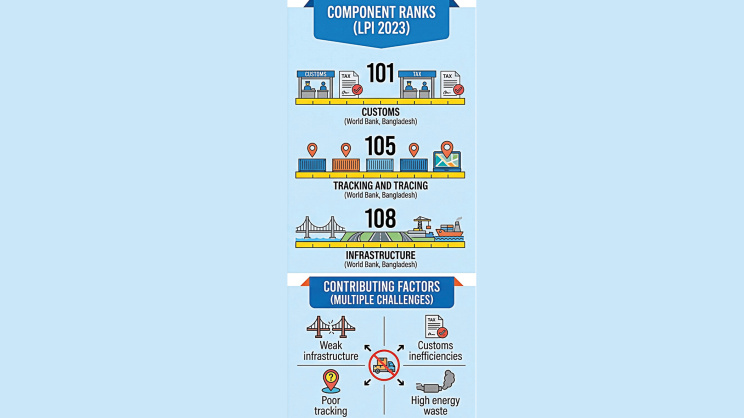
Bangladesh remains some distance from these global frontiers. The World Bank’s 2023 Logistics Performance Index placed the country 88th, reflecting weaknesses in infrastructure, customs and tracking. Yet local companies are already changing how freight is booked and managed.
Lalamove has built a network of around 20,000 registered commercial-vehicle drivers and 80,000 customers in Bangladesh, bringing on-demand booking closer to the experience of a consumer mobility app. Truck Lagbe, Loop Freight and Goods in Motion are also helping businesses and households arrange transport digitally, reducing reliance on traditional truck stands and making freight capacity easier to find.
Telematics is gaining ground as well. Kolpolok Limited’s Goti Telematics platform offers IoT-enabled fleet tracking and real-time vehicle monitoring, helping businesses improve visibility, vehicle utilisation and oversight of sensitive cargo. Such systems illustrate how global logistics technology can be adapted to local operating conditions.
Electric commercial vehicles create another opening. Bangladesh Automobile Industries Limited has demonstrated battery-powered commercial vehicles designed to provide performance comparable with conventional models while reducing energy and maintenance costs. Their wider adoption, however, will depend on purchase prices, reliable charging and confidence in long-term vehicle support.
The system, not just the truck
The most immediate opportunity may be broader use of transportation management systems. These platforms can integrate route planning, driver monitoring, vehicle diagnostics and safety tools. AI-enabled cameras can detect fatigue, speeding and risky behaviour. Vehicle sensors can identify mechanical problems before failure, while Advanced Driver Assistance Systems can support emergency braking, collision avoidance and, in some situations, a controlled stop if a driver becomes incapacitated.
For Bangladesh’s trucking industry, this technology promises more than efficiency. Better monitoring can encourage safer driving, improve maintenance and reduce preventable crashes, protecting drivers and other road users.
The future of logistics is not simply about faster trucks or larger ships; it is about the data connecting them. As autonomous driving, hydrogen power and megawatt charging mature, companies that build integrated digital systems will be better placed to compete. For Bangladesh, the transition could make freight safer, more efficient and more competitive.
 For all latest news, follow The Daily Star's Google News channel.
Comments