


Demand rising for high-quality electrical cables
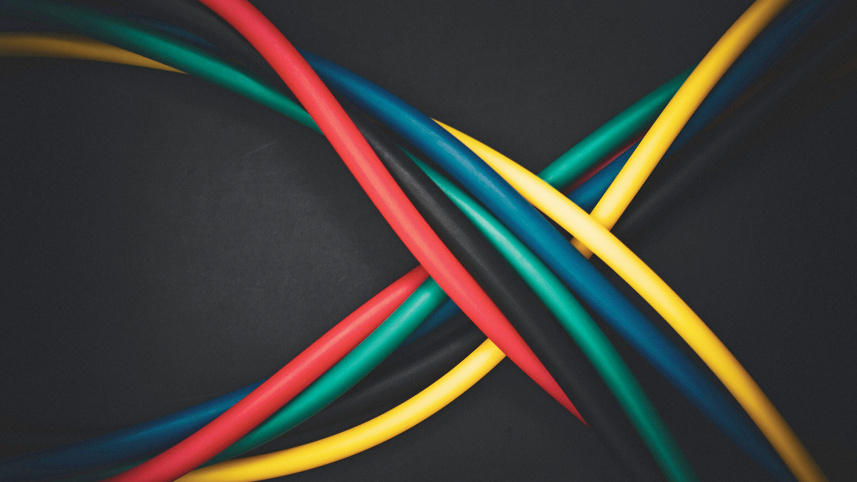
The country’s economic transformation is driven by growth in power generation and distribution. Alongside the demand for electrical cables is rising too; it is yet to reach saturation. Despite the presence of numerous manufacturers in the market, the need for reliable, high-quality cables remains critical.
Tackling incidents of fire

Lately, electrical safety has become a major concern in Bangladesh, particularly in urban and industrial areas. Approximately 39 per cent of fire incidents are caused by electrical reasons. The primary reasons include the use of low-quality cables, faulty circuit breakers, substandard switches and sockets, unsafe multi-plugs, and projects executed without proper technical supervision. When circuit breakers fail to operate effectively, excessive electrical loads can cause cables to overheat. This significantly increases the risk of fire. In industrial facilities, installation of excessive electrical equipment combined with inferior cabling is a leading cause of electrical accidents.
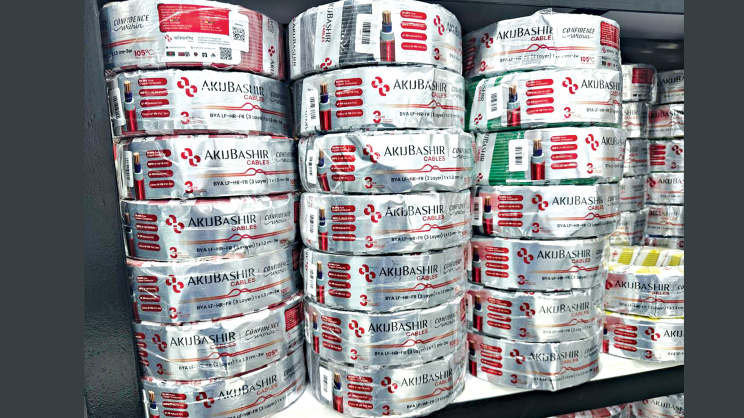
Ensuring building and workplace safety, therefore, requires careful cable selection. Recognising these challenges, AkijBashir Cables has introduced a triple-layer cable, designed to withstand temperatures of up to 105°C. This innovation offers protection against overheating and fire hazards.
Meeting quality standards
AkijBashir Cables follows both international and local standards throughout its manufacturing process. The company offers a comprehensive product portfolio that includes domestic cables, low-voltage and XLPE low-voltage cables, medium-voltage cables, fire survival cables, communication cables, instrumentation and control cables, aluminium domestic and power cables, LSZH (Low Smoke Zero Halogen) cables, coaxial cables, flexible cords, service drop cables, copper strips and bus bars. The company is capable of manufacturing cables with ratings of up to 33 kV.
AkijBashir Cables operates a state-of-the-art in-house testing laboratory. All products are manufactured using 99.99 per cent pure copper and aluminium, combined with premium-grade PVC and XLPE insulation materials. The company’s current annual production capacity stands at 3,600 metric tonnes of copper and 2,400 metric tonnes of aluminium.
 For all latest news, follow The Daily Star's Google News channel.
Comments