


World Cup's political fault lines
The FIFA World Cup has rarely existed in a political vacuum. While it is celebrated as football's greatest festival, it has also served as a stage for projecting national power and prestige.
Benito Mussolini's Fascist regime cast a long shadow over the 1934 and 1938 World Cups, while Argentina's military junta used the country's 1978 triumph as propaganda.

Politics has not only shaped tournaments; it has also transformed certain matches into contests carrying far greater significance than football. As Argentina prepare to meet England in another World Cup semifinal, history offers several reminders of how old rivalries have spilled onto the pitch.
Argentina vs England
Few World Cup fixtures carry the emotional weight of Argentina against England.
The rivalry is inseparable from the 1982 Falklands War, but its roots stretch back further. England's controversial 2-1 victory in the 1966 World Cup quarterfinals, which saw Argentina captain Antonio Rattin sent off, sowed the seeds of a bitter rivalry.
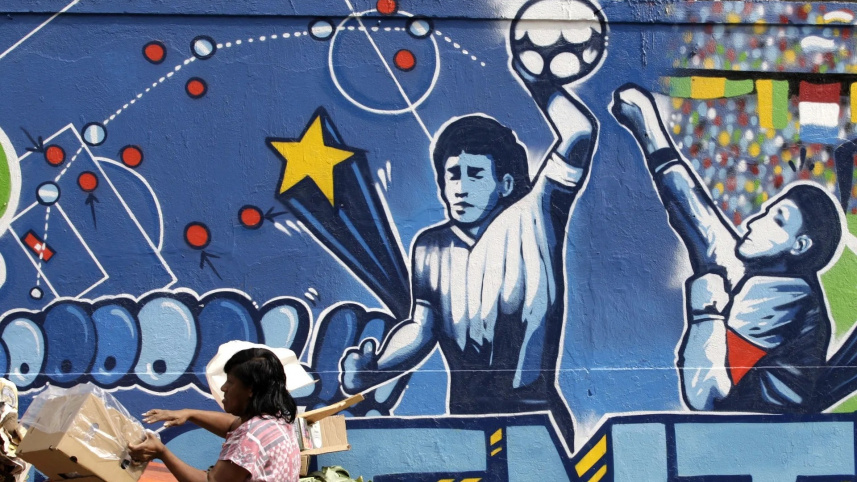
Four years after the Falklands conflict, the teams met again in the 1986 quarterfinals. Diego Maradona inspired Argentina to a famous 2-1 victory with the "Hand of God" goal and one of the greatest solo goals in World Cup history.
For many Argentines, the result carried symbolic meaning after the war; for England, it remains one of the nation's most painful defeats.
The rivalry produced another classic at France '98, where England drew 2-2 before losing on penalties in the round of 16. David Beckham's red card and Michael Owen's brilliant solo goal ensured another unforgettable chapter.
Honduras vs El Salvador
Although Honduras and El Salvador never met at the World Cup finals, their 1970 World Cup qualifying campaign remains one of football's most infamous political flashpoints.
The two Central American neighbours contested a three-match playoff against a backdrop of escalating tensions over immigration, land ownership and longstanding border disputes.
After Honduras won the first leg 1-0 and El Salvador levelled the tie with a 1-0 victory at home, El Salvador triumphed 3-2 after extra time in a decider in Mexico City to secure a place at the World Cup.
Weeks later, diplomatic relations collapsed and fighting erupted in what became known as the Football War, or the Hundred Hours' War. Although the conflict stemmed from long-standing political and economic disputes, the emotionally charged qualifiers became its defining symbol.
East Germany vs West Germany
The division of Germany after the Second World War produced one of the Cold War's most enduring rivalries.
The 1974 World Cup, hosted by West Germany, brought the neighbours together for their only World Cup meeting. East Germany stunned the hosts 1-0 through Jurgen Sparwasser's winner, topping the group ahead of their ideological rivals.
The victory was celebrated as a symbolic triumph in East Germany, but West Germany recovered to defeat the Netherlands 2-1 in the final and lift the trophy.
 For all latest news, follow The Daily Star's Google News channel.
 United States vs Iran
Relations between the United States and Iran have remained strained since the 1979 Islamic Revolution, making every football meeting politically charged.
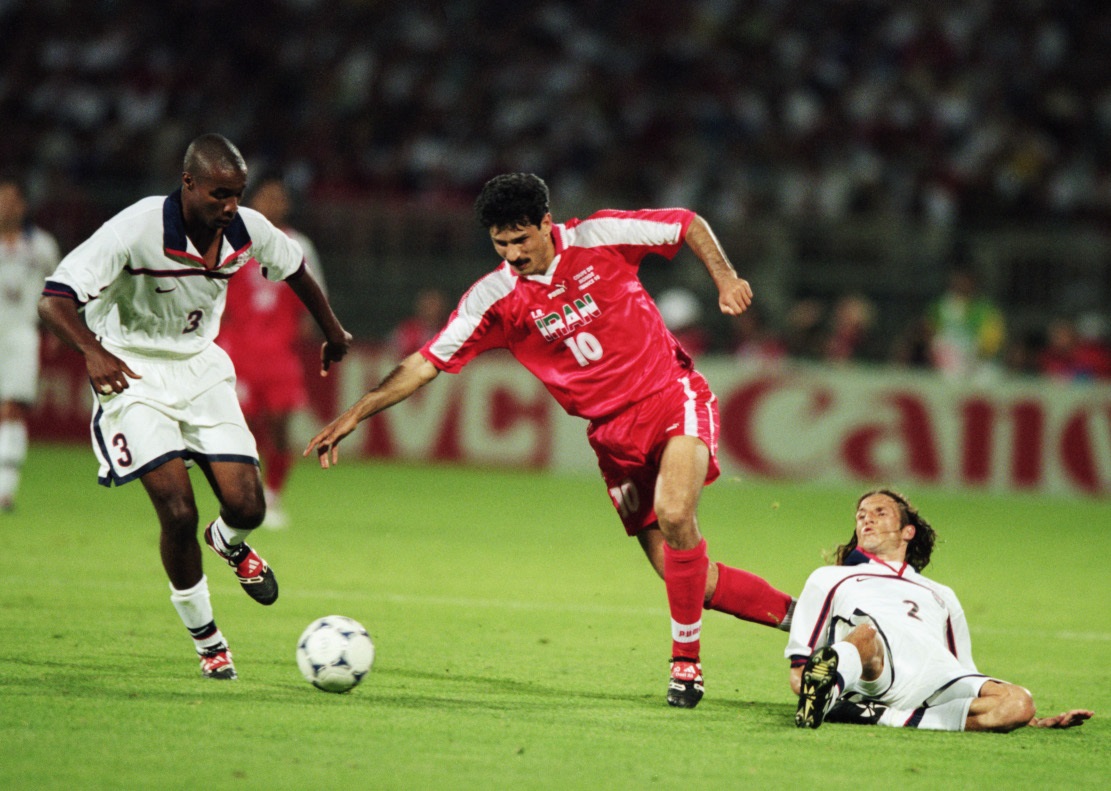
Their group-stage clash at France '98 produced one of the tournament's defining images as Iranian players presented white roses to their American counterparts before securing a historic 2-1 victory -- Iran's first World Cup win.
The teams met again in Qatar in 2022, with the United States winning 1-0 to reach the knockout stage amid heightened diplomatic tensions.
At the ongoing World Cup, Iran have based themselves in Mexico and travelled to the United States only for matchdays following the recent conflict between the two countries. They narrowly missed out on the knockout stages, avoiding another politically sensitive encounter with the co-hosts.
Switzerland vs Serbia
Politics again intruded at the 2018 World Cup in Russia.
Switzerland's Granit Xhaka and Xherdan Shaqiri, both of Kosovan-Albanian heritage, scored in a 2-1 victory over Serbia before celebrating with the double-headed eagle gesture, a symbol associated with Albania.
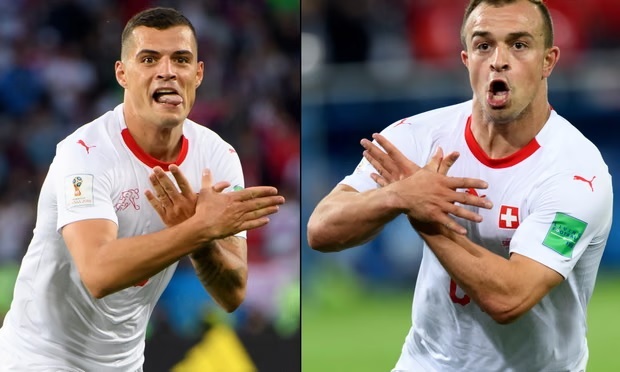
Serbia viewed the celebrations as a political provocation linked to Kosovo, whose independence it does not recognise. FIFA fined both players, and the incident became one of the tournament's biggest controversies.
Football alone has never been enough to erase history. While FIFA strives to keep politics off the pitch, certain World Cup fixtures continue to prove that national rivalries, historical grievances and diplomacy often travel with the teams.
Comments