


The most beautiful defeat

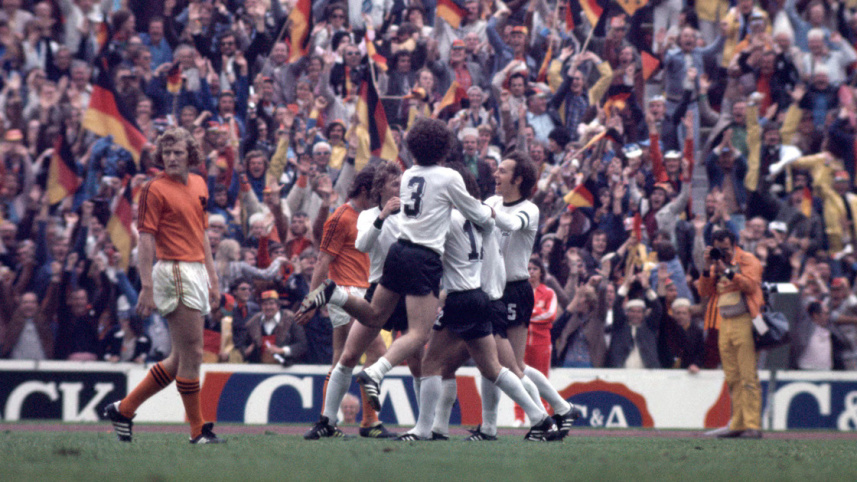
There was once a team that, when they stepped onto the pitch, did not seem to be there to just play football -- they seemed to be there to paint on an invisible canvas.
The ball did not merely stay at their feet; it flowed through their thoughts. Every pass was a sentence, every run a rhythm, and every attack the next line of an unfinished poem. The chief poet of that poem was the Netherlands' Johan Cruyff, whose vision of the game felt like an uncanny ability to see the future.

This was a team that broke rules. They believed football was not a static image but a moving piece of music. A defender would surge forward to build attacks, while a forward would drop back to organise the defence. This constant interchange, this relentless fluidity, seemed to compete with time itself. It was called ‘Total Football’, but its depth went far beyond the name. It was a declaration of freedom, where every player was a complete universe in himself.
The architect of this philosophy was the Netherlands' head coach Rinus Michels, who pulled the game away from mechanical rigidity and gave it the freedom of an artist. Yet that freedom never descended into chaos; instead, it became perfect harmony -- like every instrument in an orchestra striking its note at precisely the right moment.
At the 1974 World Cup, this Netherlands side was a marvel. They did not just win matches; they stripped their opponents of belief. Australia looked helpless, Argentina seemed lost, and Brazil, the reigning champions, could not even find their shadow. Each match felt like a new fairytale, with the Dutch cast as magicians.
Yet even fairytales must end -- and not all endings are happy.
The final began like a perfect rehearsal of Dutch supremacy. Before the West German players could even touch the ball, the Dutch completed 16 consecutive passes among themselves. It felt as though they were not playing against an opponent, but performing a mesmerising passing ritual among their own.
When Cruyff surged into the German penalty box with the ball, Uli Hoeneß had no option but to foul him. The result: a penalty. As Johan Neeskens sent the ball into the net, the clock had not yet reached the second minute. The crowd fell silent, the hosts were stunned, and at the centre of the pitch stood the smiling orange gods.
At that moment, it felt like a pre-written story -- one where the Dutch would have the final word. But football is never entirely poetry; prose intrudes without warning.
West Germany slowly found their way back. Paul Breitner equalised from the penalty spot. The tempo shifted, the rhythm changed. And then came the moment. A fleeting chance, a split second -- and Gerd Muller did not miss it. Perfect positioning and a clinical finish made it 2-1. That goal was like a sharp blade, silently cutting through the Dutch dream.
Trailing behind, the Dutch grew desperate in the second half. Waves of orange crashed again and again into the West German penalty area. But the impenetrable wall of Sepp Maier refused to break. Each attack rebounded like it had struck stone. As time passed, an unspoken sorrow began to seep into the rhythm of those magical feet. A quiet melancholy spread across the pitch -- like the sadness of an unfinished fairytale.
When referee Jack Taylor blew the final whistle, Cruyff stood motionless at the centre of the field. His shoulders slumped, his gaze fixed emptily on the grass.
The World Cup was lifted by Franz Beckenbauer, yet a strange silence gripped the footballing world. The Dutch seemed to exist in another realm. There were no questions in their eyes, no complaints -- only a deep stillness, as if they knew that what they had created could never be measured by a trophy.
That day, more than the celebration of the victors, it was the sorrowful faces of the defeated that captivated everyone. West Germany won the trophy, but it was the Dutch who forever claimed the hearts of football romantics.
Because on that day, they did not just lose a match -- they won a strange kind of immortality.
For them, the word “defeat” does not quite fit. It feels more like an unfinished symphony, each note still floating in the air.
And the name of that symphony could only be summed up as ‘the most beautiful defeat’.
 For all latest news, follow The Daily Star's Google News channel.
Comments