


The first time football brought me to tears

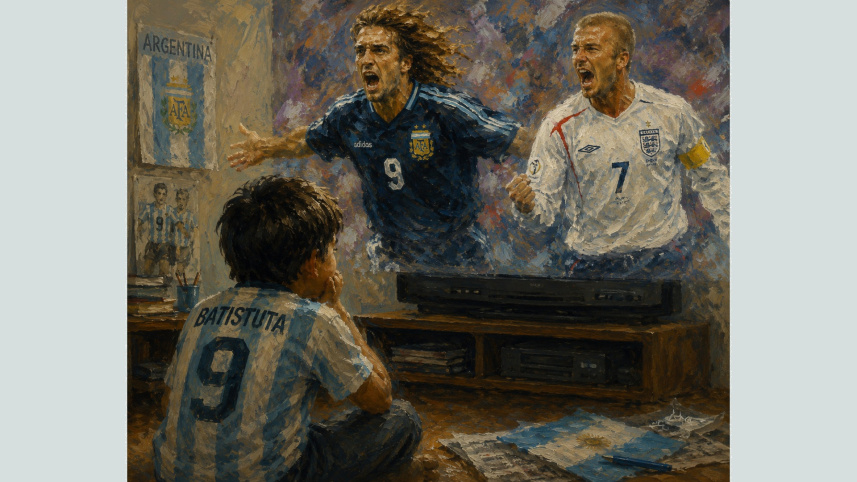
Football can be cruel. It has the power to bring joy beyond imagination, but it can also leave even the strongest supporters in tears.
I learned that lesson during Argentina's match against England at the 2002 FIFA World Cup.

I was a Class Three student, and it was the first World Cup I could truly remember watching. Interestingly, almost everyone in my family supported Brazil, while my father also admired Germany and Italy. Even today, I cannot clearly explain why I chose Argentina.
Perhaps it was Gabriel Batistuta.
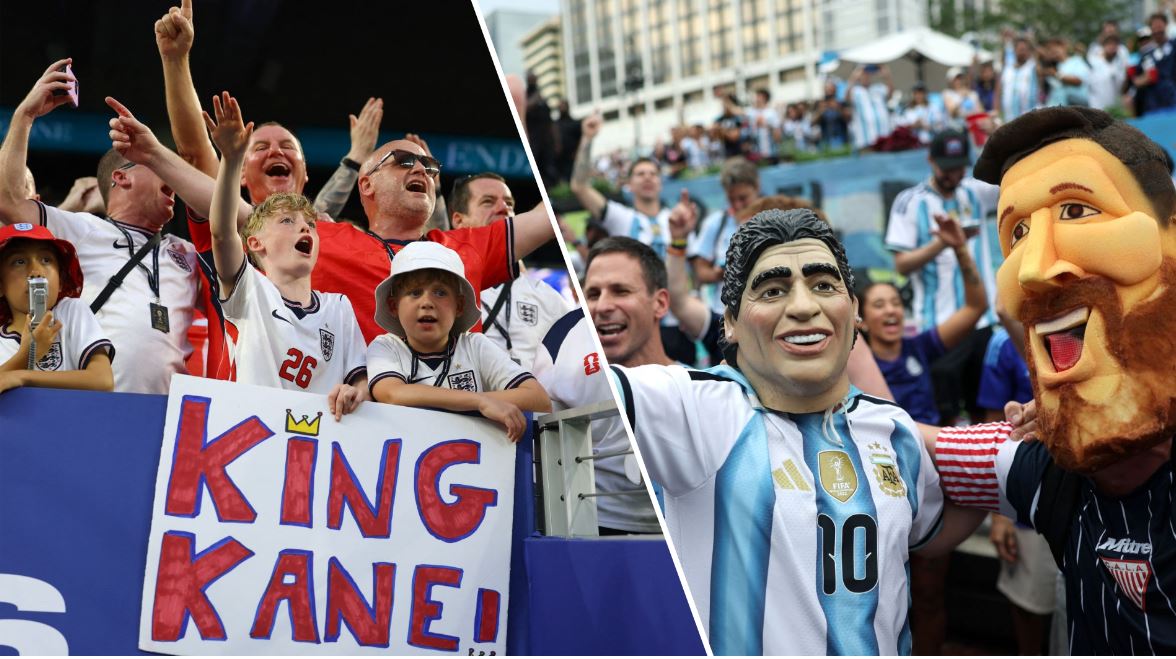
With his flowing long hair and reputation as one of the world's finest strikers, Batistuta was preparing to play in what would be his final World Cup. The constant television and newspaper reports about him and an Argentina side widely regarded as one of the favourites made me fall in love with the Albiceleste.
The 2002 World Cup was supposed to be Argentina's moment. Having comfortably topped the South American qualifiers, Marcelo Bielsa's side arrived in Japan and South Korea as one of the strongest teams in world football. Their squad was packed with stars and match-winners.
Batistuta, Hernan Crespo, Ariel Ortega, Juan Sebastian Veron, Pablo Aimar, Claudio Lopez and Diego Simeone formed a formidable attacking unit, while Roberto Ayala, Walter Samuel, Pablo Sorín and Javier Zanetti anchored a rock-solid defence. I wrote their names over and over again in my school exercise books, repeating each one aloud until I had memorised them.
Drawn into the infamous "Group of Death" alongside Nigeria, England and Sweden, Argentina still looked well equipped to progress.
They opened their campaign with a hard-fought 1-0 victory over Nigeria, Batistuta scoring the decisive goal with a trademark header early in the second half.
I still remember what happened after that victory.
Along with some of my friends and older boys from our neighbourhood, I joined a small celebratory parade carrying handmade Argentina flags. We had glued paper flags onto bamboo sticks, proudly waving them through the streets. It felt as though Argentina were destined for greatness.
Then came England.
The match carried enormous significance. It was a rematch of the fiery 1998 World Cup clash, when David Beckham had been sent off and blamed for England's elimination.
I still remember asking my mother for permission to watch the match. I finished my homework early and sat in front of our 21-inch colour television, eagerly waiting for kick-off.
Argentina started brightly, but England gradually grew into the contest.
As the first half was drawing to a close, England were awarded a penalty after Michael Owen went down inside the box following contact from Mauricio Pochettino. The decision was controversial. Replays later suggested there had been minimal contact, and Owen himself admitted years later that he had been looking for the foul.
None of that mattered then.
Pierluigi Collina pointed to the spot, and Beckham calmly converted the penalty. It proved to be the only goal of the match as England held on for a memorable 1-0 victory.
At that age, I knew nothing about controversial refereeing decisions or whether the penalty should have been awarded.
 For all latest news, follow The Daily Star's Google News channel.
 I only knew one thing.
My team were losing.
As the clock ticked towards full-time, I desperately hoped Argentina would find an equaliser. When the referee finally blew the final whistle, I sat frozen in disbelief.
Argentina had lost.
My team had lost.
Then, without warning, tears rolled down my face.
It was the first time football had made me cry.
My mother immediately noticed. She tried to comfort me, telling me that sport is about both winning and losing and that no team wins every match.
But her words could not stop the tears.
I went to bed early that night without eating dinner.
A few days later, Argentina drew 1-1 with Sweden and were sensationally eliminated in the group stage.
It was another heartbreak.
Yet that disappointment only deepened my attachment to the team.
Supporting Argentina has since meant enduring plenty of pain: the 2006 World Cup quarter-final defeat to Germany, the 2007 Copa America final loss to Brazil, and the agonising run of three consecutive major final defeats between 2014 and 2016.
But football also gave those tears meaning.
There were tears of joy when Argentina finally ended their 28-year wait for a major international trophy by beating Brazil to win the Copa America in 2021. There were even greater tears when Lionel Messi lifted the FIFA World Cup in Qatar in 2022.
Since 2021, Argentina have brought far more smiles than heartbreaks, although the dramatic way they continue to win matches has probably caused supporters countless mini heart attacks.
Yet no victory has erased that childhood memory.
More than two decades have passed, but I can still picture myself sitting in front of that small television, watching Beckham's penalty cross the line before bursting into tears at the final whistle.
Comments