


FIFA World Cup fever fuels Bangladesh’s economy

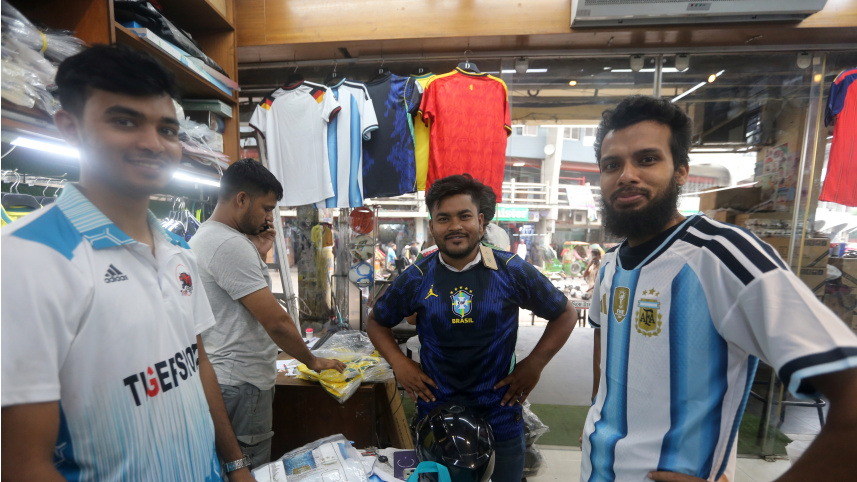
While Bangladesh is neither a host nor a participating nation in the FIFA World Cup 2026, the tournament is expected to boost the local economy through merchandise sales, advertising, and increased garment exports, generating millions of taka in business activity.
Businesspeople say that the demand for jerseys, trousers, footballs, televisions, projectors, and other products increases several times during the FIFA World Cup compared to other times of the year, creating a noticeable impact on the economy.

The Bangladesh Sports Accessories Merchant Manufacturers and Importers Association estimates that Bangladesh has a Tk 1,500-2,000 crore sporting goods market.
HIGH DEMAND FOR JERSEYS
Nokib Hasan, a Brazil supporter from Badda in Dhaka, said he has so far bought five jerseys for his elder brother, nephew, and a colleague. As a fan of the Brazil football team, he said that the FIFA World Cup brings a completely different feeling.
He added that one of the biggest attractions of the FIFA World Cup fever is buying jerseys of favourite teams -- not only for oneself but also as gifts for family members and colleagues.
Meanwhile, retail hubs are seeing significant traction. Bashundhara City Shopping Mall in Panthapath houses around 20 sports accessories shops.
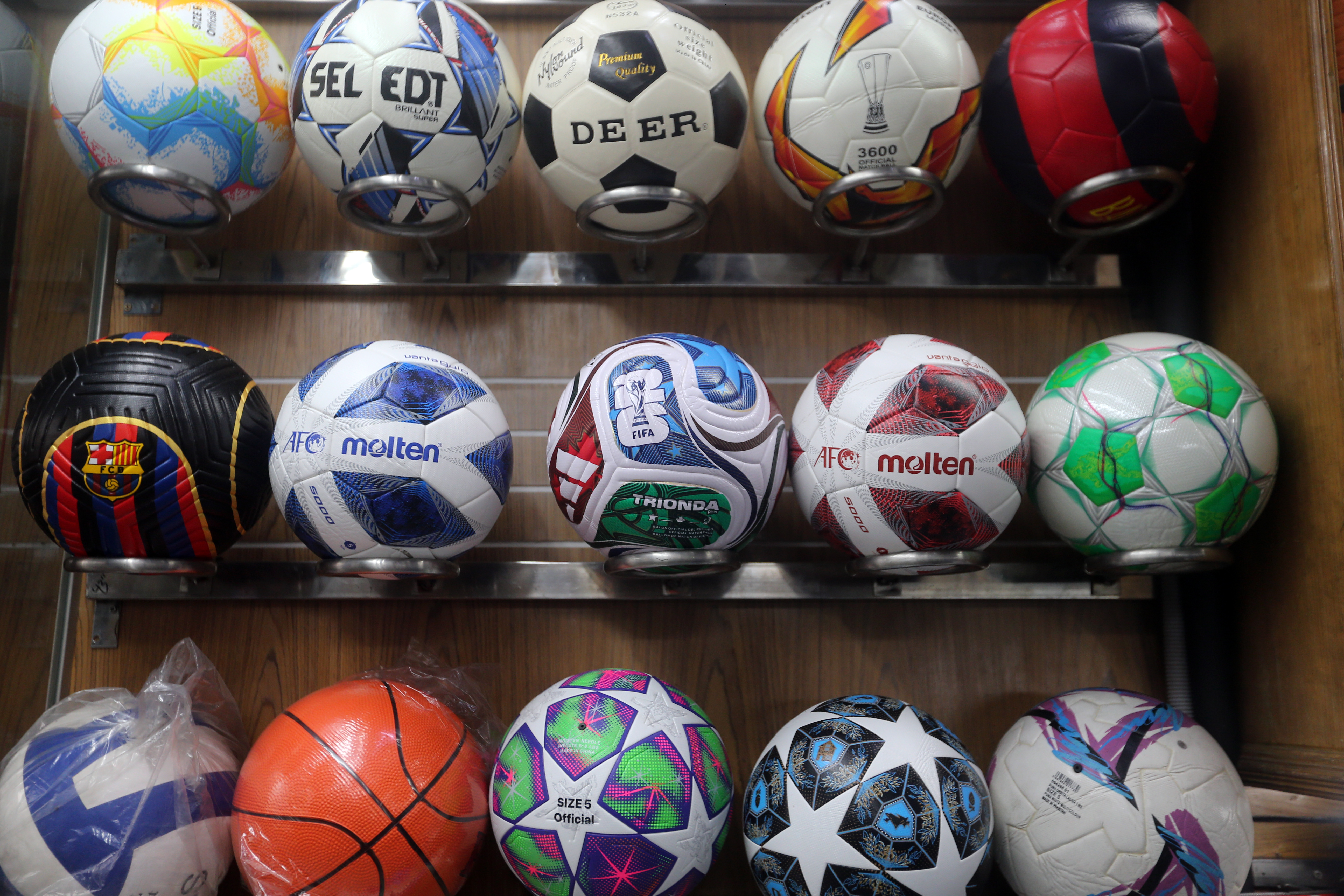
Mukul Patwary, manager of Galaxy Sports at the Bashundhara City Shopping Mall, said sales of various products have increased significantly ahead of the FIFA World Cup. Jerseys are selling the most, while footballs and other related items are also moving fast. Among the apparel sold, 60 percent are Argentina jerseys, he said.
There is also steady demand for France, Japan, and Germany jerseys, he said.
Given the current economic situation, the level of sales is quite satisfying, and expectations were not this high, Patwary added, mentioning that most customers buying these products are under the age of 35.
WHOLESALE MARKETS BUZZING
The largest wholesale and retail markets for sports merchandise in Bangladesh are the Maulana Bhashani National Hockey Stadium Market and the Cooperative Twin Tower Sports Market on Bangabandhu Avenue in the capital.
“Football fans have started buying items much earlier this year ahead of the World Cup. Usually, in the past, I haven’t seen this before the World Cup began,” said Taiyab Hossain, proprietor of Sports House at the Maulana Bhashani National Hockey Stadium market.
Hossain said that demand has also increased for items such as cups, medals, crests, and projectors, as more people plan to watch matches together during the tournament.
According to him, projector prices have risen, but sales remain strong because many customers are still purchasing them. He also pointed out a shift in customer preferences towards higher-quality products.
Locally made jerseys in Bangladesh have improved significantly compared to previous years and are now close to Chinese quality because manufacturers are using better fabric, he said.
“Previously, low-priced jerseys sold more, but now customers prefer expensive, high-quality jerseys,” he added.
Mohammad Khokon Gazi, a businessman at the Cooperative Twin Tower Sports Market, said that the market is currently dominated by Bangladeshi products, as very few foreign goods are arriving this time, allowing locally produced items to sell well.
MIXED SENTIMENTS IN DISTRICTS
Rangolal Talukder, general manager of SNP Sports shop in Sylhet, said that business this World Cup season is performing well so far. Based on the current response from customers, he is satisfied and optimistic about strong sales in the coming days.
 For all latest news, follow The Daily Star's Google News channel.
 He said there are some challenges in the market, particularly delays in importing goods from China through the airport, which have affected some traders’ ability to bring in stock on time.
Despite these issues, overall business conditions remain positive, driven largely by young people under the age of 35, he said.
IMPORT AND CURRENCY CHALLENGES
MR Shamim Patwari, chief advisor of the Bangladesh Sports Accessories Merchant Manufacturers and Importers Association, said this year’s business is different from previous years because of the ongoing economic crisis and currency instability.
According to him, businesses connected to sports goods are facing uncertainty as the rising value of the Chinese RMB and the depreciation of the Bangladeshi currency have increased import costs significantly.
He said sales ahead of the World Cup are currently about half of what they were during previous tournaments.
“We used to bring products from China, but there is now an import crisis,” he said, adding that one RMB has risen to nearly Tk 19, compared to around Tk 16 or Tk 17 a year ago and about Tk 13.89 during the previous World Cup.
Speaking about the industry, Patwari said factories producing World Cup-related merchandise are operating with concern because country-specific jerseys become difficult to sell after the tournament ends.
Patwari, also the former president of the association, said the country’s sports goods market, including imports and local production, is worth around Tk 2,000 crore annually. The market has been growing steadily, with the number of factories increasing by nearly 5 percent compared to last year.
Md Mushfiqur Rahman, head of product of the consumer electronics at the Fair Electronics, said this year’s FIFA World Cup is expected to generate an even stronger response than previous editions, as it coincided with Eid-ul-Azha ahead of the tournament.
During this festive period, demand for large-screen and smart TVs is projected to rise significantly, he said, adding that while chest freezers and refrigerators typically see higher sales during Eid-ul-Azha, this year they also observed a notable surge in TV demand.
A key shift this season is that consumers are no longer focusing only on HD or FHD televisions; instead, there is growing interest in UHD, QLED, Mini LED, and OLED models, he said.
“Overall, we estimate that the total TV market size for the season could reach around Tk 1,000 crore,” he mentioned.
Luthful Kabir Shaheen, director for business development of the City Group, a leading Bangladeshi conglomerate, said that the increased demand for tea, biscuits, and various types of snack items during the football World Cup is driven by people staying up late to watch the matches.
During these late-night viewing hours, consumers tend to rely more on dry food items to accompany their viewing. According to him, the same consumption behavior is being seen again this time, with snack-related demand rising in line with late-night match schedules.
Comments