


Players voice frustration over Mirpur pitch
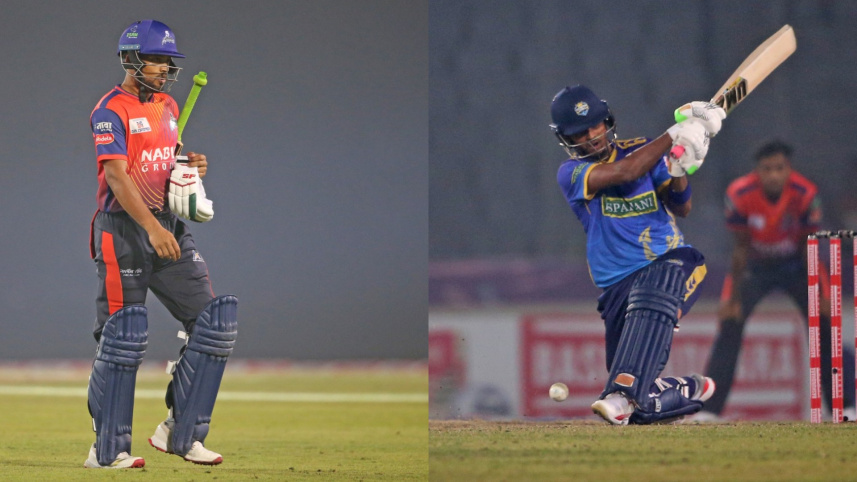
“Who should take responsibility for producing this kind of wickets?”
When posed with this question, Bangladesh Test captain Najmul Hossain Shanto hesitated briefly, seemingly unsure how to respond. The questioner then offered a simpler answer: “Is it just your bad luck?” Shanto followed that cue, saying, “Maybe it really is just our luck. Otherwise, perhaps we would have got a slightly better wicket.”

The pitch at the Sher-e-Bangla National Cricket Stadium in Mirpur has long carried an unenviable reputation. Slow surfaces that heavily favour bowlers have been a recurring feature, and players have repeatedly pointed out how such conditions hurt Bangladesh’s batters. Amid prolonged criticism, long-serving curator Gamini de Silva was replaced by Australian Tony Hemming, but the nature of the wicket has remained largely unchanged.
After losing matches influenced by the pitch, Shanto has been outspoken in his criticism, as has Litton Das. Even after winning, Mahedi Hasan made it clear that the surface was far from ideal. “The curator may have changed, but the wicket hasn’t,” Mahedi remarked.
Both Bangladesh Premier League playoff matches on Tuesday were low-scoring contests. In the first match, Sylhet Titans required a last-ball six to get past Rangpur Riders’ modest total of 111. Later in the evening, despite dew settling in, Chattogram Royals had to battle until the final over to chase down Rajshahi Warriors’ 133.
Most BPL matches this season were played in Sylhet, with only the final phase being staged in Dhaka. Despite the Mirpur pitch getting adequate rest, runs have been hard to come by. Rangpur captain Litton Das was blunt in his assessment: “This is not an ideal T20 wicket by any means. We expected a better surface for the qualifier. The pitch was very difficult, and both teams struggled.”
Shanto echoed that frustration. “Look, if in a qualifier or a do-or-die match the wicket completely favours the bowlers, that’s not good for cricket,” he said. “The surface should have been better so that the game could be played in a more balanced way.”
The Bangladesh skipper also does not believe such conditions suit T20 cricket. “As a batter, I feel this was not a T20-type wicket at all,” Shanto said. “It was extremely tough, especially for batters. If you look at the full 40 overs, every batter suffered -- local and overseas. Shot-making was very difficult. From both batting and bowling perspectives, we could certainly expect a better wicket.”
Rajshahi will face Sylhet today in the second qualifier for a place in the final. Shanto, however, is leaving wicket concerns to fate. “Whatever we get tomorrow, we’ll have to play on that,” he said. “It’s about what’s written for us. We’ll take the field trusting in Allah.”
Slow conditions did help off-spinning all-rounder Mahedi, who returned figures of two for 20 from four overs against Rajshahi as his team progressed to the final. Still, even in victory, Mahedi did not endorse the Mirpur surface. His disappointment over the unchanged nature of the wicket was evident.
“In reality, this was not a T20-style wicket,” Mahedi said. “It might have happened because a lot of cricket was played in Sylhet earlier. But we were hoping for a better surface this time. With the curator change, everyone expected a wicket more suitable for T20 cricket. That didn’t happen, and from that perspective, we are disappointed.”
 For all latest news, follow The Daily Star's Google News channel.
Comments