


Champions League 2026-27: Key new rules
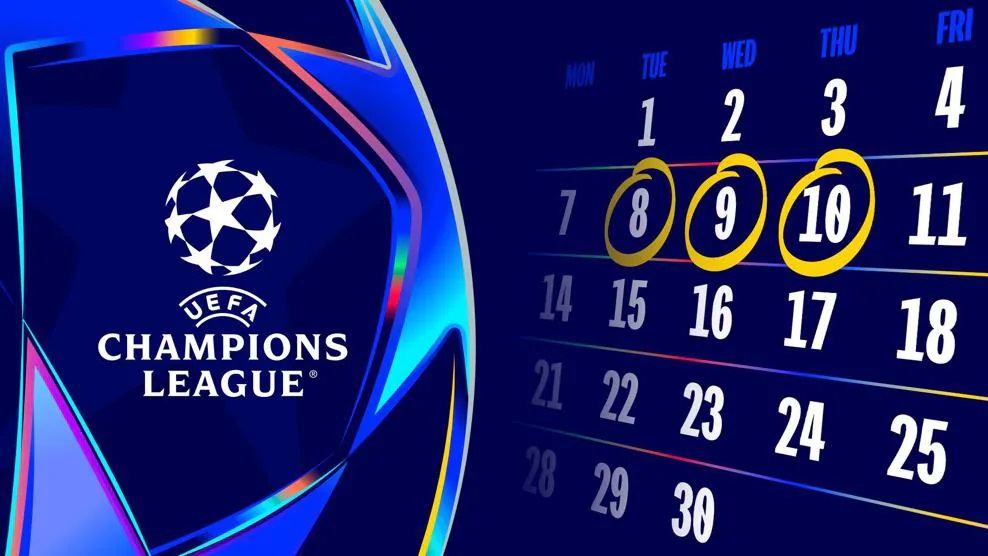
The 2026-27 season of the UEFA Champions League will begin on September 8, Tuesday.
The group-stage fixtures will conclude on January 27, 2027, while the final will take place on June 5, 2027, at the Estadio Metropolitano, Atletico Madrid’s home ground.

The 2026-27 season will continue to follow the 36-team format, introduced in the 2024-25 season, with every side playing eight different opponents, four at home and four away in the league stage.
Ahead of the new season, here are the rule changes.
NEW RULES
Reducing unnecessary delays
Player substitutions: When a player is substituted, they must now leave the field of play within ten seconds. Failure to do so will mean the incoming player must wait until the first stoppage after one minute has elapsed following the restart of play.
Players receiving treatment: Additionally, when a game is stopped for a player to receive treatment, that player must leave the field for one minute from when the ball goes back into play. This does not count for goalkeepers, or when an outfield player and goalkeeper collide and both need attention, with additional exceptions including when the injured player suffers a foul that results in a yellow or red card for the offending opponent, two teammates are both injured in a collision, or a penalty is awarded and the injured player will be the taker.
Throw-ins and goal kicks: Delaying taking a throw-in or goal kick may result in possession being awarded as a corner to the opposing team, with the referee providing a five-second countdown for players to get the ball back into play.
VAR measures
Mistaken identity: Mistaken identity can be reviewed by VAR when the referee sanctions the wrong player for an offence penalised by the referee. The judgment on the offence itself cannot be reviewed, with the review limited solely to correctly identifying the offending player.
Incorrect second yellow cards: Clearly incorrectly awarded second yellow cards can now be reviewed by VAR, who may invite the referee to conduct an on-field review and cancel the yellow card, allowing the player to stay on the field.
Fouls by the attacking teams before the ball is in play: VAR can now intervene when the attacking team has committed a clear offence before the ball comes into play at a free-kick or corner, whereby it has a direct impact on the resulting goal, penalty kick being awarded or another sanction. Where VAR intervenes, the goal, penalty or sanction will be cancelled, and the free-kick or corner will be retaken.
Goal kicks and subsequent handball offences: When the ball is stationary within the goal area and is kicked by any player, the goal kick will be considered to have been taken. If a teammate of the goalkeeper then deliberately touches the ball with the hand or arm inside the penalty area, a penalty will be awarded.
Optional law changes
Incorrectly awarded corner kicks: In UEFA matches, incorrectly awarded corners will only be reversed to a goal kick in very clear cases, where the review can be completed immediately and without delaying the restart of play. However, an incorrectly awarded goal kick cannot be changed to a corner.
Players covering their mouths: Players covering their mouths when speaking to an opponent, by itself, will not be issued a red card offence. However, referees may consider covering the mouth to conceal communication as an act of unsporting behaviour and show a yellow card. Further disciplinary investigations or proceedings may follow as a consequence of such behaviour.
Players leaving the field in protest: Players leaving the field in protest will not be given a red card. However, the principle under the Laws of the Game which states, “where a team is responsible for a match not continuing and/or being abandoned because it has fewer than seven players, the match will be forfeited by that team, subject to the relevant competition regulations,” can be used by referees as they deem it appropriate.
 For all latest news, follow The Daily Star's Google News channel.
Comments