From Chinese fighter jets to the Mecca Pact: Bangladesh’s strategic future?

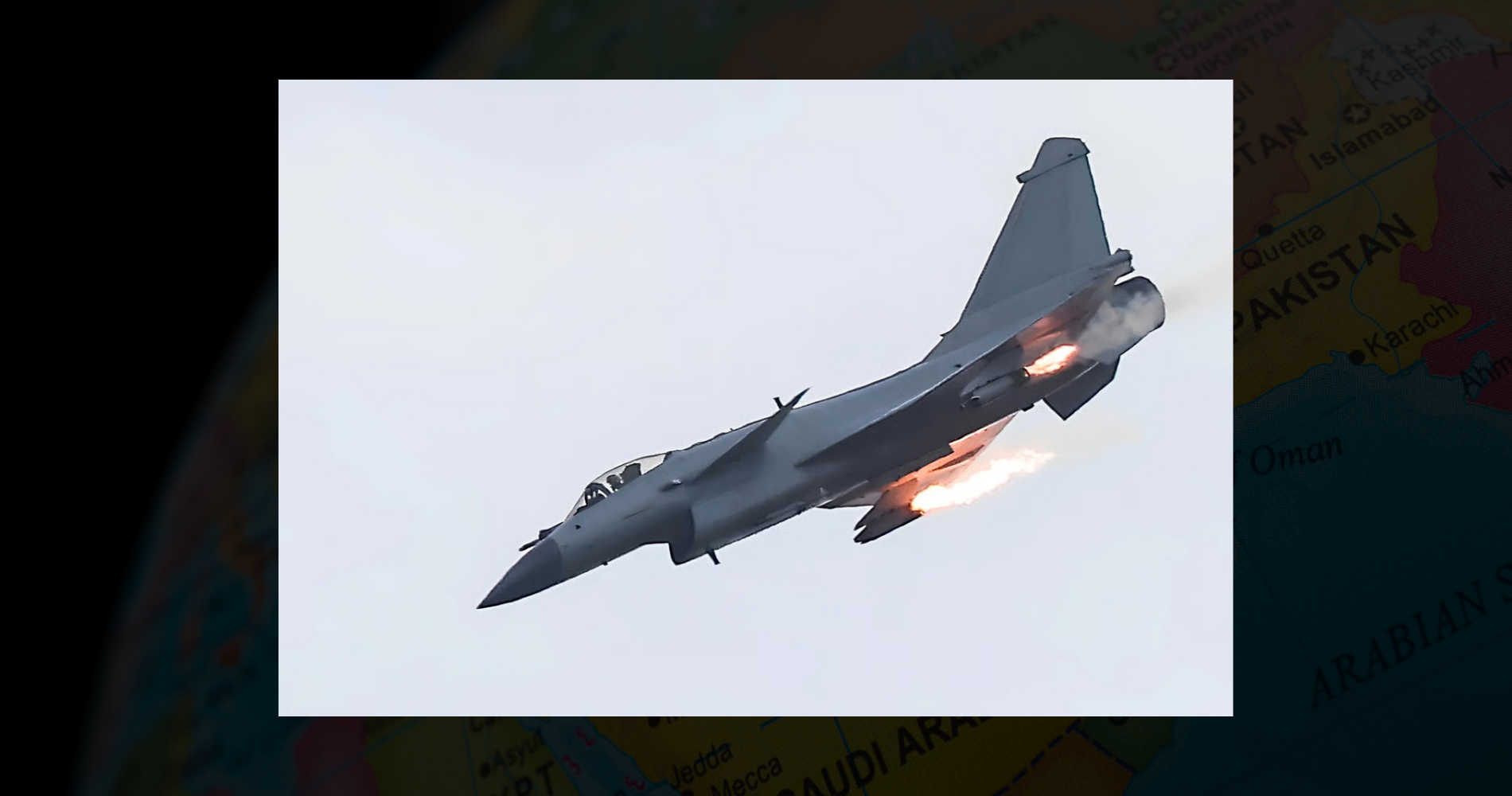
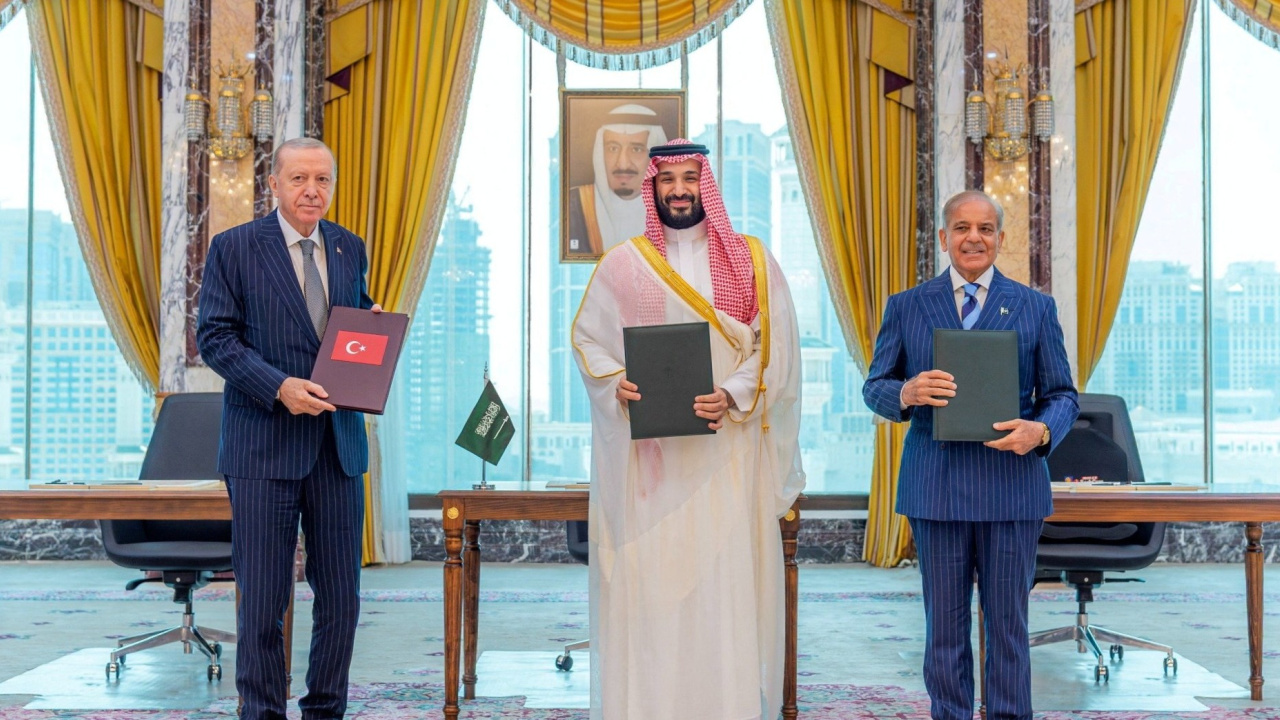
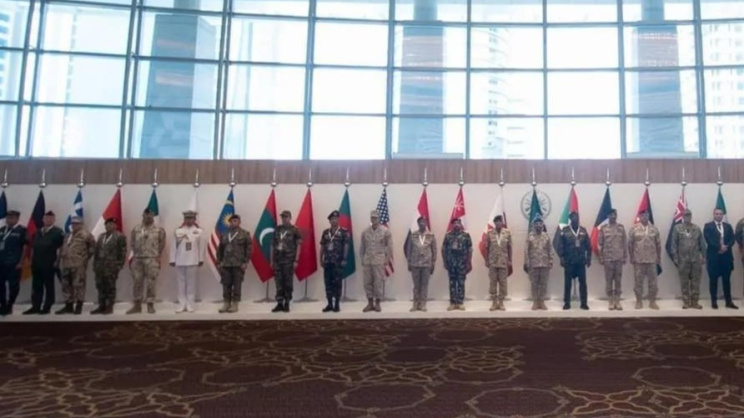
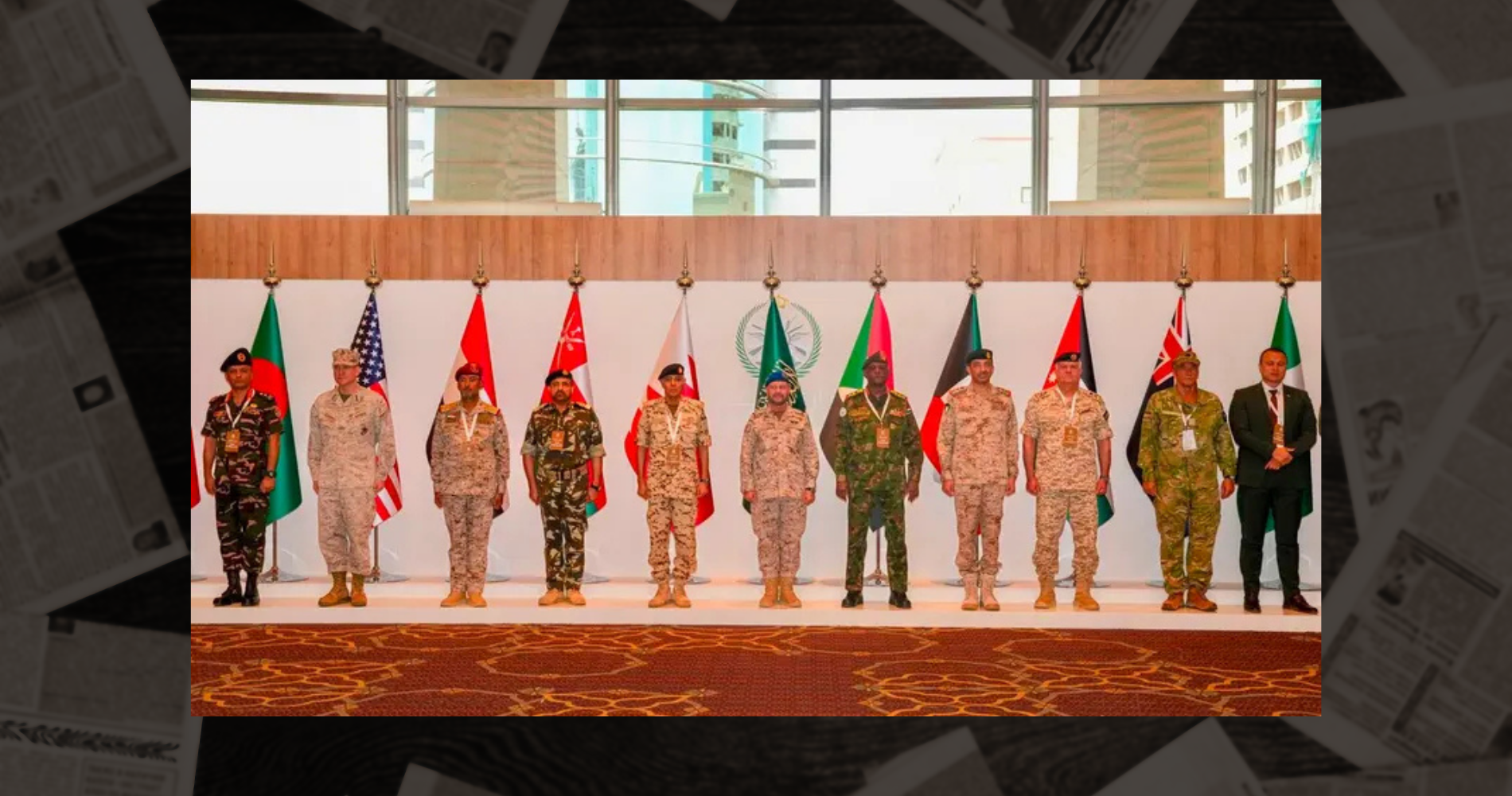
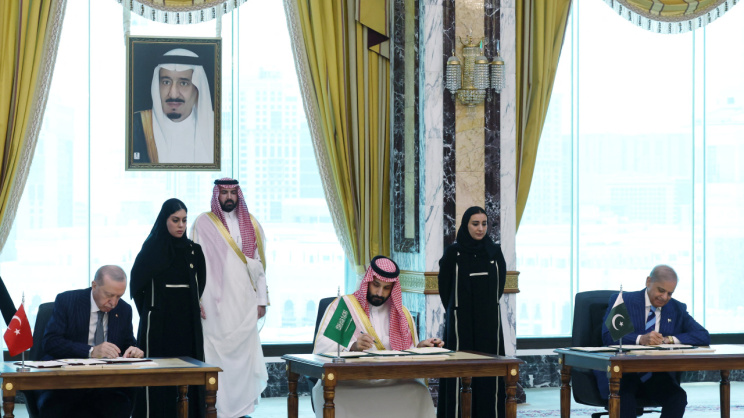
Bangladesh’s recent strategic choices have attracted unusual attention, both regionally and beyond. Its endorsement of a Saudi-led multinational maritime initiative in the Red Sea, discussions surrounding possible participation in the Mecca Joint Defence Agreement, negotiations over the Chinese Chengdu J-10CE fighter aircraft, and simultaneous engagement with American, European, Middle Eastern and Chinese partners can make the country’s foreign and security policy appear increasingly difficult to decipher.
Viewed separately, these developments may resemble a disjointed mosaic of strategic choices. Is Bangladesh moving towards China? Towards an emerging Islamic security architecture? Towards the West? Or is it simply pursuing opportunities as they emerge?
Rather than asking which “bloc” Bangladesh is moving towards, it may be more useful to examine the vulnerabilities that Bangladesh itself is trying to manage. Seen through that lens, what appears to be strategic incoherence may begin to look considerably more comprehensible.
Where Bangladesh stands strategically
Bangladesh today is dealing simultaneously with several accumulated strategic problems. Water-sharing disputes with its neighbour remain unresolved. To the southeast, the Forcibly Displaced Myanmar National (FDMN) crisis has evolved from what was initially perceived as a humanitarian emergency into a protracted geopolitical problem involving Myanmar’s internal conflict, border security, great-power interests and the increasingly difficult question of repatriation.
Energy security has become another strategic vulnerability. Bangladesh’s dependence on imported fuel and LNG means that developments thousands of kilometres away can affect electricity generation, industrial production and household expenditure at home. The problem became particularly visible this year when disruptions around the Strait of Hormuz affected Qatari LNG supplies. Qatar supplied Bangladesh with about 4.15 million tonnes of LNG in 2025, but subsequently reduced its scheduled 2026 deliveries amid maritime disruptions, forcing Bangladesh to seek alternatives.
These are some of the loose ends that Bangladesh needs to manage while simultaneously trying to build a sustainable economic and security architecture for the coming decades. It is undoubtedly a complicated environment. But complicated does not necessarily mean unmanageable.
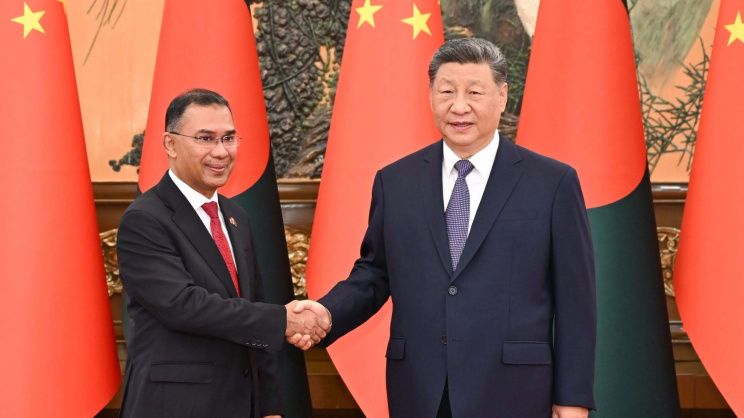
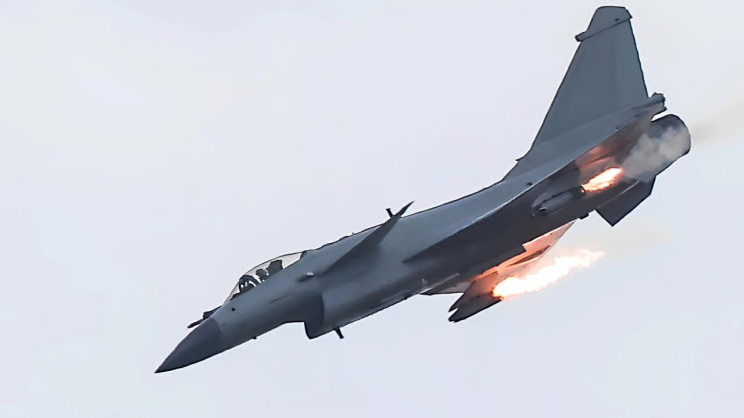
There is also another factor shaping public perceptions. Bangladesh now has a substantially larger domestic audience following international affairs, military technology and geopolitical developments. That is encouraging. Yet the speed at which individual developments are interpreted can sometimes produce a platform-centric view of strategy, in which one fighter aircraft, one agreement or one diplomatic meeting becomes evidence of an entire geopolitical realignment. The recent hype surrounding the J-10CE is a good example.
The J-10CE: Procurement or alignment?
Bangladesh has been considering fighter modernisation for years. The possible acquisition of the J-10CE is therefore better understood as part of a long-running capability requirement than as a sudden enthusiasm for joining a Chinese strategic orbit. How so, one may ask? Bangladesh’s eight MiG-29s were procured in 1999, with the first aircraft delivered in December that year and the remainder arriving in early 2000. The Air Force subsequently inducted Chinese F-7BG aircraft in 2006. The fundamental point is less about attaching a precise “generation” label to these aircraft and more about the technological environment in which Bangladesh now operates.
Modern combat aviation increasingly revolves around active electronically scanned-array radars, beyond-visual-range weapons, electronic warfare, secure data links, improved situational awareness and networked operations. Against that backdrop, evaluating a modern 4.5-generation platform is hardly an extravagant conceptual leap.
At least five considerations support the requirement for a new fighter fleet.
First, Bangladesh is operating combat aircraft based on designs whose origins stretch back several decades. Even when aircraft are upgraded, airframes, sustainment requirements and technological ceilings eventually become significant constraints.
Second, the MiG-29 fleet itself is small. A limited fleet creates obvious pressures involving availability, maintenance cycles, pilot conversion, training and the number of aircraft that can be generated operationally at any one time.
Third, instability along the south-eastern frontier is no longer hypothetical. Bangladesh has previously protested incursions by Myanmar military aircraft and helicopters. In September 2022, Myanmar aircraft entered Bangladeshi airspace and ordnance landed inside Bangladesh, leading Dhaka to lodge formal protests. Border instability intensified again in 2024 as fighting inside Myanmar spilled over into Bangladesh.
Fourth, the qualitative standard of air power in the wider region is changing. Bangladesh therefore cannot assess its requirements solely against its own historical inventory. Air defence planning is necessarily comparative.
Fifth, fighters are not simply instruments for fighting wars. They support air policing, interception, the protection of sovereignty, deterrence and the broader credibility of an integrated air-defence system.
None of these arguments requires Bangladesh to identify China—or any other country—as either an enemy or a patron.
Bangladesh’s foreign-policy behaviour over decades has generally been characterised by restraint rather than military adventurism. Other states are entitled to examine Bangladesh’s acquisitions and partnerships carefully. But interpreting every attempt to improve its military capabilities as evidence of hostile alignment risks misreading both Bangladesh’s requirements and its established strategic behaviour.
Why should a country seeking to secure its territory, energy supplies and economic interests automatically be regarded as a threat to someone else?
Can Bangladesh afford major defence acquisitions today?
When Bangladesh inducted the MiG-29 in 2000, its economy was dramatically smaller than it is today.
Bangladesh clearly possesses far greater aggregate economic capacity today. GDP increased from roughly $53 billion to more than $456 billion, while GDP per capita increased from about $397 to almost $2,600. Yes, the population also increased significantly—from approximately 134.5 million to 175.7 million—but the rise in per-capita output demonstrates that the expansion was not simply demographic.
At the same time, the macroeconomic environment in 2025 was not uniformly better. Growth was slower and inflation considerably higher than in 2000. However, Bangladesh has greater structural economic capacity today while simultaneously confronting more immediate fiscal, foreign-exchange and cost-of-living pressures. The correct debate, consequently, is not whether Bangladesh should choose development or security. The question should be whether a particular strategic expenditure is affordable, properly prioritised and capable of reducing vulnerabilities that themselves have economic consequences.
When strategic requirements meet domestic requirements
Security and development are sometimes discussed as though they inhabit completely different policy universes. To me, they are intertwined and have spillover effects on each other. An advanced naval fleet, supported by adequate maritime surveillance and a credible air force, creates deterrence. Deterrence raises the potential costs of coercion. Maritime capability can contribute to the protection of sea lanes and economic zones. Air power can protect sovereign airspace and critical infrastructure. Diplomatic partnerships can provide access, training, technology and political leverage. These are not alternatives to schools, electricity, hospitals or industrial development. The real question is whether strategic expenditure is designed to complement national development rather than compete blindly with it.
This is particularly important for Bangladesh because its economy is deeply exposed to external flows—energy, exports, remittances, shipping and access to markets.
The current energy problem illustrates this perfectly. Bangladesh cannot physically control the Strait of Hormuz, the Red Sea or every maritime chokepoint upon which global trade depends. But it can diversify its energy suppliers, participate in maritime-security arrangements where its interests justify doing so, improve its naval capabilities and build stronger relationships with countries that dominate the supply and transportation networks upon which Bangladesh depends.
Bangladesh’s participation in the Saudi-led Red Sea maritime initiative should therefore not be misunderstood as somehow guaranteeing the country’s LNG supply. Much of Bangladesh’s Qatari LNG reaches the country through the Strait of Hormuz and the Arabian Sea rather than the Red Sea. But the wider principle remains valid: for an energy-importing country, maritime security is part of economic security. The disruption of Qatari LNG deliveries in 2026 demonstrated how quickly a distant conflict can arrive at Bangladesh’s doorstep through energy prices and shortages.
The question of dependency
Then comes perhaps the strongest criticism of Bangladesh’s present defence trajectory: supplier dependence. This concern must not simply be dismissed. China has been Bangladesh’s dominant supplier of major conventional weapons. Estimates based on SIPRI data indicate that around 72 per cent of Bangladesh’s major arms imports during 2019–2023 originated from China. From a geopolitical perspective, diversification is therefore sensible.
But diversification in defence cannot be understood in the same way as changing the supplier of a consumer product. Military systems operate through life cycles. When a country buys a fighter aircraft, frigate, air-defence system or armoured vehicle, it is also entering into relationships involving training, ammunition, spare parts, depot maintenance, software, upgrades, technical documentation and, often, weapons integration that can continue for 20 to 30 years or longer. Changing suppliers therefore carries costs of its own. Different countries have responded to this problem in different ways.
India, for example, pursued licensed domestic production of the Su-30MKI through Hindustan Aeronautics Limited under agreements involving Russian technical documentation and production rights. The objective was not merely to acquire aircraft, but gradually to develop domestic manufacturing and sustainment capabilities. Pakistan followed another model with the JF-17, developing a co-production arrangement between Pakistan Aeronautical Complex and China’s aviation industry, allowing progressively greater domestic involvement in aircraft production and life-cycle support. Other countries have chosen a different trade-off. Gulf operators of the Eurofighter Typhoon, for example, have relied heavily on long-term support, training and maintenance arrangements with the original manufacturer and its partners, rather than immediately attempting to establish complete domestic control over the sustainment ecosystem.
There is no single model that Bangladesh must copy. But there is one lesson it should take seriously: diversification and indigenisation require continuity. A serious defence-industrial strategy cannot change every five years with governments, personalities or individual procurement competitions. It requires a 20- or 30-year roadmap linking procurement, maintenance facilities, technology transfer, domestic industry, ammunition production, research and development, and human-capital investment. This is arguably where Bangladesh’s record remains less convincing.
The problem is not simply dependence on China. The deeper problem is the absence of a sufficiently visible long-term pathway explaining how Bangladesh intends gradually to reduce its dependence on any external supplier.
The political economy behind strategic choices
Large procurements also have political-economic dimensions that are sometimes overlooked. Consider Bangladesh’s recent civil aviation decisions. In April 2026, Bangladesh signed an agreement for 14 Boeing aircraft, valued at around $3.7 billion at list prices, in a deal that also intersected with wider trade relations with the United States. Airbus, meanwhile, continued to offer Bangladesh a mixed fleet of A350 and A321neo aircraft, building on discussions that had also taken place during the interim government. These are not defence acquisitions, and they should not be conflated with fighter procurement. But they illustrate an important principle: states frequently use major purchases as part of broader economic and diplomatic relationships. Trade access, financing, investment, technology, industrial partnerships, political goodwill and strategic access can become interconnected.
The same logic applies—more cautiously—to security partnerships.
Bangladesh hosts more than one million FDMNs, and the crisis has long ceased to affect only humanitarian expenditure. International assessments have documented pressure on local wages and prices, infrastructure, public services, the environment, social cohesion and community security in Cox’s Bazar. Military capability cannot repatriate the FDMNs. Neither can a maritime coalition resolve Bangladesh’s energy crisis. But this does not mean that strategic capability is irrelevant to either problem.
Military capability does not replace diplomacy; it changes the context in which diplomacy operates.
A country with credible territorial defence, diversified partnerships, greater maritime capability, stronger economic connections and multiple diplomatic relationships has more options than one that depends almost entirely on goodwill. That is strategic leverage, and that leverage can ultimately serve domestic objectives.
Strategic crossroads—or strategic impulse?
Bangladesh is certainly at a strategic crossroads. But describing its recent behaviour simply as a series of impulses would be misleading. What we may instead be witnessing are the early stages of a shift from largely reactive foreign-policy balancing towards a more active search for strategic security.
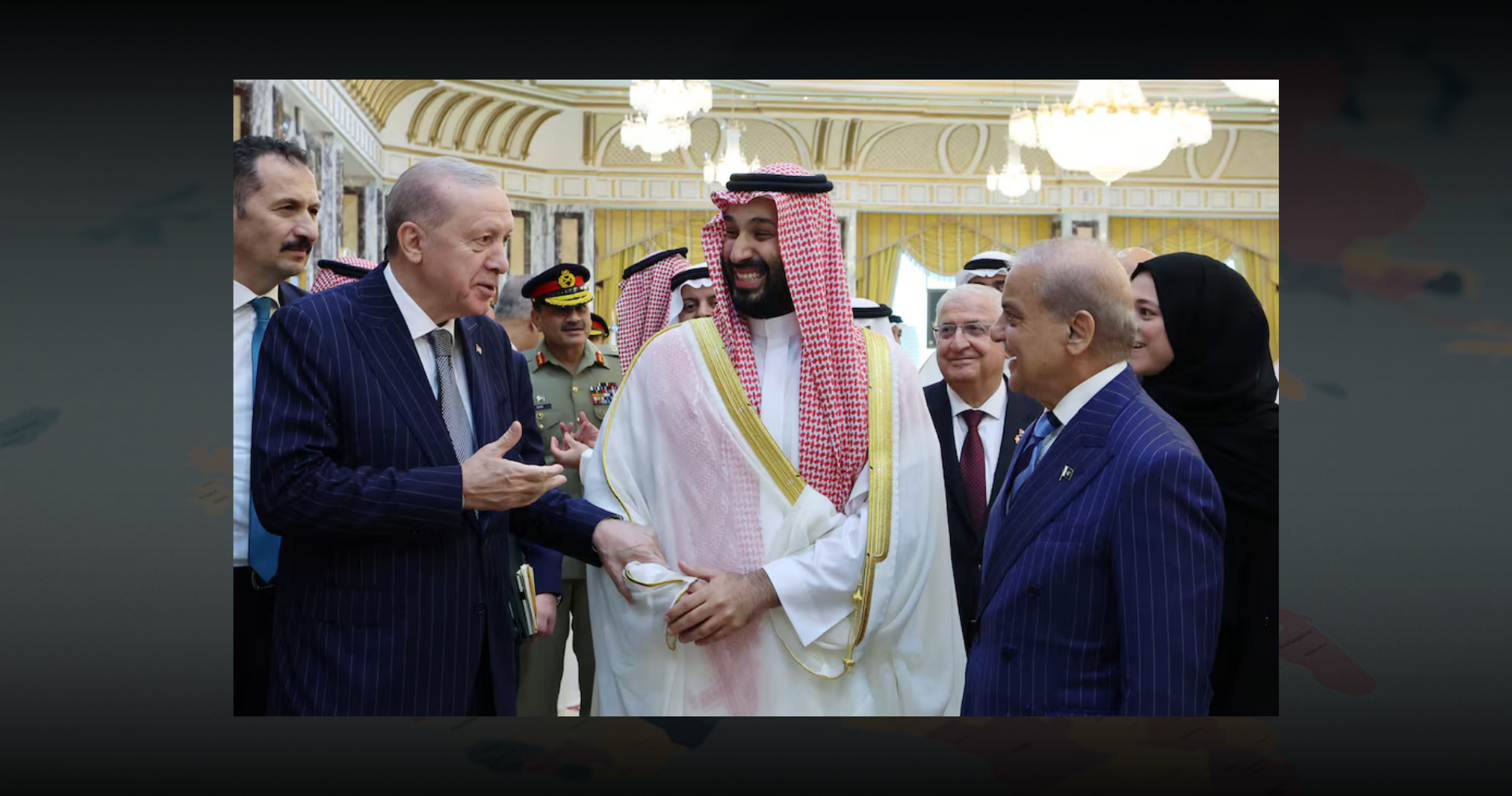
Bangladesh is simultaneously exploring relationships with China, the United States, Europe, the Gulf, Türkiye and others. That may appear contradictory if international politics is viewed exclusively through the language of blocs. From Bangladesh’s perspective, however, such relationships need not be mutually exclusive. China can remain an important defence and economic partner. The United States can remain an important trade, investment and security partner. Europe can provide markets, technology and aviation partnerships. Middle Eastern states can remain critical sources of energy, employment, investment and political cooperation. The objective should be to maximise Bangladesh’s strategic options while minimising strategic dependence.
That does not mean every proposed agreement should be signed, every aircraft purchased or every defence arrangement joined. A genuinely strategic Bangladesh must become more selective, not less. Every major decision should answer several questions: What national vulnerability does it address? What does it cost over its entire life cycle? What new dependency does it create? What leverage does Bangladesh receive in return? Can part of the capability eventually be sustained domestically? And does the decision expand Bangladesh’s freedom of action—or constrain it?
If those questions guide policy, what currently looks like a collection of disconnected purchases and partnerships may eventually form part of a coherent national strategy. Bangladesh’s greatest advantage remains the strategic temperament it has displayed for much of its history: maintaining relationships across competing centres of power without routinely turning disagreement into confrontation. The challenge now is to convert that instinct for balance into an institutionalised strategy.
The next few years will therefore be important and, indeed, very interesting—not merely because Bangladesh may buy new aircraft or join new arrangements, but because they will reveal whether a series of strategic transactions can finally be transformed into a coherent strategy.
S.M. Haseeb Aziz is a retired Bangladesh Army officer who served at the rank of major and is currently Research Coordinator at the Osmani Centre for Peace and Security Studies. He holds a master’s degree in International Relations from the University of Dhaka and is a former MONUSCO peacekeeper and instructor.
Send your articles for Slow Reads to slowreads@thedailystar.net. Check out our submission guidelines for details.

Is Bangladesh the next base for Chinese scam networks?

The politics of fear: From Gaza's paper kites to ‘unsafe’ on campuses

Shanghai Cooperation Organisation at 25: Can China, India and Russia really speak with one voice?

Shared rivers, shared responsibilities: The case for water treaties

Bihar wants Delhi to not renew Ganges treaty. What does it mean for Dhaka?
Bangladesh and the United States: Beyond the tariff bargain

From the Carter Doctrine to the Mecca Pact: A changing Gulf security order
More capability, less autonomy? Bangladesh’s emerging security dilemma

An anti-West network is emerging: How should Bangladesh respond?