


Rethinking debt management for developing countries

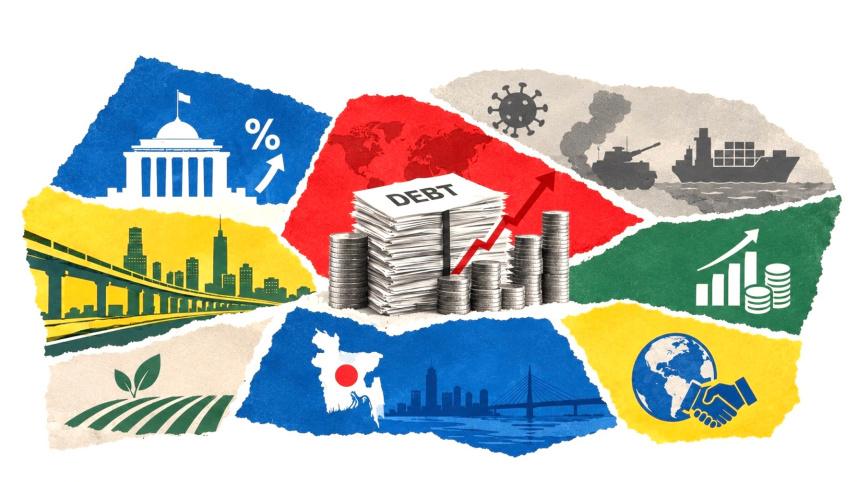
In the aftermath of the 2007-09 global financial crisis, advanced countries created abundant liquidity through expansionary monetary policies. This enabled many developing countries to borrow from the global market at exceptionally low interest rates to support their infrastructure, social programmes and responses to economic shocks. However, the era of inexpensive money ended when the world was hit by the Covid-19 pandemic and the Russia-Ukraine war. These events caused commodity price shocks worldwide, fuelling inflation. This initiated sharp monetary tightening in 2021-22 as inflation reached its peak in many economies.
During the 2023-25 period, global inflation moderated but still remained above target levels in many countries. In 2026, geopolitical disruptions and the subsequent spike in energy prices are creating renewed upward pressure on inflation. Borrowing costs remain high due to large fiscal deficits, growing public debt, and geopolitical uncertainty. Hence, developing countries face high refinancing and debt-servicing costs. At the same time, as investments in advanced countries offer higher yields on relatively safe assets, investors are moving away from riskier markets. As a result, poorer sovereign borrowers must pay higher returns to attract finance.

Debt pressures stem from several overlapping shocks. During the pandemic, several countries borrowed extensively to fund health measures, income support, and recovery programmes. Before their fiscal situation could improve, they faced renewed challenges due to rising food and fuel prices, currency depreciation, and climate-related disasters. Some countries also had high security expenditures. Consequently, they faced high debt burdens and narrow fiscal space.
Developing countries can now borrow from a more diverse set of sources. From the traditional Paris Club governments—a group of official creditor governments from advanced countries—and multilateral institutions like the World Bank and IMF—borrowing has shifted to a new terrain. Non-Paris Club lenders—countries like China, India, Brazil and Saudi Arabia, commercial banks, international bondholders, commodity traders, and domestic financial institutions—have entered the picture. As a result, although financial options have widened, restructuring becomes more complicated when a country cannot repay its debt because creditors operate under different legal contracts and interests.
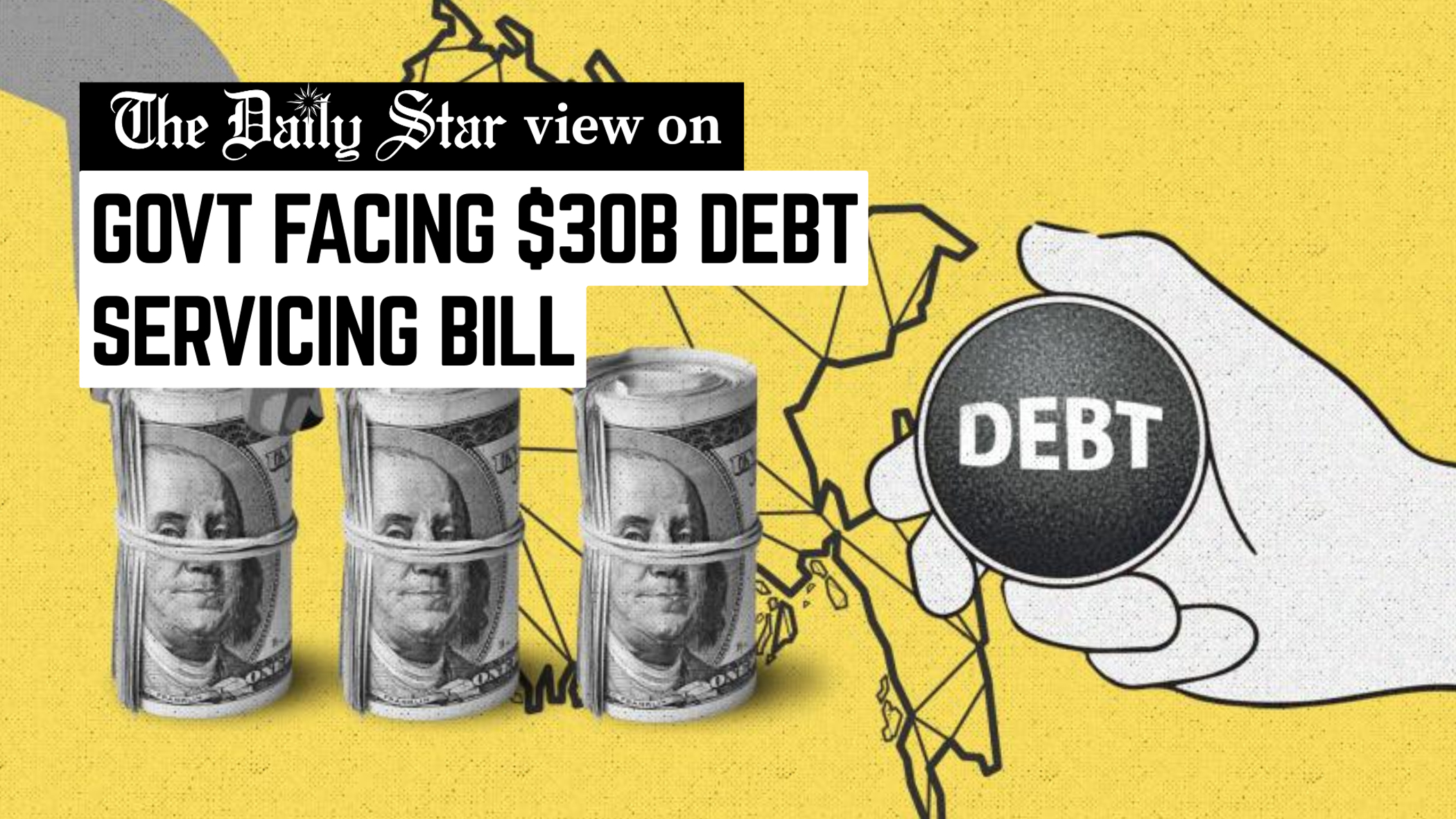
Debt grew faster than countries could repay it as some borrowing funded low-return projects or was based on inadequate assessments, while exports and domestic revenues lagged. By 2024, external debt for low- and middle-income countries hit a record $8.9 trillion, with net debt outflows (principal and interest amounts) totalling $741 billion in 2022-2024—highest in at least half a century. Meanwhile, the developing countries’ total external debt reached $11.7 trillion.
As external funding declines, governments increasingly rely on domestic borrowing. This reduces foreign exchange risk for developing countries, but it often involves higher interest rates and shorter terms for domestic debt. High levels of government borrowing can draw bank resources away from businesses, strengthening sovereign-bank ties and restricting private sector investment.
Least developed countries (LDCs) may experience debt distress without actually defaulting. Governments frequently keep up with debt payments by reducing expenditures on health, education, infrastructure, food security, and climate adaptation. This “silent debt crisis” hampers progress on economic and social indicators, especially for those with low revenue and limited export earnings. That is why debt sustainability cannot be judged by the debt-to-GDP ratio alone. A country’s fiscal vulnerability is better reflected in its debt service relative to revenue, exports, and foreign exchange reserves.
LDCs experience a vicious cycle of low growth and high debt. These governments have lower public investment and high borrowing. Sovereign credit ratings of many of these countries are weak. This increases borrowing costs. As a result, they typically face a cycle of high interest payments, low investment, slow growth, and high debt vulnerability. These countries are also vulnerable to climate change, which negatively affects revenues. They must spend more on climate-related disaster management and rely on high borrowing, even though they contribute little to global greenhouse gas emissions. Debt for fiscal management may reduce employment generation efforts, squeeze options for subsidies for the poorest segments of society, and affect lower-income households.
Tackling the increasing debt crisis requires more than debt management. It requires a reform of the international financial architecture. Given the high borrowing costs, volatile capital flows, and external shocks faced by poor countries, this change is crucial. Developing countries should not be forced to choose between debt-servicing and addressing the needs of their people. And developed countries must increase grants and concessional, long-term funding significantly for LDCs and climate-vulnerable countries. Multilateral development banks (MDBs) must also increase access to affordable funds for these countries and meet their own commitments for larger climate funds.

For poor countries, debt relief should remain a priority. The review of the Heavily Indebted Poor Countries (HIPC) initiative by the IMF indicates that significant debt reductions eased debt-service burdens and enabled increased social spending. In the current context, a new HIPC-like mechanism is needed, which should focus on current creditor complexities such as substantial debt reductions or cancellations where needed.
Hence, the debt sustainability issue should be assessed not only by whether governments can repay creditors but whether enough resources are available for development, climate resilience, and sustainable development. Some initiatives have called for debt sustainability assessments based on development goals and equitable debt crisis solutions. Other initiatives, such as the G20 Common Framework (CF), should facilitate quicker restructuring processes, enable temporary standstills on debt service, and encourage greater participation from private creditors. Launched in November 2020, the CF aims to improve the international debt system for the world’s poorest nations.
In this regard, some organisations have also emphasised accountability for both lenders and borrowers. Borrowing governments need to enhance transparency, project selection, and governance. However, responsibility levels may vary. Responsible borrowing must go hand in hand with responsible lending, affordable development financing, reform of the international financial system, and timely debt cancellations when needed.
Developing countries require greater transparency in their debt, including disclosures of public debt, guarantees, and contingent liabilities. The national parliaments should oversee these disclosures. Debt management should align with development plans, prioritising productive projects and securing concessional, fixed-rate, long-term financing. Domestic revenue collection can be enhanced by broadening the tax base, reducing unjustified exemptions, strengthening tax policies on property and high incomes, and improving administration. Diversifying exports and investing in productivity, energy, skills, technology, and climate resilience are crucial to improving repayment capacity. When debt risks becoming unsustainable, early restructuring is vital. Fiscal adjustments should safeguard essential social programmes and investment to support sustainable growth and development.
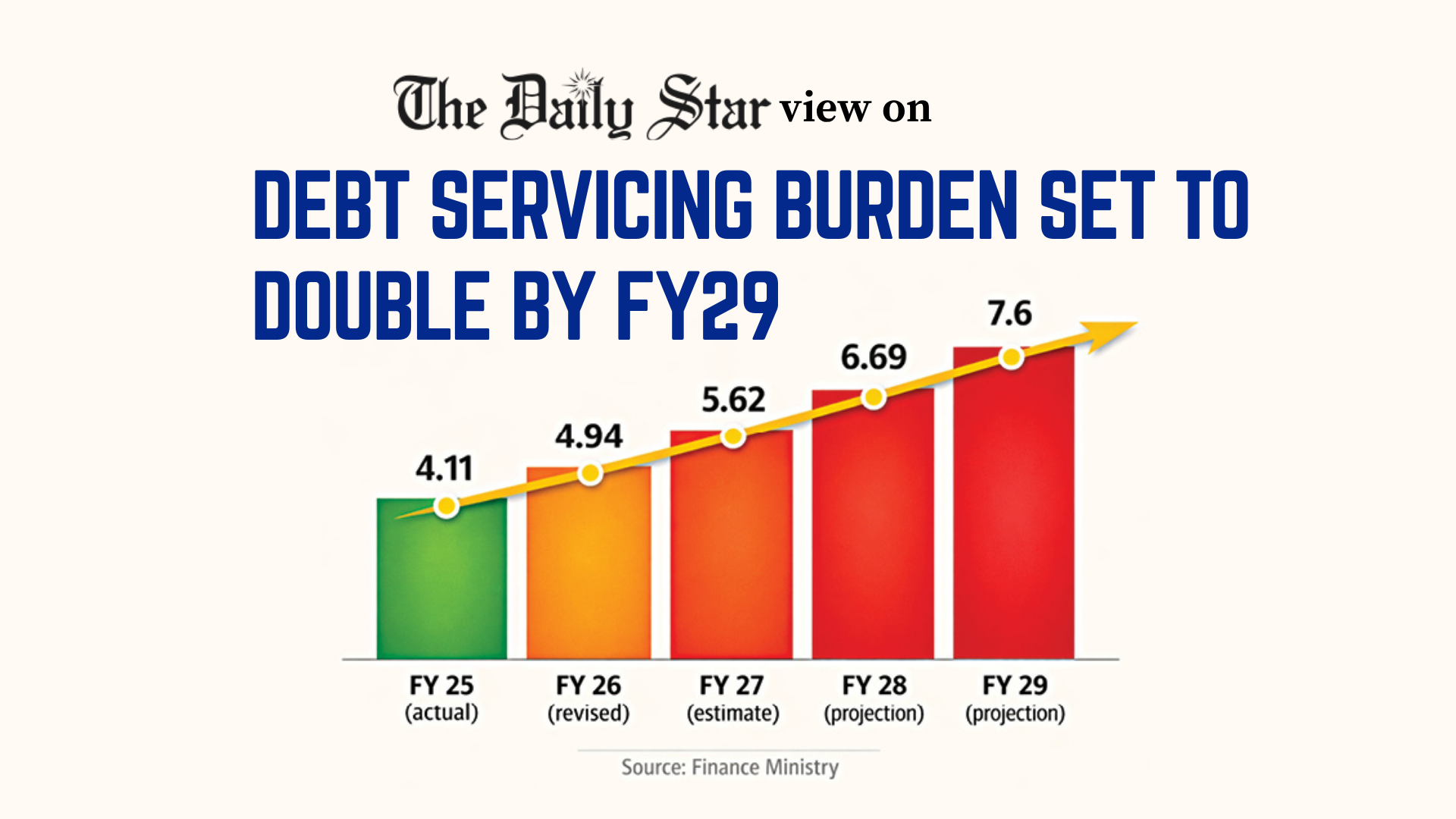
For Bangladesh, the ongoing global discussions on affordable development finance and debt system reforms are highly pertinent. The country also faces an increasingly significant global debt challenge. While public debt remains manageable in the baseline scenario, the IMF’s 2026 Debt Sustainability Analysis puts Bangladesh at moderate risk of both external and overall debt distress. This marks a shift from the low risk it had just a few years ago. Weak revenue mobilisation, rising domestic borrowing and interest expenses, banking sector vulnerabilities, and exposure to exchange-rate and climate shocks could further strain debt repayment. To address this, the country must seek long-term external finance, strengthen revenue collection and debt management, and ensure that borrowing supports productive investments.
Dr Fahmida Khatun is an economist, writer, and distinguished fellow at the Centre for Policy Dialogue (CPD). Views expressed in this article are the author’s own.
Views expressed in this article are the author's own.
Follow The Daily Star Opinion on Facebook for the latest opinions, commentaries, and analyses by experts and professionals. To contribute your article or letter to The Daily Star Opinion, see our guidelines for submission.
 For all latest news, follow The Daily Star's Google News channel.
Comments