Revisiting the origins of Sufism: Competing narratives of authenticity and borrowing
It has been argued that Sufism is more receptive to cultural diversity, interfaith engagement and religious pluralism than exoteric or legalistic forms of Islam. The mutual interaction between Sufism and local cultures is reflected in poetry, music, hagiographies, memoirs and ritual practices, while Sufi shrines frequently function as shared sacred spaces for people of different faiths. Moreover, core Sufi concepts such as fanāʾ (annihilation of the self), longing for the Beloved and contemplation often resonate with spiritual ideals found in other religious traditions. In particular, early Sufism in many ways resembles Eastern Christian asceticism. It is also apparent that the Sufi notion of “union with God” bears similarities to Neoplatonic contemplative practices, as well as to forms of meditation practised by Hindu and Buddhist monks. As a way of life, Sufism has also been debated within Islamic culture. One of the oldest stereotypes in Islam is the enduring conflict between the legalist and the mystic, as observed by Vincent J. Cornell (“Faqih versus Faqir in Marinid Morocco: Epistemological Dimensions of a Polemic.” In Islamic Mysticism Contested: Thirteen Centuries of Controversies and Polemics, edited by Frederick De Jong & Bernd Radtke, 207-224. Leiden: Brill, 1999, p. 207). This is partly because the core Sufi concept of ma‘rifa (gnosis or mystical knowledge) does not appear in the Qur’an or in any prominent prophetic report or Hadith (Ahmet T. Karamustafa, “Preface” to Knowledge of God in Classical Sufism: Foundations of Islamic Mystical Theology, translated and edited by John Renard. New York: Paulist Press, 2004, p. xi).
The similarities between Sufism and earlier mystical traditions have sparked debates about its origins and authenticity. Some scholars have argued that Sufism was heavily influenced by Christian asceticism, the Vedāntic concept of mokṣa and the Buddhist notion of nirvāṇa, thereby questioning its originality as an Islamic practice.
Margaret Smith argues (Studies in Early Mysticism in the Near and Middle East. London: The Sheldon Press, 1931, pp. 170-253) that many core elements of Sufism, including repentance (tawba), asceticism, trust in God (tawakkul), poverty (faqr), renunciation (zuhd) and the idea of union with God, have strong parallels in Christian mystical and ascetic traditions. She identifies similarities between the experiences and teachings of prominent Sufis such as Ibrāhīm Adham, Ḥasan al-Baṣrī, Rābiʿa al-ʿAdawiyya and Abū Yazīd al-Bisṭāmī and those of Christian saints, monks and mystics. Smith further suggests that Christian influence entered Islamic mysticism through social interactions, intermarriage, translations and the participation of Christians in early Islamic society.
It is interesting to note that, while searching for the Christian origins of Islamic mysticism, Smith did not pay much attention to the Qur’an. For example, the Qur’an mentions tawba on several occasions, including in verses 2:160, 6:54, 9:118 and 42:25, in addition to containing a full chapter on repentance. Trust in God, or tawakkul, is a fundamental element of the Islamic faith (Qur’an 65:3). Meditation is related to remembrance, or dhikr, in the Qur’an (24:37). The Qur’an also calls for fear and longing (7:56, 20:131), while shukr, or gratitude, is described in verse 14:7. Satisfaction, or rida, is expressed in the Qur’an in terms of an emotional relationship between human beings and a loving God.
Despite the Qur’anic verses that express a mystical dimension, proximity to Christian ascetics surely inspired early Muslim mystics. Nevertheless, the Qur’an does not deny the importance of Judaism and Christianity to Islam; rather, it presents Islam as an attempt to restore the Abrahamic faith in its original form (2:85, 91; 3:2, 85). “For the Qur’an itself states clearly that the revelation vouchsafed to Muhammad was a confirmation of what had been revealed to previous Prophets,” noted Arthur J. Arberry (An Introduction to the History of Sufism: The Sir Abdullah Suhrawardy Lectures for 1942. London: Longmans, Green and Co., 1945, p. 55). The Qur’an also states: “And unto thee have We revealed the Scripture with the truth, confirming whatever Scripture was before it, and a watcher over it… For each We have appointed a divine law and a traced-out way. Had Allah willed, He could have made you one community… So vie one with another in good works” (5:48), and “Surely the believers and the Jews, and Christians, and Sabaeans, whoever believes in God and the Last Day, and whosoever does right, shall have his reward with his Lord and will neither have fear nor regret” (2:62).
Thus, following a Christian ascetic is not necessarily considered an un-Islamic practice by many pious Muslims. Hasan al-Basri did not hesitate to cite Moses, David and Jesus, along with the Prophet of Islam, as role models for poverty and abstinence when he encountered Caliph Omar b. ‘Abd al-‘Aziz (see Suleiman A. Mourad, Early Islam between Myth and History: Al-Hasan al-Basri (d. 110 H/728 CE) and the Formation of His Legacy in Classical Islamic Scholarship. Leiden: Brill, 2005, p. 129). It is not unlikely that Muslim ascetics and early Sufis were primarily inspired by their own holy scripture, namely the Qur’an, and by the Prophetic traditions.

Two other scholars, Miguel Asin Palacios and Julian Baldick, also found parallels between Islamic and non-Islamic mysticism. Like Smith, Palacios attempted to demonstrate that Islamic mysticism borrowed from the Gospels and other books of the New Testament. But he also remained silent about the Islamic sources of those similarities. He cited parallels with the Gospels and other books of the New Testament but did not pay attention to the Qur’an (see Arberry 1945, pp. 55-56). Julian Baldick questioned not only the validity of Sufism but also that of the Qur’an and Islam (Mystical Islam: An Introduction to Sufism. NY: New York University Press, 1989, pp. 13-49). Like Smith and Palacios, he overemphasises the influence of Christianity and argues, “Sufism is part of the emerging Christian wing of Islam” (ibid., p. 32).
The counterargument is expressed most forcefully by Reynold A. Nicholson, who observes, “The seeds of Sufism are to be found in the powerful and widely spread ascetic tendencies which arose within Islam during the first century A.H” (“A Historical Enquiry Concerning the Origin and Development of Sufism, with a List of Definitions of the Terms ‘Sufi’ and ‘Tasawwuf,’ Arranged Chronologically.” Journal of the Royal Asiatic Society 38 (1906): 303-348, p. 304). He also notes that Sufism “owes comparatively little either to Christianity or to any foreign source. In other words, it seems to me that this type of mysticism was—or at least might have been—the native product of Islam itself” (ibid., p. 305). Nicholson nevertheless acknowledges a Neoplatonic influence through Dhu’l Nun. Following Nicholson’s line of thought, Marshall Hodgson noted:
To some degree, Sufism shared the traits of Christian mystical movement and developed it further; but, like the other main forms of Muslim piety, it was unmistakably Islamic. At least occasionally, men who might otherwise have become Christian monks were converted to Islam in its Sufi form when they felt the call to a more reflective life. In creativity, Sufism soon left contemporary local Christian movements far behind. (The Venture of Islam: Conscience and History in a World Civilization, three vols. Chicago: The University of Chicago Press, 1974, vol. 1, p. 393).
Some scholars argue that, as Sufism moved eastwards from its heartlands, it became infused with other traditions, especially those of Hindus and Buddhists. Robert C. Zaehner argues strongly that Islamic mysticism is indebted to Hindu mysticism in a number of ways. In support of his argument, Zaehner focuses primarily on Bistami. According to Zaehner, Sufism “becomes the unconscious victim of Vedāntin ideas transmitted by Abū Yazīd of Bisṭām and possibly also by Ḥussayn b. Manṣūr al-Ḥallāj and Abū Sa‘īd ibn Abīi’l-Khayr” (Hindu and Muslim Mysticism. London: University of London, 1960, p. 20). He points out that Bistami (d. 848 or 874) was influenced by the Vedāntic mysticism developed by Śaṅkara (788-820 CE). With the help of his mentor Abu ‘Ali Sindi, Bistami developed the idea of union with God. It may be noted here that the Vedas reveal a polytheistic religious tradition without a clear idea of a transcendent God; as such, this tradition differs significantly from Abrahamic conceptions of God.
Nevertheless, the early Upaniṣads, such as the Bṛhadāraṇyaka and Chāndogya, developed the idea of Brahman as the divine, while the Bhagavad-Gītā also elaborated important ideas concerning the divine. The idea of Brahman was identified as the sum total of human existence. Brahman is the All, which appears in the human being as mind and in the external universe as space (ibid., pp. 22-25). The Chāndogya Upaniṣad (3.12.7) describes this interrelationship as follows: “That which is known as Brahman is surely this space which is outside a man; and this space which is outside a man is surely this space which is within a man. And that space which is within a man is surely that space which is within the heart. This is the plenum and is not subject to change.”

It also distinguishes the body from the soul (ātman); the former is perishable, while the latter is eternal. The Supreme Being, on the one hand, manifests Himself in the world as perishable, mortal and formed, bound by time and space. On the other hand, another aspect of the Supreme Being remains immortal, formless and eternal, beyond time and space. Thus, the Bhagavad-Gītā makes a distinction between the higher Brahman (imperishable, immortal and changeless), with which the human soul is identical, and the lower Brahman (perishable and mortal).
According to Śaṅkara, the phenomenal world is nothing but māyā, and the unqualified Brahman is beyond the reach of qualified beings. Yet mokṣa (liberation) is possible because of the advaita (non-dualist) unity between the soul and Brahman. God, or Brahman, appears through his māyā in this world as Īśvara. For the unlettered masses, only bhakti is the key to attaining the bliss of Īśvara and ultimately mokṣa. Zaehner points out that Śaṅkara’s māyā is key to understanding Bistami, al-Hallaj, Ibn al-‘Arabi and other later Sufis. He observes that, in Bistami’s “thou art that”, the word “that” is actually used to mean God. He notes: “‘That’, indeed, for the Hindu is the normal way of referring to Brahman as the Absolute; ‘thou art that’ is the literal translation of ‘tat tvam asi’ of the Chāndogya Upaniṣad” (ibid., pp. 94-95). Bistami’s allegory of birds and trees, and remarks such as “then I looked, and I knew that all this was deceit”, resemble, according to Zaehner, the cosmic tree of the Kaṭha (6.1), Muṇḍaka (3.1.1-3) and Śvetāśvatara (4.6-10) Upaniṣads and the Bhagavad-Gītā (15.1-2).
There is another parallel between the sayings of Bistami and the Upaniṣads: “I sloughed off my self as a snake sloughs off its skin: then I looked into my self and lo! I was He.” This utterance parallels the Bṛhadāraṇyaka (4.4.7, 12). Zaehner argues that Bistami borrowed it directly from the Bṛhadāraṇyaka: “Abū Yazīd was directly influenced by a totally alien stream of mysticism and that it was through him that Vedāntin ideas became part and parcel of later Islamic mysticism” (ibid., p. 100). However, Zaehner acknowledges that Dhu’l-Nun also used the allegory of birds and that Bistami might have followed him. He observes that Dhu’l-Nun’s idea of passionate longing, like that of al-Muhasibi, is similar to Rāmānuja’s (ibid., p. 92). It might be noted that Rāmānuja (d. 1137?) was born much later than Dhu’l-Nun (d. 856) and al-Muhasibi (d. 847).
We know that the conception of God in the Abrahamic religious traditions differs from the conception of God in the Hindu tradition. We also know that conceptions of God varied considerably among the Vedas, the Bhagavad-Gītā and the Upaniṣads. Based on these differences, different schools of Hinduism provided different interpretations of God; some described God as Brahman, some as Ātman and some as Īśvara, while others, such as the Sāṁkhya school, did not acknowledge the existence of God. In the Bhagavad-Gītā, Lord Krishna suggests that, with devotion in the heart, anything could be worshipped as God. Thus, conceptions of God in Hinduism differ from those found in the Abrahamic traditions. On the other hand, a Muslim, like a Jew or a Christian, believes that life in the hereafter is permanent. A person’s status in that life will be determined according to how he or she has lived an earthly life. This conception does not readily correspond with that of the endless cycles of saṁsāra and the doctrine of karma. It appears that Zaehner did not take this fundamental difference into account when assessing the influence of Vedānta on Bistami. It seems that Zaehner focuses on similarities between certain translated words rather than on the underlying meanings of those words, a problem to which Tor Andrae later drew attention.

However, there is evidence that, before Hellenistic philosophical works were translated into Arabic, exchanges of scientific knowledge took place between Hindus and Muslims through Basra while Sindh was under the rule of the Muslim caliphs in the eighth century. But Hindu metaphysics, argues Louis Massignon, did not find a congenial atmosphere in Islam because of its complex idolatry, the infinite cycle of karma and saṁsāra, and the caste system (Louis Massignon, Essay on the Origins of the Technical Language of Islamic Mysticism, trans. Benjamin Clark. Notre Dame, IN: University of Notre Dame Press, 1997 [1922], pp. 58-59). Reciprocal influence occurred during a later period in India as a result of Muslim missionary activity, but not as early as the eighth and ninth centuries, argues Nicholson (The Mystics of Islam. London: Routledge and Kegan Paul, 1963 [1914], p. 9). In this regard, Martin Lings observed:

Ever since Islam established itself in the subcontinent of India, there have been intellectual exchanges between Sufis and Brahmins; and Sufism eventually came to adopt certain terms and notions from Neoplatonism. But the foundations of Sufism were laid and its subsequent course irrevocably fixed long before it would have been possible for extraneous and parallel mystical influences to have introduced non-Islamic elements, and when such influences were finally felt, they touched only the surface (What is Sufism? Berkeley and Los Angeles: University of California Press, 1975, p. 16). The story of Ibrahim Adham (d. 777) repudiating his princely life in search of God, and its similarity to the story of Siddhartha Gautama, is probably one of the earliest sources cited as evidence of Buddhism’s influence on Sufism. But theologically, the influence of Buddhism has also been linked to the idea of nirvāṇa and the Islamic mystical concept of fanā’. According to Muhammad Enamul Haq, the Sufi idea of the unification of the soul with the Universal Soul or Real Being (al-Haqq) resembles the Buddhist doctrine of nirvāṇa. To achieve this state of unification, Sufism prescribes different stages, namely ithbat-i-nafi (affirmation of negation), nafi-i-ithbat (negation of affirmation), fanā’ (self-annihilation) and baqā’ billah (abiding in God), which Haq argues are fundamentally based on Buddhist doctrines of yoga.
In addition, the Sufi tradition of Kashfu-’l qubur, or “Revelation from the Graves”, also resembles the Tantric Sadhus’ practice of Sava sadhana, or the performance of devotional exercises through the medium of a dead body. He holds that Arab Muslims knew of Hinduism as well as Buddhism during the formative phases of Islam, and that later Persian scholars developed the doctrine of tasawwuf (mysticism) under the influence of Neoplatonism and the Upaniṣads; hence, “Islam was never free from the influence of India” (A History of Sufi-ism in Bengal. Dhaka, Bangladesh: Asiatic Society of Bangladesh, 1975, pp. 118, 112-142).

Haq seems to overlook Nicholson’s observation that “Even if Islam had been miraculously shut off from contacts with foreign religions and philosophies, some form of mysticism would have arisen within it, for the seeds were already there” (1963 [1914], pp. 19-20). Nicholson notes that, on ethical grounds, the two concepts, namely nirvāṇa and fanā’, are identical, but he also argues that the influence of Buddhism on Islamic mysticism has been exaggerated because Muslims view Buddhists as idolaters (ibid., pp. 18-19). In addition, he holds that while “Nirvāna is purely negative, fanā is accompanied by baqā, everlasting life in God. The rapture of the Sufi who has lost himself in ecstatic contemplation of the divine beauty is entirely opposed to the passionless intellectual serenity of the Arahat” (perfected one) (ibid., p. 18).
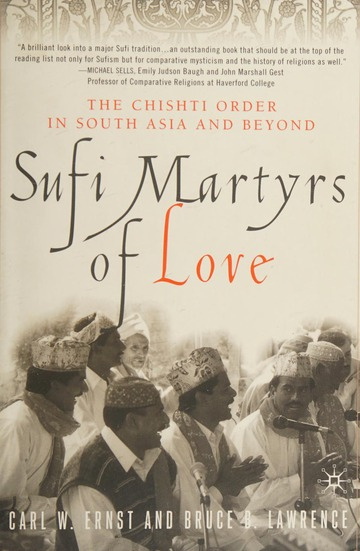
Tor Andrae makes an interesting observation in this regard. He holds that fanā’ is comparable to the sayings of the Apostle Paul, such as “it is no longer I who live, but Christ who lives in me” (In the Garden of Myrtles: Studies in Early Islamic Mysticism, trans. Birgitta Sharpe. Albany: State University of New York, 1987, p. 124). He also observes that Islamic mystical piety “in its spirit and essence comes closer to Gospel than any other non-Christian religion known to us” (ibid.). Massignon argues that the legend of Adham could be an adaptation of the Manichaean version of the story of the Buddha rather than a direct imitation (1997 [1922], p. 57, footnote). He also holds that “the Qur’an, through constant recitation, meditation, and practice, is the source of Islamic mysticism, at its beginning and throughout its growth” (ibid., p. 73). Similarly, Carl Ernst and Bruce B. Lawrence argue that “Far from being dependent on or a derivative of Neoplatonism, Christianity, Buddhism, or Hindu yoga, Sufism is an original, comprehensive, and hence authentic form of knowledge” (Sufi Martyrs of Love: Chishti Sufism in South Asia and Beyond. New York: Palgrave Macmillan, 2002, p. 8).

Despite arguments that it derives from numerous Qur’anic verses and Prophetic practices, Sufism is not immune to the influence of local cultural environments, practices, rites and even beliefs. Richard M. Eaton, while discussing the rise of Islam in Bengal, notes that Sufism is grounded in the local socio-cultural heritage (1993, p. 51), which contributed to Islam not being perceived as a foreign tradition by local inhabitants (ibid., p. 310). Nevertheless, it is also true that Sufi beliefs and values permeate local cultures in many ways. Sufism simultaneously influences other traditions and is influenced by them. In addition, by granting legitimacy and equal standing to other faith traditions, some Sufi paths promote an inclusivist approach and a practice of open spirituality (Hans Harder, Sufism and Saint Veneration in Contemporary Bangladesh: The Maijbhandaris of Chittagong. London and New York: Routledge, 2011, p. 299). Because of these characteristics, Sufism has been attacked by puritanical reformists. For the same reasons, it has also been presented as a powerful counterforce to religious radicalism and fundamentalism.
Dr Sarwar Alam is currently an Adjunct Professor of Religious Studies at George Mason University, USA. He can be reached at salam25@gmu.edu.
Send your articles for Slow Reads to slowreads@thedailystar.net. Check out our submission guidelines for details.


International Translation Day 2026 / Beyond equivalence: Translation and the politics of being understood

Between Ghumparani masi-pisi and Baby Shark: Why Bengali lullabies still matter in the age of screens

Not love at first sight

How far can devotion take us? Radhe Jaggi’s BHAKTA explores the sacred
The moral hierarchy of pleasure: Who controls women’s bodies?

Inherited Memories / My grandmother’s world: Partition, Shia traditions and memories of Old Dhaka

The taste of childhood: Bengali food, family and memory

Along the Kapotaksha, in search of Madhusudan’s river