One more page please, mama

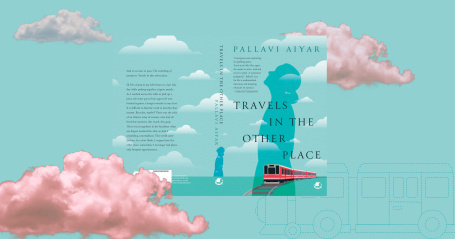
An excerpt from Pallavi Aiyar’s book, Travels in the Other Place: Pursuing the Self in Eight Acts (Tranquebar, 2025)
‘There are metaphors more real than the people who walk in the street. There are images tucked away in books that live more vividly than many men and women …’
Fernando Pessoa, The Book of Disquiet.
It’s 1983. I am eight and prickling with excitement. In a few minutes, I will be sneaking out of my home’s back door, tiptoeing to minimise the creaks. I will make my way down to the far end of the garden, where I will crouch, waiting for the signal. An owl-like hooting will mean that my friends are ready and around the corner. It’s a moonlit night, so we will need to keep to the bogeyman shadows cast by the branches of the neighbourhood trees as we scuttle along.
Midnight picnics are magical. Something about sitting under the stars makes the potted tongue sandwiches extra delicious. And one of us can usually sneak out a bottle of sweet lemonade to wash it all down with. Mother and father have never got wind of these secret pleasures, although Timmy, our dog, has threatened to give it away on occasion. Tonight isn’t just going to be about having a jolly time, although it always is when the five of us gather. We’re also going to put on our thinking caps to figure out what to do about the hidden passageway. It’s terribly narrow. And we’ll need to enter sideways in single file. The opening is barely visible, a crack along the side of one of the smaller monuments on the edge of the tomb complex.
I have two boys. My older son was born in Beijing in 2008, the younger one in Brussels three years later. They went to kindergarten in Indonesia and primary school in Tokyo. As they became literate, I couldn’t wait to introduce them to Enid Blyton’s worlds.
A few days ago, we’d been hunting down parakeet feathers in the gardens when Timmy had begun to bark uncontrollably. And then suddenly, we couldn’t hear him any more except for a distant whine. We chased his cry, and that’s how we stumbled upon the opening and the curious carvings along the walls of the passageway. We were going to try and follow it all the way down tonight. There was something not quite right about it. It smelled like … like ... dammit, all I could smell in that moment were alu ka parathas. Lunch was imminent, and my daydream came to a crashing halt.
It wasn’t midnight, but noon. I had never seen, let alone eaten, a potted tongue sandwich. Our house did not have a back garden. No friends had ever hooted at me. I’d never been up after 9 p.m. And I’d never discovered a secret passageway.
I did have a dog called Timmy, but I wasn’t allowed to take him out for walks by myself. He’d pounced on a passing dog once, and my uncle, who’d been holding him by a leash, had nearly toppled over. In fact, I wasn’t allowed to leave the house on my own, period. An adult was always in tow, whether to the school bus stop or the local market.
I did occasionally hunt for parakeet feathers in the grounds of Humayun’s Tomb. My family went for walks there on the odd weekend. The tombs had been built for the Mughal emperor Humayun, by his son, the emperor Akbar, 400 years before I ever stepped foot in them. But the neighbourhood in Delhi that I lived in, Nizamuddin, was nestled in the shade of these crumbling monuments. For adults, the backdrop had become mundane, opaque. But for children who hadn’t yet forgotten to really look at the world, the tombs were alive with possibilities. Much of Delhi was like that—ugly and traffic-clogged, but also punctuated with the carcasses of magnificent medieval buildings that offered alcoves and latticed windows and monsoon-swept terraces and bat-crowded crevices. Things to look through and climb under. Shapes and stones that fed the imagination. An imagination already fattened on Enid Blyton’s Famous Five series.
In the early 1980s, India was liminal. We were like Schrodinger’s cat, existing in two contradictory but equally true states. My generation of urban, upper-middle class Indians was post-colonial, having been born three decades after the British had vacated the country. But our tongues remained colonised by English, and a good part of our imagination too. The principal conquistador of the imagination wasn’t a rapacious asset-stripper like Robert Clive or a quintessential aristocrat like Louis Mountbatten, but the daughter of a cutlery salesman from East Dulwich in London, who had never stepped foot in India: Enid Blyton.
We’ve had some arguments, my boys and I, about what they consider to be my exaggerated reverence for the Book. Reading is ‘old fashioned,’ I have been told. YouTube explainers are more efficient than non-fiction. TV series, documentaries and movies are better entertainment.
It was through Blyton’s Faraway Tree books of adventuring children that I, and many English-educated young people of my generation, first travelled elsewhere. We went to places where the summer was ‘delightful’ rather than the hellish onslaught of heat we knew it to be. We visited worlds where lacrosse-playing schoolgirls forgave errant foreigners for their transgressions, aware that they lacked an English sense of honour. We ‘ate’ scones and crumpets and quaffed ginger ale, exotic foods that seemed to be the essential accoutrement of Adventure.
Blyton’s books never explained exactly what lacrosse, crumpets, or cornflowers were. The result was that, although they found a place in the ontologies of her Indian readers, they did so in purely imagined form. In those information-circumscribed days, one couldn’t Google, so one fabricated. I imagined lacrosse to be a balletic exercise with butterfly-catching style nets, the ultimate goal of which remained hazy. Sardines, I envisaged as some kind of kebab. At eight, which for me was a St Clare school series–addicted age, I was even convinced that an English sense of honour was a ‘thing.’ And I wanted one.
I suffered from what Katherine Rundell calls the ‘book worm’s curse,’1: the problem of knowing the meaning of words without their pronunciation, never having heard them out loud. ‘Pseudonym’ gave me pause. And names like Penelope sounded like a combination of ‘pen’ and ‘elope’, until someone sniggered and corrected my pronunciation. Rundell recalls how she’d learned the word ‘soporific’ from Peter Rabbit and had been convinced that it had something to do with lettuces. I remember thinking ‘putative’ had some kind of rancid, disconcerting connotation. Somewhere I’d got it crossed with putrid.
The very act of reading as a child was like being set supervision-free in an adult world; a place where you had to rely on your wits to make sense of the experience. Mysterious words lurked in every other sentence. And it was only through the exploration of what lay on either side of them that meaning could be pieced together, bit by bit. Context, as all travel teaches, is key.
So many of the great writers of children’s literature in English—Lewis Carroll, C. S. Lewis, E. Nesbit and Blyton—created worlds where parents were dead or gone. In their stories, children were always being abandoned, sent off to absent-minded uncles on remote islands, or packed off to school. But this was almost benign parenting in comparison to the nastiness of the fathers and stepmothers of fairy tales. Think Hansel and Gretel, where the children are forsaken in a forest by their own father. Or Cinderella, where evil family members force a little girl into servitude. Through books, the child reader is released from the strictures of their adult-determined lives and plunged into somewhere both terrifying and exhilarating, physically safe but emotionally dangerous.
With childhood travels through books on the mind, I asked my social media hivemind a question: ‘Why did we all read so much Enid Blyton when we were kids? What was the attraction?’ The thread blew up. Many said it was because we had few options. One friend answered, ‘Er, colonialism?’ There is probably some truth in both explanations.
We were Indian in lived experience, but having had our tongues English-ified, we read in English. And at the time, what bookshops offered in terms of English-language children’s literature, was Enid Blyton. We didn’t have easy access to stories translated from Indian languages. The only Indian stories I read were shoddily produced comic books of mythological tales from the Ramayana and Mahabharata. These were even more removed from our urban realities than Dorset—he setting for many of Blyton’s adventure stories.
But several of the responses I received to my query also pointed to how, despite the seeming disconnect between the childhoods of Blyton’s characters and our own, we found a way to build bridges from whichever Indian city we happened to be curled up reading in, to the southwest coast of England. We made that journey day after day, without moving from our bedrooms. We travelled, like humans did, on the pages of books. One friend wrote, ‘I remember those days when we had very little TV till the late 1980s. I remember being able to relate to tales from EB (Enid Blyton). I remember wanting to be similar—to be empowered to have adventure and fun’. I grew up in a small town, which was an overgrown village, where one could drink water from tube wells, fish in ponds, swim in rivers, climb trees, play with birds and butterflies. We were very much empowered to walk barefoot all over the town/overgrown village and then get back to EB. The exact feelings and memories cannot be expressed or explained. Pure innocence and joy.’
Another said, ‘It was a magical world that I did not have access to in my physical or economic lived reality at that time, but it appealed to my formative sensibilities about where I would love to be. It was a world away from the world—so distant in reality, but so present in mine … My neighbourhood friends and I, in sleepy Mysore, made our own versions of that life—packed cucumber sandwiches and nimbu paani (homemade lemonade) and took off on our bicycles for a “picnic”.’
And another: ‘I think what appealed most was the way food was described in those books! From picnic lunches to treats in ‘magic faraway lands.’ But by the time I actually started travelling to the UK, most of it had been replaced by tikka masala.’
I have two boys. My older son was born in Beijing in 2008, the younger one in Brussels three years later. They went to kindergarten in Indonesia and primary school in Tokyo. As they became literate, I couldn’t wait to introduce them to Enid Blyton’s worlds. Watching them read and wander in their heads, I believed, would return me to being eight again; to the bated-breathness of chasing mysteries.
My fantasies around motherhood had always involved bedtime snuggles and books. The littles and I would sit together-apart, sharing our physical space but traveling with our own books, pausing only to sip contentedly from cups of chamomile tea. I wondered how their tastes might differ from mine. Who would be their most beloved character among the Famous Five? Would the Mallory Tower series have them begging to be sent off to boarding school as it had me?
In reality, neither of my boys made any headway with Blyton. They found the writing stilted, the idea of potted tongue gross. My younger one detests sardines. Lemonade and ginger ale—words I used to hold in my mouth with a shiver of anticipation for a world full of the exciting unexplored—held no power over them.
They preferred the tropical eastern islands of Indonesia to the windswept English coast, having experienced both firsthand. And they were flooded with a choice of reading materials, in addition to the Screen. They were so cosmopolitan and knowledgeable, travelled and bathed in abundance, that I realised I was foolish to think Blyton’s tales would be their chosen repast. She had been food for the recently decolonised, pre-liberalisation mind. For my cyborgish children, her books were offal—sustenance for the deprived.
In my childhood, holidays and planes and hotels were rare. Doordarshan, the one state-owned television channel, went live for only a few hours in the evening, and its target audience was farmers pondering seed technology, rather than a young girl with magic on the mind. And so, reading was my most sustained experience of travel. Books had stood in for friends. Sometimes they’d stand in for dinner; I used to forget to feel hungry when I was in the grip of a good yarn.
My rational mind understands that it is futile to compare my proclivities as a child to those of my children, for they are creatures of a different paradigm. They have rarely known boredom, a prerequisite for learning how to read for pleasure. They’ve had lives so filled with gadgets and classes and play dates and physical travel that the space left over for books is meagre. Focus for their generation is a hyperlinked thing, which makes the linear, immutable book-ness of a book and the demands it makes on the concentration challenging.
We’ve had some arguments, my boys and I, about what they consider to be my exaggerated reverence for the Book. Reading is ‘old fashioned,’ I have been told. YouTube explainers are more efficient than non-fiction. TV series, documentaries and movies are better entertainment.
Yes, I splutter internally, but do you realise what is lost? What is lost is the stillness of mind that travelling through books brings to the reader; the very opposite of physical travel, which provokes a mental restlessness—a fear of missing out. Physical travel is often about a need for external validation—enter the selfie—that your trip is every kind of envy-generating superlative. Book travel is the most immersive kind, given that our minds are forced to engage with the writer’s words to bring
them alive. While reading, it is nigh impossible to dwell on the demonically dull to-do lists that form the architecture of our non-travelling every day. And a further advantage to journeying by book is that the traveller is unmolested by bad weather, logistics, lost credit cards or bad-tempered companions.
The writer and critic G. K. Chesterton, had counterintuitively argued that ‘travel narrows the mind.’ There was something tragic, he wrote in 1922, about the ‘thoughtless tourist, who might have stayed at home loving Laplanders, embracing Chinamen, and clasping Patagonians to his heart in Hampstead or Surbiton, but for his blind and suicidal impulse to go and see what they looked like … The human bond that he feels at home is not an illusion. On the contrary, it is rather an inner reality. Man is inside all men … But to travel is to leave the inside and draw dangerously near the outside.’
Travelling through a book, like travelling in the physical world, is as much about the reader/traveller’s moment in life, what scars and lenses she brings to the experience, as it is about the book/destination.
A hundred years on, I am surprised to find that I am beginning to agree, albeit with a smorgasbord of caveats, with curmudgeonly Chesterton. It is the first month of 2024. I am writing this first chapter of this memoir-as-travelogue in a remote corner of southwest Spain, with naught but a few books, olive groves and sheep for company. I rarely leave the house. After a quarter of a century of what can only be described as a frantically itinerant life, increasingly it is the standing-still variety of travel that appeals.
I begin reading a translation of the Portuguese writer Fernando Pessoa’s aphoristic The Book of Disquiet. ‘If I imagine, I see,’ he writes. ‘Only extreme poverty of the imagination justifies having to travel to feel.’ Pessoa said that he knew only one ‘real traveler with soul’: an office boy who obsessively collected brochures, tore maps out of newspapers and memorised train schedules between far-flung destinations. The boy could recount sailing routes around the world, but he had never left Lisbon.
This put me in mind of a short story by the Indian-German writer Anita Desai, one I’d read in middle school, called ‘The Sale’. I only remember the bare outline now, but it had made a powerful impression despite being perhaps the least critically feted of the Games at Twilight collection that it was part of. The story was very short and centred on a talented, but struggling, artist and his frenzied attempts to sell a painting—any painting—to politely disinterested visitors who happened to be browsing about his shambolic studio. The visitors are classic poverty porn–tourists, so titillated by the deprivation they are ogling that they fail to appreciate the virtuosity of the paintings. There are canvases filled with stunningly detailed flowers and assorted vital landscapes. But the twist in the tale lies in a throwaway remark towards the end of the story when the reader realises that the artist has never travelled away from his poor Bombay neighbourhood. His canvases have been painted entirely from the imagination.
Blyton’s books never explained exactly what lacrosse, crumpets, or cornflowers were. The result was that, although they found a place in the ontologies of her Indian readers, they did so in purely imagined form. In those information-circumscribed days, one couldn’t Google, so one fabricated.
I read Alain de Botton’s The Art of Travel. He writes how easy it is to forget our restless, hungry, flatulent bodies when we contemplate travel and look at photographs of beautiful destinations. We imagine feeling perfectly and continuously happy as we project ourselves into the anticipated place. But, as he puts it, the body and mind are ‘temperamental accomplices in the mission of appreciating (any) destination. The body found it hard to sleep, it complained of heat and flies and difficulties in digesting hotel meals … the mind meanwhile revealed a commitment to anxiety, boredom, free-floating sadness and financial alarm.’
There is an unsullied purity in the anticipated (and remembered) version of a place that is rarely experienced when one is corporeally there. And so, it is travelling through books that offers the purest form of peripatetic pleasure, by omitting and compressing the long periods of boredom and banality that accompany every physical trip. Book travel directs our attention to critical moments, which lend the travel a vividness and coherence it lacks in the actual execution.
I find a short essay written by my older son when he was seven years old. We had just returned to our home in Jakarta from a vacation to the island of Bali.
It reads:
Bali Holiday
‘The first day in Bali, I went to a very nice restaurant and I ate without chewing. When we went to Bed I vomit and then I vomited again. But the next day I didn’t. When it was the next day the whole family went swimming.’
It is 2019. I am forty-four years old and reading aloud determinedly, in a small room in our apartment in Tokyo. My audience is my younger boy, now eight, who is running about making truck noises. I raise my voice slightly to be audible, if only to myself, over the din.
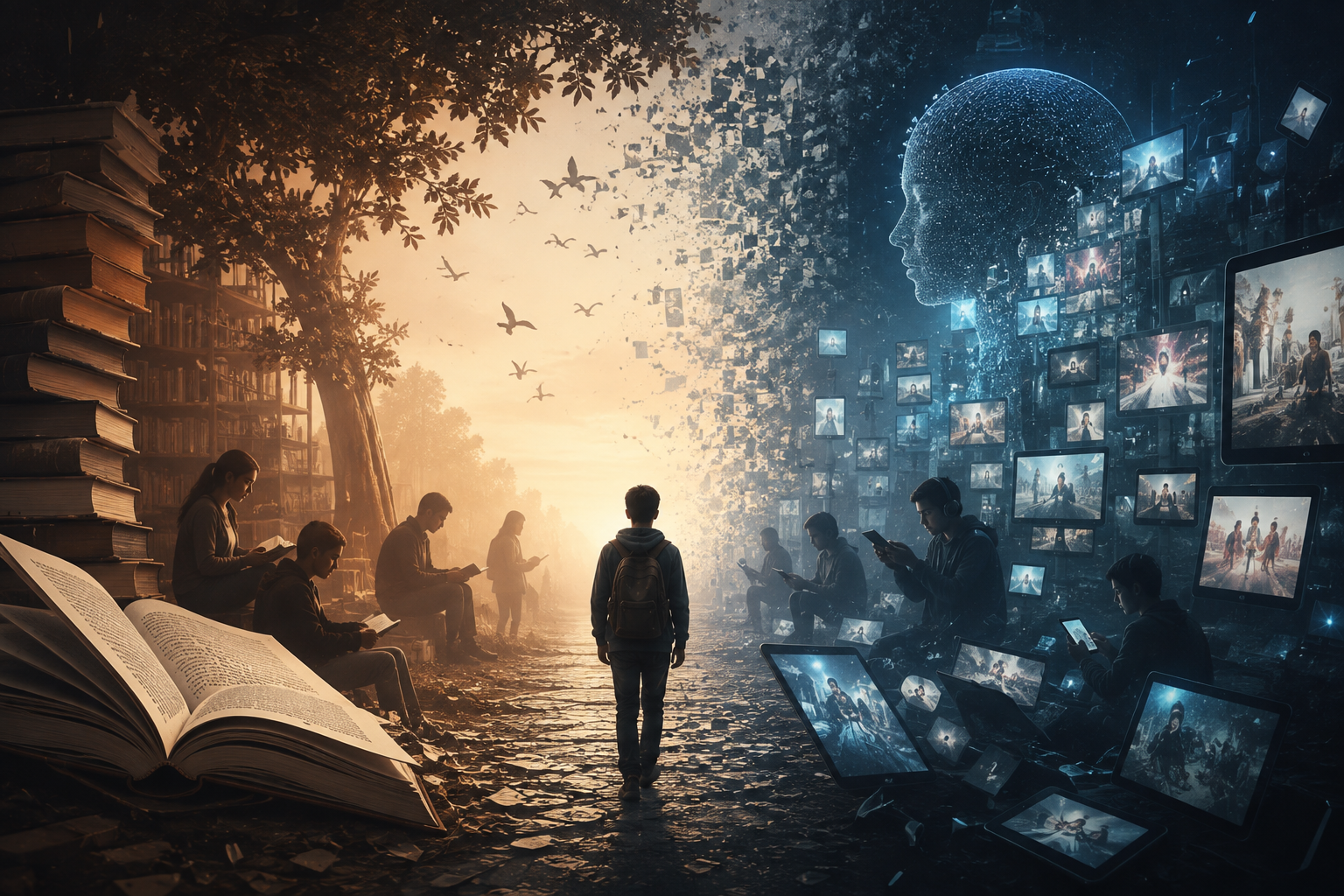
‘Reading’s just not my thing,’ the boy had announced nonchalantly a few weeks ago. What did seem to be his ‘thing’ was watching endlessly inane YouTube videos of someone known by the nom de guerre Unspeakable, playing video games while chortling like a hyena at an Argentinian barbecue. When I recalled my own eight-year-old self, sneaking off in the imagination to the mysterious passageway in Humayun’s Tomb, I was disappointed for my child. How much poorer he was, regardless of the material abundance he enjoyed.
Katherine Rundell’s essay on why adults should read children’s literature was a fixture by my bedside. ‘It is to children’s fiction that you turn,’ she writes, ‘if you want to feel awe and hunger and longing for justice: to make the old warhorse heart stamp again in its stall.’ True enough. This old warhorse was champing at the bit. But my ponies had not got the memo.
I tried a regimen of enforced reading but could not make peace with the idea that, in doing this, I was training my child to equate reading with punishment. All of which had brought me to this moment, reading aloud to the eight-year-old, regardless of whether he appears to be listening or not.
In the months that follow, assisted by many cups of chamomile tea, I eventually wade through all three volumes of The Lord of the Rings, plus The Hobbit—that’s about 1,500 pages—probably three-quarters of a year’s worth of reading.
Blyton had already bombed with my older son, and so I’d thought to try Tolkien with the younger. What I had forgotten was just how great a part of these books involves interminable stretches of the characters walking. It is almost as if they are discursively mapping their inner selves through travel. After all, they are in the vein of epic mythological narratives, and travel and transformation are the primary tropes of these stories. In India´s great epics, the Ramayana and the Mahabharata, for example, the exiled heroes travel and quest, they wander and get lost, all to ultimately find themselves and their purpose. The same goes for the Buddha, Moses or the Daoist wayfarers.
As Gandalf says of Aragom in The Fellowship of the Ring, ‘Not all who wander are lost.’ Rather, it is only those who wander that ultimately find.
When I was a teenager, Tolkein had spoken to me of the importance of fighting the good fight, of putting aside differences when needs must. A grand coalition of elves, dwarves, men, and eagles seemed to call for a pluralism that felt like a foundational value. But the books had not travelled across time as well as their protagonists traversed Middle-earth. As I read aloud night after night, intrusive, less-than-complementary thoughts pushed through constantly: Where are the women? Why are the elves so bloody blonde? Couldn’t they hurry it up a bit while getting past Minas Morgul?
Travelling through a book, like travelling in the physical world, is as much about the reader/traveller’s moment in life, what scars and lenses she brings to the experience, as it is about the book/destination.
Re-reading a book at two different points in one’s life, like revisiting a place, is never the same experience? Your first time on a plane is exhilarating; your fiftieth, a trial to be endured with benzodiazepine assistance.
Of my childhood vacations in the mountains north of Delhi, I remember almost nothing but the sacred feeling their grandeur evoked. When I visit now, fresh from holidaying in the Swiss Alps, it’s the plastic packaging strewn about the mountainsides that captures the attention. The more points of reference collected, the more relative the experience of travel inevitably becomes.
I might be getting on; jaded, though I fight it. But my boy is as fresh as an early spring day in Tokyo. We keep up the nightly readings. The only rule I insist on is that no screens are permitted while I read. He can choose to listen and be lulled into a world of magic rings and glamorous elves (male/white—I think quietly), or he can tune out and think his own thoughts about Unspeakable playing video games.
There are evenings when my son closes off his ears with his palms to drown out my words: I keep going, doggedly. Sometimes it feels like I am Frodo trudging to Mount Doom. There are evenings when the boy pleads with me to stop: I keep at it. And there are evenings when he babbles loudly to block my voice. I read on.
But then, there are evenings when he listens, his eyes growing large as he imagines Gandalf being rescued by the King of the Eagles, or an army of enraged tree-like Ents stomping towards the fortress of Isengard. I catch him with his mouth momentarily open, as though drinking in the images. He turns still despite himself; his opposition melting.
It took me almost two months of nightly reading before I heard the words that I had been thirsting for: ‘One more page please, Mama.’
Slowly, softly, with shyness almost, my youngest began to approach books of his own accord. At thirteen, he now reads voraciously. He still watches an ungodly amount of YouTube, although fortunately, he discarded his proclivity for Unspeakable a few years ago. But he also reads. What got him truly immersed in The Lord of the Rings in the end were the maps. He would pore over them, putting cartographical detail into the travels of the Fellowship we read about. He had discovered the book as travel.
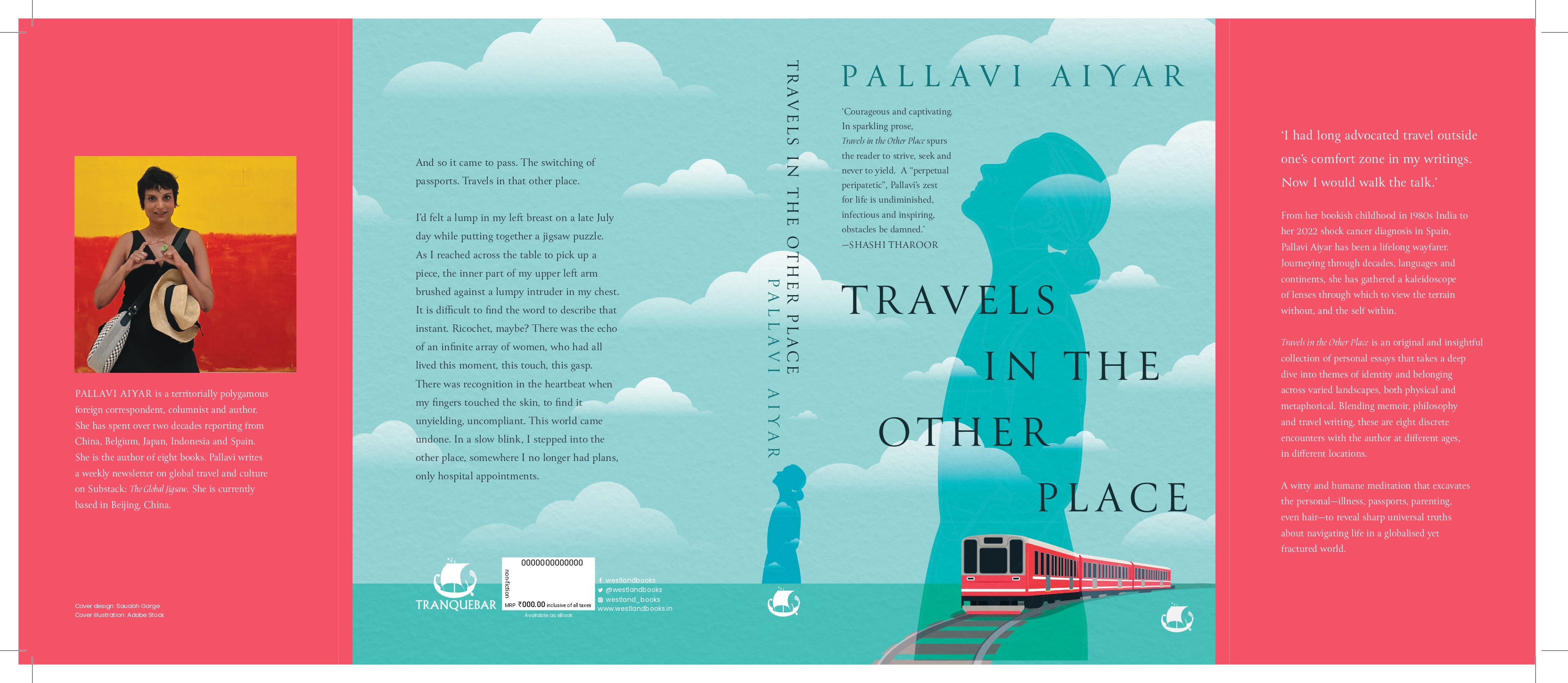
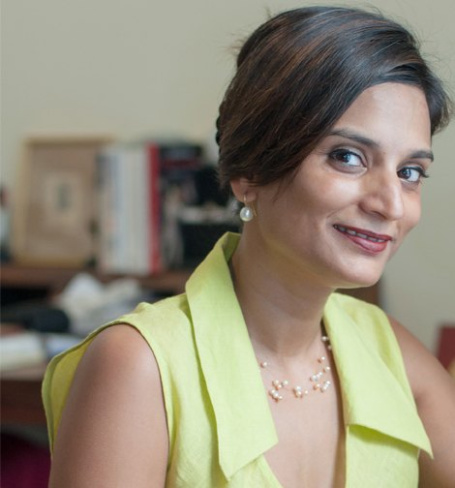
Pallavi Aiyar is a territorially polygamous correspondent, columnist, and author. She has reported from — and raised a family in — China, Belgium, Japan, Indonesia and Spain. She writes about the world with indiscriminate delight and a weakness for the surprising connections between people and places.
Send your articles for Slow Reads to slowreads@thedailystar.net. Check out our submission guidelines for details.
BTV does not need a new look to have a new future
Why is there so much anxiety about women’s bodies?
Buddhadeva Bose: As I knew him
End of reading? A post-literate society in the making
Can I still be the daughter they need?
What death teaches us about life
How to help children fall in love with reading

Why Christopher Nolan's The Odyssey disappoints in its portrayal of women

10,000 steps a day: Health myth or medical fact?