BTV does not need a new look to have a new future

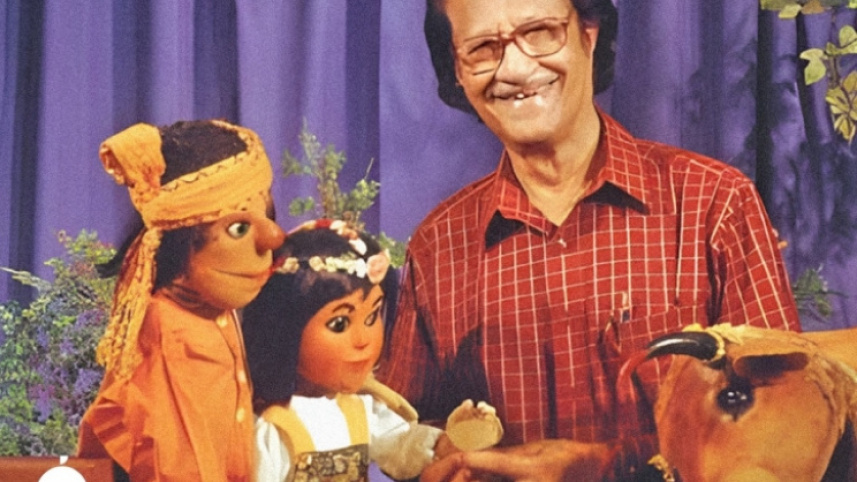
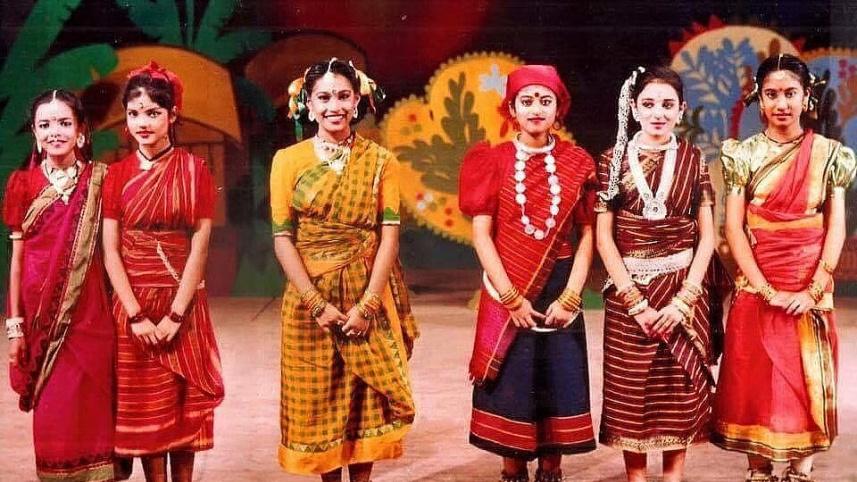
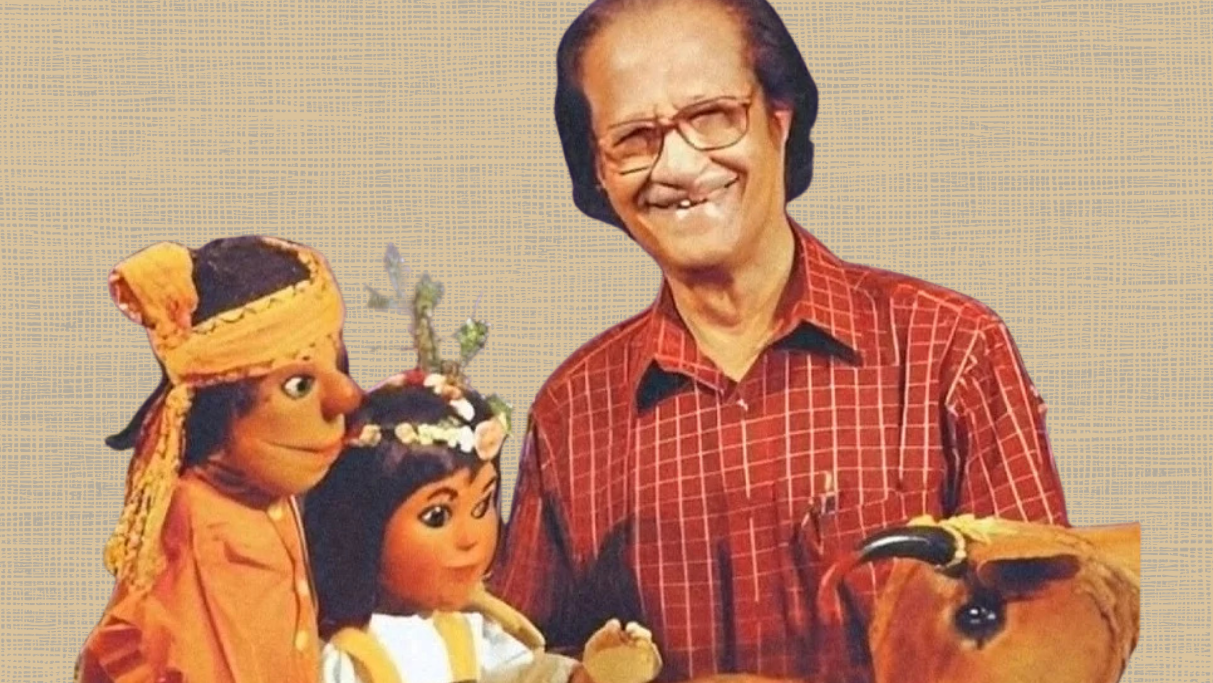
Some of my earliest memories of television are inseparable from BTV. I remember programmes in which drawing, puppetry, music and storytelling were not decorative extras but ways of teaching children to look at the world. Notun Kuri opened a door to recitation, song, dance and performance. Mustafa Monwar’s television world made imagination feel like a form of learning. I did not have that language for it then, of course. I was simply a child watching television. But when I think about BTV now, what returns first is not news or government announcements. It is that sense of possibility.
The logo was part of it, more quietly. It appeared so routinely that I hardly thought of it as something somebody had once sat down and designed. Perhaps that is what happens to certain symbols: they become familiar enough to disappear into the background of our lives, and only when someone proposes replacing them do we notice how long they have been there.
Bangladesh Television has now invited the public to design a new logo, with submissions due by September 10. There is nothing inherently wrong with visual renewal. Logos are not sacred objects, and institutions cannot survive by turning every inherited feature into an untouchable relic. Still, the announcement made me wonder: of all the things about BTV that need changing, why has the logo become one of the visible starting points?
So before redesigning BTV’s identity, I would want to know what problem the redesign is meant to solve. What is the documented history of the existing emblem? Which elements have acquired cultural significance? What do different generations associate with it? Could it be adapted rather than replaced?
Deeper crises than graphic design
For years, BTV’s more serious problems have had little to do with graphic design. They concern editorial credibility, political dependence, bureaucratic culture, ageing production practices, weak audience engagement and the difficulty of persuading younger Bangladeshis that the national broadcaster has something distinctive to offer them. Changing the sign outside a house can be worthwhile. It is simply a curious place to begin when the plumbing needs attention.
BTV’s current initiative is being presented as part of a broader modernisation. Its director general has indicated that reform is intended to extend beyond the logo to organisational structure, news presentation and artists’ remuneration, and that public opinion will matter in deciding whether the logo ultimately changes. That is important context. BTV plainly needs to modernise. What interests me is the assumption, common in public institutions, that modernity has to announce itself visually before it is experienced institutionally.
A new visual identity is easy to display. It can be unveiled, animated and placed behind officials at a launch. Editorial autonomy has no ribbon to cut. Neither does a transparent recruitment system, serious children’s programming, fairer artist fees, professional training or a newsroom where journalists can make editorial judgements without first calculating the preferences of the government of the day.
Red disc and green line beyond the frame
There is another reason this particular logo deserves more thought. BTV did not begin as BTV. According to BTV’s own institutional history, television broadcasting began in Dhaka on December 25, 1964, as a pilot project operating from two rooms of the then DIT Building, initially for only a few hours a day. It became part of Pakistan Television Corporation in 1967. After independence, a presidential order in 1972 formally established Bangladesh Television as the state television service. The change was therefore not merely a corporate renaming. A broadcasting institution inherited from Pakistan had to be made legible as an institution of a new country.
That transformation had begun even before independence was formally secured. In March 1971, television workers and cultural figures in Dhaka were already caught up in the political rupture around them. The screen itself became a contested space: what name appeared, which flag was shown, which anthem was heard, and which language and culture were allowed to represent the people watching. Broadcasting was never only about technology. In a country whose nationalist movement had been inseparable from language and culture, television inevitably became one of the places where sovereignty was made visible.
The early years after liberation make this especially clear. A Daily Star account of BTV’s transition records that viewers encountered the name “Bangladesh Television Corporation” in December 1971; Mustafa Monwar created a new signature tune based on Dhonodhanne Pushpe Bhora, and Amar Shonar Bangla was played at the close of transmission. By September 1972, viewers were being greeted by the name Bangladesh Television, Dhaka. These details may look small beside constitutions and ministries. They are not. A new state was learning how to sound and look like itself.
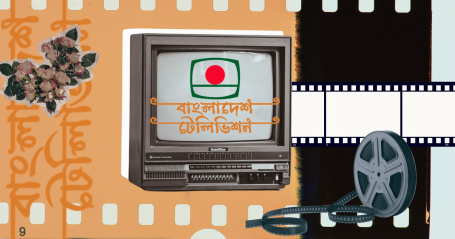
The familiar logo belongs to that moment. Its authorship is worth recording carefully because the history is more interesting than the simplified versions circulating online. Banglapedia identifies Imdad Hossain as the designer and records Mustafa Monwar as responsible for the lettering. Other accounts also note contributions associated with Kamrul Hasan and art director Mohiuddin Faruk, while Monwar later redrew the emblem for colour broadcasting. I find that collective history fitting. The logo emerged from a cultural milieu in which artists were not merely decorating a new country; they were helping it recognise itself.
A television-shaped frame, a red disc and a green line: visually, the emblem is remarkably simple. Historically, it carries the residue of a much more complicated passage from East Pakistan, through war and rupture, into the difficult work of making Bangladesh visible as Bangladesh.
This is why I hesitate when the debate is reduced to whether the logo looks old. Of course it looks old. So do many things that have survived long enough to become recognisable. Age is not, by itself, an argument for preservation; neither is it an argument for disposal.
There is considerable room between freezing the emblem in 1970s technology and replacing it altogether. It can be cleaned up for digital screens, its typography reconsidered, its animation updated, or a flexible family of marks developed around its recognisable core. I would rather see BTV investigate that possibility before treating continuity as a design failure.
The familiar logo belongs to that moment. Its authorship is worth recording carefully because the history is more interesting than the simplified versions circulating online. Banglapedia identifies Imdad Hossain as the designer and records Mustafa Monwar as responsible for the lettering.
Measure the collective memory
Public unease about the proposed change also deserves more than the label of nostalgia. Surprisingly ordinary objects often carry collective memory. Pierre Nora’s idea of lieux de mémoire, or sites of memory, is useful here: societies invest places, objects, rituals and symbols with meanings that outlive the circumstances in which they were created. A television ident is a humble example. Yet repetition matters. For people who grew up when BTV was the only television channel in the country, the emblem did not remain merely an emblem. It sat alongside dramas, songs, children’s programmes, election nights, national mourning, cricket, floods, coups, celebrations and the everyday ritual of waiting for transmission to begin.
Public symbols, shifting landscapes
The political context makes the question more complicated. I have found no evidence that this logo competition is an organised attempt to remove the visual memory of 1971, and I would be uncomfortable claiming otherwise. Intentions should be demonstrated, not imagined. But it would be equally strange to pretend that public symbols in Bangladesh exist outside politics.
We have become accustomed to watching the symbolic landscape change after political ruptures. Roads and institutions are renamed. Commemorative calendars are revised. Textbooks change. Historical figures move towards or away from the centre of official narratives. Sometimes such changes correct genuine exclusions or distortions. Sometimes one partisan memory simply replaces another. After enough cycles, even an apparently administrative change begins to raise a larger question: which parts of the past belong to a government, and which belong to the country?
That distinction matters to me more than the fate of any single logo. Governments are temporary custodians of institutions whose histories are longer than electoral terms. A country cannot begin again every time its government does.
Define before redesigning
So before redesigning BTV’s identity, I would want to know what problem the redesign is meant to solve. What is the documented history of the existing emblem? Which elements have acquired cultural significance? What do different generations associate with it? Could it be adapted rather than replaced? A public competition can generate ideas, but designers, media historians, archivists, artists and audiences should be part of deciding whether replacement is necessary in the first place.
There are, meanwhile, problems at BTV about which the evidence is much less ambiguous.
In March 2025, the Media Reform Commission recommended bringing BTV, Bangladesh Betar and BSS into an autonomous public-service broadcasting structure. Its assessment of state media was uncomfortable but familiar: BTV and Betar had largely functioned as platforms for government bulletins, official ceremonies and development news, with limited professional independence for reporters. The institutional prescription can be debated. The underlying question is harder to avoid: does BTV exist to represent the government or to serve the public?
The commission’s wider evidence gives that question some urgency. Its survey of 45,000 households found that 79.46 per cent of participants said the media was not independent because of political interference. And by December 2025, commission chief Kamal Ahmed was saying that none of its recommendations had yet been implemented, citing bureaucratic resistance and a lack of political will. That sequence is difficult to ignore when we are being invited to discuss what a “new” BTV should look like.
What truly needs modernising
I would like to see BTV’s enormous archive restored, digitised and opened to younger generations. I want children’s programming to recover some of the imagination that made television a place of discovery for my generation. I would like regional Bangladesh to appear as part of the country rather than as an occasional excursion from Dhaka. Artists should be paid properly. Producers should be trained for a digital media environment. And a minister should be able to face difficult questions on state-owned television without either the interviewer or the audience treating scrutiny as political hostility.
For me, that would be a far more consequential new look.
BTV once possessed something commercial broadcasters now spend enormous sums trying to create: a shared audience. The circumstances that produced it were hardly ideal; there was, after all, very little choice, but the cultural consequences were real. An older Daily Star reflection on BTV recalls viewers gathering expectantly around television sets in the 1960s and a station that, despite its tiny facilities, built programming around local culture. Later generations inherited a much larger BTV, but the sense of collective viewing remained. Programmes, performers, songs and even television graphics entered memory because people encountered them together.
That media world is gone, and I would not romanticise its monopoly. BTV now competes with YouTube, streaming services, private channels and the phone in our hands. But looking newer will not make it relevant. It has to give viewers a reason to return: curiosity, credibility, imagination, independence and some sense that the institution belongs to them.
History first, design second
A heritage logo should first be treated as a historical object and only then as a design problem. That means documenting its original forms, establishing the contributions of the artists involved, and finding out what audiences actually remember about it before deciding what should happen next.
There may still be a good case for refreshing the visual identity. Perhaps the existing logo needs a technically cleaner digital version. Perhaps its typography can be improved. Perhaps different platforms require a flexible family of marks. If research eventually shows that replacement is necessary, then replace it, but explain what is being lost as carefully as what is being gained.
I would like to see BTV’s enormous archive restored, digitised and opened to younger generations. I want children’s programming to recover some of the imagination that made television a place of discovery for my generation.
Recovering substance and public trust
Perhaps this is why I keep returning to the BTV I remember from childhood. I do not want that BTV back; much of it belonged to a media world that no longer exists, and some of its institutional habits are precisely what need to disappear. What I would like BTV to recover is something less tangible: the ability to make people feel that there is a reason to turn to the national broadcaster for a programme worth remembering, for an archive they cannot find elsewhere, for journalism they can trust, or simply to see parts of Bangladesh that rarely make it onto the national screen.
If that happens, the logo question may look rather different. Perhaps the old emblem will still need to change. Perhaps a good designer will find a way to carry some of it forward. At least we will know what the new design is being asked to represent. At the moment, I am not sure we do. And that, more than the age of the logo, is BTV’s problem.
Dr Lubna Ferdowsi is a researcher and educator whose work engages with society, culture, public policy and questions of citizenship.
Send your articles for Slow Reads to slowreads@thedailystar.net. Check out our submission guidelines for details.

Why is there so much anxiety about women’s bodies?
Buddhadeva Bose: As I knew him

End of reading? A post-literate society in the making
Can I still be the daughter they need?

What death teaches us about life

How to help children fall in love with reading

Why Christopher Nolan's The Odyssey disappoints in its portrayal of women

10,000 steps a day: Health myth or medical fact?
Why Dhaka University should rethink its rules for female students