And still, my father lives

Begum Bazar has always lived very close to my heart because somewhere within its narrow lanes, its fading walls, its familiar sounds and its old, weathered houses stands our ancestral home. It is the place I return to most often, not with my feet, but with my memory. I find myself wandering through it again and again, room by room, window by window, as though time has quietly opened its doors for me. Through the old, broken windows of our home, I can still see my Dadi, Kubra, and my mother, Rahat, moving about the old kitchen, and hear the faint clatter of utensils and the rhythm of a home being lived in. I can see my Dada in his crisp white panjabi, sitting with his legs folded, one over the other, completely absorbed in The Message (1976).
Even now, if I close my eyes, I can hear its loud old Hindi songs spilling into the courtyard, the voices and laughter of people mingling with the music, while the smell of freshly fried puri travels through the air and finds its way into our home. But what I remember most is the malai. The milk for the hotel's chai would be boiled for hours and hours, slowly and patiently, until a thick layer of malai gathered on its surface. I can almost see that creamy skin floating on top, and I can almost taste it again: the richness, the softness, that faint sweetness of milk cooked slowly over time. It was such a small thing, perhaps, but in the memory of a child, it was everything.
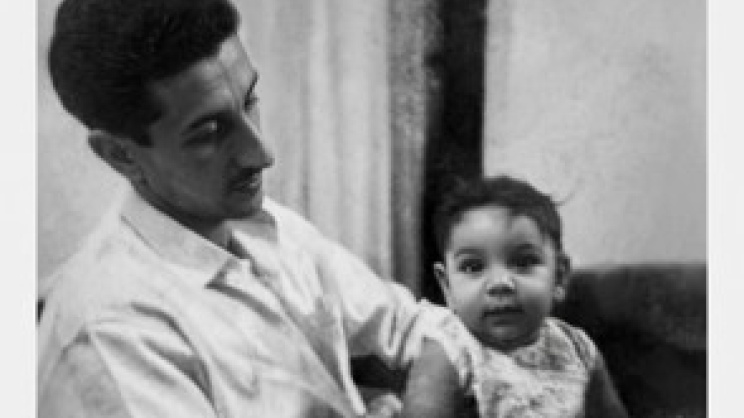
And perhaps that is why Shab-e-Barat remains my favourite memory of all. We would fill our entire chaman (courtyard) with tiny, flickering candles because my Dada would tell us that on that blessed night, spirits visited the homes they once belonged to. After returning home with my father, having made our ziyarat (visitation) to the graves, we would rush about with the excitement only children can carry, waiting to light our tarabatti (fireworks), watching the sparks scatter into the darkness, then sitting together with plates of boot ka halwa, passing them from hand to hand among family, friends and neighbours. These memories do not feel like memories to me. They feel like places that still exist somewhere. I return to them constantly, as if the spirit inside my body slips quietly away from the present and travels back through those old rooms. And there, between one room and another, between the sound of an old Hindi song and the smell of boiling milk, between the glow of a Shab-e-Barat candle and the taste of that malai, I meet them again: some whom I was blessed enough to know in this life, and some whom I have only ever known through old photographs. For a few moments, they are no longer photographs. They breathe. They speak. They are alive. And I am home again.
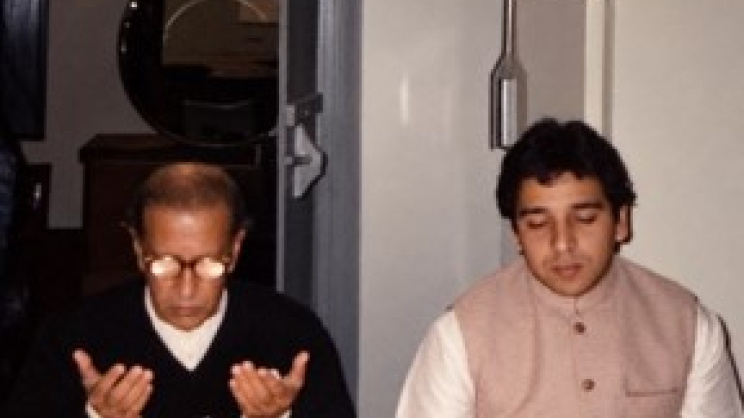
Centuries ago, my forefather, Syed Fida Hussain, journeyed from the sacred lands of Madina during the reign of the fourth Mughal emperor, Jahangir, passing through Delhi and Calcutta before our family finally found its roots in Dhaka. From him came generations who became part of this city's story: Syed Ghulam Hussain; his son, Syed Faizuddin Hussain, who served as Kotwal during the era of Murshid Quli Khan; Syed Muzaffar Hussain, who stood among the close associates of the Nawabs of Dhaka; and Syed Faqihuddin Hussain, a devoted disciple of Ubaidullah Ubayd Shuhrawardy. His wisdom passed to Syed Sharfuddin Hussaini Sharaf, the poet and nobleman, and through him to Syed Manzur Hussaini, and finally, in 1962, to my father, Syed Faizul Hussaini. Ten generations I can trace on paper, but it was only through my father that I truly felt them. It was through him that those names stopped being names and became people.
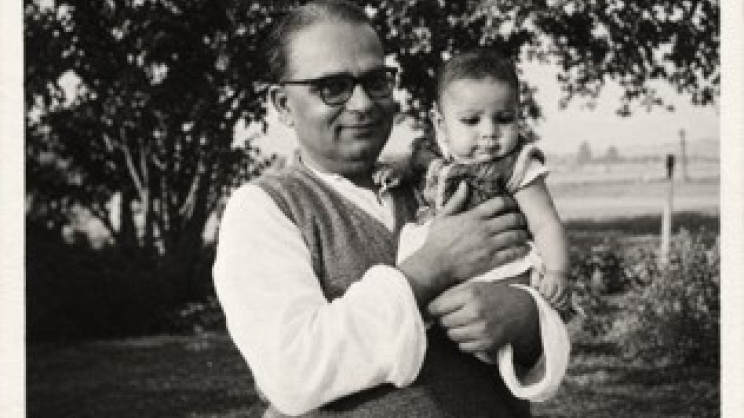
I never saw Syed Fida Hussain, but perhaps I did not need to. I saw something of him in my father: in his manners, his quiet dignity, the gentle curve of his smile, the calm in his eyes and the faith he carried so naturally within him. Through my father, I felt as though centuries had somehow gathered themselves into one man and come alive before me. The history I had inherited was no longer something written in old papers; it was sitting beside me, speaking to me, loving me. And from him, I learnt perhaps the most important inheritance of all: that to love is to live, and that the essence of life is to give, to give kindness, to give time, to give compassion, without ever keeping count. My father taught me that giving is not merely generosity; it is faith. For it is not you who give. It is God who gives through you. And perhaps this is why, whenever I return to those old rooms in my memory, I find myself looking for him among everything that remains: the old papers, the photographs, the objects passed down through generations and the little things that once seemed ordinary but now carry the weight of an entire lifetime.
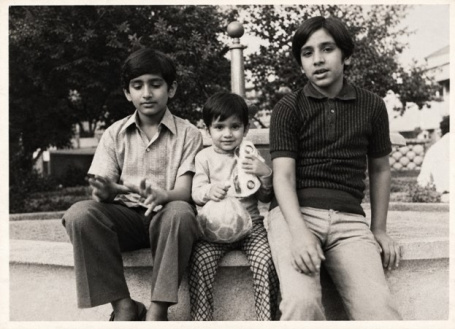
And perhaps the history of a family is not only found in names, dates and old documents. Sometimes, it survives in the objects we touch without ever knowing how many hands have touched them before ours. Sometimes, I return to our dining room in my memory and see my Dada, Manzur Sahab, sitting at our dining table, papers scattered before him, working with Nawab Taqi Muhammad Buddhan to compile and preserve the Urdu scriptures handed down to us by our forefathers.
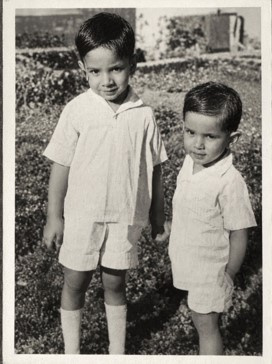
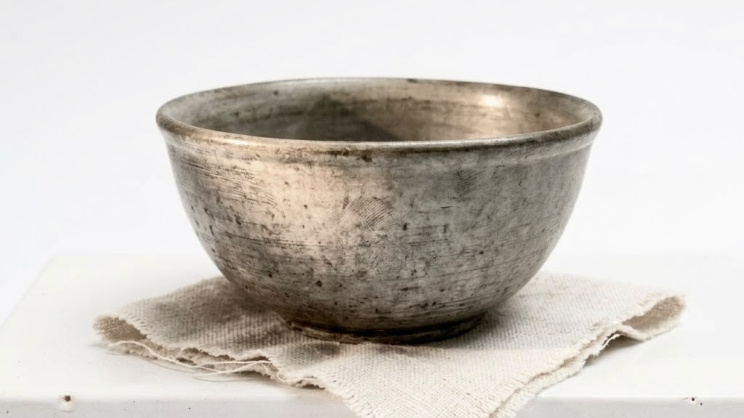
I remember the old bowl, too, a simple vessel, yet one that had travelled through generations of our family, carrying with it more history than I could ever have understood as a child. Whenever we fell ill, my Dada would make us drink water from it, invoking the names of Allah, Muhammad and the Panjatan before giving it to us. He used to say that the water itself had no power to cure us, but that sanctity, holiness and healing power lay in the names he invoked. For the names themselves were the cure, remembrance was the remedy, and obedience was the true wealth. At the time, it was simply Dada taking care of us. Only now do I understand that even in those small acts, I was receiving something inherited: faith, memory, tenderness and a way of belonging to those who had come before us. The old papers on the dining table, the bowl in his hands, the names he whispered before we drank: they were all fragments of the same inheritance my father later carried into my life.
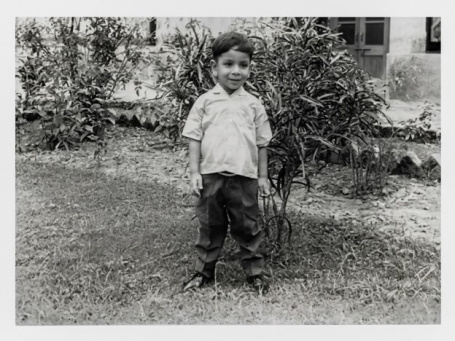
And perhaps that inheritance was not only something we could hold in our hands. It was something we could hear. Urdu is my grandfather's tongue, and I always hear it in his voice, the voice of Manzur Sahab. Though English, the lingua franca, has felt like home for decades, Urdu keeps calling me back to its verdant garden. It is a language that lived in the inflection of my grandfather's voice, in the pages of his books lined up like old companions, in the ink that stained his fingers late into the night, and in the reams of his diary, in which he wrote religiously, every day. Sometimes, I think that is why certain words in Urdu carry a weight that no translation can quite hold. They do not merely mean something; they sound like someone. They carry the voice of the person who once spoke them, and in that voice, for a moment, the person returns.
And then, somehow, my memory moves from that dining room to a different kind of table: the earth of a grave. The papers disappear, the room falls silent, and I see a candle burning upon the earth of my father's grave. I see its small flame trembling in the darkness; I feel its warmth, watch its glow, and remember the scent of the agarbatti (incense stick) we once placed upon my Dadi's grave, a scent that now rises beside the graves of my Dada and my father. And suddenly, from somewhere within that silence, his voice comes back to me, my father's voice:
“Faizan, baba, come here to me, rest against my chest.”
And then, as though the years between us have momentarily disappeared, I hear my Dada's voice too, carrying that old ache of separation:
“Kya kijiye, furqat ki musibat nahi jaati,
shab jaati hain, tarikhi qismat nahi jaati;
sab kuch toh gaya, haye, ye aafat nahi jaati,
dil se kisi surat teri ulfat nahi jaati.”
کیا کیجیے، فُرقت کی مصیبت نہیں جاتی،
شب جاتی ہیں، تاریک قسمت نہیں جاتی؛
سب کچھ تو گیا، ہائے، یہ آفت نہیں جاتی،
دل سے کسی صورت تری اُلفت نہیں جاتی۔
What can I do? This torment of separation will not leave me;
The nights pass, but this dark fate refuses to depart.
Everything is gone, alas, yet this affliction remains;
No matter what I do, my love for you will not leave my heart.
Perhaps this is why the word furqat has always felt so different to me. It is one of those Urdu words that seems to hold a tear somewhere between the tongue and the heart. It speaks of separation, but it is more than simply being apart. In Urdu, furqat becomes the poetry of absence, the longing for someone who was once within reach and now exists only in memory. It is not a word one merely understands; it is a word one recognises somewhere inside the body. In the silence of an empty room. In the smell of an old agarbatti rising from the earth. In the flickering light of a candle beside a grave. In the slow evening hours when the world carries on, yet some part of you remains behind with the people you have lost.
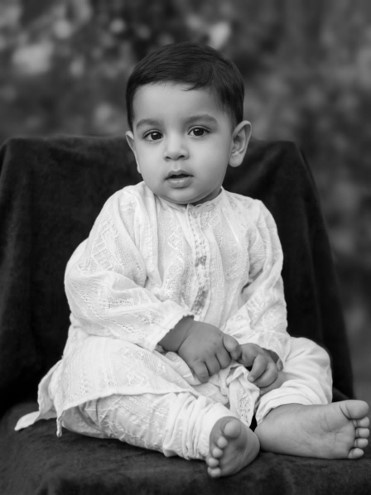
Maybe that is what furqat truly is. It is not what happens when love disappears. It is what happens when love remains, but the beloved is no longer there to receive it. It is grief carrying memory on its back. It is devotion without touch, love without the possibility of an answer. It is the heart continuing to beat around a hollow space, somehow making music from what is missing. And perhaps that is why the word has survived so beautifully in Urdu, because Urdu understands that some of the deepest feelings are not the ones that arrive, but the ones that remain after someone has gone. Furqat does not close the wound; it gives the wound a name. And sometimes, to give our grief a name is the only way we know how to keep carrying it.
And yet, above all this remembering, there is the truth of His words:
“Everything perishes except His Face.” (28:88)
Perhaps that is why I keep dreaming of Begum Bazar. Why I keep seeing my Dada, Manzur Sahab, my Dadi, Kubra Bano, and my father, Faizi, in rooms where they no longer physically exist. Perhaps they live now in that strange country between memory and dreams, where the dead are never completely gone. They return in voices, in smells, in photographs, in old Urdu verses, in the objects their hands once held, and in the places where our memories still know exactly how to find them. And because I keep dreaming of them, I cannot help but think of Mahmoud Darwish's words: “And because you're a dream, I sleep a lot.”
October 8 marked six years since my father departed this world, six years of learning how to live without the word “Abbu” on my tongue. Yet when I look back, I find warmth. I find peace in knowing that the man I admired most lived as he believed: by giving and by loving. Perhaps my great ancestor, Syed Fida Hussaini, once lived by the same creed centuries ago. Perhaps I, too, will spend the rest of my life trying to live in that same rhythm, by giving and by loving. Because, in the end, perhaps that is all that truly matters. But when I think about this day, when I think about the fact that six years have passed since I last heard my father's voice in this world, it feels as though my heart has been ripped from my chest and my head removed from my body. It is as if the dunya never happened. As if everything I knew existed for only a moment before being taken away from me. And the Hereafter is all there ever was. I miss him. I miss him in ways that words cannot hold. I miss his voice, his presence, his hands, his smile, the way he called my name, the simple comfort of knowing that my father was somewhere in this world.
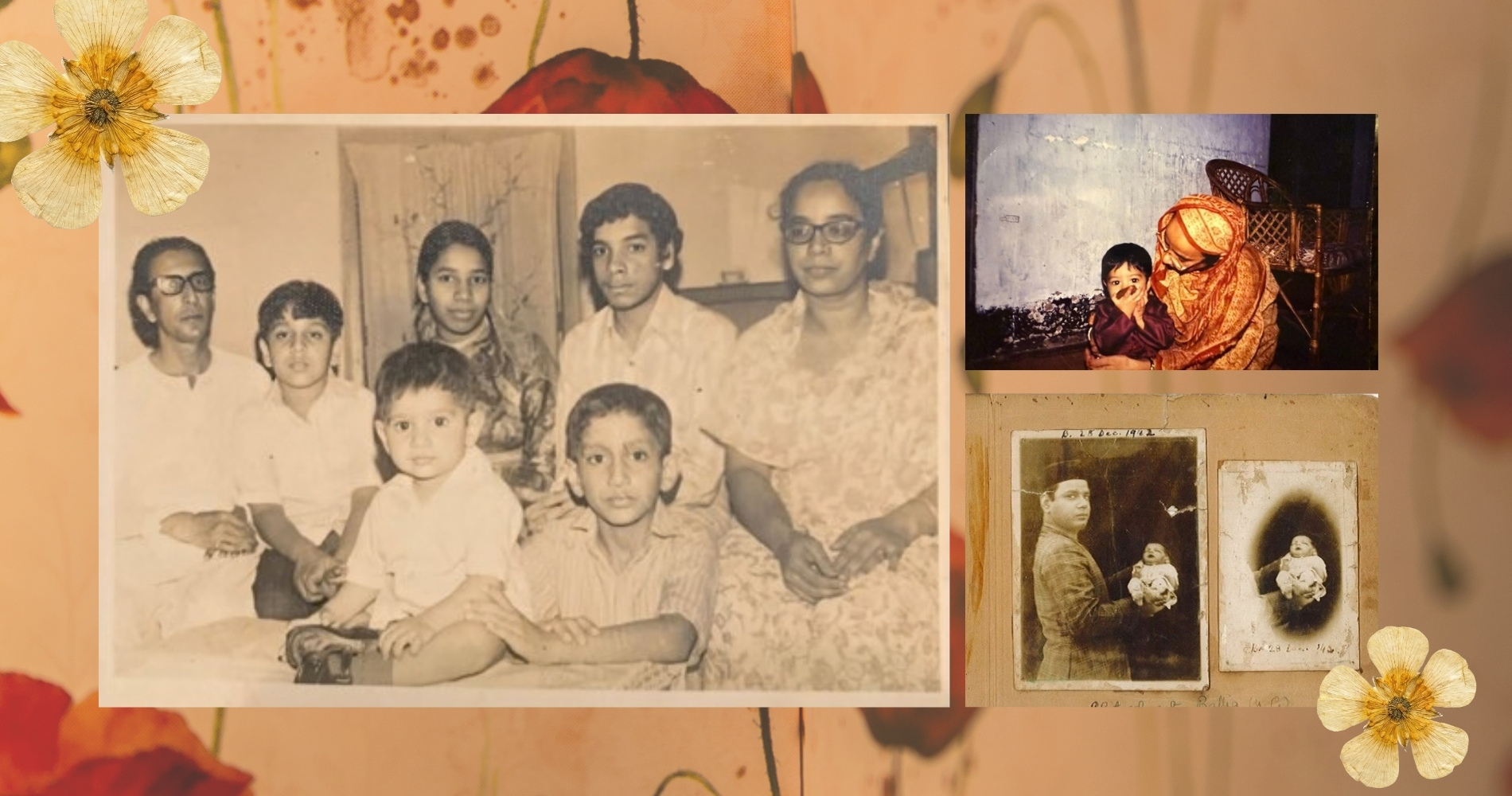
And perhaps that is why I keep returning to those rooms, those windows, those voices, those graves, those candles, those faces. Perhaps that is why I keep dreaming. Because in those dreams, for a moment, they are not gone. My father is still there. My Dada is still there. My Dadi is still there. Begum Bazar is still alive. And I am still that little boy, waiting to hear my father call, “Faizan, baba, come here to me.” Maybe this is what inherited memories truly are: not simply memories passed down from one generation to another, but pieces of the people we have loved that remain alive inside us long after they have returned to Him. I carry my father in the way I love, in the way I remember, in the way I give, and in the way I look at the world. Six years have passed, but sometimes it feels like six minutes, and sometimes it feels like a lifetime. And tonight, as I remember him, I do not know whether I am writing about a man who died six years ago or about a father who never really left me. Perhaps, in some way, he still lives: in me, in our memories, in the old rooms of Sharaf House, in the soil of Begum Bazar, in every photograph I hold close to my eyes, and in every prayer I whisper for him. To Allah we belong, and to Him we return.
Syed Faizanul Hussaini spends his weekdays navigating the world of HR and talent acquisition and his spare time wandering through the lanes of history, heritage and Urdu literature.
Send your articles for Slow Reads to slowreads@thedailystar.net. Check out our submission guidelines for details.
Why this year’s Nobel-winning brain technology matters to you

Why do humans naturally drift to the left?
From chai to shampoo: The extraordinary journeys of ordinary words
Between Bangladesh and Australia: Learning the rules of freedom
When loyalty decides what counts as facts: Welcome to the age of epistemic fragmentation
Revisiting the origins of Sufism: Competing narratives of authenticity and borrowing
International Translation Day 2026 / Beyond equivalence: Translation and the politics of being understood
Between Ghumparani masi-pisi and Baby Shark: Why Bengali lullabies still matter in the age of screens
Not love at first sight