Life and death on Bangladesh’s char islands

For Nazma Begum, motherhood became a memory of grief before it could become a fulfilled dream. Two years ago, the 20-year-old gave birth to her first child on a remote river island in northern Bangladesh. The joy of holding her newborn lasted only three days. The baby suddenly fell ill, and as family members desperately tried to carry the infant to a hospital by boat, the child died on the way. Even now, Nazma cannot speak about the tragedy without breaking down in tears.
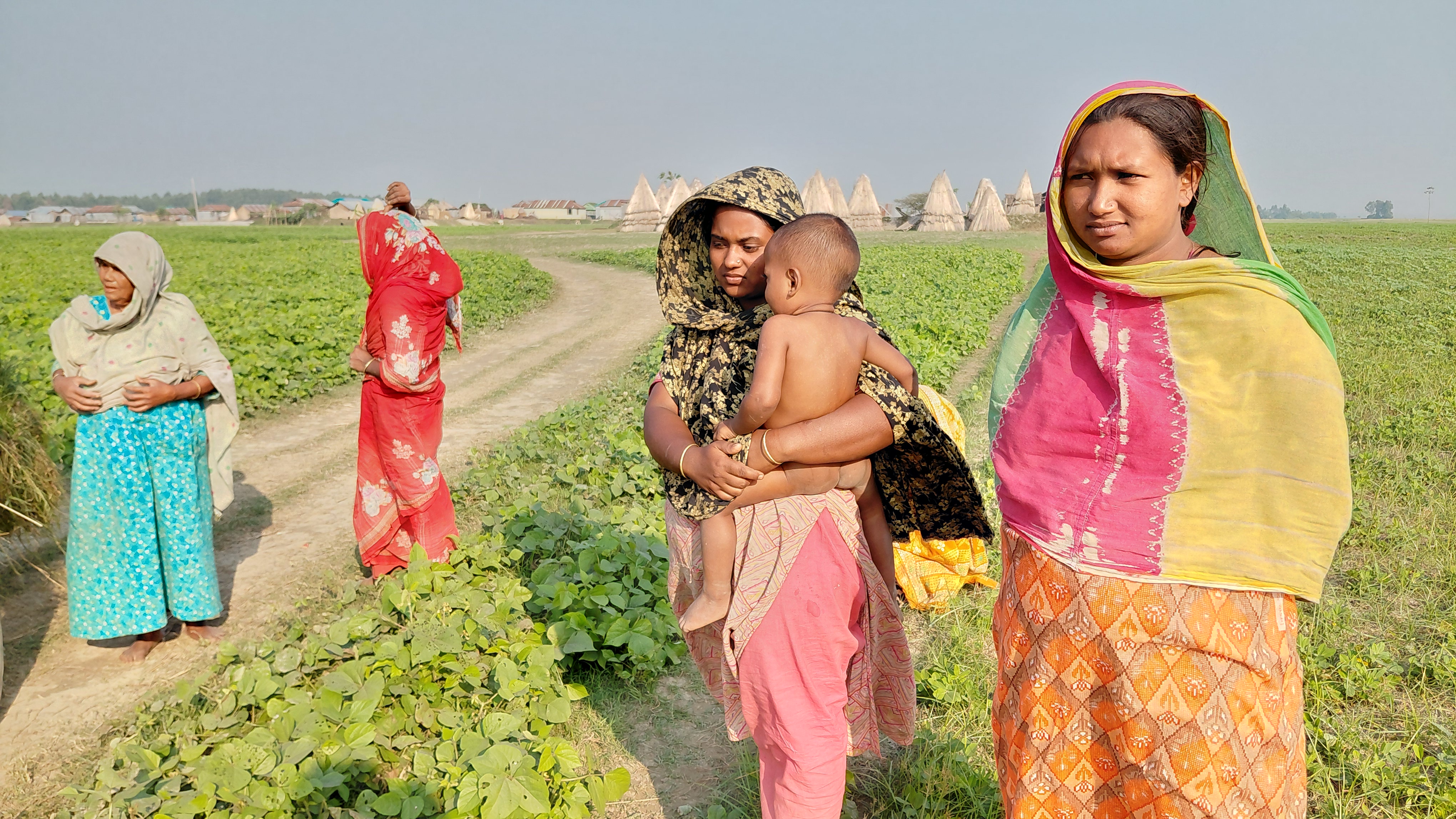
Nazma and her husband, day labourer Ramiz Ali, live in the isolated Manushmara Char of Kurigram’s Chilmari upazila, one of hundreds of river islands scattered along the Brahmaputra basin. Reaching the char from the mainland requires crossing the river twice and then walking another seven to eight kilometres over sandy terrain. During the monsoon season, the journey becomes even more dangerous and uncertain. For the people living here, healthcare is not a guaranteed service but a distant hope.
Nazma is pregnant again and expecting her second child within the next three months. But instead of excitement, fear dominates her days. The trauma of losing her first baby still haunts her constantly.
“Except for Allah, we have no one,” Nazma said softly. “There are no doctors, no hospitals here. There isn’t even any transport to take a sick person to a hospital. We survive only by Allah’s mercy.”
Her husband, Ramiz Ali, echoed the same helplessness. “If there were even a small health centre with a doctor on the char, we would not live with this fear every day,” he said, adding, “Travelling between chars takes hours, and by the time patients reach the mainland, many are already in critical condition.”
For thousands of families living in the chars of Kurigram, sickness often means choosing between impossible risks — crossing dangerous rivers for treatment or staying home and hoping for survival.
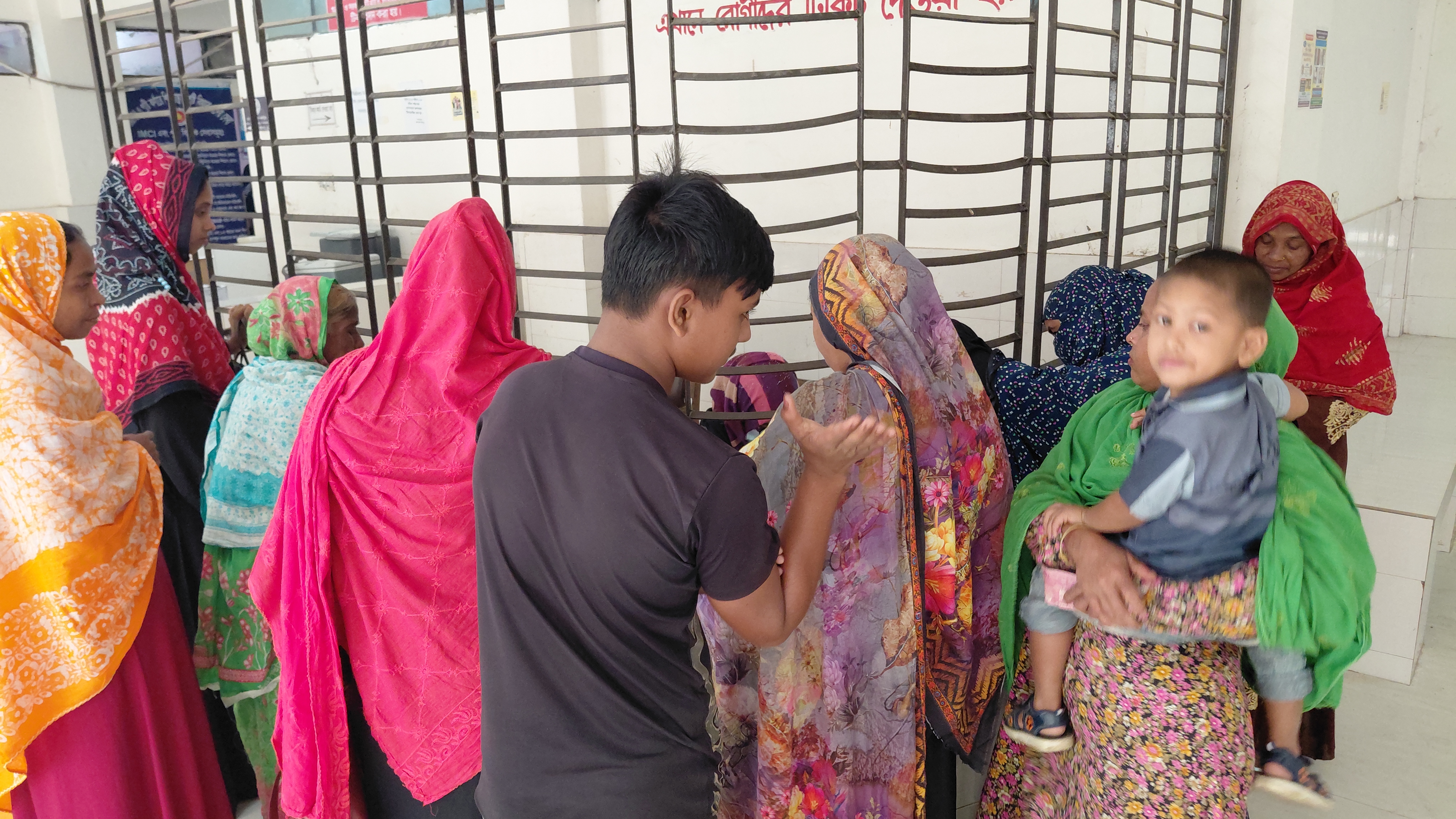
Rozina Begum, 23, another resident of Manushmara Char, said her three-year-old child frequently falls ill, yet proper treatment remains beyond reach.
“When my child gets sick, I become terrified,” she said. “The nearest community clinic is at Char Karai Barishal, but there is no doctor there. We have to travel all the way to the upazila hospital for treatment. Sometimes I cannot even manage the transport costs.”
She said many families are forced to depend on village healers or untrained practitioners because travelling to hospitals is physically exhausting, expensive, and time-consuming. “Crossing rivers and walking miles over chars while carrying a sick child is unbearable,” she added.
The suffering of Manushmara Char reflects a much wider humanitarian crisis across Kurigram, where more than 400 chars remain largely disconnected from essential healthcare services.
Mohor Ali, a 65-year-old farmer from Char Karai Barishal, said even those who manage to reach the Chilmari Upazila Health Complex often return without receiving proper care because of severe doctor shortages.
“There is an operation theatre and medical equipment, but most of it remains unused because there are no doctors,” he said. “People suffer for days, and many die without treatment.”
Char Milon Bazar is a river island settlement located in the middle of the Teesta River in Lalmonirhat Sadar Upazila. One of its residents is Mohona Begum, 42.
Data from the Kurigram Civil Surgeon’s Office reveals the depth of the crisis. The district, home to more than 23 lakh people, has 306 sanctioned doctor posts, but only 81 doctors are currently working. A staggering 225 positions remain vacant.
When members of her family fall ill, they usually seek treatment from a local traditional healer rather than visiting a qualified doctor. There is no community clinic or healthcare facility on their char. To consult a doctor, they have to travel nearly 10 kilometres across the char and then reach the mainland town area.
Mohona Begum said, “There is no healthcare centre on our char. We do not even have a community clinic here. When someone becomes sick, there is virtually no opportunity to receive proper medical treatment. To access a community clinic, we have to travel to another char, which requires crossing at least six kilometres of char land. As a result, we cannot easily access community clinic services. Our healthcare largely depends on treatment provided by local traditional healers.”
According to Dr Aminul Islam, Health and Family Planning Officer of Chilmari Upazila, the local health complex has 20 sanctioned doctor posts, but only six physicians are currently serving.
“The operation theatre has remained closed for six years because there is no surgeon,” he said. “More than 300 patients come every day, but with such a severe shortage of doctors, it becomes extremely difficult to provide proper treatment.”
He added that healthcare delivery in char regions is especially challenging because of poor communication systems, river erosion, seasonal isolation, and widespread poverty.
Data from the Kurigram Civil Surgeon’s Office reveals the depth of the crisis. The district, home to more than 23 lakh people, has 306 sanctioned doctor posts, but only 81 doctors are currently working. A staggering 225 positions remain vacant.
Among the district’s 297 community clinics, 84 are located in char areas. However, nine clinics have already been washed away by river erosion. In some places, temporary healthcare services are now being provided from local homes.
Civil Surgeon Dr Swapan Kumar Biswas said, “There is a shortage of doctors across the country, but it is most severe in Kurigram. Many of the more than 400 chars do not even have clinics. As a result, ensuring healthcare services has become extremely difficult.”
He proposed to the government the establishment of sub-health centres in 19 important chars, the recruitment of doctors, and the introduction of boat ambulances. “Char areas are ‘hard-to-reach’. The healthcare policies designed for the mainland are not effective here. Separate policies are needed for the chars,” he added.
Professor Shafiqul Islam Bebu, convener of the Kurigram Char Development Committee, said there is no specific government data on char dwellers. According to local information, more than 500,000 people live in chars in Kurigram alone. Most of the chars are remote, and the lack of medical care and death are part of daily reality there. “Healthcare services cannot be ensured without separate policies for the chars. We believe that forming a ‘Char Ministry’ is essential.”
According to sources at the Rangpur Divisional Health Director’s Office, there are nearly 750 riverine chars (sandbar islands) across the Rangpur Division. However, healthcare services have not yet reached all of these chars.
At present, around 90 of the larger chars have community clinics, through which basic healthcare services are provided to local residents. However, several community clinics have been washed away by river erosion. In such cases, healthcare services are being delivered temporarily from the homes of local residents.
Rangpur Divisional Health Director Gausul Azim Chowdhury said, “There is a shortage of doctors in all districts. The government is preparing to recruit new doctors. Healthcare workers also have to struggle in remote areas like the chars. Establishing sub-health centres and appointing doctors in important chars are essential. We are taking the necessary measures to ensure healthcare services in remote chars.”
S Dilip Roy is a journalist at The Daily Star.
Send your articles for Slow Reads to slowreads@thedailystar.net. Check out our submission guidelines for details.
Where have Bangladesh’s hilsa gone?

Lead poisoning in Bangladesh: A crisis ignored for too long
Who recycles Bangladesh’s garment waste?
Bangladesh running out of options on Rohingya crisis: Is there a way out?
Construction of the Sugandha-Kalatoli beach road / A grave threat to Cox’s Bazar’s sand dunes
Why have Nihar Koli and Samrat been sent back to their alleged abusers?
The reality of vocational training for Bangladeshi women
Can we save young Bangladeshis from deadly Mediterranean crossings?
Breastfeeding in Bangladesh: What is holding mothers back?