The cost of conservation in the Sundarbans

Every year, the Sundarbans is closed to Bonojibis during June, July, and August, a period that coincides with the breeding season of fish and other aquatic species. According to forest officials, the ban is intended to preserve biodiversity and maintain the ecological balance of the Sundarbans by ensuring the undisturbed reproduction and regeneration of aquatic species. The closure also allows the forest to recover from the intensive human activity of the honey-harvesting and fishing seasons, when large numbers of Bonojibis enter the forest and place significant pressure on its resources. In addition, the restricted period supports the natural regeneration of trees and other vegetation, contributing to broader ecological restoration. While this period is commonly described as a time of regeneration for the mangrove ecosystem, Bonojibis challenge this narrative, arguing that it facilitates the activities of “bon-kheko” rather than effectively conserving aquatic species, which ultimately brings immense suffering to the Bonojibis.
The livelihood impact of the seasonal forest ban
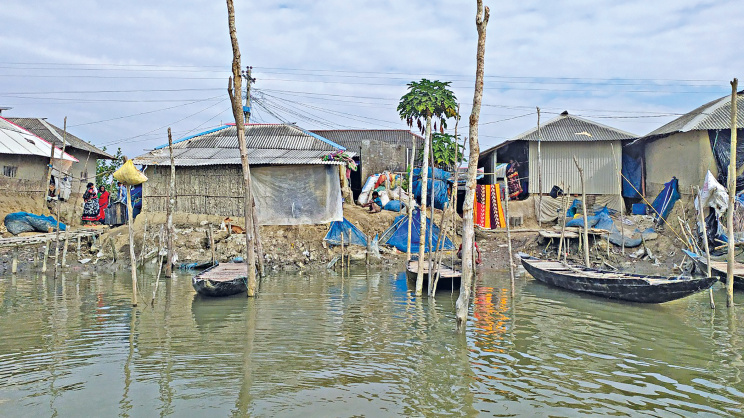
The seasonal ban has a significant impact on livelihoods in the districts of Khulna, Satkhira, and Bagerhat, especially for Bonojibis who have no alternative livelihood options or are unable to take up seasonal work. There is no survey on how many people actually depend on the forest; however, some NGOs working with Bonojibis estimate that approximately 15–17 lakh people are directly or indirectly dependent on the Sundarbans for their livelihoods. Among them, around 5–7 lakh people rely directly on the forest and its waterways for their daily survival, while the rest are involved in various forms of trade and commerce. As a result, the ban affects a large population whose income depends on the resources of the Sundarbans.
How do the Bonojibis survive during the forest closure? To compensate fishers from the Sundarbans region, the government provides occasional relief, mainly in the form of rice. However, many fishers note that this assistance is insufficient, and irregular distribution often excludes those who are most in need. A fisherman from Mathurapur village said, “In our village, around 200 people from 80 families are actively engaged in fishing, but many do not have jele cards (fishing cards). Fishing cards have been issued in the names of about 100 individuals. As a result, the rice meant for 100 fishers is divided among 200 recipients, reducing the amount each person receives. Instead of the expected share, many fishers receive only around 30–40 kilograms of rice. Now tell me, can a family survive on 30–40 kilograms of rice for three months?”
Only a few Bonojibis are able to save enough income before the ban to sustain themselves during these three months. Many are forced to temporarily change professions, often migrating to cities for manual labour, although this shift is difficult for those accustomed to forest-based livelihoods.
Under such circumstances, some individuals turn to illegal activities such as theft, poaching, and the use of poison for fishing, practices that, according to local accounts, sometimes continue with the tacit approval of local authorities.
According to local fishers, the expense of accessing the forest during the closure period has risen sharply. A fishing trip that once cost around 5,000 taka, for instance, now requires nearly 10,000 taka because of additional bribes and other unofficial payments. With only 30 kilograms of relief rice to support a household, many fishers say they have little choice but to risk their lives or bear these additional expenses in order to continue fishing and sustain their families.
Forest enclosure as a debt trap
The most significant long-term impact of the ban is the cycle of debt. Many families take loans from microcredit organisations or local NGOs to survive the three-month closure, using the money for basic necessities, which later creates heavy interest burdens. Another common locally established credit system is dadon, an advance payment given by local traders or boat owners, often called mahajon. Fishers take this money during periods of forest closure and, in return, are often bound to work for them during the following months to repay the debt at a higher interest rate. As a result, each three-month closure leads to nearly six months of financial strain, as workers struggle to repay loans while managing household expenses, often trapping them in a continuous cycle of indebtedness.
An elderly Bonojibi from Munshiganj in Satkhira, who has depended on the forest for more than four decades, criticised government-led conservation measures during the breeding season. “In the name of protecting the forest,” he said, “the government has taken the jungle away from those of us who have lived off its resources for generations and handed it over to the bon-kheko.”
Another fisher from Mathurapur echoed the sentiment. “Have you ever seen a fisherman enter the forest with weapons to kill a tiger?” he asked. “We go to the jungle with a dinga and fishing nets (jal-dhorar o dinga). Do we kill tigers or use poison for fishing? Why has the jungle been taken away from us?”
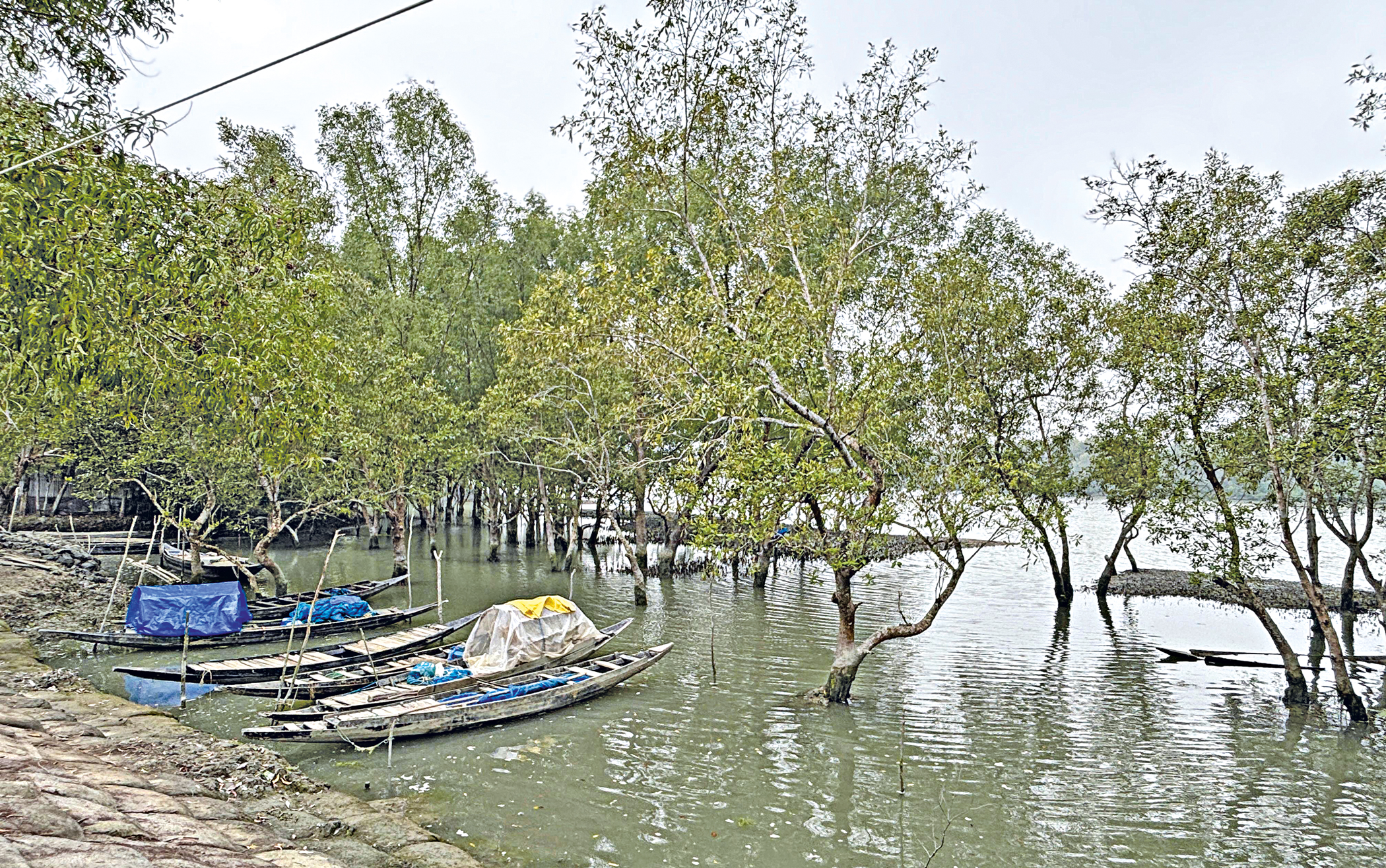
The remarks illustrate how Bonojibis distinguish themselves from those they describe as bon-kheko, literally “forest-eating people”, whom they accuse of exploiting and destroying the forest for profit. According to the elderly Bonojibi, the real threats to the Sundarbans often operate during the very period when ordinary forest-dependent communities are barred from entering.
“If you enter the jungle during the breeding season, you can easily see what is happening,” he said. “The bon-kheko set traps to catch deer, place poisoned bait to kill tigers for the illegal trade in their body parts, and use poison for fishing to maximise profits. The forest is now open to them because they can afford to pay high bribes. There is little surveillance during this period. The forest is closed to us, but not to the bon-kheko.”
Md Raihan Raju teaches at BRAC University. He can be reached at raihanraju29@gmail.com.
Send your articles for Slow Reads to slowreads@thedailystar.net. Check out our submission guidelines for details.
Thirst in the Sundarbans: The water crisis facing Munda women

Which female-dominated jobs are actually the most exposed to AI?
What remains of Bangladesh's fading ethnic traditions
Good intentions are not enough: Why Bangladesh should rethink orphanages

Are we eating microplastics with our fish?
The invisible Mintis of Karwan Bazar
Republic of the footpath

The dreams of girls in a Bangladesh river char
Can Bangladesh bring back the Chakaria Sundarbans?