Echoes of Anne Frank in Swati’s war diary

In March 1971, as the shadows of Operation Searchlight fell over Dhaka, a Class Seven schoolgirl, Swati Chowdhury, began recording what no child should ever have to witness. Like The Diary of a Young Girl by Anne Frank, her notebook turns private fear into a quiet, enduring testimony, where history is not distant, but lived in real time.
On the night of 25 March 1971, she writes of a sudden rupture in ordinary life—of being “very surprised and confused” as the city erupts—sharp bursts of gunfire, the relentless rattle of machine guns tearing through the darkness. Huddled on a balcony with her family, she watches Dhaka burn. A newspaper office—The People—goes up in flames before her eyes. “We feared our house would be burnt too,” she notes, capturing the suffocating dread of waiting and not knowing if the next moment will be the last. The moment recalls how Anne Frank, hidden away in the Secret Annex, described the distant thunder of war—never fully seen, but always felt, pressing in from all sides.
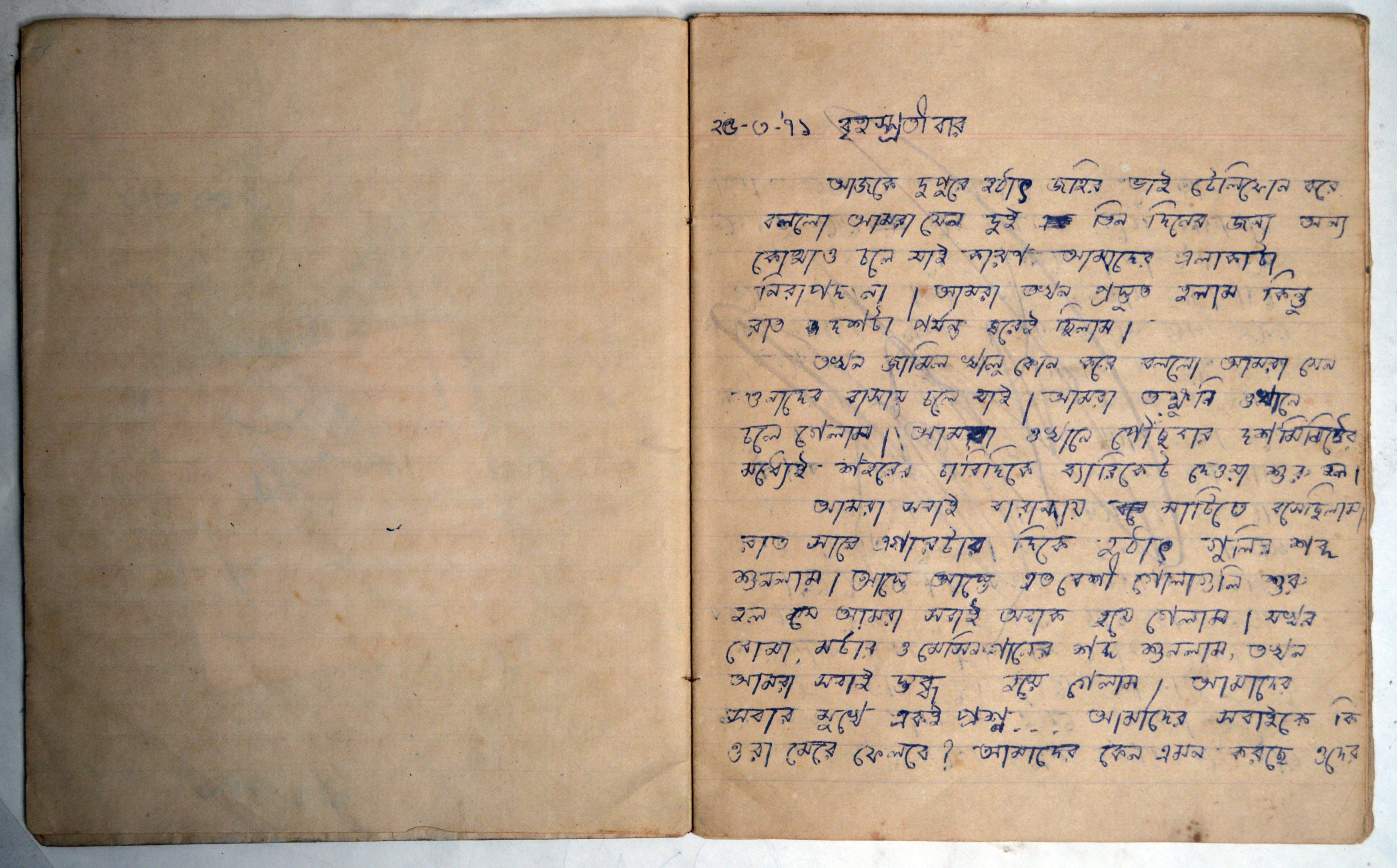
Morning does not bring relief. It brings curfew. The city becomes a prison of smoke and silence. From behind closed doors, they glimpse fires still raging, hear distant shots. Anyone who dared step outside, she records, was shot. Just like Anne Frank described in her diary the haunting sense of her days being “numbered,” Swati’s world, too, contracts into the narrow space between danger and waiting.
When the curfew briefly lifted on 27 March, fragments of truth emerged. Family members who ventured out returned with unbearable news—“dead bodies piled everywhere,” especially in Jagannath Hall and Iqbal Hall of Dhaka University.
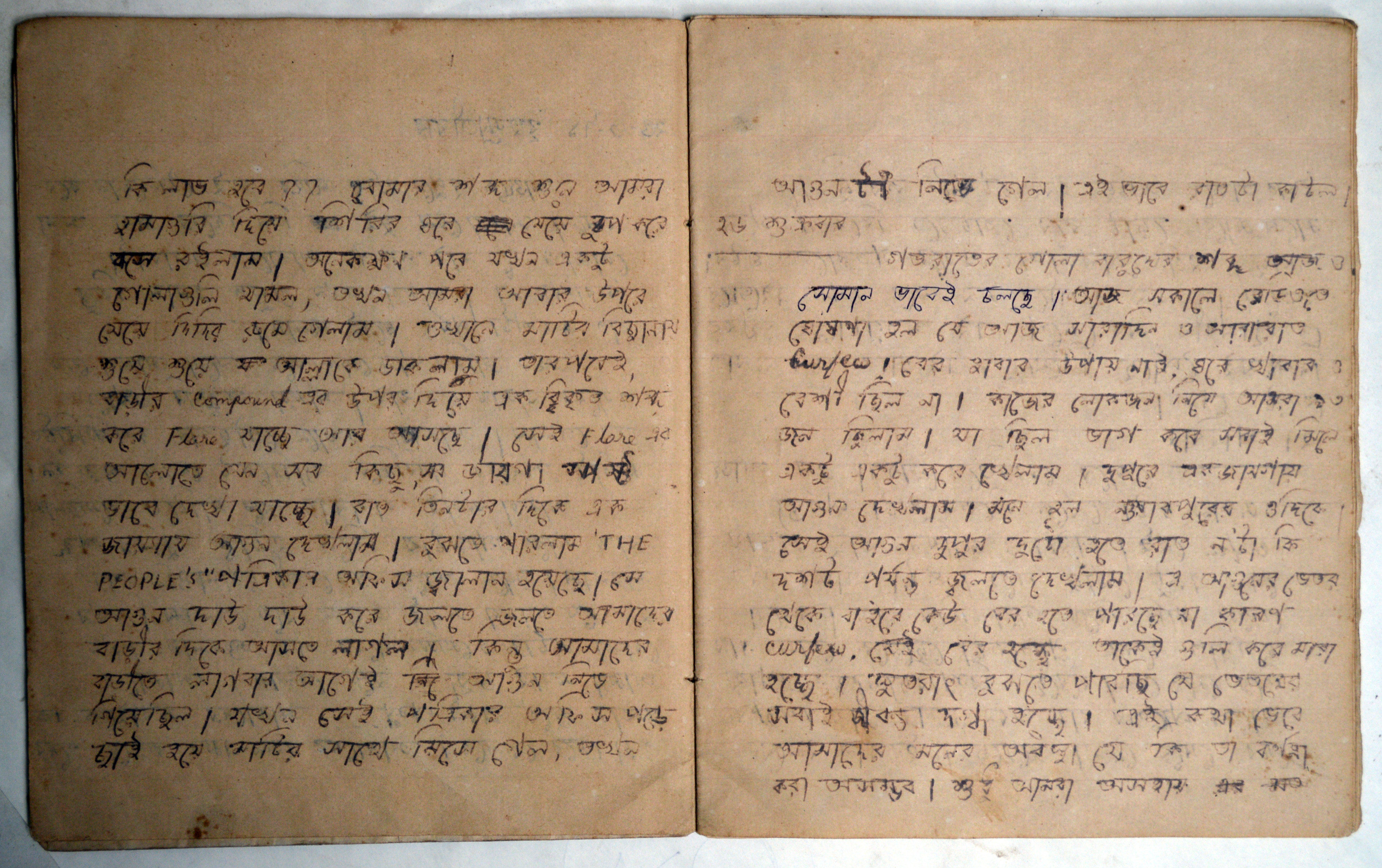
Soon, like countless others, her family fled towards a village near the Balu River. Yet even distance brought no peace. “We hear news from the city every now and then,” she writes, each update carrying the same refrain of killing and suffering.
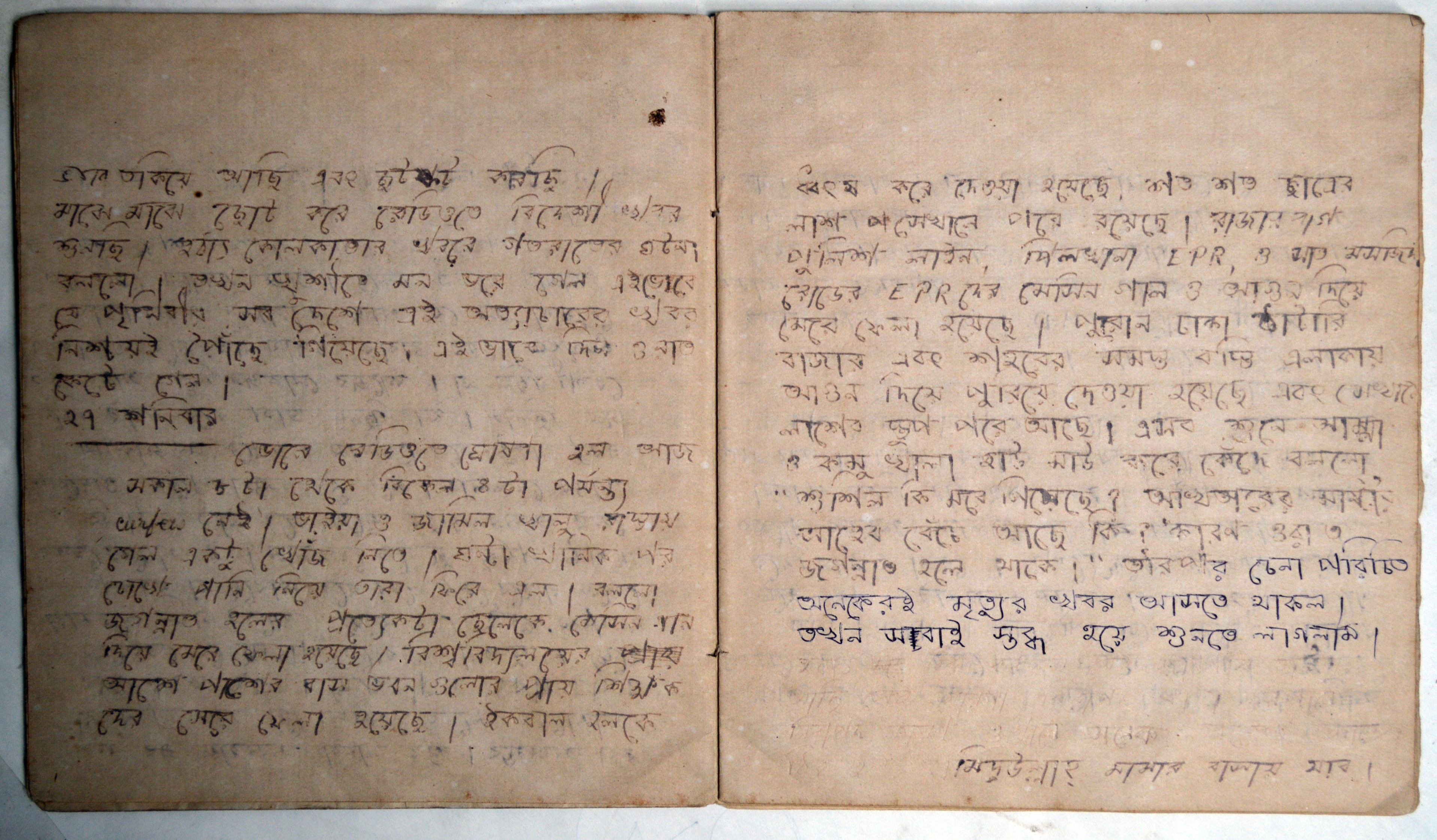
Her diary ends not with closure, but with uncertainty, an unfinished testimony in a time that refused to make sense. As with Anne Frank’s words, Swati’s voice—though little known—endures to this day, where the smallest details and fleeting thoughts become the truest record of history. Through her words, we glimpse not just history, but the quiet endurance of a child trying to understand a world set on fire.
Miftahul Jannat is a journalist at The Daily Star. She can be reached at miftaul@thedailystar.net
Send your articles for Slow Reads to slowreads@thedailystar.net. Check out our submission guidelines for details.
Interactive / Operation Searchlight: The night hell opened over Dhaka
The naval hero who envisioned a nation
Genesis of a genocide report
Prelude to an order for genocide
The Australian doctor who witnessed what Bangladesh wanted to forget
Birangona Women of Bangladesh
‘A huge gulf separates Mujib from Bhutto’

Instructions to genocide
Sorry for what?