Will the next generation speak Kokborok?

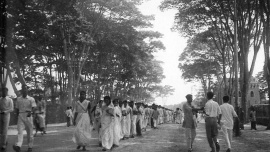
In a small village of Khagrachhari, a grandmother calls her grandson to dinner in Kokborok. Her voice carries the warmth of generations and is filled with the words she learned from her own mother. But the boy replies in the Chakma language. He understands her, yet he hesitates to answer in his mother tongue. The language that once flowed naturally at home now struggles to survive even within its own walls. Such moments have become very common across Tripura communities in Khagrachhari, Rangamati, and parts of Cumilla. The once-prominent language of this indigenous community is now slowly fading away with each generation.
Kokborok, which literally means “language of the people,” belongs to the Sino-Tibetan language family and is spoken by the Tripura community of India and the border regions of Bangladesh, mainly in the Chittagong Hill Tracts and nearby areas. For generations, it has survived as a community language with limited written use, carrying the history, culture, and identity of its people. However, today, Kokborok stands at a critical stage where its survival faces serious challenges.
At present, Kokborok has very limited written and literary development in Bangladesh. Unlike some neighbouring regions, such as India, there is little formal grammar documentation, textbooks, literature, or standard learning materials. Most communication remains oral. It does not yet have a standardised written form. In addition, the language lacks sufficient literary resources. While some poems and short stories exist in Kokborok, the available body of literature is still too limited to support the language’s growth effectively. The community launched its first Kokborok book in Bangladesh only as recently as 2022. Nikke Tripura, a community member, shared, “Our language is mostly oral, and we still lack a proper written form in Bangladesh. Some people use Roman letters, and India has developed a writing system, but now the government and community are working together to develop one.”
Schools mostly use Bangla and English as the mediums of instruction. As a result, children grow up prioritising these dominant languages rather than their mother tongue. In multicultural school environments, some even adopt other indigenous languages, such as Chakma, due to environmental influences. Barna Tripura, a university student in Dhaka, shared that by growing up surrounded by Chakma families, she gained the ability to speak that language more comfortably than Kokborok. She explained, “Most of my friends spoke Chakma, and school used Bangla, so I naturally learned those languages. My family rarely used Kokborok at home. My parents were working parents, and my mother does not even know proper Kokborok. Therefore, I never really learned it. Only my aunt in my family knows Kokborok.”
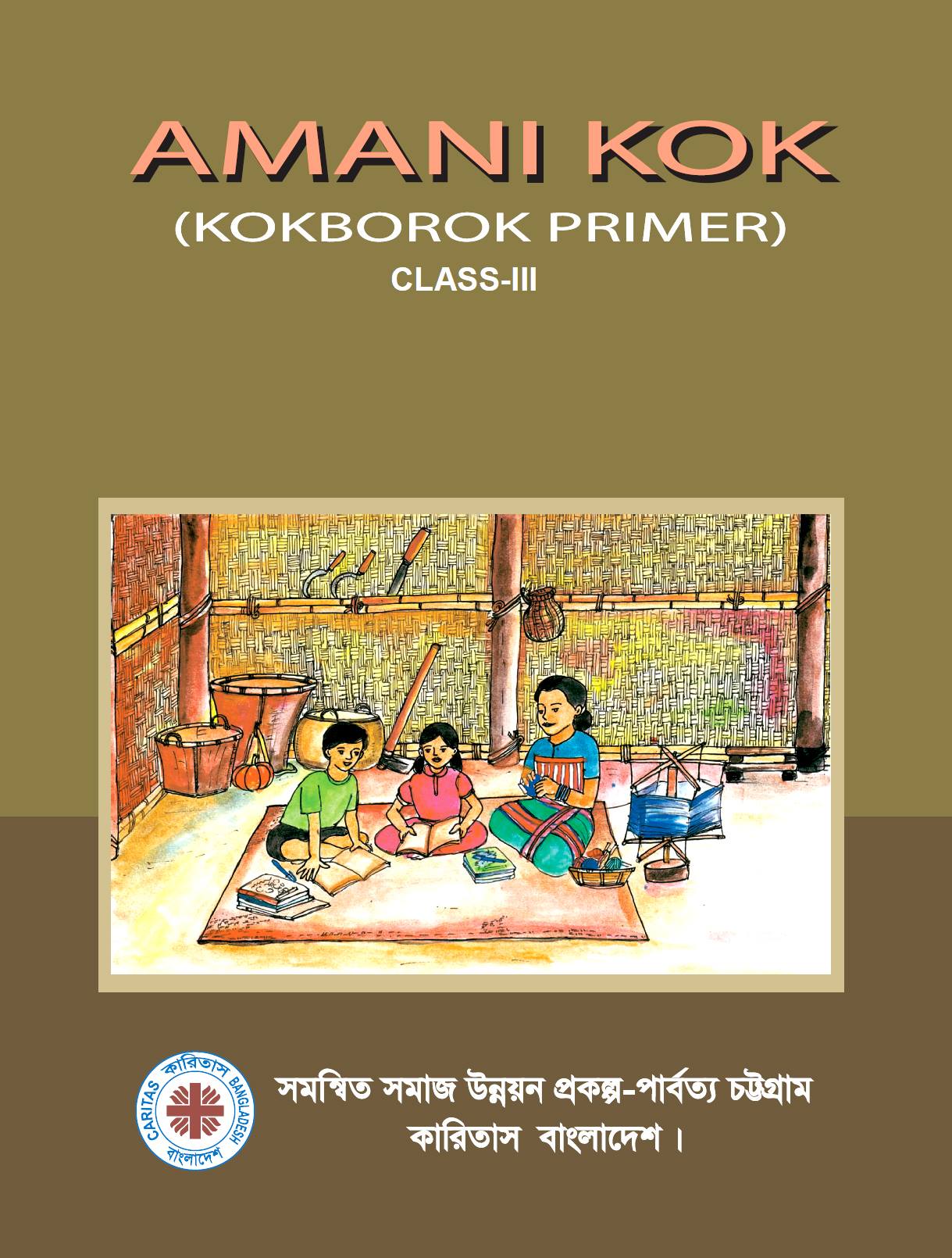
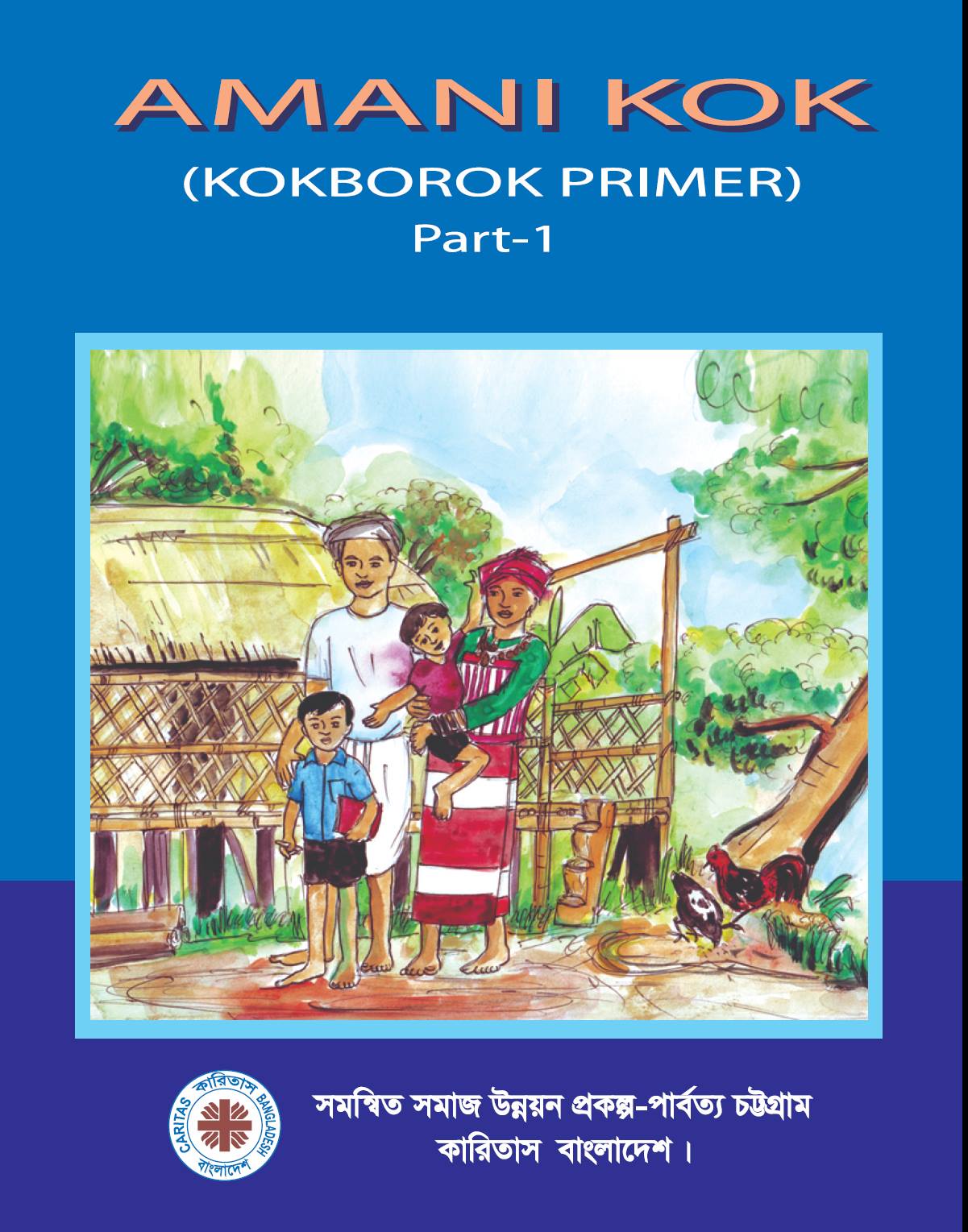
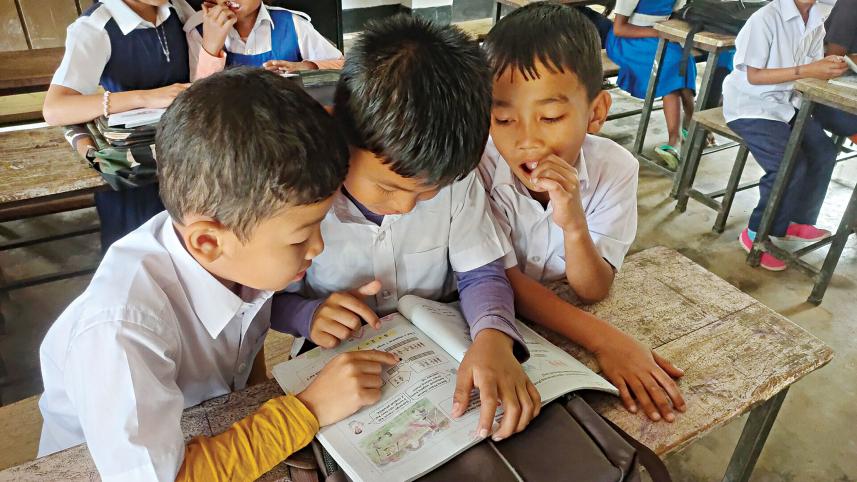
However, recognising the vulnerable condition of this language, the government initiated the teaching of Kokborok in community schools in 2017. Still, the results have not been satisfactory due to inadequate teacher training and the limited economic value associated with the language. Mathura Bikash Tripura, Executive Director of Zabarang Kalyan Samity, explained, “Although children are now being taught Kokborok in schools, the outcome remains disappointing.” He also added, “The younger generation has little interest in learning their mother tongue because it offers fewer economic benefits in terms of employment or educational opportunities.”
Future of the language
The future of Kokborok in Bangladesh appears uncertain and fragile. Although the language is not yet extinct, it is clearly moving towards endangerment. Without immediate efforts to increase daily use, proper documentation, and sustained institutional support, Kokborok may gradually disappear under the pressure of dominant languages such as Bangla, Chakma, and Marma.
Dr Md Mostafa Rashel, Associate Professor of Linguistics at BUP, shared that Kokborok is already in a vulnerable state. According to him, “The language is not yet fully endangered, but it is clearly moving in that direction. Due to the strong influence of Chakma, Marma, and Bangla, community members are no longer able to use Kokborok regularly. As Chakma, Marma, and Bangla become more common in daily communication, many original Kokborok words are slowly being forgotten. The younger generation, especially children, is not fully acquiring these traditional words, which leads to a gradual loss of vocabulary and cultural knowledge. Our current focus is to document the language so that it does not vanish completely.”
Urbanisation has added another layer of difficulty. Mathura Bikash Tripura, Executive Director of Zabarang Kalyan Samity, shared, “Many young Tripura people who move to towns or cities feel embarrassed to speak Kokborok in public. Even when they use it, they often mix it with Bangla or English. This code-mixing weakens the purity of the language and reflects a declining sense of linguistic pride among the youth. Some people still value their mother tongue, but unless this attitude changes among the younger generation, the future of Kokborok remains uncertain. We are trying to increase engagement with them, but the results are not yet satisfactory.”
There is still hope, as small efforts are beginning across villages and community schools, such as local classes, children’s books, and cultural programmes. Linguists and activists believe that if Kokborok is taught in schools, used at home, and supported through digital media and literature, it can survive and even grow again.
Impact of technologies
At present, technology has had a limited impact on Kokborok in Bangladesh, but it is beginning to open new possibilities for the language. Some digital tools, as well as expanding online content and e-books, could support the preservation and learning of the language through documentation alongside traditional methods, although such initiatives remain in the early stages. Dr Md Mostafa Rashel shared, “Tools like Google Translate are now available. It can detect and translate Kokborok. Although the translations are not fully accurate, they provide a starting point for making the language more accessible and for supporting learning.”
For Kokborok, survival is not just about words on a page or lessons in a classroom. It lives in conversations at home, the songs sung in villages, and the stories passed from grandparents to children. Yet today, those voices are fragile, and the language is slipping into the shadows of Bangla, Chakma, and English. Documentation and tools such as books or apps can help, but they cannot replace daily use and practice. Kokborok will thrive only if the next generation chooses to speak it, share it, and carry it forward as a living part of their identity. When a language disappears, it is not only words that are lost; it is stories, songs, history, and a people’s way of seeing the world. Saving a language is more than preservation. Saving Kokborok means preserving the voice of the Tripura community itself.
S. Disha is an undergraduate student of Applied Linguistics at BRAC University, exploring the intersections of culture and community.
Send your articles for Slow Reads to slowreads@thedailystar.net. Check out our submission guidelines for details.
Will the next generation speak Kokborok?
Hajong and the cost of being unwritten
Preserving the A’chik tongue

The last speaker of Saura
Thar: A language born on the rivers
The Bawm language at a crossroads

Bangla in the age of algorithms
Beyond Bangla: Why Bangladesh’s other languages matter
What two decades with Hyow taught me about language loss
Language, power, and the erasure of Kol