Beyond Bangla: Why Bangladesh’s other languages matter

Bangla is one of the approximately seven thousand languages spoken worldwide, with around 250 million native speakers in Bangladesh and West Bengal. In terms of the number of native speakers, it ranks as the seventh most widely spoken language in the world. In Bangladesh, Bangla is also spoken as a second language by diverse ethnic communities and tea workers, many of whom belong to distinct ethnic identities.
Fifty ethnic communities are included on the official list of Khudra Nri Gosthi (small ethnic communities). In addition, the Society for Environment and Human Development (SEHD) has documented another fifty smaller or lesser-known ethnic communities, as detailed in its two books—Lower Depths: Little-known Ethnic Communities of Bangladesh and Slaves in These Times: Tea Communities of Bangladesh.
These non-Bangalee communities collectively speak more than forty languages: ten in the Chittagong Hill Tracts (CHT), about a dozen in the tea gardens, and others spread across the northwest, north-central, and northeastern regions of Bangladesh.
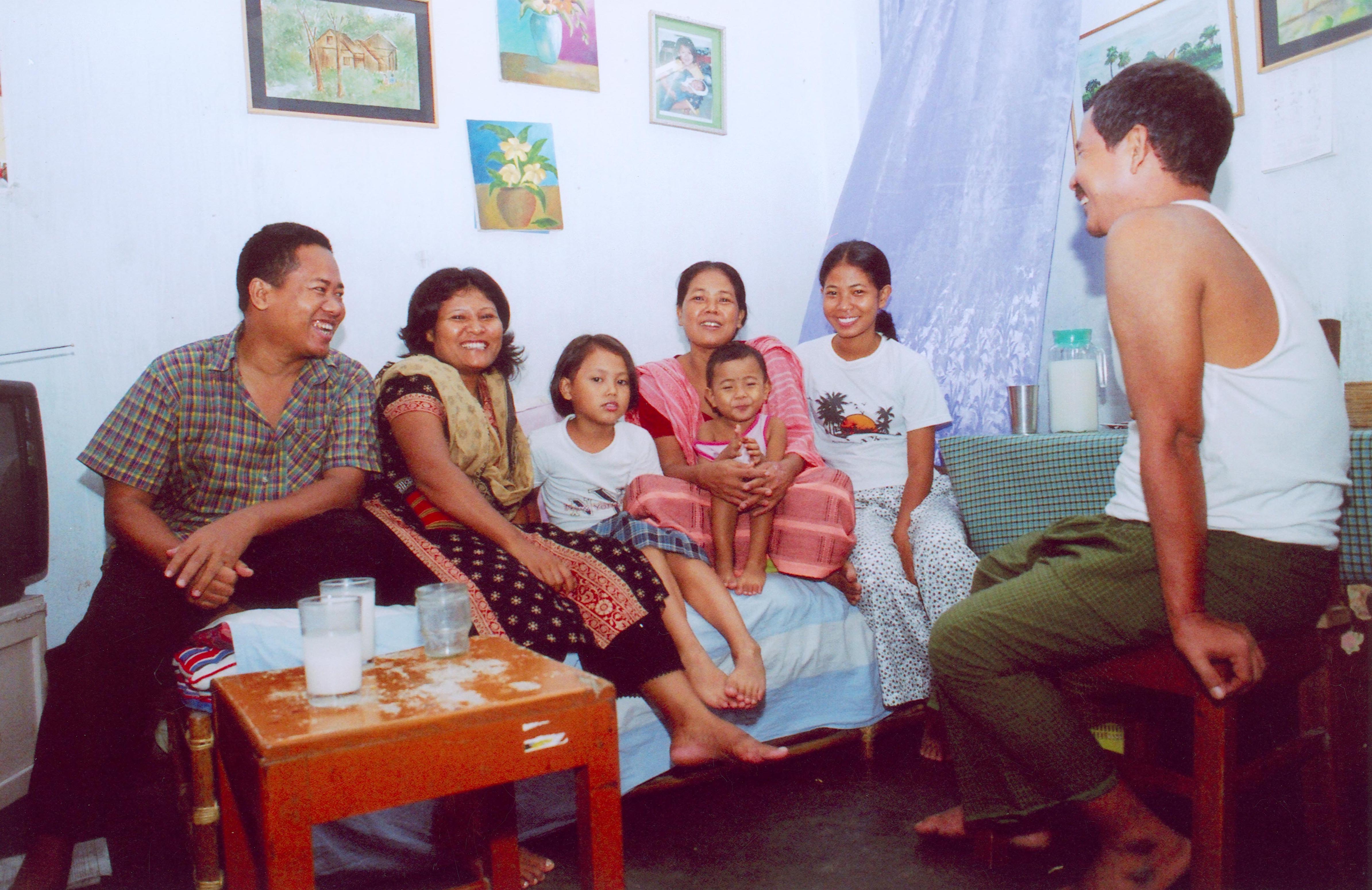
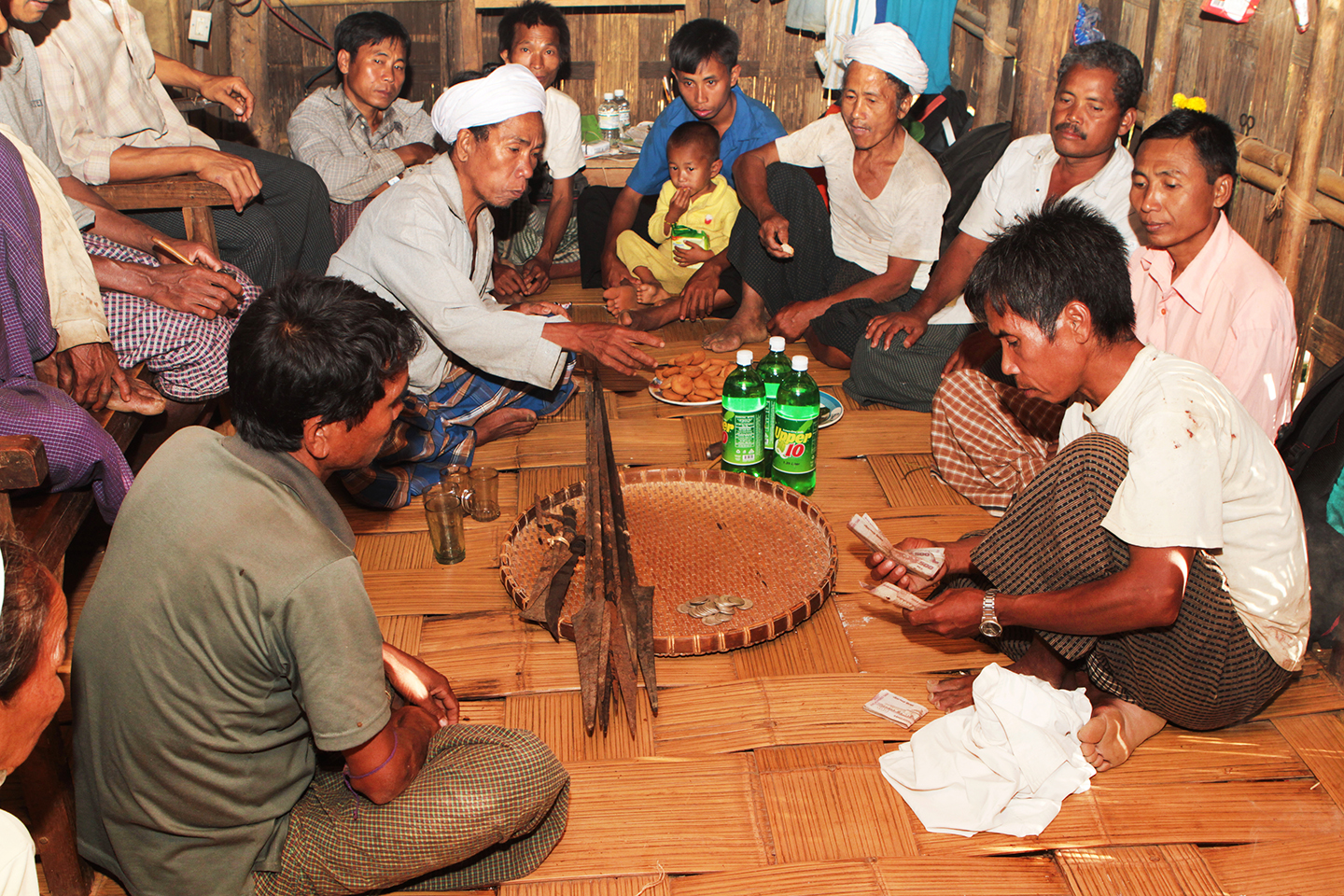
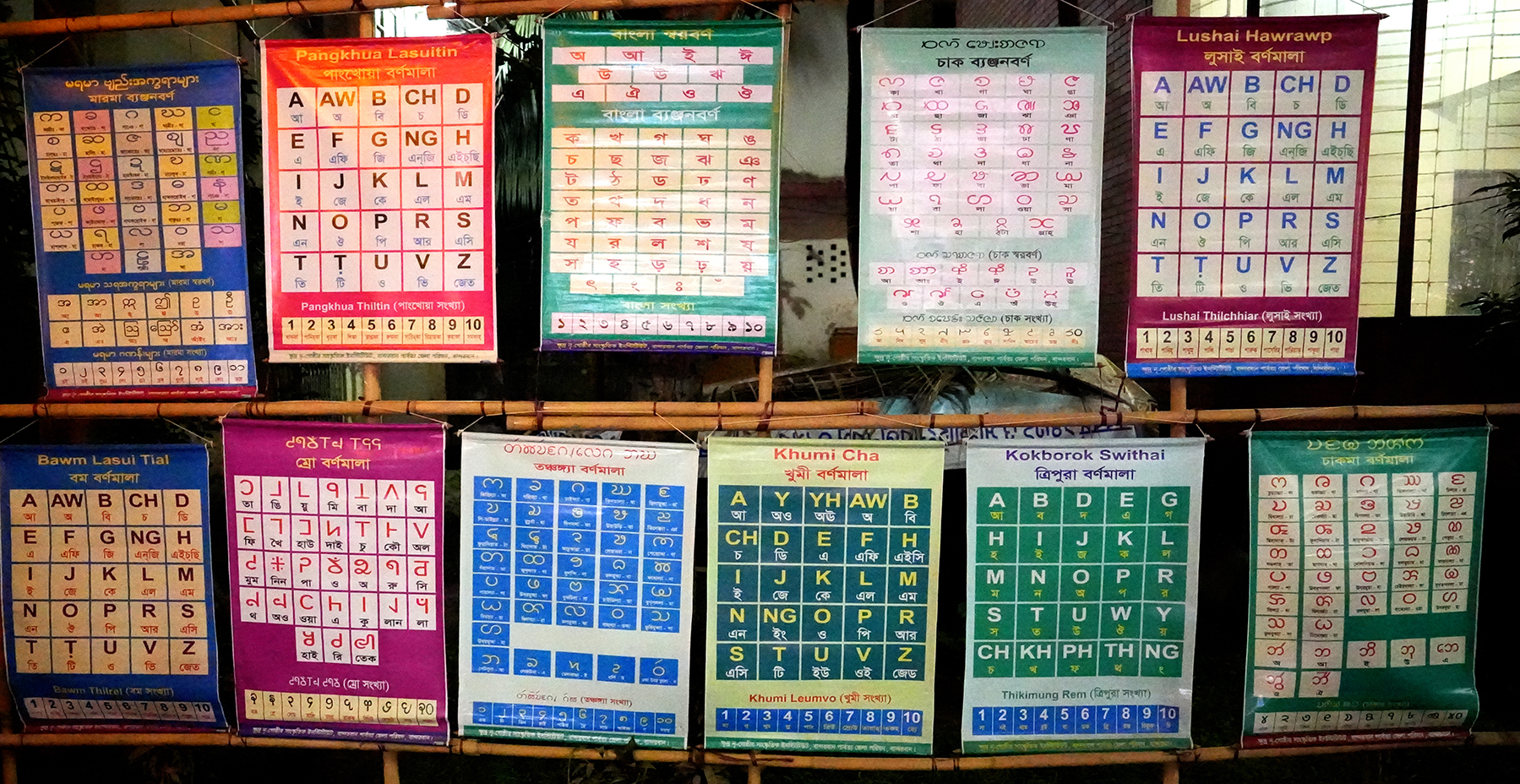
Many of the mother tongues spoken by Adivasi and other smaller ethnic communities are at risk of extinction. Some of these languages lack alphabets and have no written form. Today, they are spoken primarily by elderly members of the community, while the younger generation is no longer able to speak them. One such example is the language of the Koch, which has no written script.
In the tea gardens, a language known as “Jangli” illustrates the severity of the crisis facing the mother tongues of marginalised ethnic communities. Bound to the labour lines of the tea estates and living in conditions akin to servitude, these communities face the gradual erosion of their linguistic heritage.
Some of the languages spoken by very small ethnic communities are strikingly beautiful. One such community is the Chak, also known as the Sak, in the Bandarban Hill District. With a population of fewer than 4,000, the community possesses a distinct language called Chak. Concentrated in 21 remote jungle villages in the Naikhongchhari and Bandarban Sadar upazilas, the Chak people maintain a linguistic identity that is uniquely their own.
There are many other very small ethnic communities—such as the Kol, Kora, Kadar, Kheroar, Dalu, Pangkhua (or Pangkho or Pangkhu), Bhumali, Shobor, and Ho—each with a population of fewer than 2,000. These communities are engaged in a difficult struggle to preserve their languages. Both smaller and larger ethnic communities face challenges in sustaining their mother tongues while also navigating Bangla as their second language.
The power of their enchanting songs, dances, and music is deeply rooted in their language. Although the Chaks speak Bangla as a second language, many in the more remote villages struggle to communicate fluently in Bangla. For thought, expression, and learning, Chak remains their primary and most natural language.
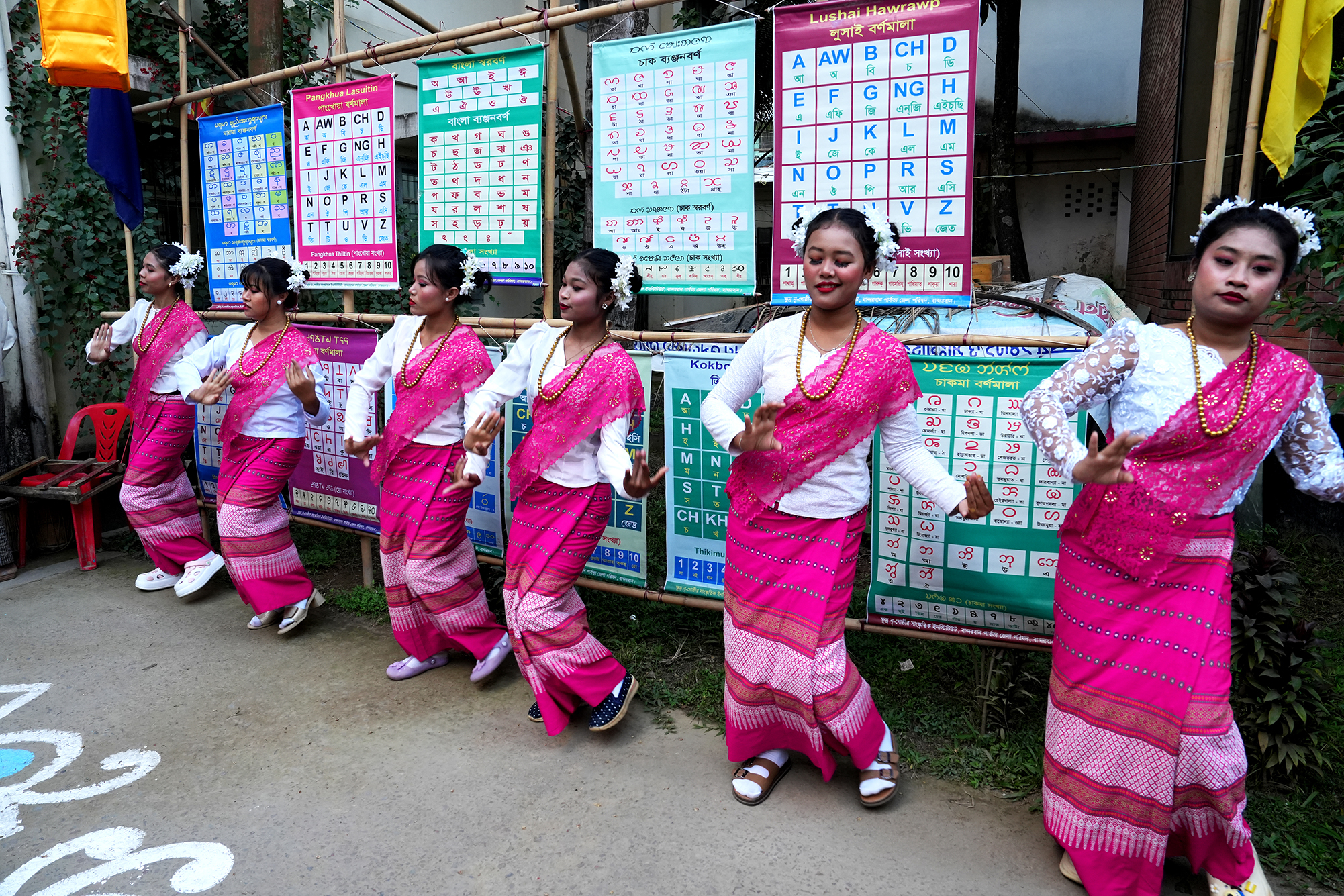
The smallest of the ethnic communities in the Chittagong Hill Tracts—the Lushai—with a population of 380, has its own language. Because of their small population and geographic isolation, the Lushai, speakers of the Mizo language in Bangladesh, depend heavily on community transmission within families and villages. While the language remains strong in Mizoram (India), in Bangladesh it is more vulnerable due to a small speaker base, limited institutional support, and pressure to use Bangla for education and administration.
There are many other very small ethnic communities—such as the Kol, Kora, Kadar, Kheroar, Dalu, Pangkhua (or Pangkho or Pangkhu), Bhumali, Shobor, and Ho—each with a population of fewer than 2,000. These communities are engaged in a difficult struggle to preserve their languages. Both smaller and larger ethnic communities face challenges in sustaining their mother tongues while also navigating Bangla as their second language.
The languages that Indigenous communities of Bangladesh speak provide them with distinct identities and add colour to their lives, as demonstrated in their rituals, festivals, cultural performances, attire, and social behaviour.
The language and cultural diversity, particularly in the Chittagong Hill Tracts, has been vividly noted by a Swiss-German ethnologist and academic known for his extensive fieldwork among the Mro and Khumi.
“If there is anywhere on earth where one can find within an area of a few square miles several different ethnic groups exhibiting distinctly different cultures, then it is in certain regions of the southern Chittagong Hill Tracts. Here, within one and the same mouza, one may find four groups speaking completely different languages, building different types of houses, wearing different clothing, and following different customs and different religions (Buddhism, Hinduism, Christianity, and Animism).” (L. G. Löffler, Mru—Hill People on the Border of Bangladesh)
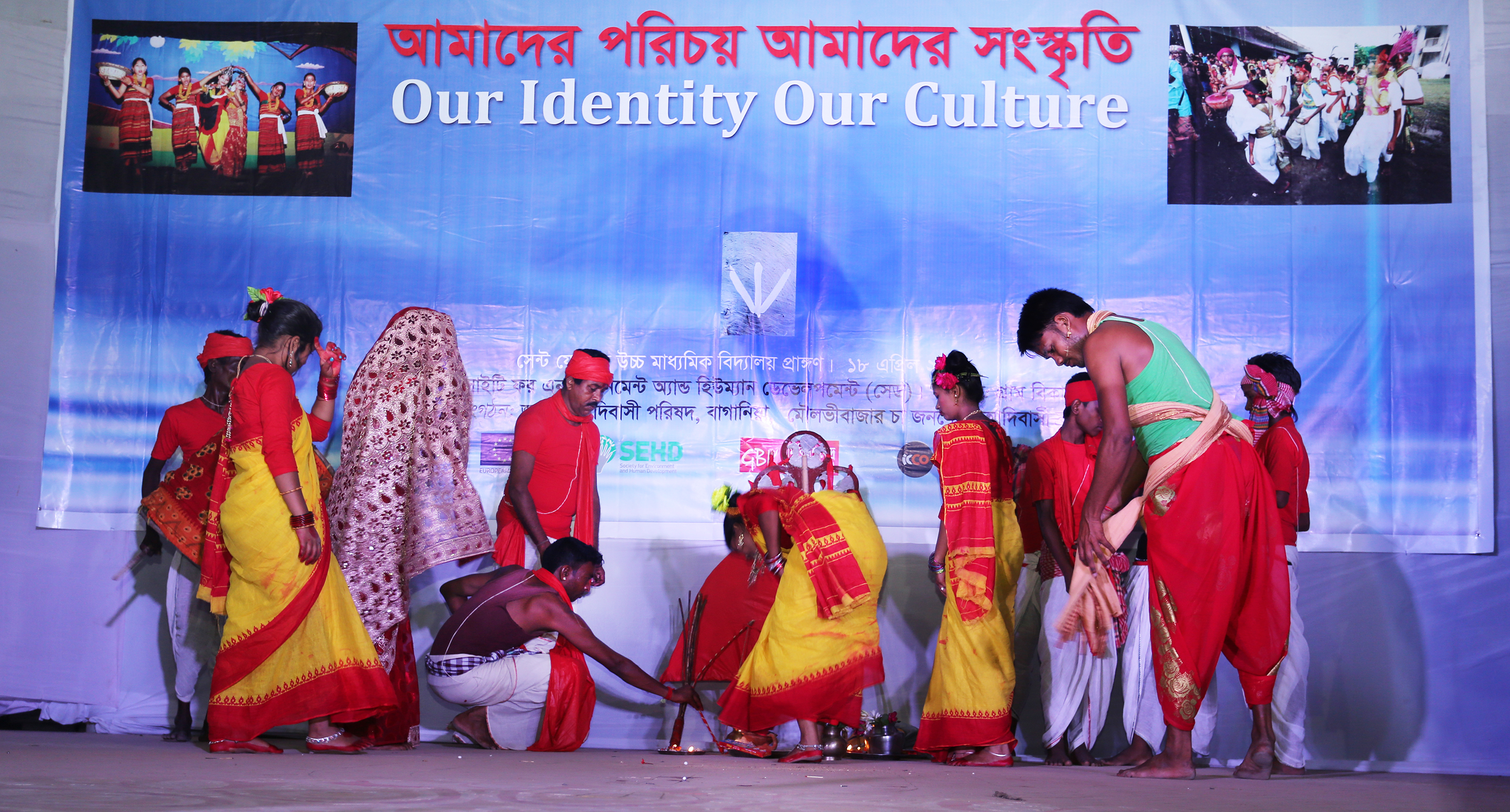
Languages spoken by small communities are particularly vulnerable and may gradually disappear. Nearly a dozen languages—including Santali, Mundari, Mahale, and Garo—are spoken in the tea gardens of Bangladesh but receive little attention. While a few individual scholars have given some attention to these languages, there has been little or no engagement from state bodies such as the International Mother Language Institute (IMLI). For many of these languages, there are no comprehensive lexicons, basic word lists, or grammar books.
There are, however, notable examples of high-quality linguistic research on some ethnic languages of Bangladesh. Foremost among them is The Language of the Modhupur Mandi (Garo): Grammar by Robbins Burling, a professor at the University of Michigan, who devoted much of his life to studying the language, culture, and society of the Garo people in Modhupur and India. The book provides a detailed analysis of Mandi (Garo) phonology, morphology, syntax, and dialect variation, and is written for speakers, learners, and linguists alike. It is complemented by additional volumes, including a word list, glossary, and lexicon. Baboharik Garo Obhidan by Himel Richil is a 495-page dictionary compiling words used in everyday Garo speech. Together with Burling’s word list and lexicon, it offers a strong foundation for the preservation and further study of the language.
A Santal Dictionary is one of the most important dictionaries of the Santali language, compiled by Paul Olaf Bodding, a Norwegian missionary, linguist, folklorist, and scholar. Published in the early twentieth century, it is a comprehensive Santali–English dictionary based on extensive fieldwork among the Santal people in present-day India and Bangladesh. The dictionary, published in multiple volumes (approximately 6,000 pages), documents thousands of words, idioms, and cultural expressions, making it not only a linguistic resource but also a valuable record of Santal society and oral tradition. It remains a benchmark reference for scholars and speakers of Santali today.
A Grammar of Hyow is a comprehensive linguistic study of the Hyow language, spoken by the Khyang, a small ethnic community of 4,826 people (2022 census) living in the Bandarban and Rangamati districts. The work documents phonology, morphology, syntax, and core grammatical structures. It serves both as an academic contribution to Tibeto-Burman language studies and as an important resource for the preservation and documentation of an under-described Indigenous language.
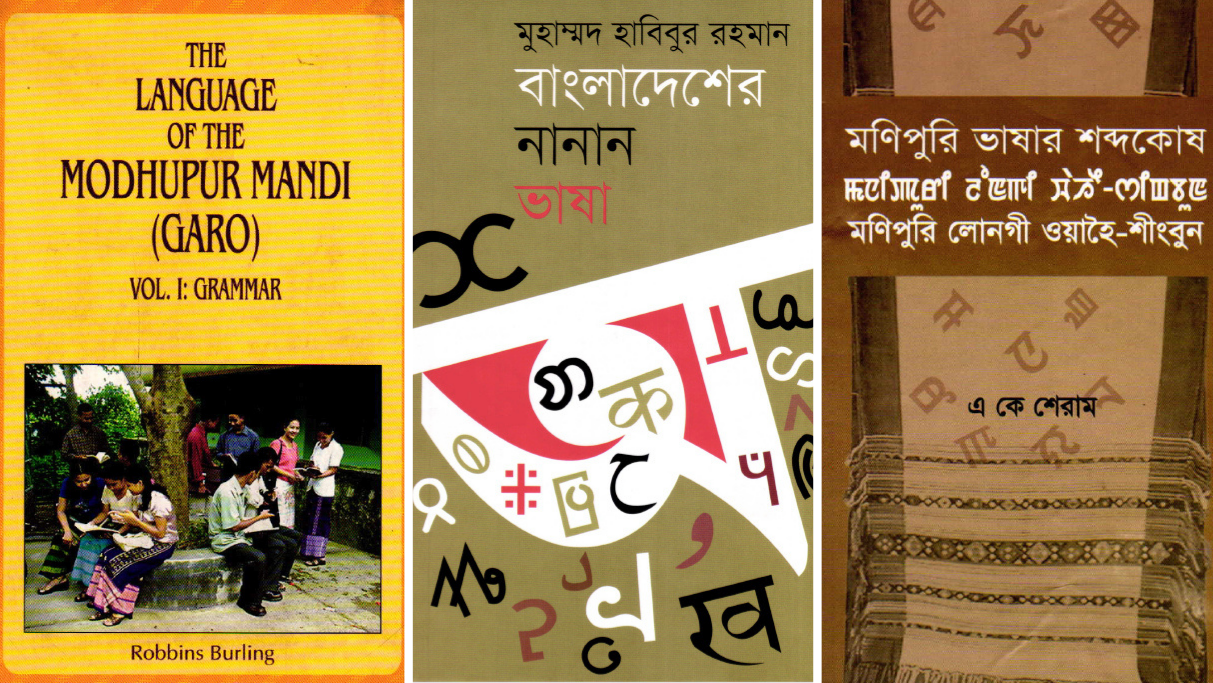
A. K. Sheram, a Manipuri scholar, has done a commendable job with his mother language, Manipuri. His work, Manipuri Vasa’r Shobdokosh, is a 78-page trilingual (Bangla–English–Manipuri) dictionary that systematically documents Manipuri vocabulary with meanings, usage, and linguistic explanations, aiming to support both learners and researchers. The book also provides an introduction to Manipuri phonetics, scripts, and grammatical features—often using the International Phonetic Alphabet (IPA)—to clarify pronunciation and structure for Bangla readers. Overall, it serves as an important reference work for preserving, studying, and standardising the Manipuri language in Bangladesh. Similar studies of other languages would be a significant step forward in preserving those that are threatened.
Bangladesher Nanan Vasha by Muhammad Habibur Rahman (former Chief Justice of the Supreme Court) provides an overview of the linguistic diversity of Bangladesh, discussing the historical origins, scripts, sounds, and social contexts of Bangla alongside many Indigenous and minority languages. Through concise chapters on languages such as Arabic, Urdu, English, Khasi, and others, the book explains how migration, religion, education, and state policy have shaped language use in the country. Overall, it highlights Bangladesh as a multilingual society and underscores the cultural value and vulnerability of its lesser-known languages.
The studies on languages other than Bangla spoken in Bangladesh mentioned above are indeed noteworthy. However, there are many other linguistic and ethnographic studies that still need to be examined and undertaken. There is little doubt that systematic research on these languages remains limited. In the interest of safeguarding languages, cultures, histories, and the very existence of smaller communities, it is essential that academia and learners receive proper orientation and sustained support. In this regard, state authorities and relevant institutions bear a particular responsibility.
Philip Gain is a researcher and director of the Society for Environment and Human Development (SEHD). He can be contacted at philip.gain@gmail.com.
Send your articles for Slow Reads to slowreads@thedailystar.net. Check out our submission guidelines for details.
Will the next generation speak Kokborok?
Hajong and the cost of being unwritten
Preserving the A’chik tongue
The last speaker of Saura
Thar: A language born on the rivers
The Bawm language at a crossroads

Bangla in the age of algorithms
Beyond Bangla: Why Bangladesh’s other languages matter
What two decades with Hyow taught me about language loss
Language, power, and the erasure of Kol