Preserving the A’chik tongue

The mist still clings to the ancient Sal forests of Madhupur and the rugged edges of the hilly terrains of Netrokona and Mymensingh, much like the stories of the Garo people—A’chik, as they call themselves. If you walk through these landscapes at dawn, you might still hear the rhythmic thud of a wooden pestle or the distant hum of a folk tune, but more often now, you hear the sharp, digital ping of a smartphone. The A’chik Ku’sik (Garo language), a vibrant member of the Tibeto-Burman family, is currently standing at a fragile crossroads where centuries of oral tradition are being forced to evolve within the high-speed demands of a globalised world. It is a story of a language trying to find its feet on a digital floor while keeping its heart buried deep in the forest soil.
To understand the weight of this struggle, one must first explore the name the community claims for itself. According to Michael Mridul Kanti Sangma, an Ethnic Language Specialist at FEEL (Friend of Endangered Ethnic Languages) and a veteran language surveyor, while the world knows them as "Garo," they identify as Mandi. He explains that the word originates from “Ma·ani de,” literally meaning "children of the mother." This linguistic root is the umbilical cord to a matrilineal heritage, where identity and belonging are passed down through mothers. "My language is my identity," Michael asserts. "It is completely different from any other; its pronunciation and accent carry a unique soul."
For the Mandi, when a language like this fades, it is not just words that disappear; it is a specific way of honouring womanhood and nature that vanishes from the human record. In their world, to lose the language is to lose the very map of their ancestry.
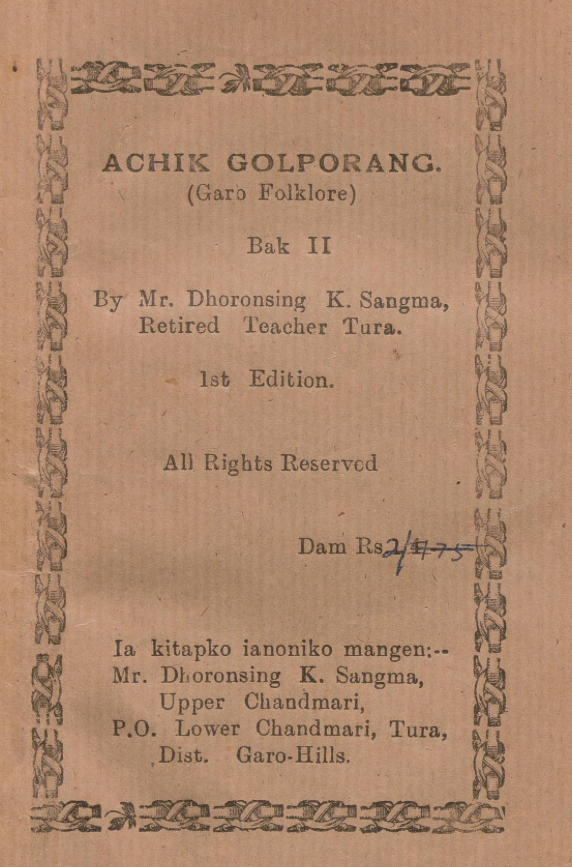
For generations, this heritage thrived as an oral masterpiece, surviving without a formal indigenous script. While folklore whispers of a lost ancient writing system—some say it was written on skins that were lost during a great famine—the language was largely formalised in the late 19th century by American Baptist Missionaries using the Latin script. However, forcing a language born of the hills into a foreign alphabet is a complex task. We hear from Newton Nokrek, a Garo community member and student at the University of Dhaka, who points out that the lack of a structured, indigenous written version remains a significant hurdle. "Our traditions and beliefs have been transferred orally," he says.
This oral tradition is now being tested by a harsh "Language Shift." In urban hubs like Dhaka, parents often prioritise Bengali and English, fearing that practising A’chik Ku’sik might limit their children's career prospects. This creates what linguists call "receptive fluency" -- a generation of young Garos who can understand their parents’ stories but cannot find the words to speak back in their own tongue. It is a silent tragedy where the conversation between generations becomes a one-way street.
The real revolution, however, is happening in the pockets of the youth. The future of A’chik Ku’sik now depends on being "typable." Community-led tech initiatives have developed Garo-specific keyboards for smartphones, allowing a teenager in the village to text their grandmother in their mother tongue without the clumsy interference of Bengali autocorrect.
Michael Mridul Kanti Sangma views this as a vital opportunity, noting that the younger generation is becoming more interested in practising literature through digital tools. As a community member, Newton Nokrek echoes this optimism, believing that building Natural Language Processing (NLP) datasets for AI could grant A’chik Ku’sik the "prestige" it needs to compete in a globalised world. If a young person sees their language recognised by a computer or a translation app, the psychological barrier of "backwardness" begins to crumble. This digital evolution is not just about convenience; it is about proving that a "forest language" is sophisticated enough for the silicon age.
However, the struggle for survival is marked by two stark realities. There is a profound institutional gap; while the National Curriculum Textbook Board (NCTB) has published pre-primary materials, Michael warns that they are only available in limited areas, which is not enough to sustain a community of over 200,000 speakers in Bangladesh. Without expert teachers and a mandatory curriculum, these books often sit gathering dust, symbols of a promise only half-kept. Furthermore, the social pressure to assimilate remains heavy. Newton recalls a painful personal truth: "In my childhood, when I spoke my language in public, people would stare at us as if we were strange." This social stigma, combined with the dominance of Bengali, often forces the mother tongue into the shadows of the home, stripping it of its power in public life. When a language is treated as a secret, it eventually stops being a living force.
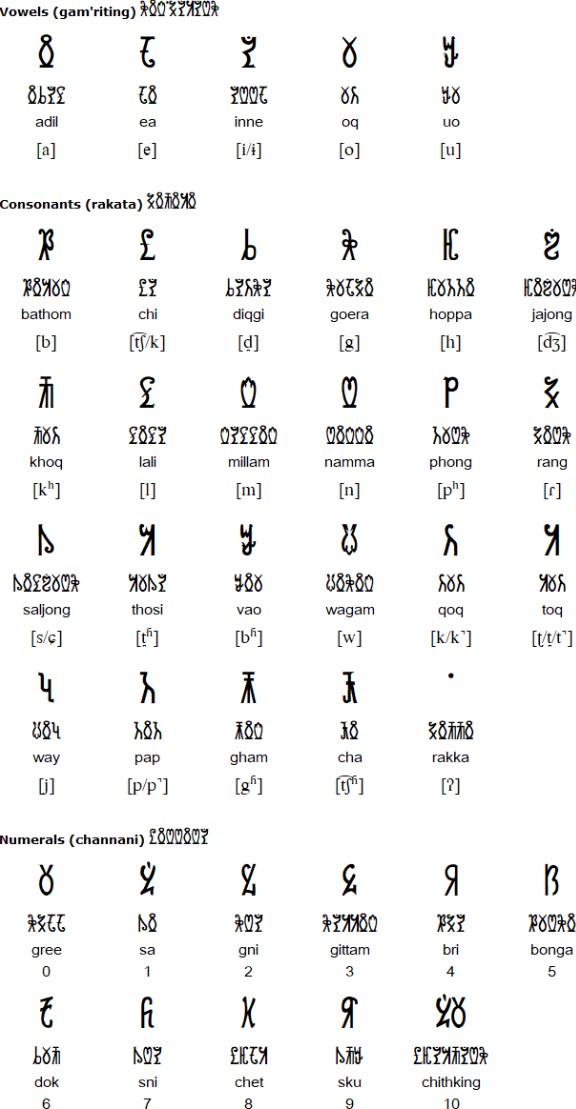
The evolution of the language requires more than just pride, it requires a structural overhaul of how the language is taught. Grammar development is not just for linguists; it is the skeleton that allows a language to stand tall. Currently, experts are working to standardise the phonetic rules of the language to prevent it from fragmenting into mutually unintelligible dialects. Because A’chik Ku’sik is tonal and rich in glottal stops, it often feels "squeezed" when written in Latin or Bengali scripts. Standardising these nuances is essential for creating a uniform literary tradition that can be taught in schools and preserved in digital archives. It is a race against time to document the elders' vocabulary before the last of the "pure" speakers are gone.
The path forward requires a harmony between the state and the soil. Newton Nokrek argues that institutional recognition and Mother Tongue-Based Multilingual Education (MTB-MLE) are essential to give the language prestige in schools, citing the existing models in Meghalaya, India, where the language holds official status. The Garo language is rich with words that defy translation. Terms like middima (a sense of spiritual presence), ka·sroka (to love gently), and rim·preta (to hold with care) capture emotions that Bengali or English simply cannot convey. These words are the artifacts of a civilisation that sees the world through the lens of community and the environment. Without these specific sounds, the Mandi worldview becomes flattened, losing its vibrant, spiritual dimensions.
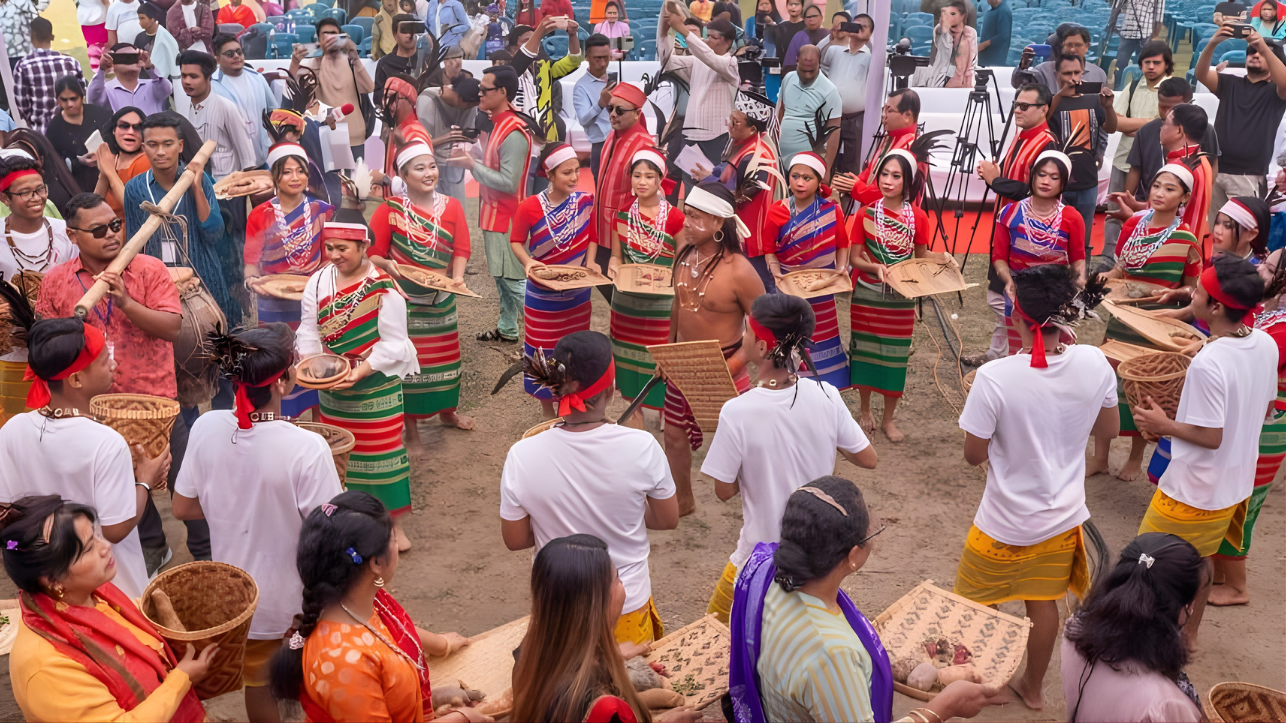
In the shadows of the hills, the transition is also about reclaiming the physical spaces where the language lives. When a Mandi youth types a message in A'chik, they are not just communicating; they are performing an act of resistance against the erasure of their history. The keyboard becomes as essential as the drum used in the Wangala harvest festival. As Michael observes, the survival of the language depends on its ability to move from the kitchen to the classroom and finally, into the global digital ecosystem. This move ensures that the language evolves rather than merely surviving as a relic of the past.
As we look toward the future, the survival of the A’chik tongue is not just a concern for the Mandi people; it is a test of our collective commitment to human diversity. In an era where AI and global connectivity threaten to homogenise culture, the smallest voices deserve a platform. We see a generation of youth who are no longer ashamed to wear their identity on their digital sleeves. They are the bridge builders, taking the stories told by the hearth and turning them into code. The goal is a future where a Garo child can walk into a classroom in Dhaka or a digital space online and feel that their mother tongue is a bridge to the future, not a weight from the past.
Musrat Hossain Mithila is an undergraduate student of Women and Gender Studies at the University of Dhaka. She can be reached at mmusrat30@gmail.com
Send your articles for Slow Reads to slowreads@thedailystar.net. Check out our submission guidelines for details.
Will the next generation speak Kokborok?
Hajong and the cost of being unwritten
Preserving the A’chik tongue
The last speaker of Saura
Thar: A language born on the rivers
The Bawm language at a crossroads

Bangla in the age of algorithms

Beyond Bangla: Why Bangladesh’s other languages matter
What two decades with Hyow taught me about language loss
Language, power, and the erasure of Kol