Historic Six-Point Movement: The photographs they suppressed
Tuesday, June 7, 1966. In support of the Six-Point demands, thousands of people poured onto the streets at dawn like sparks from a fire. Defying police barricades, defiant crowds marched forward. Wave after wave of demonstrators swept through the streets, shaking the very foundations of Pakistan’s ruling elite and the colonial order they upheld. In a craven response, the regime unleashed state forces against the protesting masses. They sought to drown the uprising in blood, but the result was the opposite. Braving bullets and bayonets, people embraced Bangabandhu’s Six-Point programme and stood united against Pakistan’s autocratic rule. From the capital to the districts and subdivisions, an unprecedented awakening swept across the land, as people joined the struggle for rights with an intensity never witnessed before.
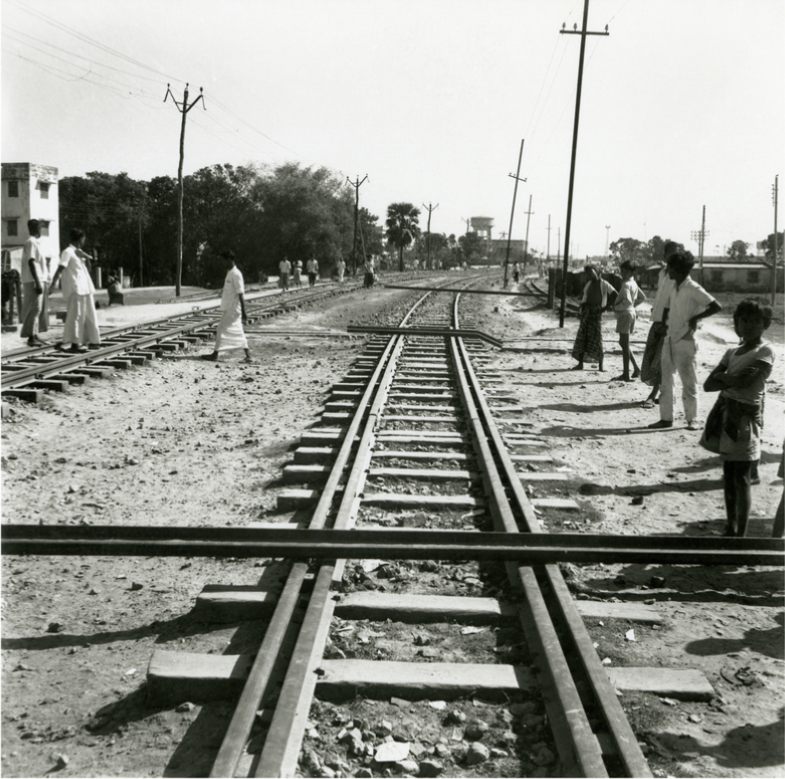
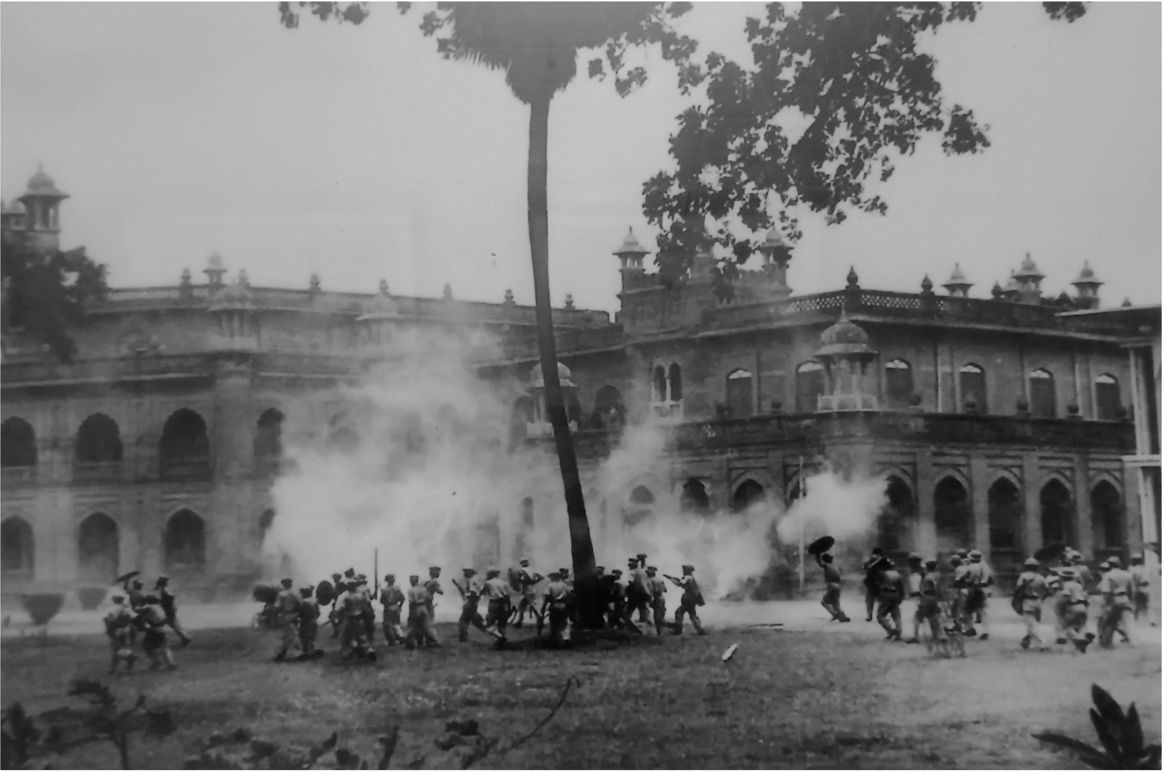
That day, a nation-wide general strike had been called by the Awami League. With participation from all sections of society, Dhaka city came to a complete standstill from the morning. Industrial workers shut down factories and joined the strike. In anger and frustration, students, workers, and ordinary citizens uprooted railway tracks at Nakhalpara and cut telephone and telegraph lines. In Tejgaon, demonstrators attacked the Director of Land Records and Survey Office and the Settlement Press. Curzon Hall at the University of Dhaka became a battleground. Students set fire to a police vehicle and three buses in front of the High Court. When protesters attacked the State Bank, police opened fire and dispersed the crowd.
Gunfire erupted that day in Tejgaon, Tongi, and Narayanganj. News of the Pakistani atrocities spread across the country like wildfire. Workers Monu Mia, Waziullah, and Babul, along with twelve other workers and students whose names remain unknown, were martyred in police firing that day. The blood and sacrifice of Bengal’s fearless youth laid the foundation for the Mass Uprising of 1969. The wave of the Eleven-Point Movement further shook the decaying fortress of reactionary rule. It ultimately led to the downfall of the Ayub-Monayem dictatorship. These developments ultimately culminated in the Liberation War of 1971, through which Bangladesh achieved independence. This is why the Six-Point programme is remembered as the Charter of Liberation for the Bengali people.
Following the bloody events of June 7, 1966, the government imposed strict restrictions on the publication of news and photographs related to the movement. At the time, newspapers published in Dhaka included Dainik Pakistan, Azad, Sangbad, Ittefaq, Paygam, Pakistan Observer, and Morning News. Using powers granted under the Press Ordinance, the regime sent press notes to newspaper offices late at night. Concealing the real events, the official statement claimed that “the police opened fire on unruly crowds in self-defence.” The next day, newspapers were forced to publish this official version.
Although all newspapers had to carry the government statement, Sangbad refused to comply silently. In protest, editor Zahur Hossain Chowdhury and executive editor Shahidullah Kaiser suspended publication of the newspaper the following day. Sangbad reappeared on June 9 and once again registered its silent protest. On its front page, enclosed within a black border, the paper carried a double-column statement:
“Our silent protest. When profound grief cannot be expressed in words, silence becomes the only language. Therefore, Sangbad could not be published yesterday. Though our protest may stand alone, we believe our readers stand with us in spirit.”
On June 7, 1970, Sangbad published an editorial commemorating the historic Six-Point Movement and explaining why the true events of 1966 could not be reported at the time. In the editorial titled Why Sangbad Did Not Publish That Day, it stated:
“The full account of that day’s events could not be published on the pages of any newspaper. The names of all the martyrs of that day could not be known, and even among those whose names were known, not all could be published. No newspaper was able to provide a complete report of the events. This was because Ayub’s enforcer, Monayem not only used his baton on the streets and in factories, but it was also “effectively” used against the newspapers. The draconian laws were not only imposed but enforced with ruthless authority by Ayub and his worthy associate Monayem Khan. Through the Press Ordinance, restrictions were imposed on all newspapers, and reporting of the truth was prohibited. Almost all newspapers had prepared their own reports on the incident, but none were able to publish them. Late at night, government press notes were issued, instructing newspapers that nothing other than the official press note could be published. The truth was not allowed to be published. In protest against this situation, Sangbad, despite having its entire edition printed, did not appear that day.”
Photojournalists risked their lives on that turbulent day of June 7, documenting events on the streets of Dhaka. Yet government censorship prevented their photographs from being published. One of those photographers was the young photojournalist Rashid Talukder of Sangbad. His photographs of the Six-Point Movement remained unpublished until after independence. On June 7, 1972, Sangbad finally published seven of his photographs to commemorate the historic movement. Six appeared on the back page and one on page seven.
The photograph published on page seven showed a bus (registration number EBA 6343) engulfed in flames in front of the High Court. Thick smoke darkened the sky, and not a single person was visible attempting to extinguish the fire.
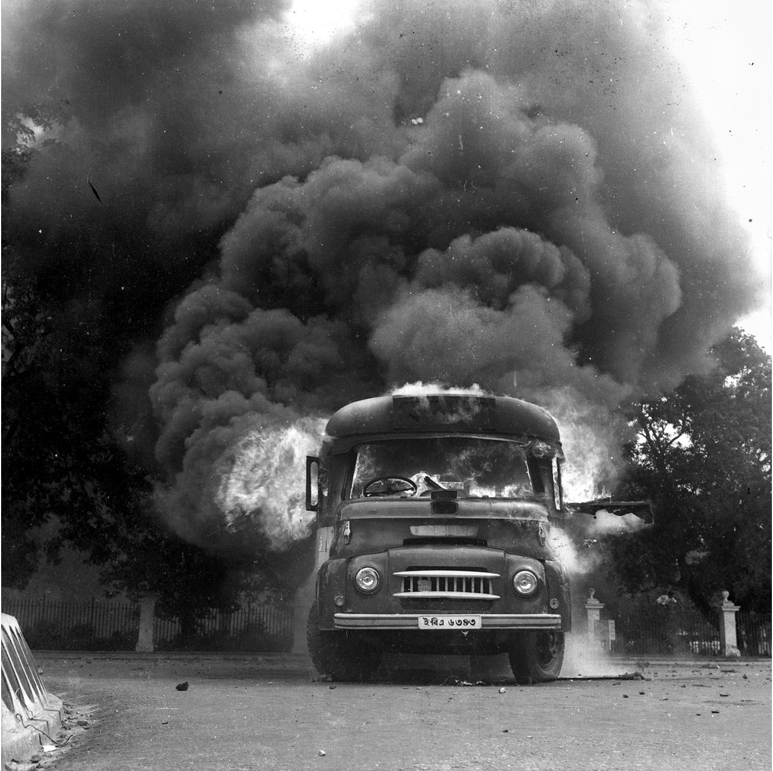
The caption read: “An unpublished photograph: On the historic 7 June 1966, a protesting crowd set a bus ablaze in front of the High Court. The autocratic government suppressed all publication of news and photographs of the movement.”
The six photographs published on the back page appeared under the headline: “The People’s Rebellion Ablaze”. Printed in reverse type, the headline seemed to embody both grief and outrage. Beside it appeared the subtitle: “Some unpublished photographs from the blood-drenched June 7, 1966.”
A general caption across the centre of the page read: “These photographs stand as testimony to the movement of the blood-stained June 7, 1966 and to the autocratic rule of Ayub Khan. At the time, the murderous regime did not permit their publication. Today, in independent Bangladesh, we present here a few of those previously unseen images of the people’s glorious struggle and resistance. The photographs were taken by Sangbad’s own photojournalist, Mr. Abdur Rashid Talukder.”
Beside the caption appeared a few defiant lines:
“You think you can only take lives,
For you are aided by cruel cannons.
We too have warm chests and blood deep red,
Time has indicated that history is on our side.”
Shahadat Parvez is a photographer and researcher. The article has been translated by Miftahul Jannat
Send your articles for Slow Reads to slowreads@thedailystar.net. Check out our submission guidelines for details.
Forgotten story of Jeanette Van Tassel, the American woman who flew over Dhaka in 1892
Beyond 1947 / A personal essay
Abul Mansur Ahmad / A global quest in search of a nation
Chand Bibi and the forgotten history of Muslim women’s political resistance
Women’s voices in Nazrul’s Dhumketu
How Milad-un-Nabi shaped Muslim cultural life in colonial Bengal
What Rashomon teaches us about truth and human behaviour
Why Chittagong never became a maritime city
The many worlds of Ghulam Murshid