Ferdausi Rahman: The making of a music legend

It was the month of Asharh, which marks the rainy season in Bengal. The skies were dry and the weather was hot and unbearable. People cried out for rain, and then the showers came, bringing peace to the inhabitants. In the middle of the profuse downpour, legendary singer and musician Abbasuddin Ahmed's wife, Lutfunnessa Abbas, gave birth to a fairy princess, their first daughter after three sons in a row. Abbasuddin was overjoyed. The family lived in Cooch Bihar, a princely state in West Bengal, India. Abbasuddin mostly lived alone in Kolkata, the metropolis. He often made trips to be with his family in Cooch Bihar. These trips became more frequent as he welcomed his only daughter. He named her Ferdausi Begum. He held her in his arms and softly sang songs to put her to sleep. His father, Moulvi Zafar Ali Ahmed, remarked, "Abbas really loves his daughter, much more than his sons. I think he will bestow all his property on her."
Truly enough, Abbasuddin Ahmed gave her his melodious voice, his songs, his versatility, and his talent. She became the singing icon of erstwhile Pakistan and then Bangladesh. Ferdausi Rahman became a household name, her name being synonymous with her songs, her playback singing, and her children's programme. Abbasuddin Ahmed left behind his legacy in her.
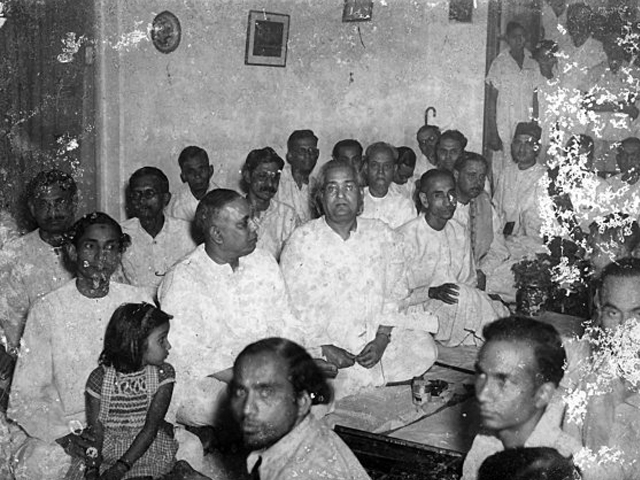
From a very early age, when none could conceive that a three-year-old would sing an entire song, she sang "Shudhu Kangaler Moto Cheyechinu Tar Malakhani." Songs and records overflowed in their home, and her uncle Abdul Karim was also a lyricist. He stayed with the family, and they spent evenings together in song and mirth. She learned her first Kazi Nazrul Islam song from a recording by Vidushi Dipali Nag: "Ankhi Pata Ghume Joraye Ashe." Everyone was taken by surprise by her impeccable rendition!
Partition took place in 1947, and Abbasuddin migrated to erstwhile East Pakistan. His family followed, including his wife, his sons Mustafa Kamal and Mustafa Zaman, and his six-year-old daughter, Ferdausi Begum. Another son, Mustafa Jamal, had passed away from typhoid. Admitted to St Francis School, Ferdausi (named Myrna after a Russian lassie) soon started getting private lessons in music.
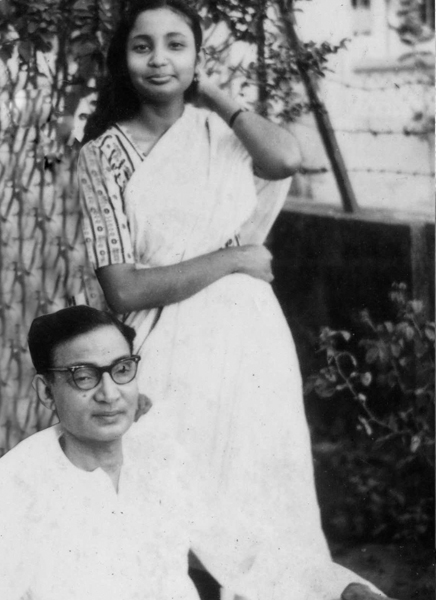
At the age of seventeen, she took everyone by surprise by presenting her first classical raga on the radio. She sang Raga Touri with grace and confidence. She was tutored at home by her father. He always bought her the latest albums by Lata Mangeshkar and Sandhya Mukhopadhyay. He encouraged her to learn those songs and sing them before him. Every emotion was captured with precision. During recess, she rendered these songs to her friends in college.
One day she sang two Bhawaiya songs on the radio. When she came home, her father looked shell-shocked. He said, "Where did you learn these songs, Myrna? I never taught you any folk songs!" Ferdausi had it in her blood. Who could stop her soaring fame?
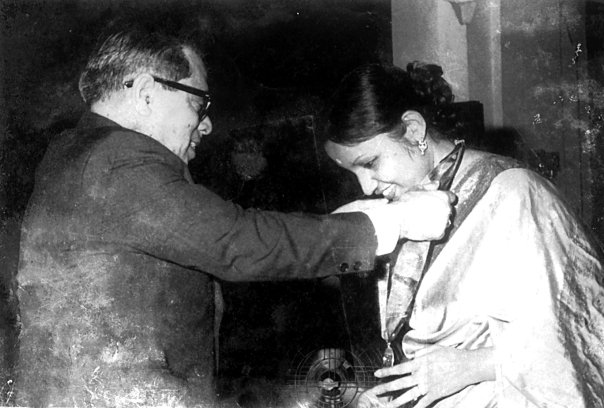
Then came offers for her to sing as a playback singer. Her father had passed away, but his prophetic predictions came true. Each and every playback song, both in Bangla and Urdu, became an instant hit. Ferdausi Rahman's name became synonymous with beautiful, melodious, and lilting songs. Be it playback or modern songs, Nazrul Sangeet or Urdu geet and ghazals, classical or semi-classical, Bhatiali or Bhawaiyya, she was unparalleled. She received the Pride of Performance award as its youngest recipient in 1965. Films in which she lent her voice—including Chanda, Talash, Rajdhanir Buke, Milan, Bahana, and Ayna O Oboshishto, to name a few—became immensely popular. She earned phenomenal popularity, comparable to that of Sandhya Mukhopadhyay in West Bengal and Lata Mangeshkar throughout India.
In 1961, she toured China for one month. There she sang in many communes and observed that each commune had its own common song. Everyone knew that song, and when one person sang, the entire population joined in. It was a great emblem of unity. She wished there were such songs in her own country. An opportunity arrived. In 1964, Pakistan Television started its broadcast in Dhaka, and she sang her first song as the opening artist, "Oi Je Akash Neel Holo Aj." She was invited to launch a children's programme titled "Esho Gan Shikhi." The programme was planned by artist Mustafa Monowar and achieved immense success, continuing to teach music to generations. Like the commune songs in China, any song from the programme Esho Gan Shikhi is known to all, and they are still sung by children and adults across generations. They have been instrumental in bringing music into the homes of Bangladeshis, many of whom would otherwise have been deprived.
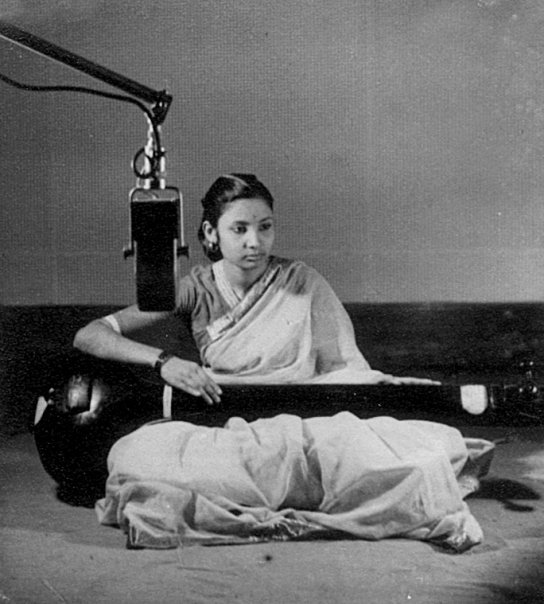
Ferdausi became a student of Ustad Nazakat Ali and Ustad Salamat Ali Khan. They travelled to many countries together. Sometimes Ustad Mehdi Hassan accompanied them. During her classical renditions, both the Khan brothers and ghazal maestro Mehdi Hassan would listen to her attentively from the wings. They greatly enjoyed her renditions, saying that they were presented with love and that her combinations brought novelty.
The upward journey continued. In singing and playback, teaching and composition, Ferdausi Rahman was awarded the prestigious Ekushey Padak (1977) and Swadhinata Padak (1995), along with many lifetime achievement awards. She has carried herself with dignity and honour and remains one of the greatest living legends of Bangladeshi music.
Nashid Kamal is a former academic, author, orator, Nazrul exponent, and translator.
Send your articles for Slow Reads to slowreads@thedailystar.net. Check out our submission guidelines for details.

157th Birth Anniversary of Mahatma Gandhi / Gandhi’s return to Noakhali
Why does Tagore still trouble Bangladesh’s idea of ‘us’?

Can Bangladesh make better use of its zakat money?
Three revolutions that reshaped the world
Paradise lost and found: Rediscovering early modern Bengal
Unbound Mother: The making and remaking of Kaali in Bengal

Do great leaders make history, or does history make them?
Poison and cremation: A forensic history of colonial Bengal