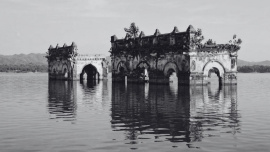
Bonolata Sen remains after a film hollows you out

There are films you understand, and there are films you half-understand. Bonolata Sen belongs to the latter—arriving not as a conventional narrative, but as the perpetual dusk of Jibanananda Das’s inner world. You do not follow it; you feel it, the way evening descends on earth—silently.
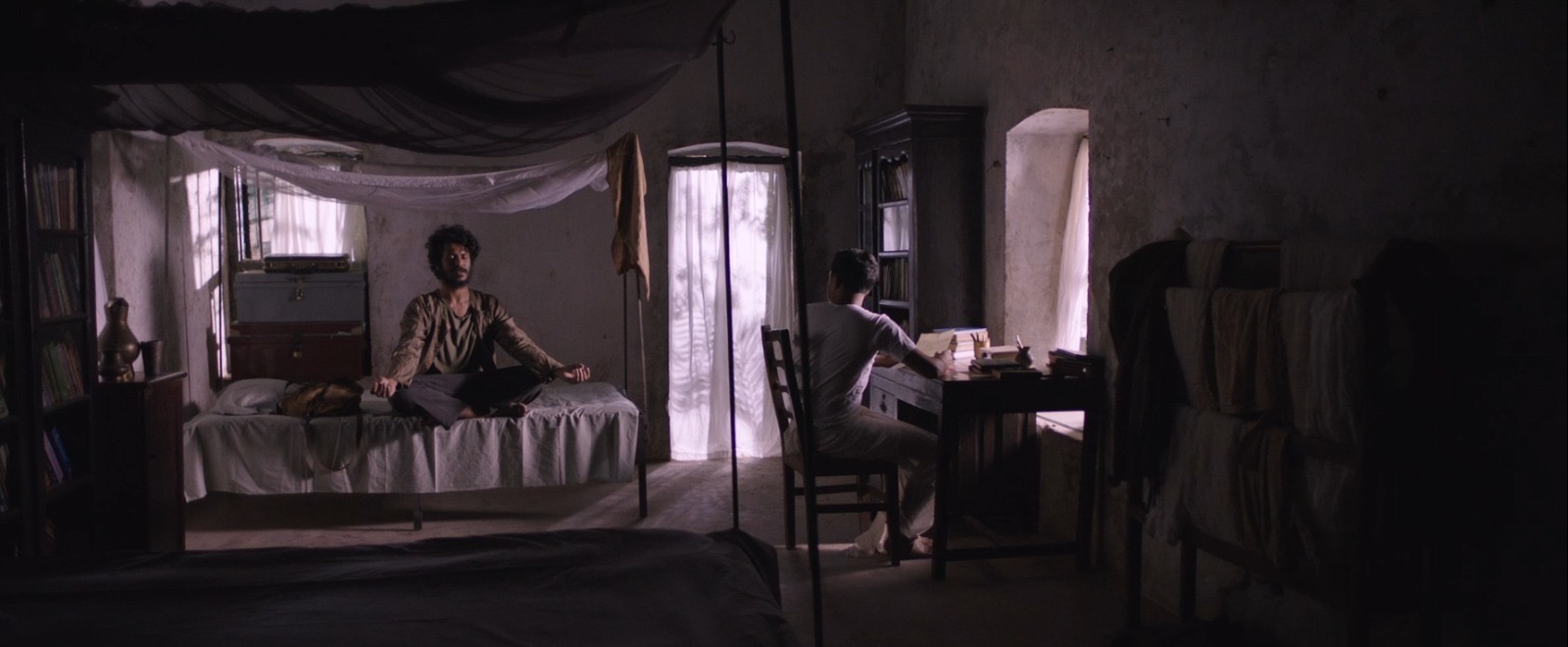
Directed by Masud Hasan Ujjal, Bonolata Sen is a film about desire playing out in eternal twilight. At its heart stand two men who are, in truth, one. There is Jibanananda—quiet, receding, almost erased by his own stillness—and Moheen, his restless shadow given flesh, voice, and a body that cannot stop searching. Where the poet turns inward, Moheen burns outward. Together, they form a portrait the world never quite saw: the full inner life of a man whose greatest creation was a woman who may never have existed.
Moheen’s presence is at times theatrical—perhaps more so than necessary—but this excess is not without meaning. It represents what the poet kept locked inside, finally unleashed upon the world. The real man and his alter-ego must merge to form a complete portrait; neither suffices by himself.
At one point, Moheen utters a line that stops you cold: I was not born yet. It sounds like a riddle, acting as the central paradox the film revolves around without ever quite naming it. It comes from a man searching across centuries for a woman who does not exist.
The film acknowledges the presence of Leela Nag, a character rooted in actual history, in real flesh, and in the tangible world. She arrives with weight, credibility and academic pedigree, but she cannot hold her ground. Moheen’s presence overwhelms her. His restless, obsessive searching sweeps past her like a tide past a standing stone—noticing her briefly before moving on toward an elusive Bonolata.
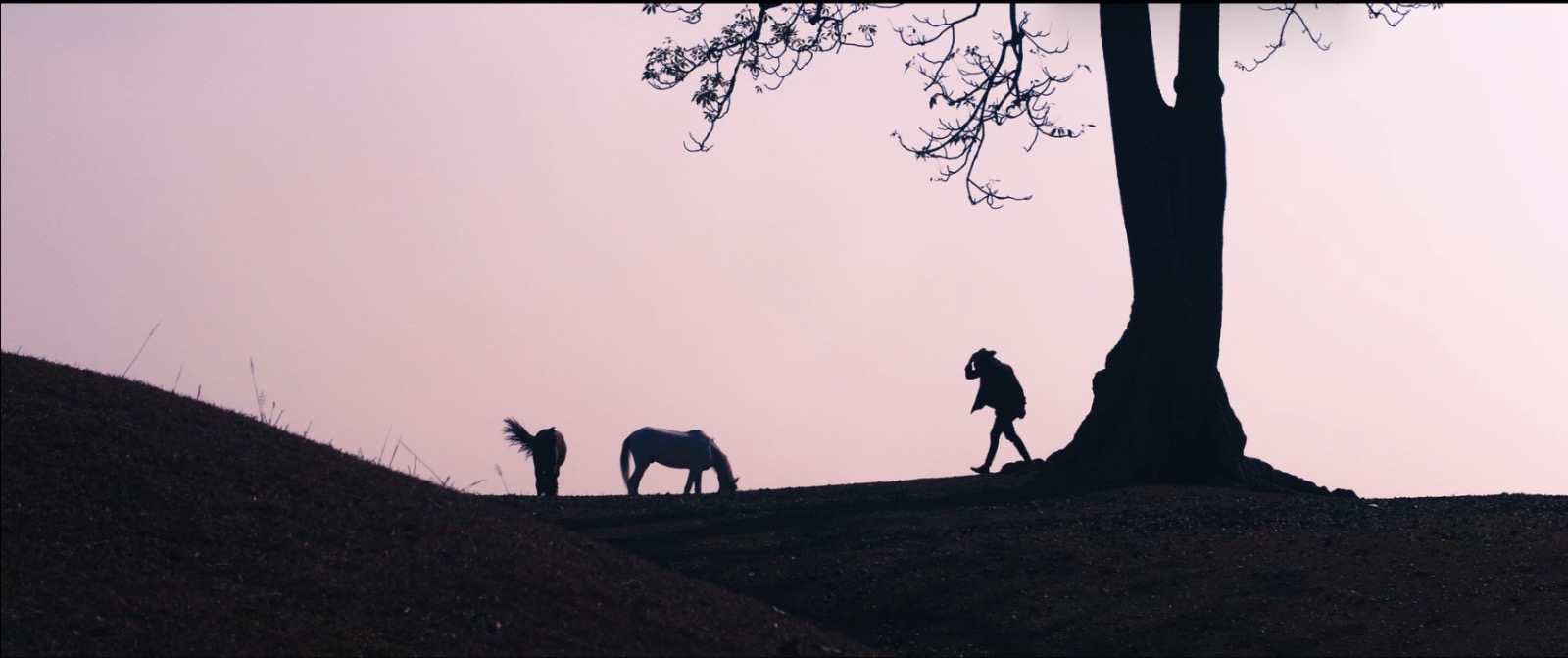
Jibanananda once wrote of horses from the Stone Age grazing in moonlit fields—ancient creatures displaced into a mechanised world, drawn by the lure of grass, wandering upon the earth’s grotesque dynamo. That is Moheen. That is the poet himself. They are neither dead nor born, existing instead in a liminal space between arrival and departure, between recognition and erasure, and, perhaps, between life and death.
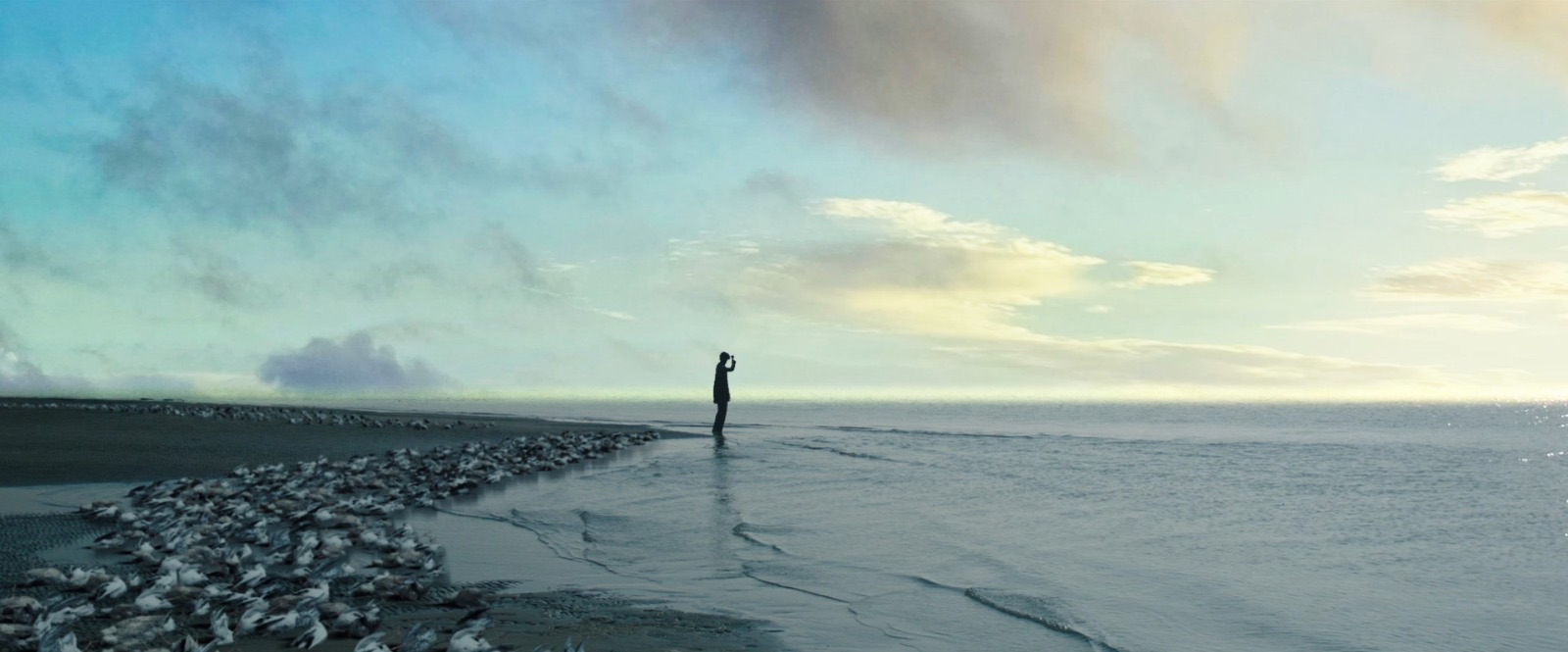
The brothel scene is perhaps the film's most painful sequence. Bishakha—a physical version of Bonolata—steps forward from the darkness, comforting Moheen, a lost man. She is tender. She is present. She is real—until she isn't. A lantern lights up walls that have absorbed generations of longing—the kind that brings men to such places not for pleasure, but for proof. Proof that something real exists, that desire has a destination. Bishakha exists only in that precise moment between wanting and arriving, the same razor-thin space where Bonolata has always lived. She lives in the poem, in the poet’s mind, and in the centuries of wandering that Jibanananda mapped so precisely. From Vidisha to Sravasti, the ancient world dissolves into this one, all of it drawing toward a woman holding a lantern in the dark.
The filmmaker understood something essential here: desire in the physical world is not consummation; it is resignation. A man doesn’t walk into that brothel with hope. He walks in with exhaustion, carrying the accumulated weight of every previous disappointment—and still, he walks in. He does so because the walking itself is all there is. Because Bonolata cannot be found, she can only be approached. Again and again.
This is the weight the film's darkness carries. Technically, it is a conscious cinematic mood and a deliberate aesthetic choice. Yet it is also the inner life Jibanananda inhabited, which the director and the cinematographer have successfully reproduced—a world where brightness feels dishonest, and where shadow is the only truthful light.
This film does not hold your hand.
Bonolata Sen arrives not as a story to be learned, but as a world to be felt within a dream. Time here does not move forward; it accumulates. Layers press upon layers, mirroring the way memory—and poetry—actually work.
Most audiences will resist this. They will feel frustrated, untethered, and cheated of a narrative, leaving the cinema with questions they cannot properly articulate—a vague sense of having missed something essential, of standing outside a door that never quite opened.
And they will not be entirely wrong.
But what they may not realise until much later, in the quiet after the evening has fully descended, is that this bewilderment is intentional. The audience will carry home a sense of emptiness, just as I did. The poet himself resists complete comprehension. The poem resists it. The woman at its centre resists it. She was always designed to dissolve at the exact moment of approach.
There is a long tradition of this. We see it in Sufi poetry, where the beloved is simultaneously human and divine, present and unreachable. We see it in Zen, where the unanswerable question is itself the answer. And we see it in modernist literature, where incomprehension is not a wall but a doorway—where the feeling of not quite grasping something becomes its own form of beauty, its own form of knowledge.
To not fully understand Bonolata Sen—both the poem and the film—is perhaps the most authentic way of receiving it. The uninitiated viewer who leaves confused and slightly unmoored, carrying an inexplicable feeling they cannot name, may have encountered the film more completely than someone who successfully decoded every literary reference, mapped every historical allusion, and identified every borrowed image. In truth, Jibanananda was not writing to be decoded; he was writing to be felt.
What Masud Hasan has attempted—and perhaps achieved—is an act of radical translation: the abstract made tangible, the invisible given flesh. Jibanananda’s poetry lives in a realm beyond the physical, lingering in sensation, in half-memory, and in the evening light on ancient water. The film reaches into that realm and pulls something back, giving it texture and weight—culminating in a woman with a lantern in the dark. Bishakha. Or Bonolata. The same absence. The same light.
You can almost touch it.
And then, it fades. Like mist rising off the southern Dhanshiri—the river Jibanananda returned to again and again in his imagination, that ribbon of water carrying everything he loved about Bengal’s quiet, melancholy beauty—the film’s tangible world dissolves back into abstraction the moment you reach for it.
That is the entire point of the film.
Yet, it stops short of the most haunting question of all.
In 1954, Jibanananda stepped in front of a tram in Kolkata. Eight days later, he was gone. And nobody—not then, not now, and not in this film—can tell us with certainty what happened in that moment. Was he simply elsewhere in his mind, wandering as he always did, absorbed inside that vast interior universe where Bonolata or Bishakha existed? Had the physical world simply become too thin, too insufficient to hold him any longer? Or had life itself—the accumulated weight of poverty and a marriage that offered little peace—quietly ground him down to nothing?
Here was a man who created the most celebrated, sensuous, and longed-for woman in Bengali literature, yet what existed between him and his wife, Labanya—the real woman beside him—remains largely unexamined. Two people lived under the same roof, separated by a vast distance. The poet disappeared daily into a world his wife could not enter, leaving Labanya to navigate life beside a man who was more present in his imagination than in his own home.
But before Labanya, before Bishakha, and before the dream consumed everything, there was Shobhona. A cousin. A real presence. She was a woman whose proximity stirred something in the young poet that was firmly grounded in actual human feeling.
The film holds one scene so quiet and apparently insignificant that it almost passes without notice: Jibanananda and Shobhona sitting on a bank of the Dhanshiri. A man in white. A woman in turquoise.
The Dhanshiri that Jibanananda made immortal is no longer what it was. The river has lost its way; it is shallow now, sandy and uncertain, searching for its own course the way a man searches for a woman who may not exist. It is still beautiful, still carrying that particular Bengali light—diffused, golden, and melancholy—but it is diminished. Standing there, you understand something no biography can fully capture: his love for this landscape was not mere romantic decoration. It was the ground beneath everything. It was the very thing that made him possible.
This, perhaps, is the film’s most quietly devastating truth.
The real women—Shobhona, Leela, even Labanya—exist. They have names, and they occupy actual space in the world. But they cannot compete with what Bonolata is. She is achingly beautiful because she is an absence. A longing.
Bonolata Sen of Natore offers “two moments of peace,” and then—where does she go? Where is she today? She is not in Natore. She is not in any perfume distillery, brothel doorway, or ancient city. She lives only in the space between the poem and the reader, between the film and the darkened hall, and between one weary soul and the darkness it finally learns to sit with.
She is wherever the longing is.
Ultimately, the film makes a radical statement: Bengali literature did not end with Rabindranath Tagore. It did not close when that enormous sun set. Instead, it continued. It shifted, deepened, and grew stranger and more interior, finding in Jibanananda Das a voice that Tagore himself could not have produced. It is a voice less universal, perhaps, but more solitary. More modern. More honest about the darkness.
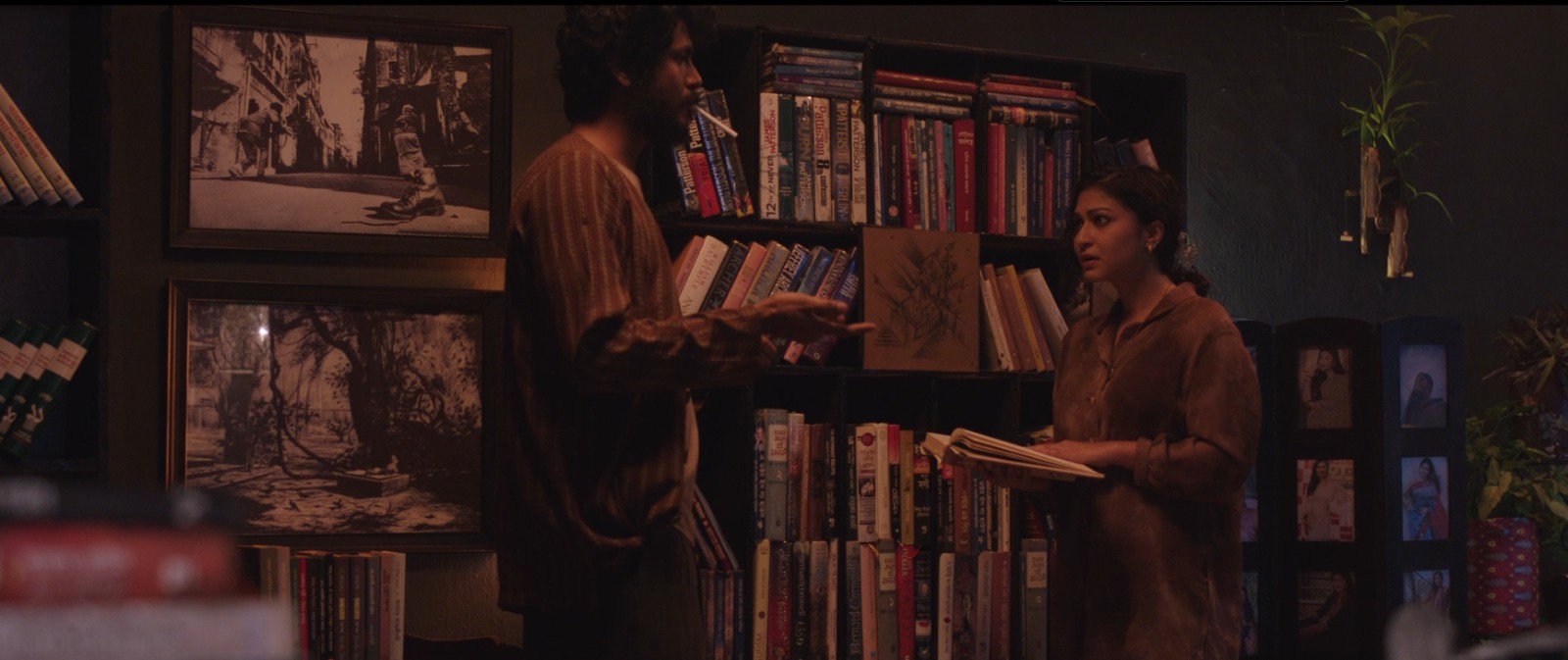
Yet, the film cannot fully escape Tagore’s gravitational pull—nor does it try to. There he is, a portrait on the wall. Watching. Presiding. His familiar face has become almost architectural in the Bengali consciousness, and the director did not place that portrait carelessly. It is a conscious act of acknowledgment, situating Jibanananda within a literary lineage while simultaneously suggesting he reached somewhere beyond it.
And then—জীবনমরণের সীমানা ছাড়ায়ে, বন্ধু হে আমার, রয়েছ দাঁড়ায়ে—beyond the boundaries of life and death. Tagore’s words float through a film about a man who dissolved those very boundaries in his poetry, and perhaps, in that final moment before the tram accident.
The film is not without its excesses. A herd of pigs moving through a forest, for instance. One searches for the metaphor and finds—what exactly? Is desire reduced to animal instinct? Is it humanity’s baser nature rooting through the darkness? Whatever the intention, the scene feels like an unnecessary intrusion.
Then there is a mortuary.
Here, one must pause. Jibanananda did write about death with extraordinary intimacy; his poem on the mortuary is real, powerful, and entirely his own. But lifting that imagery into this film feels slapdash and unearned.
Then there is a Buddhist temple from above.
The aerial shot announces influence rather than embodying it. Yes, Buddhist philosophy permeates Jibanananda’s poetry—that profound sense of impermanence, of desire as suffering, of the world as a beautiful illusion. But here, the aerial shot merely resembles a tourist's image of something sacred.
These excesses share a common failure: they mistake symbolism for poetry.
And yet.
The film does not leave you in ruins. Not entirely.
This is perhaps its most faithful achievement, marking its deepest fidelity to the poem that breathed it into existence. For all his solitude, for all his grey wandering through the kingdoms of Bimbisara and Ashoka, through the midnight waters of Malay, and through the accumulated exhaustion of a thousand years of roads—Jibanananda was not writing a poem about despair. He was writing a poem about arrival.
Weary, yes. But arriving.
Bonolata Sen earns this. Through its darkness, its moody interiors, its mysterious women, and its unanswered questions about the poet’s death, his troubled marriage, and a literary world that barely acknowledged him while he lived—through all of it, the film moves steadily toward that final stillness. It moves toward the moment after everything has been spent.
And there she is.
Bonolata, sitting face to face with the poet in the dark—her eyes like a bird’s nest, her face reflecting the delicate craftsmanship of Sravasti’s forgotten art. She does not explain herself, nor does she need to. She simply remains when everything else has faded.
Only darkness remains, and Bonolata Sen, to sit face to face with.
When the cinema’s lights came back on, I walked out hollowed. The perpetual dusk of Jibanananda’s world had followed me out of the cinema and into the evening.
Arun Devnath is the Deputy Editor at The Daily Star.
Send your articles for Slow Reads to slowreads@thedailystar.net. Check out our submission guidelines for details.

157th Birth Anniversary of Mahatma Gandhi / Gandhi’s return to Noakhali
Why does Tagore still trouble Bangladesh’s idea of ‘us’?

Can Bangladesh make better use of its zakat money?
Three revolutions that reshaped the world
Paradise lost and found: Rediscovering early modern Bengal
Unbound Mother: The making and remaking of Kaali in Bengal

Do great leaders make history, or does history make them?
Poison and cremation: A forensic history of colonial Bengal