From Durée to Nomadology: Tagore’s “Balaka” and the decolonial poetics of becoming

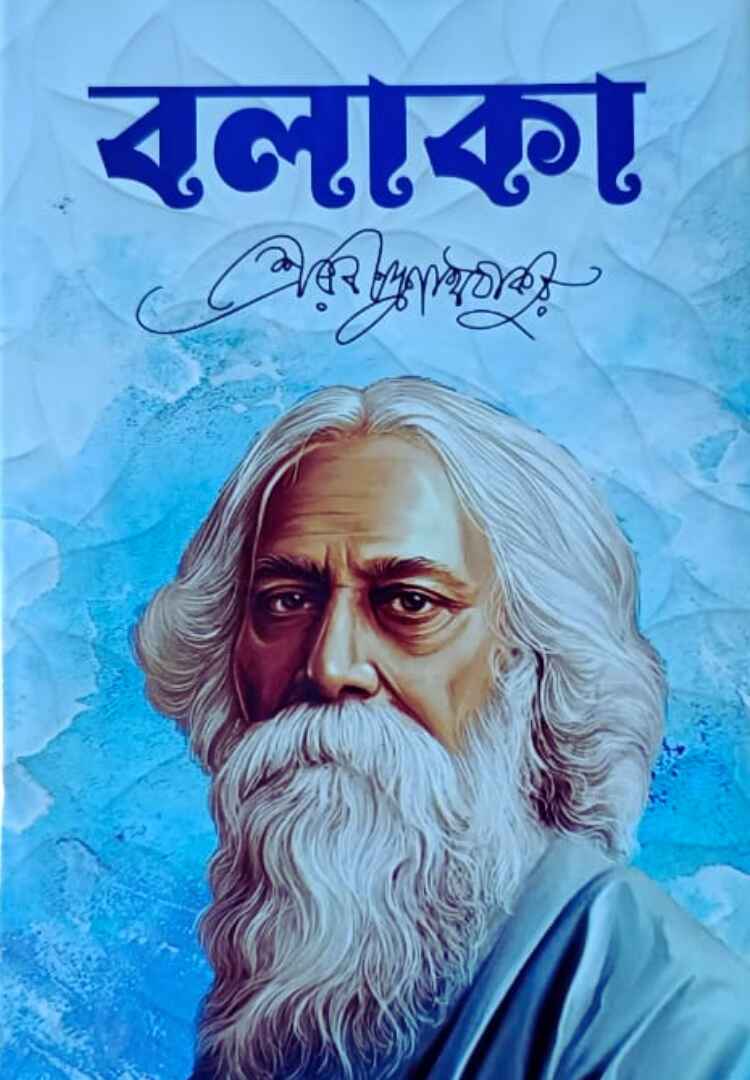
When Rabindranath Tagore published Balaka in 1916, the world stood at a historical threshold. Empire still organised global reality, yet the epistemological and moral certainties underpinning nineteenth-century civilisation had already begun to fracture. Industrial modernity accelerated movement across continents through railways, steamships, and telegraphy, while the catastrophe of the First World War exposed the violence concealed beneath Europe’s civilisational self-image as the bearer of reason and progress. Within this turbulent historical conjuncture, Balaka emerged not merely as a collection of poems but as a philosophical intervention into the meaning of motion, temporality, and human existence itself.
The title—meaning a flight of cranes or wild geese in migratory movement—announces the collection’s governing metaphor from the outset. Yet the birds of Balaka are not simply lyrical embellishments within nature poetry. They become figures of transition, vectors of becoming, embodiments of a universe perpetually in motion. Through them, Tagore reinvents poetic form as a medium for metaphysical inquiry. The stillness and devotional inwardness associated with Gitanjali give way here to a kinetic cosmology in which reality unfolds as vibration, flux, and continual transformation.
What makes Balaka philosophically remarkable is that its poetics of motion stages a sustained dialogue across intellectual traditions. The collection engages Henri Bergson’s key concepts of durée (lived duration) and élan vital (vital impulse), reworking the idea of creative evolution as a continuous unfolding of time rather than a sequence of discrete moments. At the same time, it draws upon Indic traditions of impermanence (anitya), momentariness (kṣaṇikavāda), and vibratory ontology (spanda), where reality is understood not as substance but as ceaseless becoming. In retrospect, it also anticipates aspects of what Gilles Deleuze and Félix Guattari would later theorise as nomadology, deterritorialisation, and lines of flight—concepts that foreground movement over fixity, and becoming over being. Yet these resonances never culminate in synthesis or philosophical reconciliation. Instead, Balaka produces a dynamic field of motion in which ideas traverse, collide, and unsettle one another. The Orient and the Occident do not merge into harmonious universality; they encounter each other through displacement, interruption, and continual transformation.
To read Balaka today is therefore to encounter an extraordinarily early form of decolonial thought—one that resists both colonial hierarchies and reactionary cultural essentialism. Extending its engagement with Bergsonian durée and élan vital, as well as Indic ontologies of spanda, anitya, and kṣaṇikavāda, Balaka reconfigures motion itself as a philosophical principle rather than a mere thematic motif. Against the colonial construction of the East as timeless, passive, and spiritually static, Tagore reimagines Bengal as a site of kinetic thought in which being is indistinguishable from becoming. Motion thus becomes epistemological resistance: a way of undoing fixed identities imposed by imperial discourse and metaphysical essentialism alike. Becoming, in this sense, is not only a metaphysical condition but also an ethical and political horizon for a non-teleological, decolonial humanism.
Duration and the Poetics of Temporal Flow
The philosophical proximity between Balaka and Bergson’s durée is striking. Writing against mechanistic understandings of time inherited from positivism and scientific rationalism, Bergson argued that lived temporality cannot be reduced to measurable succession. Real time is duration: qualitative, indivisible, and continuously flowing. Consciousness experiences temporality not as isolated moments arranged spatially like points on a line but as an interpenetrating continuity akin to melody.
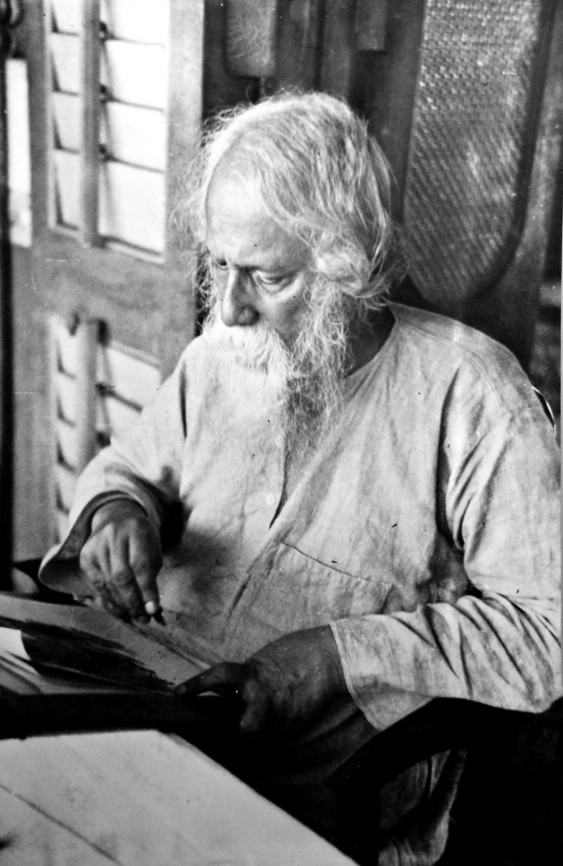
Tagore’s poetic practice in Balaka repeatedly enacts this Bergsonian temporality. The poems resist stable chronology and narrative progression. Images dissolve into one another with dreamlike fluidity. Memory, sensation, anticipation, and perception coexist simultaneously. Rather than describing movement from the outside, the poems inhabit movement internally.
Here is the corrected version with grammar improved, British spelling retained, and your word count and density preserved.
This becomes evident in lines such as:
“Je muhurte purno tumi, she muhurte kichu tobo nai, tumi tai pobitro shodai.”
(“The moment you are full is when you possess nothing; and thus you are ever sacred.”)
The paradox destabilises metaphysical closure. Fullness emerges not through accumulation but through relinquishment. Completion coincides with emptiness. The sacred lies not in achieved permanence but in openness to transformation. Here, being reveals itself as becoming.
Bergson’s notion of élan vital—the vital impulse through which life continually creates itself—finds a powerful echo in this poetic ontology. Yet Tagore’s vision simultaneously exceeds Bergson’s secular vitalism. Beneath the lyric resides a distinctly Indic metaphysical field in which permanence is variously affirmed, qualified, and dissolved: in the non-dual absolutism of Adi Shankaracharya, where ultimate reality is an unchanging Brahman and becoming is displaced into appearance; in the qualified non-dualism of Ramanuja, where difference and relationality become real modalities of the absolute; and in Buddhist thought, where nirvāṇa marks the cessation of attachment to any enduring essence within a world of radical impermanence. Across these trajectories, being is repeatedly displaced, reconfigured, or dissolved, and it is within this dense philosophical field that Tagore’s poetics of motion situates itself, where becoming is not a deviation from truth but its very condition of existence.
Balaka imagines reality as fundamentally unstable, departing from metaphysical traditions that privilege stable identity, fixed essence, or transcendental permanence. Motion does not interrupt order; motion is order.
The Migratory Imagination
If Bergson liberates time from mechanical measurement, Deleuze and Guattari extend this liberation into ontology, politics, and space. In A Thousand Plateaus, they formulate nomadology as a philosophy of movement resisting territorial fixation and hierarchical organisation. Becoming operates through lines of flight—deterritorialising movements that disrupt rigid structures of identity and power.
Tagore’s migratory cranes embody this nomadic logic with remarkable precision decades before the publication of Deleuze and Guattari’s work. The birds do not symbolise destination or transcendence. Their significance lies precisely in movement itself. Flight becomes a mode of existence.
Again and again, Balaka dissolves the stability of place. Rivers flow endlessly. Winds traverse boundaries. Birds cut across open skies. Stars move through infinite space. Even the human self appears transient and unstable, constituted through passage rather than rootedness.
This nomadic imagination surfaces poignantly in the line:
“Smriti bharey ami pore achhi, bhramamukto she ekhane nai.”
(“I lie here weighed down by memory; the one free of illusion is no longer here.”)
Memory appears here as sedimentation, as a force anchoring the self within immobility. The absent figure escapes through movement beyond attachment. In Deleuzian terms, this departure resembles a line of flight: an exit from fixed identity into becoming.
Yet Tagore’s nomadism differs from purely post-structural abstraction. Movement in Balaka is not merely conceptual deterritorialisation; it remains affective, ethical, and existential. The poems are haunted by longing, loss, and transience. The migratory imagination carries both exhilaration and melancholy. Human beings move because existence itself is unfinished.
To read Balaka today is therefore to encounter an extraordinarily early form of decolonial thought—one that resists both colonial hierarchies and reactionary cultural essentialism. Extending its engagement with Bergsonian durée and élan vital, as well as Indic ontologies of spanda, anitya, and kṣaṇikavāda, Balaka reconfigures motion itself as a philosophical principle rather than a mere thematic motif. Against the colonial construction of the East as timeless, passive, and spiritually static, Tagore reimagines Bengal as a site of kinetic thought in which being is indistinguishable from becoming. Motion thus becomes epistemological resistance: a way of undoing fixed identities imposed by imperial discourse and metaphysical essentialism alike. Becoming, in this sense, is not only a metaphysical condition but also an ethical and political horizon for a non-teleological, decolonial humanism.
This unfinishedness becomes central to Tagore’s humanism. The human subject is not defined through essence, nation, race, or civilisational purity. Humanity emerges relationally through movement across difference.
Indic Cosmologies of Becoming
Reading Balaka solely through European philosophy, however, risks reproducing the very colonial epistemology the text resists. Long before Bergson or Deleuze, South Asian philosophical traditions had already conceptualised reality through impermanence, vibration, and process.
The Sanskrit concept of spanda understands the cosmos as pulsation or rhythmic vibration. Reality exists not as inert substance but as dynamic energy. Similarly, Buddhist kṣaṇikavāda posits momentariness: all phenomena arise and vanish continuously, rendering permanence illusory. The wandering paribrajaka or ascetic traveller embodies an ethics of mobility that predates modern nomadology by centuries.
Here is your corrected version with grammar improved, British spelling maintained, and word count and density preserved.
These traditions shadow Balaka profoundly. Yet Tagore does not mobilise them as civilisational nostalgia or essentialised “Eastern wisdom.” Instead, he transforms them through encounter with modernity. Indic metaphysics and European process philosophy enter into a reciprocal unsettling in which neither retains purity.
This is precisely what gives Balaka its decolonial force.
Colonial discourse frequently imagined the East as timeless, static, and spiritually passive, while assigning dynamism, progress, and historical agency to the West. Tagore reverses this hierarchy without simply inverting it. Bengal becomes a site of movement, experimentation, and philosophical innovation. The East is no longer immobilised within metaphysical timelessness.
At the same time, Tagore resists nationalist essentialism. Balaka does not advocate a return to cultural purity or enclosed civilisational identity. Its migratory birds traverse borders ceaselessly. Motion itself becomes cosmopolitan.
A Cosmology of Velocity and the Modern Sensorium
What emerges in Balaka is a distinctive reconfiguration of modernity not grounded in industrial machinery but in a cosmology of accelerated perception. Motion is no longer anchored in static spatial order; it becomes the very medium through which reality discloses itself. Wind, rivers, migratory birds, and celestial bodies form a continuous field of movement in which no entity exists outside relational passage.
Within this kinetic ontology, Tagore’s poetics resonates with Henri Bergson’s critique of spatialised time and his concept of durée as lived, indivisible flow. Time in Balaka is not segmented into measurable units but experienced as qualitative continuity—an unfolding in which perception, memory, and anticipation interpenetrate. The lyrical imagination thus approximates Bergson’s élan vital, not as biological metaphor alone, but as a broader principle of creative self-differentiation within lived temporality.
At the same time, this movement anticipates what Gilles Deleuze and Félix Guattari would later theorise as a world of deterritorialised flows, where becoming precedes fixed identity and relational motion displaces stable form. The migratory bird (balaka) becomes an emblem of such nomadic ontology: it does not signify arrival or destination, but continuous passage through open space.
What finally emerges from Balaka is a radically reconfigured humanism. Unlike Enlightenment universalism, Tagore’s vision does not conceal imperial hierarchy beneath abstract reason. Nor does it retreat into reactionary particularism or civilisational purity. Instead, Balaka imagines a world-humanism grounded in becoming itself. The human remains unfinished, diasporic, and perpetually in transit.
Crucially, this modernity is not technological but cosmological. Its “speed” is not produced by machines but by the intrinsic dynamism of the universe itself, where wind, water, and celestial movement constitute a unified field of becoming. In this sense, Balaka articulates a modernity without industrial referent—a modernity of pure motion in which the world is no longer a container of objects but a process of unfolding relations.
Smooth Space and the Ethics of Openness
Deleuze and Guattari distinguish between “striated space” and “smooth space.” Striated space is ordered, regulated, territorialised, and measurable. Smooth space remains open, fluid, indeterminate, and resistant to capture.
Balaka unfolds overwhelmingly within smooth space.
Its landscapes refuse enclosure. Horizons remain shifting. Rivers exceed banks. Birds traverse borders. Even language itself becomes rhythmic movement rather than stable representation. The poems continually evade closure, ending not in resolution but in continuation.
This spatial logic carries ethical implications of considerable significance today. Against all ideologies grounded in rooted absolutism—nationalist purity, civilisational essentialism, racial enclosure—Tagore proposes movement as ethical openness.
The human being in Balaka is never self-identical. Identity remains porous, relational, unfinished. Hospitality towards transformation becomes the foundation of coexistence.
Such a vision acquires renewed urgency within the contemporary world. Our historical moment is increasingly marked by exclusionary nationalisms, border anxieties, xenophobia, and cultural closure. Everywhere one witnesses attempts to territorialise identity absolutely—to convert humanity into fixed categories of race, religion, language, or nation.
Tagore’s migratory imagination resists precisely this logic. The cranes crossing the sky refuse enclosure within cartographic certainty. Their movement becomes a philosophy of coexistence beyond territorial absolutism.
Here is your corrected version with grammar improved, British spelling maintained, and no reduction in word count or conceptual density.
Toward a Decolonial World-Humanism
What finally emerges from Balaka is a radically reconfigured humanism.
Unlike Enlightenment universalism, Tagore’s vision does not conceal imperial hierarchy beneath abstract reason. Nor does it retreat into reactionary particularism or civilisational purity. Instead, Balaka imagines a world-humanism grounded in becoming itself.
The human remains unfinished, diasporic, and perpetually in transit.
This humanism differs fundamentally from colonial narratives of progress. Colonial modernity often imagined history teleologically: Europe represented the future towards which the rest of the world supposedly moved. Tagore rejects such linear temporality. Movement in Balaka has no final destination. Becoming itself becomes the condition of freedom.
Nor is this movement reducible to liberal cosmopolitanism detached from history. The decolonial force of Balaka lies precisely in its refusal to subordinate Indic thought to European conceptual authority, while simultaneously refusing cultural isolationism. Tagore stages philosophical encounter without hierarchy.
From Bergsonian durée to Deleuzian nomadology, from spanda to rhizomatic becoming, Balaka traverses intellectual traditions without belonging exclusively to any of them. The result is neither synthesis nor eclecticism but a mobile field of thought resisting enclosure.
To read Balaka today is therefore to encounter a text astonishingly contemporary in its implications. Long before globalisation discourse, postcolonial theory, or planetary ethics emerged as academic vocabularies, Tagore had already imagined humanity relationally through movement across difference.
The cranes of Balaka continue their flight across philosophical borders. They remind us that perhaps the most vital form of resistance against every closed system—imperial, nationalist, metaphysical, or epistemological—lies in remaining open to transformation itself.
In that sense, Balaka never truly concludes. It remains perpetually in movement: ever arriving, never arrived.
A brief caveat is necessary: the decolonial force of this reading is primarily epistemological and aesthetic, concerned with the undoing of civilisational temporality and the reconfiguration of Southern intellectual agency. It does not extend to questions of colonial political economy in the sense developed in later decolonial theory, nor does it seek to exhaust the historical complexity of Tagore’s political positioning. Within its specific domain—the critique of Orientalist stasis and the rethinking of being as becoming—Balaka remains decisively decolonial, even if that domain does not encompass the totality of decolonisation.
Dr. Faridul Alam, a former academic, writes from New York City.
Send your articles for Slow Reads to slowreads@thedailystar.net. Check out our submission guidelines for details.

Mercy, love, and pluralism: A sufi vision of Islam

Beyond the loom: How Jamdani preserves the values of peace

Hair oil, bumblebees, and the lost world of Bengali advertising art
The tale of some rare portraits from Nazrul’s final days
Tuning the melody of Baul songs into peace education

Shreemati Rassundari and the making of the first autobiography by a Bengali woman

Nabayug: Nazrul’s radical pen and Fazlul Huq’s leadership
Reading Nazrul in an age of inequality

East Bengal’s victory and the memory of lost homes