


Preparing for Your First Office Job
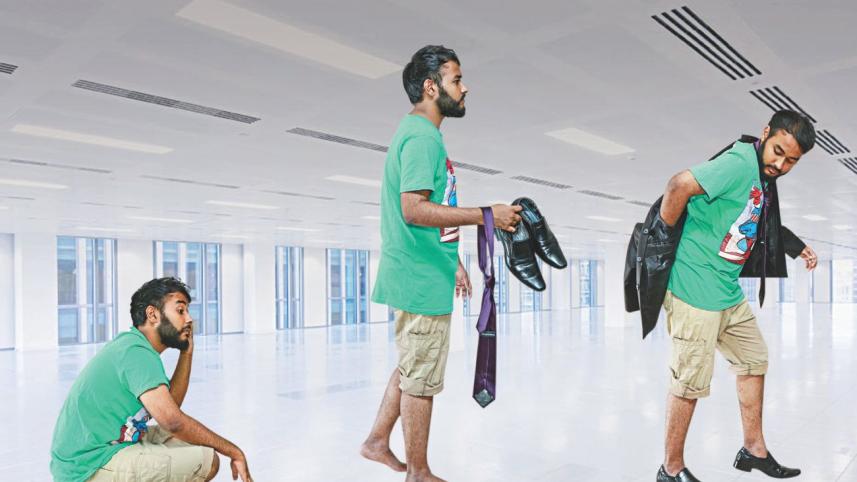
If you think your university courses can prepare you for jobs, you're quite not there yet. It's one thing to ace academics and another thing to step out into the work field. You have to go the extra mile to get yourself ready and we are happy to help.
FINDING A JOB OPENING
A common issue Bangladeshis face is that job openings are limited and competition is fierce. Similarly, we complain that there aren't as many opportunities for students to get part-time jobs. We hate to break it to you, but that only means you aren't looking hard enough.

For part-timers: As a student who wants to get involved in a part-time job, your focus must not be on the money. Don't dismiss an opportunity just because it doesn't meet your definition of a well-paying job. Firstly, find out what you are good at, or what you feel passionate about. Then go to the Facebook pages or websites of a few companies in that field, and follow them. These days, most companies actively use social media and their own website to recruit young talents, so keep an eye out for that.

"My friend showed me a post by imprint.com on their Facebook page, which said they were hiring," said Taki Uddin, a student of a private university. "So I applied, and got a call back for an interview, as did my friend."
For fresh graduates: It is expected that you will get into a job befitting of your degree that you worked so hard to earn over the last four years. For these jobs, always be on a look out. Always. The first thing you do in the morning should be searching the newspaper for any job opening. Sign up in the online job hunt websites and check them every day for a suitable job. Similarly, if there are any career fairs hosted by your university, make sure you attend those and drop your CV wherever appropriate. You can also use the networks you've built over the years to land yourself a direct interview opportunity, if possible. This is not the same as using unethical means to get a job, since you will go through the interview and get selected or rejected for your own skills. Remember, this is why people always encourage you to make more connections.
APPLYING FOR THE JOB
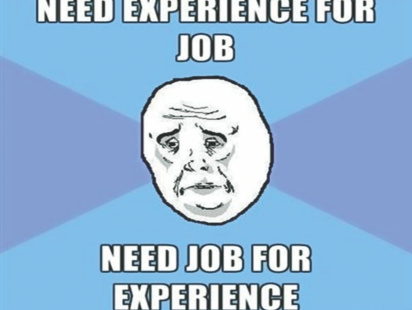
Whichever route you take to find a job, the first step in applying for a job would be to get a polished CV ready and like it or not, the preparation starts way before you graduate. Tanzina Giash Tanni, a recruitment associate, says, "I am enthusiastic about recruiting fresh graduates and interns. Their energy is commendable. As an employer, I look into their academics first. I'm not looking for numbers but I definitely want to see potential. As far as extracurricular activities are concerned, I appreciate someone who goes outside his/her comfort zone to achieve something. Just signing up for your university club does not add much to your profile."
Write your CV: It should include basic personal and contact details and next, your educational background. Start with the most recent one of your educational level and include name of the institution and your results as you go. Enlist jobs that you've had, at which company, and for what duration. Mention your extra-curricular activities that are relevant and might add value. List all your skills as well. Do put up a Career Objective box at the beginning, and attach a professional photograph of yourself (no, not your Facebook profile picture). And of course, ask Google for help in case you're confused.

You must now place that in all the right places. Do remember that every time you drop your CV somewhere, you must customise it according to the position, field and organisation you are applying to, especially in the Career Objective part. If it is a small and flexible organisation, maintain a relaxed tone in your CV. Highlight your skills that might be relevant to the field you are applying to. For example, if the job is of a public relations manager, highlight your communications skills and note down a few instances when you might have led a team. Some organisations do not accept standardised CVs, and rather ask you to answer a few descriptive questions, mostly based on personal experiences.
Research the job: If you don't research well, chances are that you will land yourself somewhere you did not intend being a part of. Ask seniors, visit company websites and follow news that might be available online. You might get an idea about the company culture and the kind of work ethics they follow. So, for sound decision making and higher chances of success at the interview, you must do your part of gathering information.

Submit the CV: Nowadays, most good companies rely on submission of CV over the internet. If you are emailing your CV, make sure you write which position you are applying for in the subject line and introduce yourself in the body. It is also a good idea to add your LinkedIn profile link in the message. But if you're dropping your CV in the traditional way, ensure that all the pages are properly stapled and are not wrinkly, otherwise your initial impression may get tarnished.
PREPARING FOR THE INTERVIEW
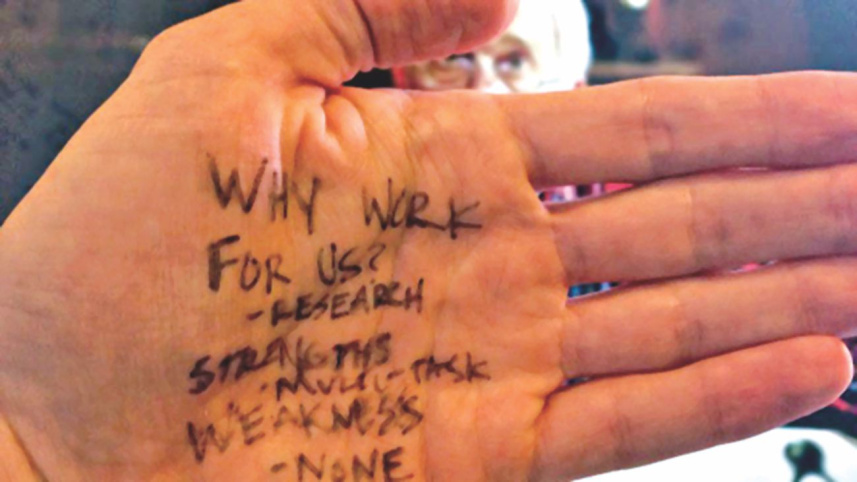
What you are asked at an interview can range from what the equation of a curve is to what you had for breakfast. In any case, assertion, confidence and good posture pay off. Getting dressed for an interview can be tricky too. You don't want to overdo anything but you also don't want to seem like you didn't put an effort. For men, formals are a must. However, many firms maintain a flexible environment and a suit and tie may in fact contradict with the overall culture. Hence, leave nothing out while you are conducting your research. For girls, there was once a time when sarees were considered formals but now, there's no harm wearing kameez or even shirts. However, stay away from excessive patterns and colours. We know it's boiling hot but sweat stains are a turn off, for both men and women. Do carry handkerchiefs.

In this day and age, social media can be a make or break thing for you. The person interviewing you might look you up on Facebook the moment you leave the door and though it shall not be admitted or mentioned, you can lose the job, depending on what social media 'image' you have. Get rid of any pictures or posts you think are inappropriate. Take care of your username.
AFTER GETTING THE JOB
Well, congratulations on getting your first job offer but you are not done yet. There are still so many things you need to take care of if you are to hold on to that job. The social media caution prevails. If you do make friends with your boss on Facebook or follow each other on Twitter, don't rant about your company's management or say that your boss is stingy. Not everything has a place on social media. Organise your time well and your desk too. Traffic jam excuses are getting too old. There are lots of file manager and organiser apps that help you track and manage your workload but over-dependence on your smart devices will rather backfire.
Adapting to the office culture is another issue that needs to be taken care of. Being an introvert and liking your own space is fine but once in a while, do join your colleagues for lunch or coffee break. Networking is the new-age mantra and you must make it work for you.
 For all latest news, follow The Daily Star's Google News channel.
 Arman R. Khan is a caffeine addict, a dreamer and a culture enthusiast who takes life one day at a time. Correspond with him at fb.com/arman.r.khan or tweet @ArmanRK
Dyuty Auronee is an occasional fusspot who loves her tea and authori-tea. Reach her at dyuty.r@gmail.com.


Comments