


The draft cyber law will restrict the media

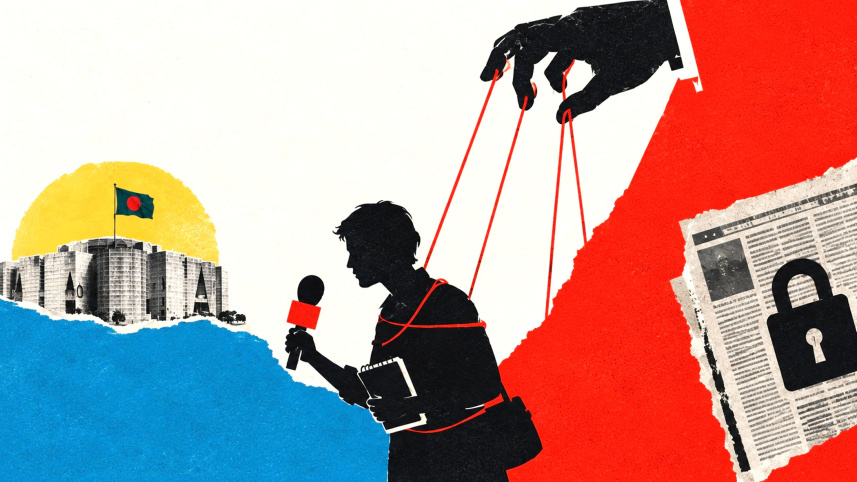
The first thing we want to bring to the attention of the public and the government—assuming the latter is interested—is the critical fact that the whole process of drafting the amendment to the existing cyber protection law was done by the bureaucrats. That may be understandable in the case of some other laws, but when a law deals with freedom of thought, speech and expression, they are clearly not ones to trust intuitively. Bureaucracy, by its very nature, is rarely interested in institutions that raise questions, differ, oppose or criticise it. Bureaucrats are primarily interested in “obedience”, which their “bosses” want and which they often seek to ensure in the name of “security”.
This may be evident in the fact that the title of the digital or cyber law long retained the word “security” in it, instead of “protection”. This distinction is important because, to many, “protection” represented the safeguarding of people, while “security” came to represent a government imposing its will and protecting politicians, ruling party members, bureaucrats and other government functionaries in the name of state security.

The vital thing that the current drafters of the law and its proponents have not taken into consideration is that the “cyber world” and the “media world”, which were once separate, are now so merged, so interactive, and so intricately interwoven that a law that deals with the cyber world will automatically and inevitably have impact on the media world—and invariably negatively. One law for two totally different worlds—one to fight crime, the other to expand freedoms—cannot be made in the old mould. In fact, whether one law can cover both is a question we want seriously raise at the very outset.
The infamous Digital Security Act was enacted in 2018, under the then ICT Minister Mustafa Jabbar. In 2023, the DSA was replaced by the Cyber Security Act (CSA) under the then Law Minister Anisul Huq. In 2025, the CSA was replaced by the Cyber Protection Ordinance under Law Adviser Dr Asif Nazrul of the interim government, which was adopted as a law by the BNP government in 2026. In June, an amendment to the law was passed in parliament. Now, it is being revised again, sadly for the worse.
The existing cyber law already permits actions against online content on the grounds of national security, defence, integrity, public order, incitement, and communal harmony. But the new Section 8(2) broadens the power to block or remove content based on apprehension, not just facts, and includes information that is “defamatory” or “derogatory” to any person or the state. If a law can be implemented based on apprehension, and if it has to do with defamation, then its implementation obviously becomes subjective. Given the past record of our law enforcers, who tilt with the prevailing political wind and is very “respectful” of the power of money, we can predict that the proposed cyber law will probably go in the same direction as the previous ones.
What is of greater concern is that the draft amendments empower new government institutions—who were never included before—to now implement the law, including the information ministry, whose officials might use it to control media outlets. The controversy surrounding the Department of Films and Publications is well known, yet nothing has been done about it though governments have come and gone.
Section 25 of the current law largely concerns online sexual harassment, blackmail, pornography, and material concerning child sexual abuse. This we consider relevant. But the amendments greatly broaden this section and unnecessarily includes defamation, humiliation, disparagement (“heyo protiponno” in Bangla) and bullying. They are made to cover speech, publications and reports that may portray someone as dishonourable. How can a report be written about a person stealing from public funds, adulterating food or medicine, supplying inferior road, bridge or railway material, or wilfully making non-performing loans without revealing facts that damages said person’s reputation?
This is very concerning, because investigative reporting, the very heart of journalism, can and will damage the reputation of a person, institution or a business. How can the media break a corruption story without revealing who the individuals accused of corruption are and what institution they represent? What about corrupt bureaucrats, police officials, and intelligence agencies? Will they ever let a journalist proceed once they learn that an investigative story is in progress? This draft law will stop all investigative reporting and critical journalism because anybody could claim to have been “defamed,” and police and others could enter a newspaper, TV, or an online media house and confiscate content and even take away some significant parts that may affect the whole output.
Section 25 also introduces much heavier penalties than before. For a general offence, the present two-year imprisonment has been increased to five years. If the victim is a woman or under 18, the punishment is 10 years and much higher fines. Offences that include speech or news report will greatly increase fear in journalists, which will lead to self-censorship that will significantly restrict investigative reporting meant to curtail corruption. So the legitimate question here is: are these amendments being drafted to reduce corruption or to protect the corrupt?
The proposed Section 26A has no equivalent in the existing law. It criminalises the publication or dissemination of “rumours” and “misinformation” in cyberspace, carrying a maximum punishment of 10 years. This is dangerous as there is no clear definition of what constitutes “rumours” or “misinformation. Without a clear definition, no crime can be properly determined and the “violator” punished. It constitutes an abuse of law.
As proposed, the new law is likely to negatively affect journalism and curb freedom of expression because of the broadly worded provisions (sections 25 and 26). “Rumours”, “bullying”, “misinformation”, “digital defamation”, “ humiliation”, and “fake news”—clear definition of all these occurrences do not exist in the draft. Lack of clarity as to what constitutes a rumour is particularly worrisome. It includes unsupported or unverified information, news or claims that may create or “have the potential to create” confusion, fear or social instability. These terms remain vague and their interpretation can be so subjective that putting such provisions of the law in the hands of police and any other government agency—about whose integrity and knowledge base we have some idea—is basically creating an environment of fear and intimidation, not to mention bribery.
The law’s investigative powers also raise concern. Sections 33 and 34 allow the authorities to access, search and seize computers, digital devices, and stored data. For journalists, every investigative report needs research and interviews with various sources, many of whom speak on assurance of anonymity. Can we expect them to do so when any investigating official can access a journalist’s phone, computer and/or network? This will intimidate all sources and damage independent reporting.
Perhaps the most stunning and shameful amendment suggested in the new draft—something that did not exist in all previous laws, including the most nefarious DSA—is trial by mobile courts. These courts are run by executive magistrates under the legal control and directive of deputy commissioners, who are essential parts of the government. So trial by mobile courts is trial by the administrators, meaning the government of the day. Will a mobile court allow investigative reporting particularly if it reveals corruption involving the government, the ruling party, and the influence-peddling class? A minister may force a mobile court to do their bidding because a DC is unlikely to intervene.
Under all previous laws, cybercrimes were tried in the tribunal, which was always headed by a judge. If the proposed amendments are approved without revision, this will be the first time that a mobile court will perform the functions of the tribunal. A reporter caught in a street, investigating manipulation of the prices of essentials, could be convicted by a mobile court for spreading rumours. Yes, it may not happen. But as the possibility exists, can I, as an editor, take the risk of jeopardising my colleague’s fundamental right to freedom?
Our conclusion is that there is no way that media can be protected under the draft cyber protection law. In the law approved by the interim government, there was a provision of judicial oversight while implementing the cyber law. Shockingly, this provision has been withdrawn in the draft amendments. There is no explanation from the authorities as to why. Its withdrawal may lead to ruthless implementation and open abuse.
Will this government not learn anything from the past? It was the DSA that triggered the most vicious and disrespectful views of Sheikh Hasina, personally, and of her government, institutionally. Will the promoters of the draft amendments not ask how many cyber criminals were punished or taken to task, and how many journalists, cartoonists, writers, poets and critics were jailed under the DSA? Facebook posts criticising ministers, MPs and political leaders led to arrest and confinement. DSA had 20 provisions carrying punishment, of which 14 were non-bailable. The draft law also has non-bailable sections. This is most dangerous. People are arrested and not granted bail for months and even years. A journalist fearing non-bailable arrest will seldom go for revealing corruption stories.
As we said earlier, the draft law aims its gun at cybercriminals but ends up targeting media institutions and professionals. The internet, digitalisation and now AI will take the media further into the cyber world. In fact, the prediction is that print media will cease to exist and media will survive only in the digital world. If that is the case, we need to rewrite all media laws in light of the fact that that existing laws dealing with media must become suitable for the digital world.
So, we need a separate cyber law for the media, or at least a separate set of rules and guidelines, which will prevent cybercrimes without hampering freedom of speech, expression and publication. The world does not have many examples of it yet. The European Union has made some inroads, but not much. Maybe Bangladesh can lead the way.
The draft cyber law will have an extremely negative impact on journalism, democracy, accountable government, and transparent administration. This law will harm the BNP government, whose prime minister has given early and very positive indications about his support for an independent media and freedom of the press. We would like to assume that he has not been fully briefed about the harmful aspects of the present draft.
We need to rework the proposed amendments. We suggest that a new initiative be taken with two groups of specialists: one dealing with cybercrimes and another dealing with the media, its freedoms and independence. Both groups can address the dangers of the cyber world from their respective professional ethos. We journalists commit our full cooperation to this venture. We can involve countries that have made progress in this area, as well as the EU and UN, and really play a leadership role in creating an appropriate law for the new media of the digital world.
 For all latest news, follow The Daily Star's Google News channel.
 Mahfuz Anam is the editor and publisher of The Daily Star.
Views expressed in this article are the author's own.
Follow The Daily Star Opinion on Facebook for the latest opinions, commentaries, and analyses by experts and professionals. To contribute your article or letter to The Daily Star Opinion, see our guidelines for submission.
Comments