


Why teacher training needs a complete overhaul

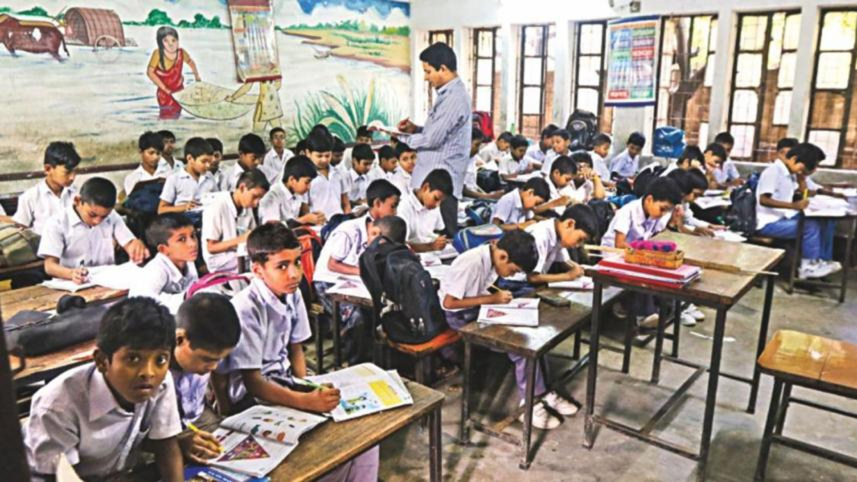
As an education and development professional, I participated in a classroom observation once, following training on technology-enhanced English language teaching. The teacher conducted his lesson mostly in English and incorporated an audio resource. However, the lesson seemed largely staged rather than naturally integrated into his teaching routine. Students struggled to understand his English as it was not a regular practice, and his lesson lacked the elements of interactive pedagogy. As a result, the lesson was less effective than his usual teaching practices and did not improve learning outcomes. I observed a similar pattern during a visit to a multimedia classroom, where the use of technology did not translate into “smart” teaching. Instead, it remained a superficial change in content delivery using a multimedia projector, without enhancing interaction or student learning.
Despite the investment to improve teachers’ skills to enhance their classroom practices, the outcome mostly remain unchanged. Sometimes, the way the trainings are designed and delivered is fundamentally flawed and unlikely to produce any meaningful change. While we are concerned about the limited impact of training, there is surprisingly little rigorous evidence on what actually works.

Rather than investing in teachers’ continuous professional development, we have normalised an event-based training culture that relies on one-shot workshops, with minimal follow-up and long-term support. This is compounded by a “Cascade Model” of delivery, which dilutes the quality of the training as information is passed down through multiple layers before reaching the teachers. Furthermore, as the training lacks follow-on support through effective monitoring, mentoring and other mechanisms, it quickly fades without leaving any lasting impact in the classroom. These short, isolated event-based workshops are typically designed to deliver knowledge rather than to transform teaching to create impact. We introduced competency-based curriculum and experiential learning, but teachers’ professional development remained traditional and mostly theory-based, and thus rarely led to substantial changes in classroom practice.
Teaching is a dynamic and practice-based profession that requires continuous reflection, feedback, and adaptation. So, only one-shot workshops cannot transform deeply rooted teaching habits, nor can they address the diverse challenges teachers face in real classrooms, as they often lack contextual relevance. The problem is worsened by a system that prioritises ticking administrative boxes over genuine professional growth.
Our education demands a systemic shift, and it will make more sense if we can create an enabling situation for teachers that provides quality materials, promotes self-study, peer learning and ensures ongoing mentoring and monitoring support. This approach of continuous professional development (CPD) can serve as a change-making process through teachers’ continuous and collaborative learning and research so that they can plan and try out new ideas in their classrooms. We need to adapt multiple effective mechanisms of CPD based on real classroom needs, using local examples, global best practices and practical strategies that teachers can immediately implement. We should prioritise transformation over delivery by incorporating more reflective practice, making learning impactful.
The current structure of one-shot workshops can be the orientation of new interventions if it is followed by ongoing and more structured support mechanisms. Ultimately, teachers are their own greatest resource. When peer support is effectively utilised and sustained as a continuous journey, it gives educators the time to apply new ideas, reflect on the results, and refine their craft. For example, Japan established a cost-effective approach of peer learning through “Lesson Study,” where peer teachers at schools work collaboratively for their professional development. Bangladesh piloted this idea in primary education, but it wasn’t scaled up. In this approach, teachers themselves become critical friends and learn together through group study, observing each other’s lessons, and discussing solutions.
Finally, without accountability, even well-designed programmes can fail to produce results. To foster a continuous learning culture, head teachers and supervisors must actively mentor staff. Furthermore, robust evaluations are essential to track a training’s direct impact on classroom practices and student outcomes, while also providing actionable data on systemic barriers to guide future decisions. It is time to stop setting our training programmes up for failure. Let’s learn from past mistakes and build a system designed to thrive.
Sudeb Kumar Biswas is an education specialist. He can be reached at skbiswas78@gmail.com.
Views expressed in this article are the author's own.
Follow The Daily Star Opinion on Facebook for the latest opinions, commentaries, and analyses by experts and professionals. To contribute your article or letter to The Daily Star Opinion, see our guidelines for submission.
 For all latest news, follow The Daily Star's Google News channel.
Comments