


The flaw in the debate over free education for girls

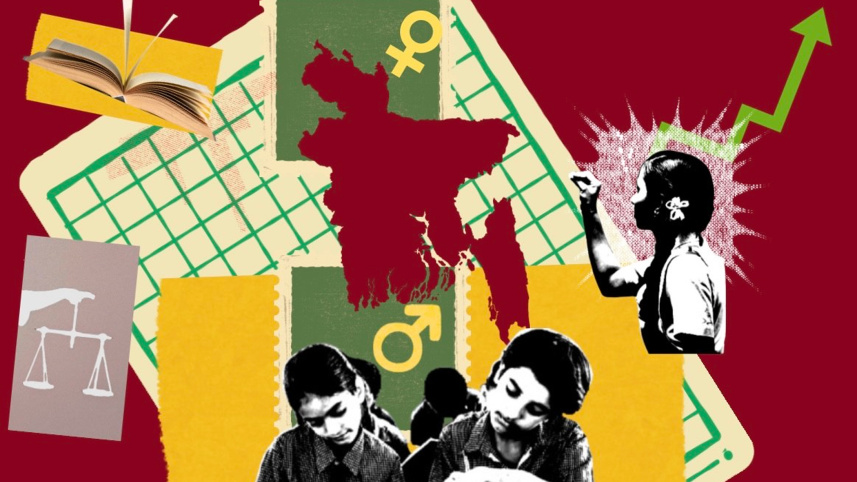
If you step out to the streets of Dhaka, you will see a far lower presence of women and girls compared to men. The situation is similar in other parts of Bangladesh. Despite that, they make most of the headlines when it comes to violence within families, workplaces, communities and society at large. The existing laws and regulations can barely contain gender-based social menaces when they are woven into our way of living, passed down for generations in the name of traditions. It requires us to change the fabric of our way of life to improve the lives of both men and women, because one half of a society cannot live well by treating the other half as inferior beings. Democracy, which promises to serve everyone, is thus obligated to devise policy tools to make the invisible visible and to give the voiceless a voice to challenge deep-rooted norms and transform them for the better. One of the most effective tools to this end is education.
This is the backdrop against which an MP—a woman, elected to a reserved seat in parliament—has recently questioned the disparity in educational opportunities for boys and girls over the last three decades. Free tuition for girls attending secondary school (Classes 6-10) is one such example she took issue with. It is one thing to express concern over impoverished boys not having enough access to education; it is quite another to accuse the government of being biased towards girls in policymaking.

Improving the living standards across all social strata through economic growth is usually the motto of a democratic government. If that is the goal, the government has to forge the path needed to reach it. Similarly, if every citizen is supposed to have equal opportunities to thrive and help the economy flourish, those starting from a position of disadvantage must first be brought to the same starting line before they can benefit from the opportunities. This is where the need for equity measures arises: the need for quotas, the need for targeted benefits that the woman lawmaker mistook for girls receiving something extra, for being privileged.
An example may better illustrate the challenges girls must overcome on the path to literacy. Suppose the road to school is desolate and girls fear being ambushed. The public school or the government arranges transport to ensure girls’ attendance. We may consider this a special benefit, but it is simply what girls need to be at school. The same logic applies to the support that enabled the female lawmaker to reach parliament to represent women. It also applies to girl students getting the support to attend school instead of being married off, confined to unpaid care work, or consigned to household chores, all of which imprison them in the shadows and render them invisible to political, social and economic discourse.
The policies the MP considered biased towards women have made great strides towards achieving equality. Over the last three decades, the female literacy rate in Bangladesh—for those above the age of 15 years—improved from a mere 26 percent to 77 percent. During the same period, the male literacy rate advanced from 44 percent to 81 percent, according to Unesco. The gender gap in literacy narrowed, driven in large part by economic incentives designed to promote girls’ education. However, male literacy was elevated even without such incentives, because men are traditionally seen by families and by society at large as the financial backbone who need better skills to earn more. Without targeted support, women would have fallen further behind or remained where they were. Equal benefits for all citizens is an ideal scenario, but when resources are limited, the government must prioritise those who need them the most.
By elevating the female literacy rate, Bangladesh has improved other social indicators, including the child marriage rate (which remains the highest in Asia), child mortality, and child malnutrition. Other factors have, of course, played a role, but education and educated mothers have been major contributors to improvements in children’s health, education, and nutrition. When girls are given incentives to study, their families are less likely to marry them off during adolescence, and the chances of them giving birth before attaining physical maturity are reduced.
Some indicators, however, have not shifted much over the last three decades. Social violence, including rape and dowry-related abuse, remains persistently high. At the same time, women’s labour force participation rate is still very low at 40.89 percent, compared to over 80 percent for men, according to the Bangladesh Bureau of Statistics (BBS). This means that access to education has yet to translate into economic empowerment for a large proportion of women. In fact, the BBS Labour Force Survey 2024 reveals that the labour force shrank by 17 lakh between 2023 and 2024, with women accounting for most of the decline. Women, therefore, need sustained and additional policy support to contribute to the economy and gain the financial strength to push back against repressive norms and violence.
Women’s economic empowerment is also imperative for the nation’s overall economic growth. Their productivity will drive consumption, generate assets, and improve national well-being. South Korea offers a compelling example. It focused on technical and professional education for women, and that investment helped take the nation to where it stands today—one of the largest economies in the world, with a GDP per capita of $31,000 and a literacy rate of 98 percent.
Among the many steps that could be taken to advance Bangladesh’s economic goals, the incumbent BNP government has announced free education for girls up to the undergraduate level. This prompted the argument in parliament about why boys should not receive the same opportunities. It would indeed be better if all children were given free access to education so they could reach their highest potential. But the government has limited funds, and girls are being encouraged to come to the front and stand on par with their counterparts.
The day will come when girls will no longer require policies targeting them, when they will compete for the same opportunities on equal footing. However, Bangladesh is not there yet.
Bishakha Devnath is business editor at The Financial Express.
Views expressed in this article are the author's own.
Follow The Daily Star Opinion on Facebook for the latest opinions, commentaries, and analyses by experts and professionals. To contribute your article or letter to The Daily Star Opinion, see our guidelines for submission.
 For all latest news, follow The Daily Star's Google News channel.
Comments