


Why Bangladesh needs a national health fund


Imagine a government hospital urgently needs a life-saving medicine or essential medical supply, and there is not enough money under the relevant budget line item, or the allocation has already been exhausted. At the same time, funds allocated under another line item remain unused. But shifting that money to where it is urgently needed is far from easy. This is a fundamental weakness of Bangladesh’s health financing system.
The public health budget remains largely input-based and organised around rigid line-item allocations. Money is separately allocated for staff, medicines, equipment, maintenance, and other inputs, and moving funds from one line to another often requires lengthy administrative procedures. As a result, the problem is not always a lack of money. Often, it is the lack of flexibility to use money when and where it is needed.

Hospitals may suddenly need additional medicines, supplies, personnel, transport, and other resources during situations such as a major accident, a disease outbreak, a flood, cyclone, fire or other disasters to respond to the unexpected demand for health services. Such events cannot be accurately predicted when preparing the annual budget and the existing line-item system is not designed to respond quickly to such situations.

Besides, we tend to measure performance by asking how much money was allocated and how much was spent. We pay far less attention to how many people received services, how quickly they received them, what quality of care they received, and what health outcomes were achieved. Consequently, spending the allocated budget can sometimes become an indicator of efficiency in itself. That is why we need a fundamental shift in our health-financing philosophy. The question should no longer be simply, “How much money was spent?” It should be: “How much health service did that money generate, and what difference did it make to people’s lives?”
A National Health Fund (NHF) could be an important instrument for making this transition. It could enable faster allocation according to need, ensure rapid financing during emergencies, and link public and private sector capacity with patients’ needs and health outcomes.
Several countries have attempted to make this transition by combining input-based financing with output- and outcome-oriented approaches. Thailand and India, for example, have established institutions to support such reforms, such as the National Health Security Office in Thailand and the National Health Authority in India. Bangladesh also took steps in this direction through the Shasthyo Suroksha Karmasuchi (SSK), which incorporated elements of output-based financing. A framework for establishing a national health protection authority was also developed. However, these initiatives did not progress as envisaged.

Does the need for a more flexible, outcome-oriented approach mean we should abandon the existing budget system? No. What Bangladesh needs is a complementary financing mechanism, one that is flexible, responsive, and increasingly linked to results. This is why we need a National Health Fund.
The first step towards that goal could be the enactment of a “National Health Fund Act” that should clearly define the fund’s objectives, sources of financing, eligible expenditures, fund-release procedures, emergency procurement mechanisms, the possibility of purchasing services from the private sector, and arrangements for audit and accountability.
An autonomous body, such as a national health fund authority, national health protection authority, or national health commission, could be established to manage the fund, which should have multiple sources of financing. A fixed proportion of the national budget could be allocated annually for the fund. Other potential sources should also be considered, including sectors like mobile telecommunications.
A significant share of mobile operators’ revenues currently reaches the government through direct and indirect taxes, fees, and spectrum charges. Without changing the existing revenue collection structure, an additional 1-2 percentage points from this sector could be earmarked for the health fund. Given the widespread use of mobile communication, even a relatively small additional allocation could potentially create a predictable and sustainable source of health financing.
A portion of corporate social responsibility (CSR) funds from pharmaceutical companies, banks, insurers, private hospitals and other businesses could also be channelled into the health fund. Voluntary contributions from development partners, foundations, individuals, and expatriate Bangladeshis could complement these sources. But the defining feature of the NHF must be a careful balance between flexibility and accountability.
The regular government budget should continue to finance routine hospital expenditure like salaries and allowances, regular medicines and supplies, maintenance, utilities, and other operating costs. The NHF, meanwhile, could provide hospitals with block grants for clearly defined purposes. Within established guidelines, these grants could be used flexibly for emergencies, unforeseen needs, and locally identified priorities.
This is where output- and outcome-based financing becomes important. Future allocations and incentives should consider not merely how much is spent, but how many patients are served, how quickly emergency care is provided, whether essential medicines are available, how long patients wait, whether agreed quality standards are met, and what health outcomes are achieved.
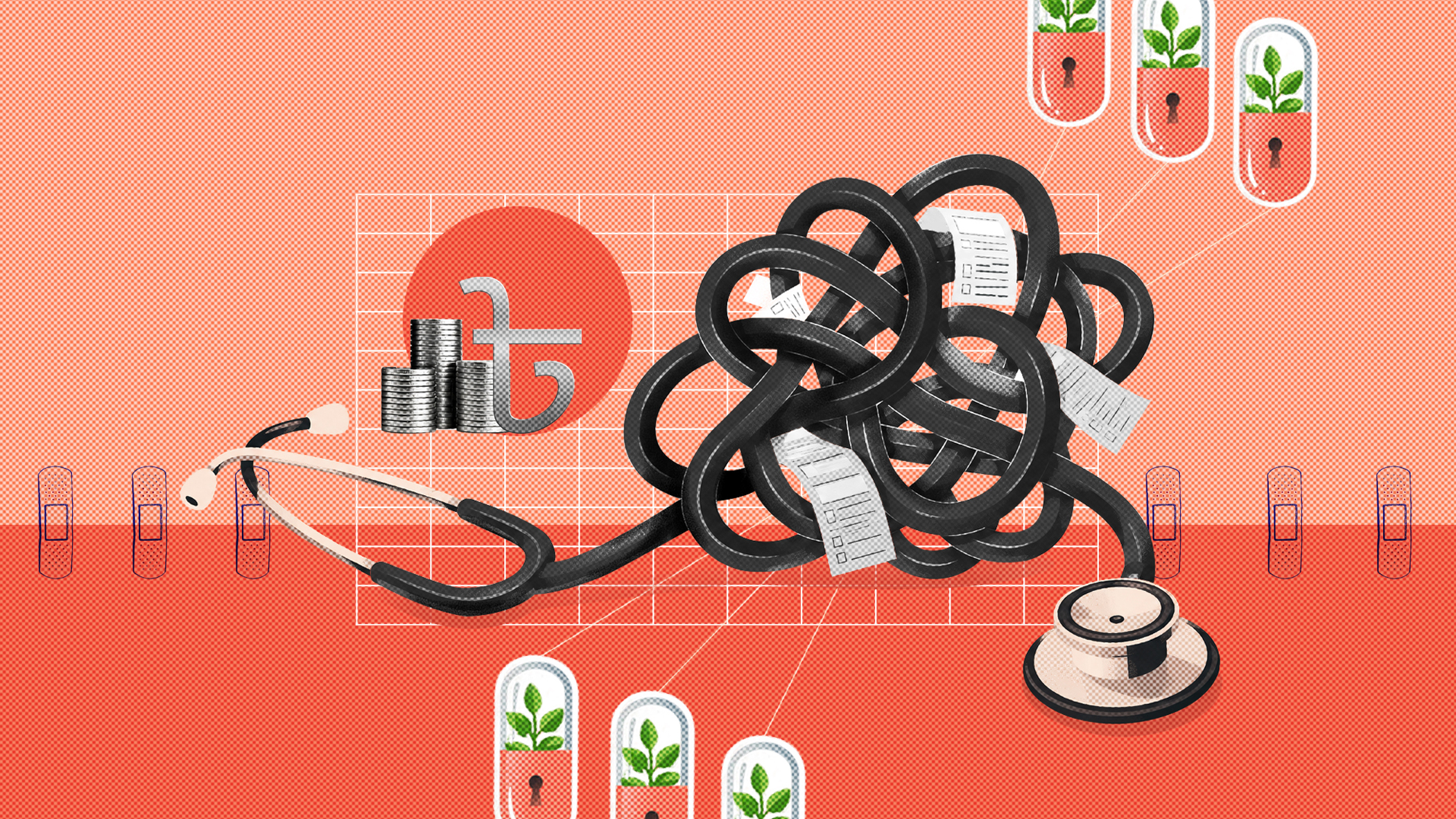
The fund should also allow hospitals to purchase specific services from accredited private providers when the required capacity is unavailable within the public facility. Such purchasing should be based on predefined standards and prices. In addition, a separate Emergency Health Fund could be maintained within the NHF, allowing rapid release of resources during disease outbreaks or major disasters under predetermined rules.
Flexibility, however, must never become an opportunity for misuse. Accountability must be built into the system from the beginning. Every taka should be digitally traceable through the chain of allocation, expenditure, service and outcome. An open dashboard could disclose how much each facility received, how the money was spent, what services were delivered, and what results were achieved. Alongside conventional financial audits, performance audits should assess not only whether money was spent according to financial rules, but also whether the intended results were achieved.
The time has come to establish a national health fund. The additional block allocation provided for the health sector in the current fiscal year offers an opportunity to take the first step. A portion of this allocation could be used to launch the NHF and begin building a more flexible, responsive and results-oriented health financing system for Bangladesh.
Dr Syed Abdul Hamid is professor at the Institute of Health Economics of the University of Dhaka, and convener of Alliance for Health Reforms Bangladesh.
 For all latest news, follow The Daily Star's Google News channel.
 Views expressed in this article are the author's own.
Follow The Daily Star Opinion on Facebook for the latest opinions, commentaries, and analyses by experts and professionals. To contribute your article or letter to The Daily Star Opinion, see our guidelines for submission.
Comments