


Give women athletes a market before asking them to earn their value

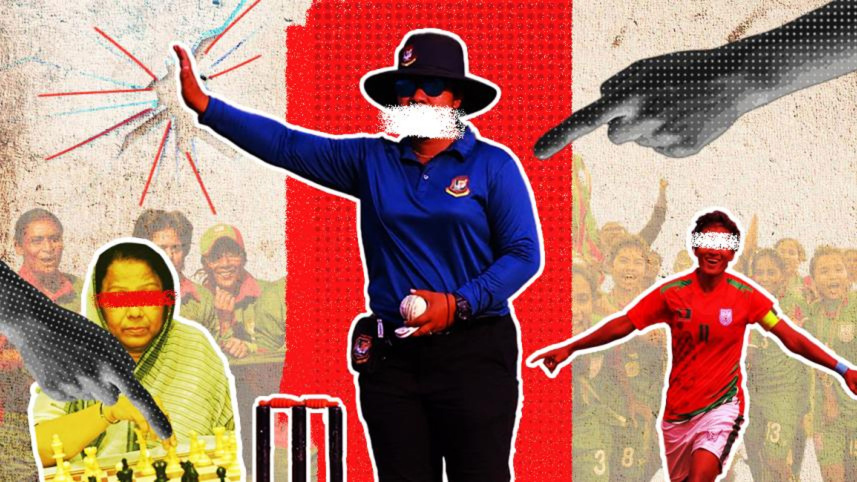
A few years ago, when Bollywood superstar Aamir Khan was asked why female actors are often paid less than their male co-stars, he offered a practical answer. An actor’s fee, he argued, is not determined simply by gender or talent, but by the audience the actor can attract to theatres. If a female actor can draw more people into theatres than a male actor, she should command the higher fee.
It is a strong argument because in the commercial industry, talent and hard work matter alongside the ability to create economic value. An actor who consistently attracts audiences, advertisers, and revenue will eventually receive premium pay. But what happens when we apply the same logic to sports, especially women’s sports in Bangladesh?

The question is timely. The Bangladesh Cricket Board has recently announced a substantial increase in domestic match fees. Men’s first-class players will now receive Tk 1.5 lakh per match, while the fee for a List A match has risen to Tk 1 lakh and that for a T20 match to Tk 80,000. Women’s match fees have also doubled, reaching Tk 40,000 for first-class matches, Tk 30,000 for List A matches, and Tk 20,000 for T20 matches. The increase is welcome. Professional athletes cannot be expected to sustain their careers indefinitely on passion and sacrifice alone.
The pay difference, however, raises a more interesting question than whether men and women should receive identical fees: are women athletes paid according to their market value, or according to the size of a market we have never seriously tried to build?
Audiences do not automatically appear; they are cultivated. A sport becomes commercially valuable when people have regular opportunities to watch it, follow players, understand its competitions, and develop an emotional connection with the teams and players. Broadcasters create exposure; media cover stories; sponsors create commercial opportunities; and social media keeps the conversation alive between matches. A talented athlete becomes commercially valuable when an ecosystem gives audiences a reason to know and follow her.
Growing evidence suggests that women athletes in Bangladesh can spark that interest. Women’s football has become one of the country’s most successful sporting stories in recent years. Bangladesh reached the 2026 SAFF Women’s Championship final after winning the previous two editions. Although India won this year’s final, Bangladesh’s sustained presence at the top of South Asian women’s football demonstrates that the team has become a genuine regional force.
Bangladesh’s women’s futsal team then won the inaugural SAFF Women’s Futsal Championship 2026, winning five matches and drawing one, before defeating Maldives 14-2. Captain Sabina Khatun finished as the tournament’s top scorer with 14 goals. Upon returning home, enthusiastic fans greeted the team at Hatirjheel, celebrating the champions.
Women’s hockey tells a similar story. Bangladesh’s senior women’s team made its international debut in April 2026, drawing 5-5 with Chinese Taipei, then recording its first international victory against Uzbekistan and defeating Hong Kong to qualify for the Asian Games. A few months later, the women’s junior team went unbeaten to win the Women’s Junior AHF Cup in Oman, securing Bangladesh’s first international hockey title at any level. These achievements challenge the convenient assumption that local audiences are simply uninterested in women’s sports.
Look beyond the national teams—women’s football and futsal competitions at school, academy, district, and community levels are also creating enthusiasm. Grassroots centres such as Kalsindur in Mymensingh demonstrate what can happen when girls are allowed to play. Social media has also shown that local athletes can build substantial followings when people have something to watch and celebrate. So, then, the problem is not that Bangladesh lacks an audience for women’s sports. Perhaps we have not given that audience enough to watch. This is where Aamir Khan’s argument becomes complicated.
If a female cricketer attracts a smaller audience than a male cricketer, should she automatically command the same commercial fee? Not necessarily. But imagine that the female cricketer has played fewer matches, had fewer opportunities to build a public profile, received less television exposure, competed in fewer commercially attractive competitions, and received considerably less promotional investment. Can we then say that the market has rejected her? A market is not merely discovered; it is built. The objective should not be artificial pay equality overnight, nor should women’s sports be treated as charity. The more sustainable approach is to create the conditions for women’s cricket to generate its own commercial value.
That means ensuring a predictable domestic calendar, meaningful competitions, regular broadcasting, stronger promotion, accessible statistics and player profiles, spectator-friendly venues and match times, and sponsorship packages that treat women’s sports as a commercial property rather than merely a corporate social responsibility initiative. Most importantly, women need enough matches for rivalries, personalities, and fan bases to develop.
A trophy can create a moment of national celebration, but a sustainable sports economy requires people to keep watching even after that. Young girls are now seeing Bangladeshi women win football matches, lift futsal trophies, and make history in hockey. They are beginning to see sport not merely as an activity but as something in which girls can excel and build a career. However, if we want them to choose sport as a profession, they need more than just applause.
The “Notun Kuri Sports” initiative, launched in April-May with the aim of identifying talented children from the grassroots level and developing them into skilled athletes, offers another reason for optimism. More than 160,000 adolescents reportedly registered nationwide, including more than 44,000 girls. These figures demonstrate that potential is not confined to traditional sporting centres. The opportunity, however, must extend beyond finding and developing talent to creating a market in which women athletes can build sustainable careers.
The discussion, therefore, should not begin with equal pay. It should begin with equal opportunity to create value. If a woman can fill more seats, attract more viewers, build a larger following, or generate greater commercial value, she should be able to command the market price that follows. But before asking women athletes to earn their market value, we should ensure we have actually given them a market.
Shafiq R Bhuiyan is vice-president and head of internal communication and CSR at BRAC Bank.
Views expressed in this article are the author's own.
Follow The Daily Star Opinion on Facebook for the latest opinions, commentaries, and analyses by experts and professionals. To contribute your article or letter to The Daily Star Opinion, see our guidelines for submission.
 For all latest news, follow The Daily Star's Google News channel.
Comments