


Have we grown desensitised to violence against women and children?

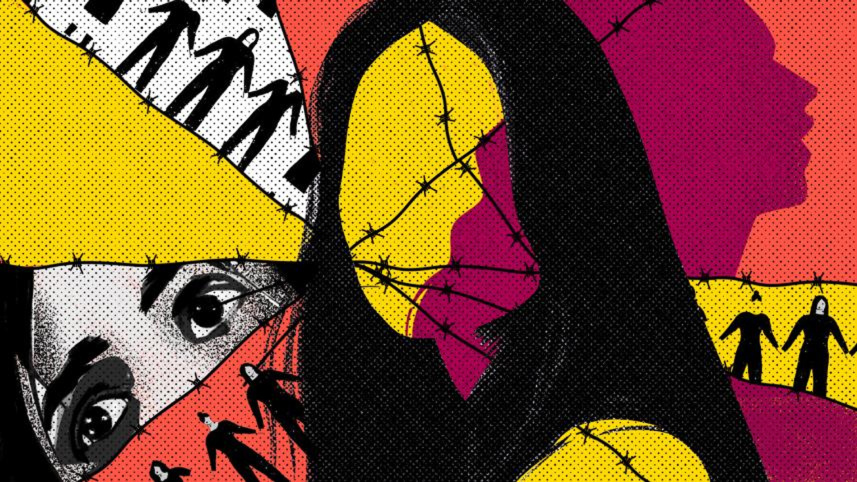
In the span of a few days, an 18-year-old was arrested for attempting to rape a four-year-old. A 15-year-old girl was abducted in front of her father and found dead the next day, all because she had dared to demand justice for her rape. A grandmother was killed while trying to protect her granddaughter, who was then raped and strangled to death. A university student was assaulted by someone she knew and trusted. This is not an exhaustive list; these incidents are simply what pierced through the noise.
There is something deeply unsettling about how quickly we get accustomed to horror. We read, freeze, feel the sharpness of anger, and then, almost reflexively, move on to another breaking news, investigation, social media post, debate, or distraction. The tragedy shrinks into a statistic, a life gets reduced to a number, and a family’s devastation is compressed into a paragraph. When sexual violence recurs with such frequency, it ceases to shock institutions, and individuals’ shock doesn’t last long. And that is where the crisis lies.
 For all latest news, follow The Daily Star's Google News channel.
 It is tempting to frame these crimes as the work of monsters and aberrations detached from society. But monsters operate within systems. When perpetrators act with confidence, it is often because consequences appear uncertain, distant, or negotiable. Delayed trials, fragile investigations, uneven enforcement, and the shielding of the influential all contribute to an atmosphere in which deterrence erodes. Each case that lingers for years in procedural limbo signals that time is on the side of the accused. Each influential suspect who escapes scrutiny signals that connections can outweigh crimes. Each family pressured into silence signals that reputation matters more than justice.
To describe these cases as isolated is analytically dishonest. Sexual violence thrives in environments where harassment is underestimated, survivors are doubted, reporting mechanisms are weak, and institutions lack urgency. It thrives where communities advise silence over scandal and where political ecosystems prioritise loyalty over accountability. Addressing this crisis requires certainty of punishment beyond symbolic arrests. It requires transparent investigations and time-bound trials. It requires institutional reform: survivor-centred policing, strengthened forensic capacity, and specialised prosecution units trained to handle gender-based violence with rigour and sensitivity. It requires political courage to ensure that affiliation, influence or proximity to power does not shield the accused.
Perhaps one of the most troubling questions is how we keep functioning as if these crimes are inevitable. Normalcy, in moments like these, becomes tempting. It shields us from the discomfort of confronting structural failure. Acknowledging the scale of the crisis would require institutional audits, budget reallocations, and sustained public pressure. It would require confronting entrenched interests and admitting that existing approaches are insufficient. It is easier to treat each case as a standalone tragedy than to admit that they collectively accuse a system.
But safety is not a privilege to be intermittently delivered; it is a right. The state cannot outsource protection to families, nor can it reduce justice to rhetoric. Each case is a personal catastrophe, but together they form a national warning. A society that grows accustomed to violence against its women and children risks eroding its own moral foundation. We cannot undo the harm that has already been done. What we can decide is whether the victims’ names fade into the background noise of the next news cycle, or whether they compel sustained demand for accountability that extends beyond temporary discomfort.
The question is no longer whether the situation is alarming. The evidence answers that unequivocally. The real question is whether we are prepared to confront what we need to do emotionally, institutionally, politically, and collectively.
Maisha Islam Monamee is a contributor to The Daily Star.
Views expressed in this article are the author's own.
Follow The Daily Star Opinion on Facebook for the latest opinions, commentaries, and analyses by experts and professionals. To contribute your article or letter to The Daily Star Opinion, see our guidelines for submission.
Comments