


When will this monstrosity stop?
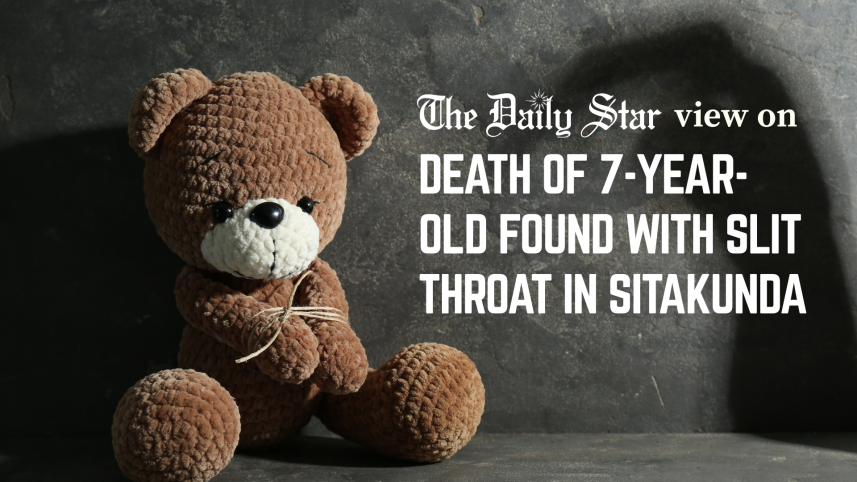
We are devastated and outraged by the death of a seven-year-old child, who was rescued from near Sitakunda Eco Park on Sunday, with her throat slit, which rendered her literally speechless and unable to provide details of her attacker(s). The child succumbed to her injuries at the Chattogram Medical College Hospital (CMCH)’s ICU early Tuesday morning. The child’s mother filed a case on Sunday against unidentified individuals, and law enforcement agencies—including police and Rab—launched investigations into the incident. So far, police have arrested one suspect. According to the One Stop Crisis Centre at the CMCH, the victim was swabbed to test for evidence of sexual assault, but the report is still pending.
Sadly, besides this heinous crime, a number of other criminal incidents involving the abuse of women and children happened in Bangladesh over just the past week. On February 25, the body of a 15-year-old was found in a cropland in Narsingdi. Fifteen days earlier, the girl had sought justice from the local union parishad member, alleging abduction and rape by miscreants. Those same accused abducted her on the night of February 26 when she was travelling to her relative’s house with her father. This time, they killed her. In Pabna, a 15-year-old girl was raped and killed on February 28, allegedly by her relative, after he killed the teenager’s grandmother.

What is unconceivable is how common such atrocious acts have become nationwide. In 2025, Ain o Salish Kendra (ASK) recorded 749 rape cases, including 569 gang rapes. At least 370 victims were under 18. After rape, 36 women were killed, seven died by suicide, and six died after attempted rape. ASK also recorded the abuse of 1,023 children and the deaths of at least 410 children due to rape, murder, physical abuse, abduction, suicide and explosions.
In recent memory, one case that saw major public outcry and also received a rare, speedy trial was the rape and killing of an eight-year-old in Magura last year. Unfortunately, there appears to be a correlation between the intensity of public response that a case of child or woman abuse generates and the speed with which the trial concludes. In a country where many incidents of sexual violence go unreported due to associated stigma, the authorities should feel morally obligated to strongly pursue reported cases. Unfortunately, the reality is often otherwise, which emboldens perpetrators to carry out heinous crimes without fear of facing justice.
This must change. Now that a new elected government is in place, it is crucial that the public’s trust in law enforcement and the judiciary is restored. That police in Sitakunda are investigating the seven-year-old's murder as a high priority is reassuring. We urge that they pursue justice in this case until it is achieved. But without all cases of abuse against children and women being treated as emergencies, the crimes may only get more frequent and crueller.
 For all latest news, follow The Daily Star's Google News channel.
Comments