


How BNP can make its 25 crore tree plantation project work

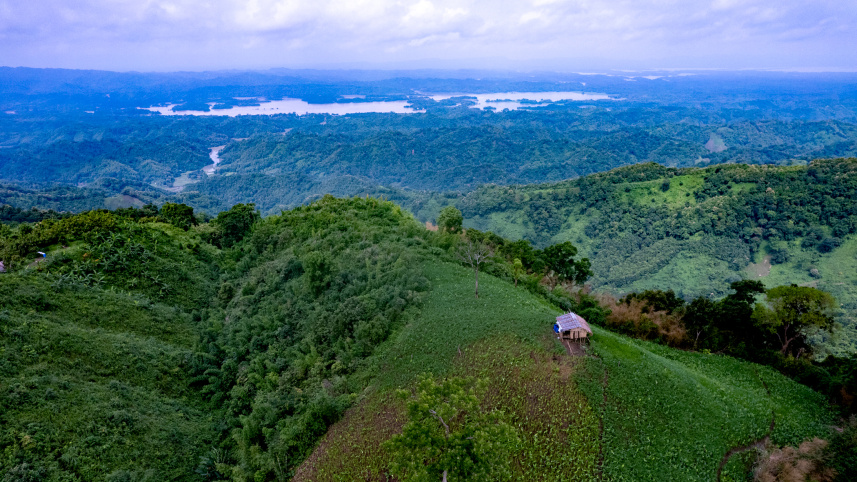
On March 4, 2026, the Bangladeshi premier formalised his government’s plan to plant 25 crore trees during its current tenure, thus keeping the BNP’s election promise. The project called “National Green Mission” may seem an enormous target, given that 50 percent of the country is wetland; it’s indeed achievable.
However, the goal can easily be tarnished by mismanagement, corruption, irregularities, exaggeration, and narrow vision. Local communities’ and Indigenous Peoples’ cultural, land and ecological rights could be violated by over-enthusiastic groups, especially as the government aims at involving a wide range of organisations in the plantation programme.

We therefore need to think it through and remind ourselves the amazing role large-scale plantations can play in creating short- and long-term green jobs (in nurseries, transportation, planting, aftercare, and monitoring); conserving soil, water and biodiversity; reducing air and dust pollution; removing carbon from the atmosphere; protecting us from natural calamities; and in sustaining the economy of a village, a region, and a country through supplying raw natural resources.
Besides, mega-plantations can also support rebranding Bangladesh’s global persona and fulfil its environmental obligations. In 2024, Bangladesh promised under the UN Convention on Biological Diversity (CBD) to restore at least 15 percent of its degraded terrestrial, freshwater, coastal and marine ecosystems by 2030. Massive tree plantations can help the country to keep this promise. Similarly, Bangladesh’s National Adaptation Plan (NAP), 2023-2050, and the third Nationally Determined Contribution (NDC) report, 2026-2035, clearly outline afforestation as a crucial intervention to fight climate change. But biodiversity conservation and climate action require a lot of money. Over the past few years, climate finance, green finance, and sustainable finance have been widely talked about for channelling money from various domestic and international sources. If planned and implemented well, Bangladesh’s large-scale plantations can create opportunities for the country to sell carbon credits on the carbon market to earn additional funds.
But how can our 25 crore tree-planting effort move forward, considering all these immediate and long-term activities and concerns? How can we measure the impact of such a huge undertaking on different dimensions and claim its full credit?
One way to do this is by using a comprehensive, well-designed guiding tool. The IUCN’s Global Standard for Nature-based Solutions (NbS) could be such a useful instrument. At its core, NbS involve harnessing nature—such as through tree planting—to tackle societal challenges like deforestation, climate change, and joblessness. Developed first in 2020 through consultations in 100 countries and improved in response to users’ experience, the NbS standard is a good tool for Bangladesh’s mega-plantations. But we need to contextualise it.
First, to ensure people’s participation, a key aspect of NbS, from nursery raising to plantation monitoring, we need to build on our experience of coastal afforestation since the early 1960s, of social forestry since the early 1980s, and of co-management of natural resources since the mid-1990s. We need to consider provisions in our Forest Act, 1927, Biodiversity Act, 2017, Wildlife Act, 2026, Forest and Tree Conservation Act, 2026, Protected Area Management Rules, 2017 and Environmentally Critical Areas Management Rules, 2016. We should also ensure transparency, accountability and local people’s agreement over a new plantation: who will benefit from this, are we depriving the families who relied upon the land before the plantation, and if yes, have we created any alternative livelihoods for them to sustain themselves.
Second, an NbS must bring positive changes in biodiversity. So, any plantation programme must include many locally appropriate tree species. We must not rely on just one or two due to popular demand or the vested interest of certain groups. We can learn from the mangrove enrichment plantation done by UNDP and the Forest Department under the Integrating Community-based Adaptation into Afforestation and Reforestation project (2015-2021), where 12 mangrove species were used to save the degraded coastal green belt, which was once created with only two species: keora (80-85 percent) and baen (15-20 percent). China also showed us how choosing the wrong species can destroy a plantation programme. In the 1980s and 1990s, Ningxia province had to cut down eight crore infested fast-growing poplar trees to control Asian Longhorned Beetle attack, causing significant environmental and economic damage.
Third, turning a plantation site into a vibrant ecosystem takes time; hence, post-plantation follow-up is vital. This should accompany adaptive management of the plantation based on the evidence gathered and lessons learnt regularly—an important aspect of NbS to ensure sustainability. As a part of adaptive management, information on all plantation sites (i.e., area, geographical location, number of saplings planted, and agencies responsible for plantation, aftercare, and monitoring) should be openly available online for public scrutiny. Such a vigilant system is critical to halt falsification and manipulation of plantation data.
The government has already formed an 11-member national cell to coordinate and guide the planting of 25 crore trees. It remains to be seen whether the national cell will formulate a strategic framework for fully leveraging this unprecedented NbS venture.
Dr Haseeb Md. Irfanullah is an independent environment and climate change consultant and visiting research fellow at the University of Liberal Arts Bangladesh (ULAB). He can be reached at hmirfanullah@outlook.com.
Views expressed in this article are the author's own.
Follow The Daily Star Opinion on Facebook for the latest opinions, commentaries, and analyses by experts and professionals. To contribute your article or letter to The Daily Star Opinion, see our guidelines for submission.
 For all latest news, follow The Daily Star's Google News channel.
Comments