


We need a stronger lightning policy, and fast


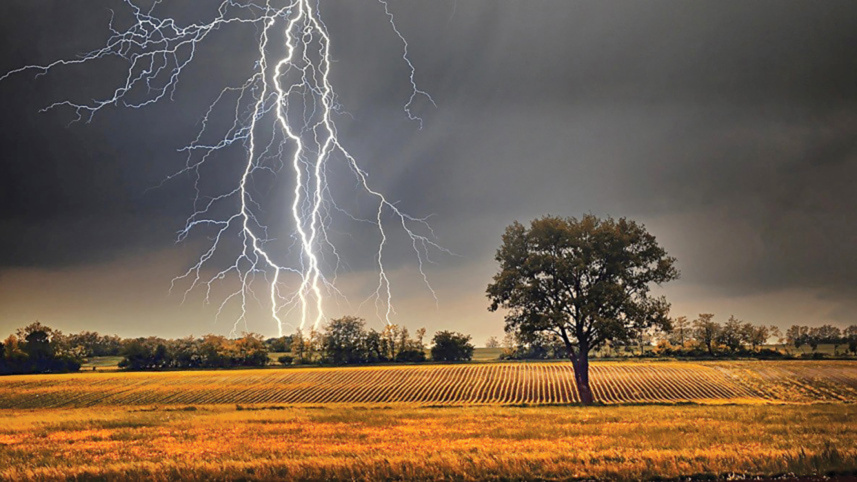
In recent years, lightning has emerged as one of Bangladesh’s most fatal climate hazards, although policy responses have yet to evolve proportionately. Since lightning was formally declared a natural disaster in 2016 and incorporated into national disaster management frameworks, including the National Plan for Disaster Management (NPDM) 2021-2025, annual death tolls have continued to exceed 300 in most years. This persistence of high casualties indicates a lack of proper policy recognition that would translate into effective protection for those most vulnerable to this hazard.
Between 2015 and 2024, lightning strikes resulted in at least 3,485 deaths, with annual fatalities ranging from 226 in 2015 to a peak of 427 in 2020. Although reported deaths declined to 322 in 2023 and 271 by mid-2024, the pattern in 2025 seemed to take a severe turn again, with April 28 alone recording the deaths of 23 people, including 19 farmers. This year, as per a report by Samakal, there have been 60 fatalities as of April 18. On Saturday, The Daily Star reported at least 13 deaths from lightning strikes, causing renewed concerns. Districts often identified as high-risk include Rangpur, Dinajpur, Nilphamari, Kurigram, Kishoreganj, Sunamganj, Netrokona, and Sylhet. Parallel reporting by non-governmental organisations suggests that official statistics may not fully capture the scale of mortality.

The intensification of lightning risk has a strong correlation with climatic change. Lightning frequency is estimated to increase by about 12 percent for every one-degree Celsius rise in global average temperature. Regional projections also indicate that convective available potential energy over Bangladesh could rise by up to 45 percent during the pre-monsoon season, creating conditions conducive to more frequent and intense thunderstorms. According to the Bangladesh Meteorological Department, 62 percent of lightning strikes occur during this short pre-monsoon period, which overlaps directly with the agricultural calendar. This convergence of climatic and occupational factors has significantly increased fatality risk.
Environmental and land-use changes also play a role in further amplifying exposure. In the haor regions, the removal of tall trees to expand agricultural land has all but eliminated natural conductors that previously helped dissipate lightning discharges. As a result, farmers and fishers working in open fields and wetlands have effectively become the “tallest objects” in the landscape. This has created a harmful feedback loop in which agricultural expansion aimed at maximising output simultaneously increases disaster risk, which in turn raises mortality, particularly during labour-intensive periods such as the Boro rice harvest.
Atmospheric pollution has also emerged as a contributing factor. Increased lightning activity has been associated with higher concentrations of fine particulate matter and aerosols during the pre-monsoon season. Transboundary dust and sulphate particles, largely originating from agricultural burning and industrial emissions across the Indo-Gangetic Plain, can alter cloud microphysics and enhance electrical charge separation, potentially leading to higher lightning flash rates. Because these pollutants are transported over long distances, lightning risk is being shaped not only by domestic conditions but also by regional environmental dynamics.
The human and economic toll of lightning reveals its deeply unequal impact. Nearly 80 percent of lightning victims are farmers and fishers who work outside, and rural residents face an almost ninefold higher risk of being struck than their urban counterparts. Fatalities occur especially when people are engaged in essential livelihood activities such as harvesting rice, fishing in open water, or tending livestock. It goes without saying that when the primary earner of a rural family is killed, many households face immediate financial collapse. Families are forced to borrow at high interest rates, exhaust savings, and sell productive assets, trapping them in a vicious cycle of poverty. These distress sales compromise long-term food security, housing stability, and children’s education.
Moreover, lightning strikes also kill livestock, damage homes, and cause fires. But there is no comprehensive national data capturing these losses. For many rural households, livestock is the primary store of wealth as well as economic security. The absence of systematic accounting means that the full economic burden of lightning remains underestimated, weakening the design of any mitigation and compensation measures.
Government initiatives such as palm tree planting, installation of lightning arresters, and expansion of early warning services have established a foundation for risk reduction, but lightning remains institutionally under-prioritised to this day. There is no dedicated mandate or ring-fenced budget for detection, forecasting, and warning, and resources are frequently diverted to other hazards. Existing investments also tend to focus largely on static infrastructure, even though effective protection also depends on rapid human response as well as accessible shelter in high-risk rural settings.
Given these realities, there is no alternative to stronger policy interventions to ensure that early warnings reach those most at risk. The full activation of the Cell Broadcast system in high-risk districts would allow location-specific alerts to be delivered instantly to all mobile phones without any prior registration or cost. This should be reinforced through local dissemination using mosque loudspeakers, union parishad announcements, megaphones, and established volunteer networks, ensuring rapid and clear communication of warnings through trusted local systems.
Protective infrastructure must also be aligned with behavioural realities. Small, strategically located concrete shelters in agricultural hotspots would provide farmers and fishers with accessible refuge during storms, provided they are directly linked to early warning triggers and clear operating protocols. Updating the National Building Code to require certified lightning protection systems for public buildings and new tall structures—particularly schools and health centres in rural areas—would further play an instrumental role in reducing exposure.
Finally, lightning must be addressed as a source of household-level financial shock. The introduction of subsidised micro-insurance or a dedicated social protection window for registered rural workers would enable rapid payouts after strikes, preventing distress sales of land and livestock and supporting recovery. Without such financial protections, early warnings and shelters alone cannot break the cycle of vulnerability perpetuated by lightning.
Bangladesh has taken some steps to mitigate lightning risks, but much more needs to be done, if the annual fatality rates are any indication. We need a coherent policy framework that integrates early warning, infrastructural support, and social protection. As climatic conditions continue to intensify, failure to respond properly will continue to result in deaths and destruction, and those whose labour sustains our rural economy will continue to suffer disproportionately.
Asaf Ibne Salim and Rassiq Aziz Kabir are, respectively, a policy analyst and an academic and researcher.
Views expressed in this article are the author's own.
Follow The Daily Star Opinion on Facebook for the latest opinions, commentaries, and analyses by experts and professionals. To contribute your article or letter to The Daily Star Opinion, see our guidelines for submission.
 For all latest news, follow The Daily Star's Google News channel.
Comments