


The July lesson: Restore the contract that allows democracy to self-correct

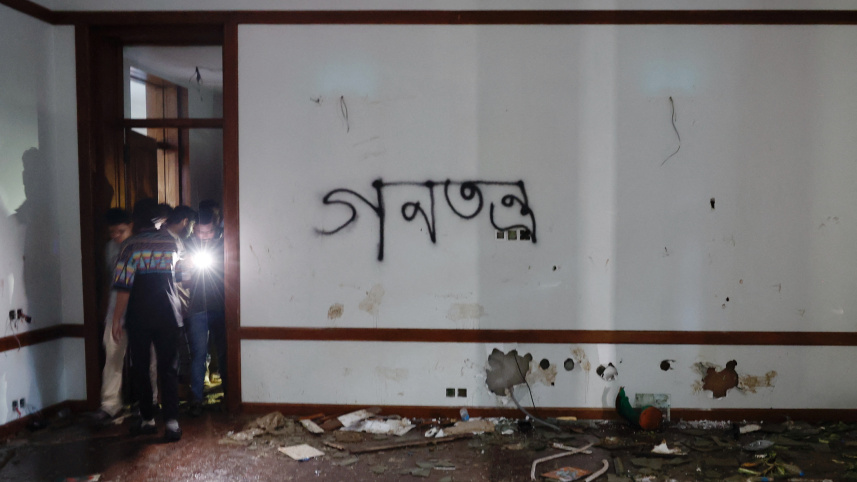
This August 5 marks two years since a student-led mass uprising culminated in the ouster of an authoritarian regime. During this period, I have tried to understand what historical circumstances brought us to July, why Bangladesh’s state structure nearly collapsed on August 5, 2024, and what we learnt to prevent another collapse. Before answering these questions, some context is necessary.
A basic idea of democracy and the liberal political system is that a leader, a party, and even a voter can make mistakes, but there is always an opportunity for self-correction. Suppose a voter chooses one party in an election, which they may later feel was a wrong decision. In the next election cycle, they might choose another party. Because there is a fixed time limit to government tenure, voters repeatedly get a chance to correct their earlier decisions. They don’t have to surrender themselves to one party for life, nor does any party gain permanent ownership of the state.

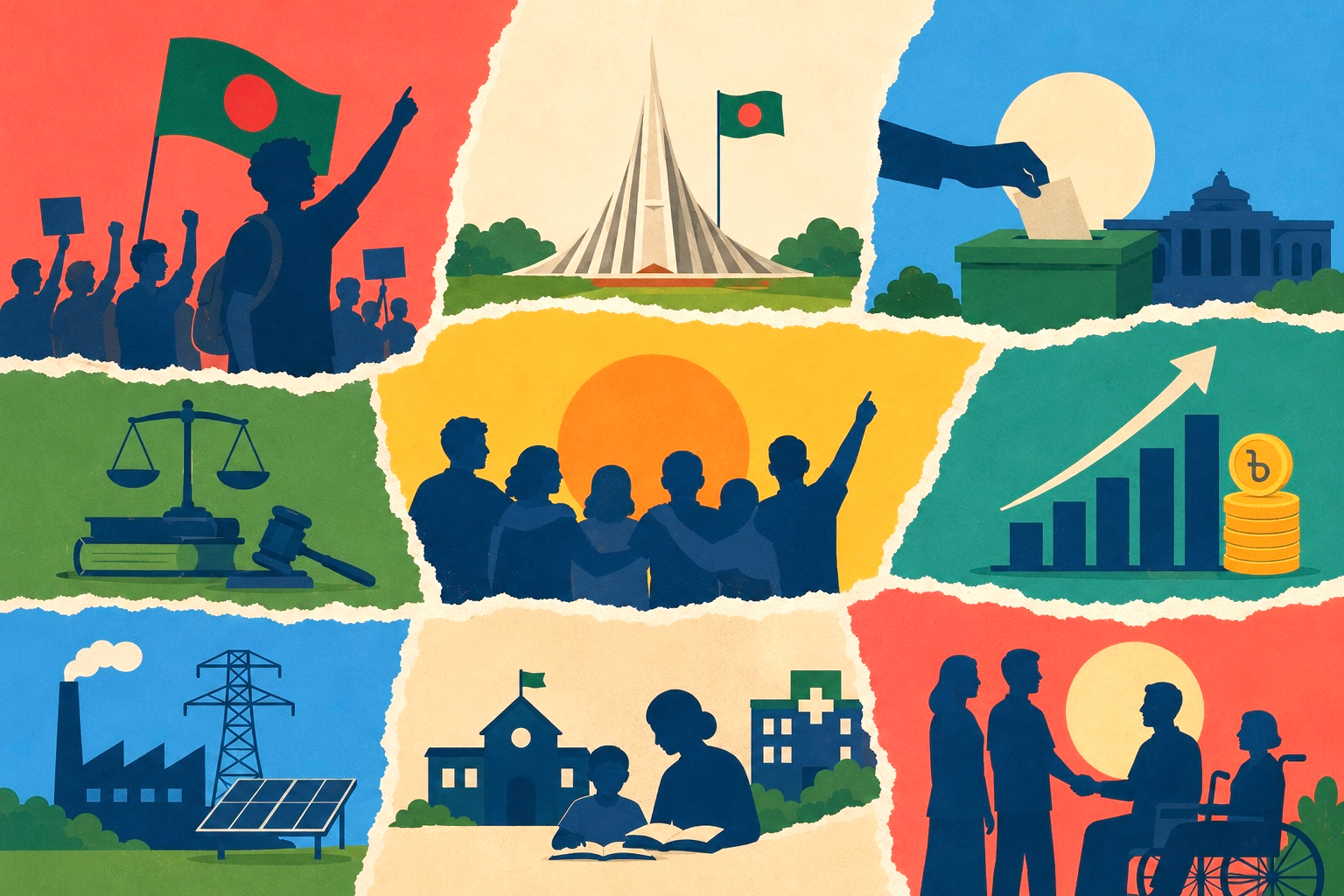
One condition for this system to survive is the presence of at least two major political parties. There may be more. They may disagree over governance, administration, the economy, religion, culture, foreign policy, and so on, but they must agree that power will be transferred through elections. Another important element is a large and stable middle class with a particular lifestyle, preserving which requires democratic stability, regular elections, law, and peaceful transfers of power. Otherwise, its jobs, businesses, property, children’s futures, and social security come under threat.
From this emerges an unwritten social contract: political parties will follow electoral rules, and the middle class will support democracy. If one or both parties abandon this contract whenever convenient, the cycle of gaining, transferring, and exercising power can no longer be called democratic.
Now let’s look at Bangladesh’s history.
On December 6, 1990, autocratic ruler HM Ershad resigned in the face of a mass uprising. Awami League, BNP and the middle class then reached a basic settlement: democratic institutions and elections would determine transfers of power. Broadly, this arrangement survived for quite a while. Parliamentary democracy returned through the 1991 election. The June 1996 election transferred power from BNP to Awami League, and the 2001 election returned it to the BNP-led alliance.
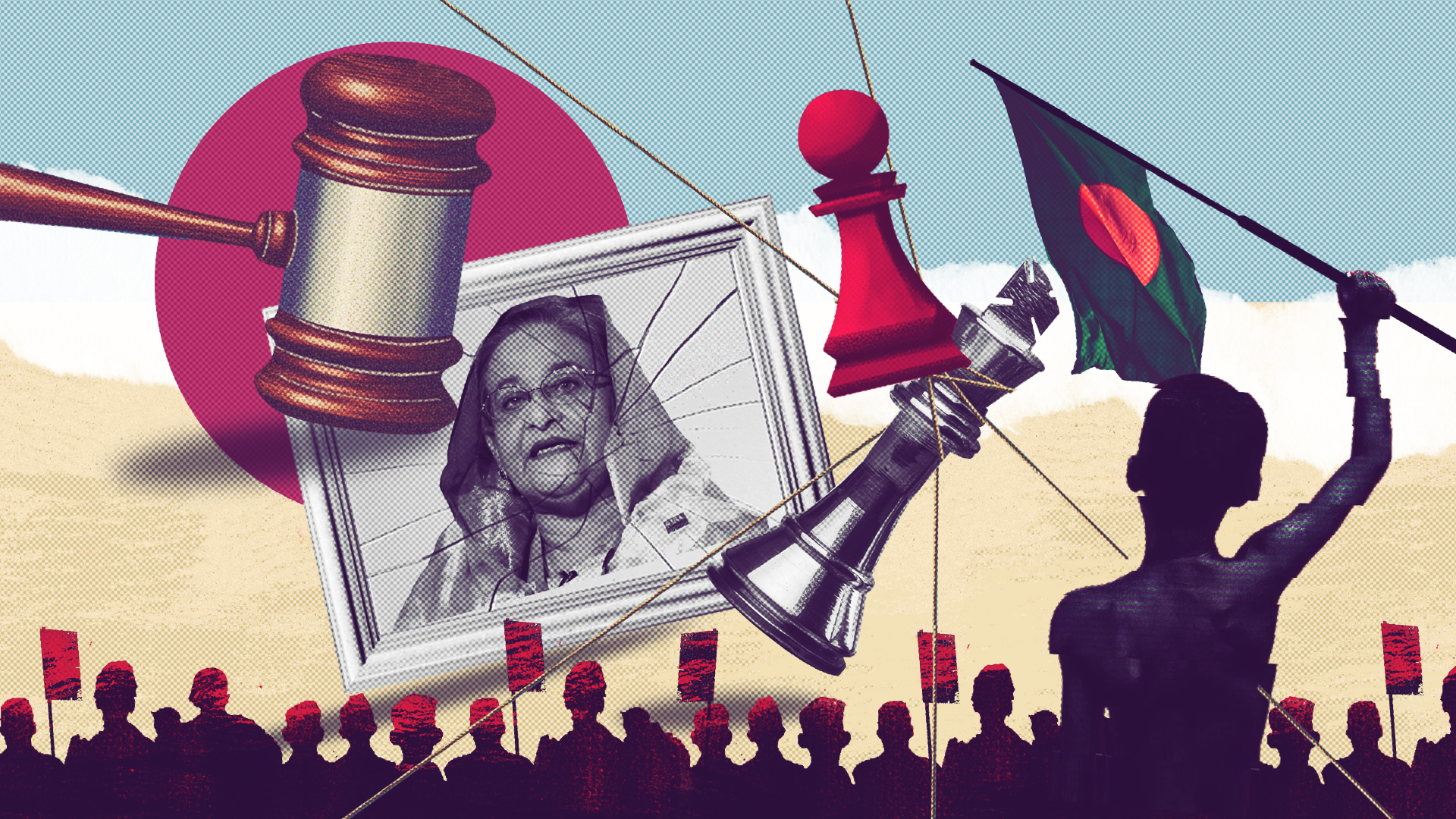
In 2006, a major crack appeared in this social contract. The BNP-led alliance government tried to bring an otherwise acceptable caretaker system under its influence. The retirement age of Supreme Court judges was raised from 65 to 67, allegedly so that the then government’s preferred judge could head the caretaker administration. At the same time, serious questions emerged over the appointment and conduct of the chief election commissioner. There were allegations of fake names on the voter list as well. Together, these developments badly damaged the opposition’s trust in both the Election Commission and the caretaker arrangement.
At the time, the BNP-Jamaat government might have believed that limited legal engineering could tilt the election-time system in its favour. But even limited distrust can destroy an electoral system. Awami League launched a movement, which turned violent. A state of emergency was declared on January 11, 2007. A military-backed caretaker government led by Fakhruddin Ahmed as the chief adviser took office. Civil society figures joined this government.
Later that year, Awami League chief Sheikh Hasina and BNP chief Khaleda Zia were arrested on corruption charges. The goal was removing the two leaders of the country’s main political parties from politics, based on the argument that these two leaders had caused every problem in the country. Remove them, and politics would become new and clean. The state could be rebuilt.
Of course, that project failed. The military-backed government became unpopular. It eventually held an election on December 29, 2008, which brought Awami League back to power. The party was supposed to hold another acceptable election in 2014. Instead, it broke the social contract, far more systematically and successfully than BNP. In 2011, the 15th Amendment was passed in parliament on June 30 and became law on July 3, abolishing the caretaker government system. Awami League prepared to hold elections under a party government.
So, both BNP and Awami League denied, when it suited them, the post-1990 social contract over the transfer of power. The latter was far more successful in doing so. Through the 2014, 2018 and 2024 elections, Awami League denied citizens a meaningful choice. The post-1990 democratic social contract was replaced by authoritarian rule. To remain in power, the party used enforced disappearances and extrajudicial killings as instruments of political repression. Democracy consequently collapsed.
During the same period, another significant change took place. The middle class of the 1990s was largely a professional class educated in mainstream schools, colleges and universities, working in government, teaching, medicine, journalism, banking, business, etc. A significant section had grown up within a relatively liberal political language. It considered a stable state and parliamentary democracy necessary for maintaining its lifestyle. However, over the last two decades, the boundaries of this middle class have expanded, taking in new groups. The social identities and political imaginations of the new middle class are not the same as those of the older one.
The economic base of middle-class life has also changed. It now relies not only on government employment but also on private capital, corporate jobs, garments, banks, NGOs, information technology, small businesses, and remittances. Remittances from the Middle East, in particular, have changed the economic and social position of many Bangladeshi families. They have also brought in new religious and cultural influences, new dreams, and a new political language. One part of this new class demanded the return of democracy and elections. Others imagined alternatives outside liberal democracy. Thus, the character, boundaries, and political aspirations of the middle class changed.
Meanwhile, Bangladesh produced a huge number of young graduates—potential entrants into professional or elite spaces—faster than the state and the economy could create the space to accommodate them. Not everyone found good work or access to research, universities, administration, journalism, business, or political leadership. Many saw political connections, family identity, or party loyalty working more effectively than education and merit. This created unequal competition. It also produced a form of anti-elitism. The language of struggle against an invisible elite class became popular in both social and political life.
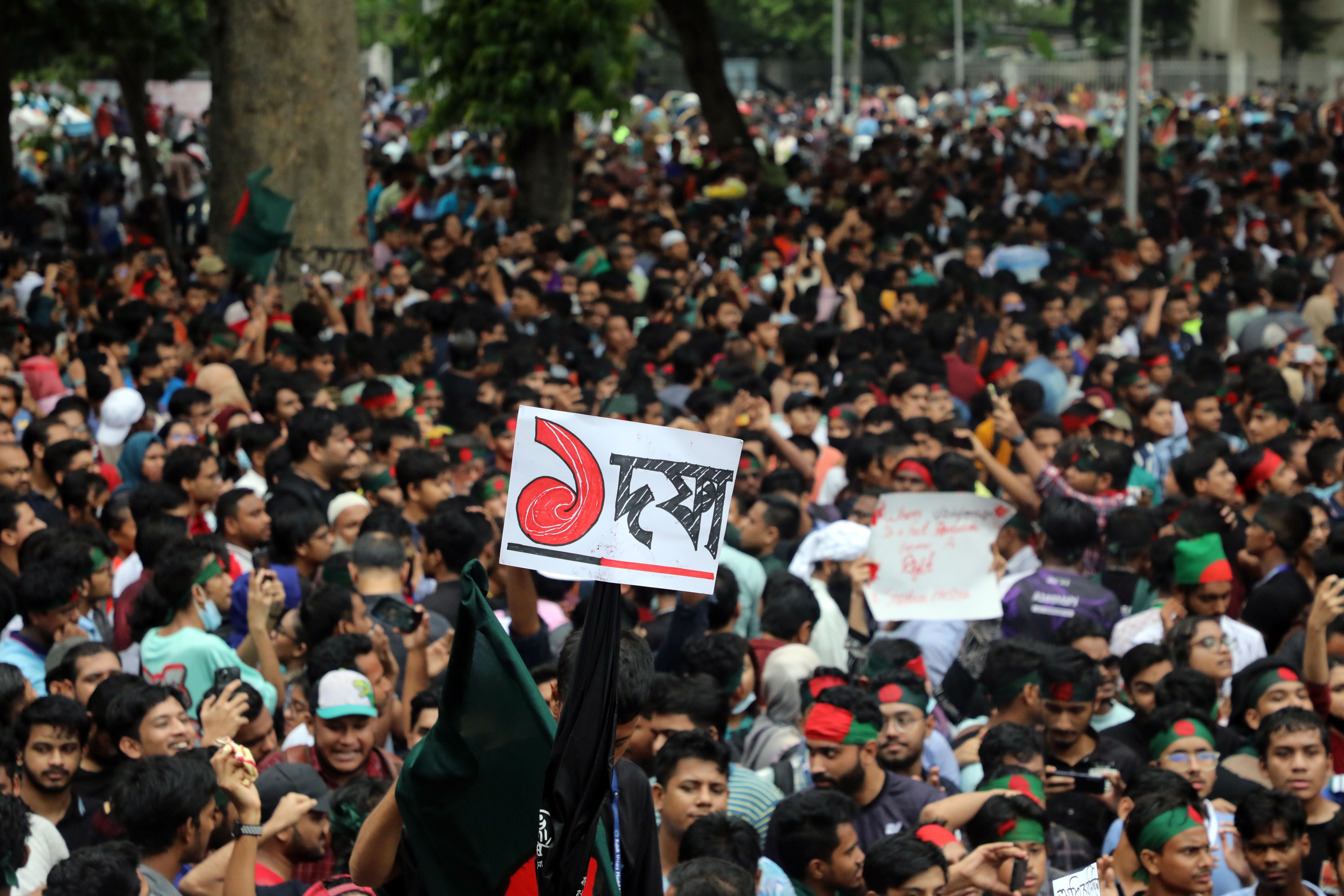
Together, these developments created enormous pressure that exploded in July and August of 2024. The quota reform movement was the immediate trigger, but anger had accumulated for years. State repression, killings and political arrogance widened the uprising.
Sheikh Hasina took refuge in India on August 5. Parliament was dissolved on August 6, and Muhammad Yunus’s interim government was sworn in on August 8. Meanwhile, a frightening vacuum emerged at the centre of executive authority. Large parts of the police and administration became dysfunctional. Bangladesh’s state structure came close to a collapse.
 For all latest news, follow The Daily Star's Google News channel.
 Now, the question is: how many more such collapses can the country survive? Will we seek to dismantle the state structure every time we remove a government? Or will we learn from this history?
We need a new social contract in which political conflict remains, even intense conflict. Parties will disagree over history, religion, the economy, and foreign policy. But no political party will violate the agreement over democracy and the transfer of power. Elections must be held. Those who lose must leave office. The opposition cannot be eliminated. The ruling party cannot become the permanent owner of the state. Losing power cannot routinely lead a political leader to murder, prison, or exile.
The greatest lesson of the July uprising is not simply the fall of an authoritarian government. It’s that when the path of self-correction through voting is closed, society eventually chooses an explosion.
Asif Bin Ali is a geopolitical analyst and doctoral fellow at Georgia State University in the US. He can be reached at abinali2@gsu.edu.
Views expressed in this article are the author's own.
Follow The Daily Star Opinion on Facebook for the latest opinions, commentaries, and analyses by experts and professionals. To contribute your article or letter to The Daily Star Opinion, see our guidelines for submission.
Comments