


Tea workers deserve fair wages, and BNP is pledge-bound to deliver them

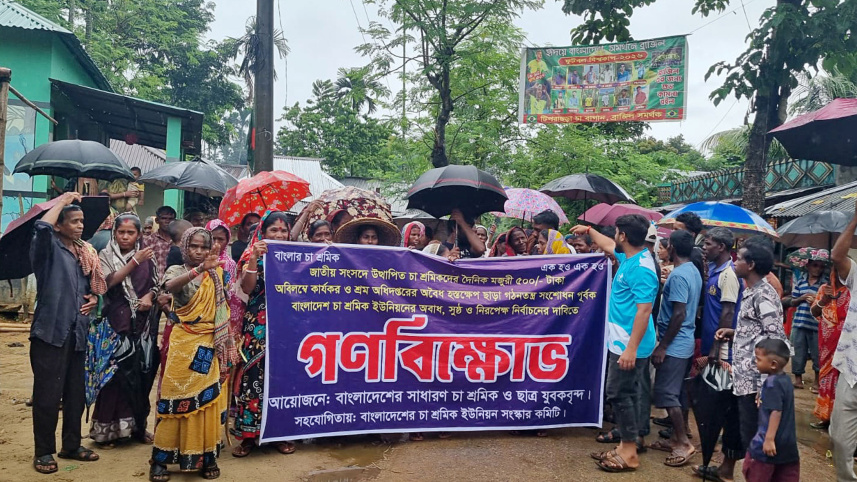
Tea workers across the country have been staging demonstrations for more than a month making for four demands, including a daily wage of Tk 500. The other three demands are: repeal of the 2023 gazette, which limits the annual wage increase to 5 percent; recognition of the tea communities’ land rights; and an immediate election to the Bangladesh Tea Workers Union (BTWU).
The daily wage of tea workers was raised to Tk 196 from Tk 187 after applying the 5 percent increase per the 2023 gazette. That is a Tk 9 increase—a cruel joke for workers trying to feed and support their families. Workers say a five-member family needs Tk 650-700 a day for food alone; more is needed to cover education, healthcare, clothing and housing expenses. So their demand for a daily wage of Tk 500 is not asking for luxury but the minimum needed to eat adequately and return to work the next day.

Traditionally, tea workers’ wages are renegotiated every two years through collective bargaining. After their 2022 movement for a Tk 300 wage, the daily wage was raised by Tk 50: from Tk 120 to Tk 170. But the 2023 gazette replaced collective bargaining with an annual 5 percent increase, amounting to just Tk 8-9. That is why the workers are demanding the Tk 500 daily wage as well as the repeal of the 2023 gazette. It should be noted here that the wage determination period for the tea workers expired last month. Earlier in July, Labour and Employment Minister Ariful Haque Chowdhury had said the government would review and revise the wage structure in August “as part of its commitment to improving their quality of life.”
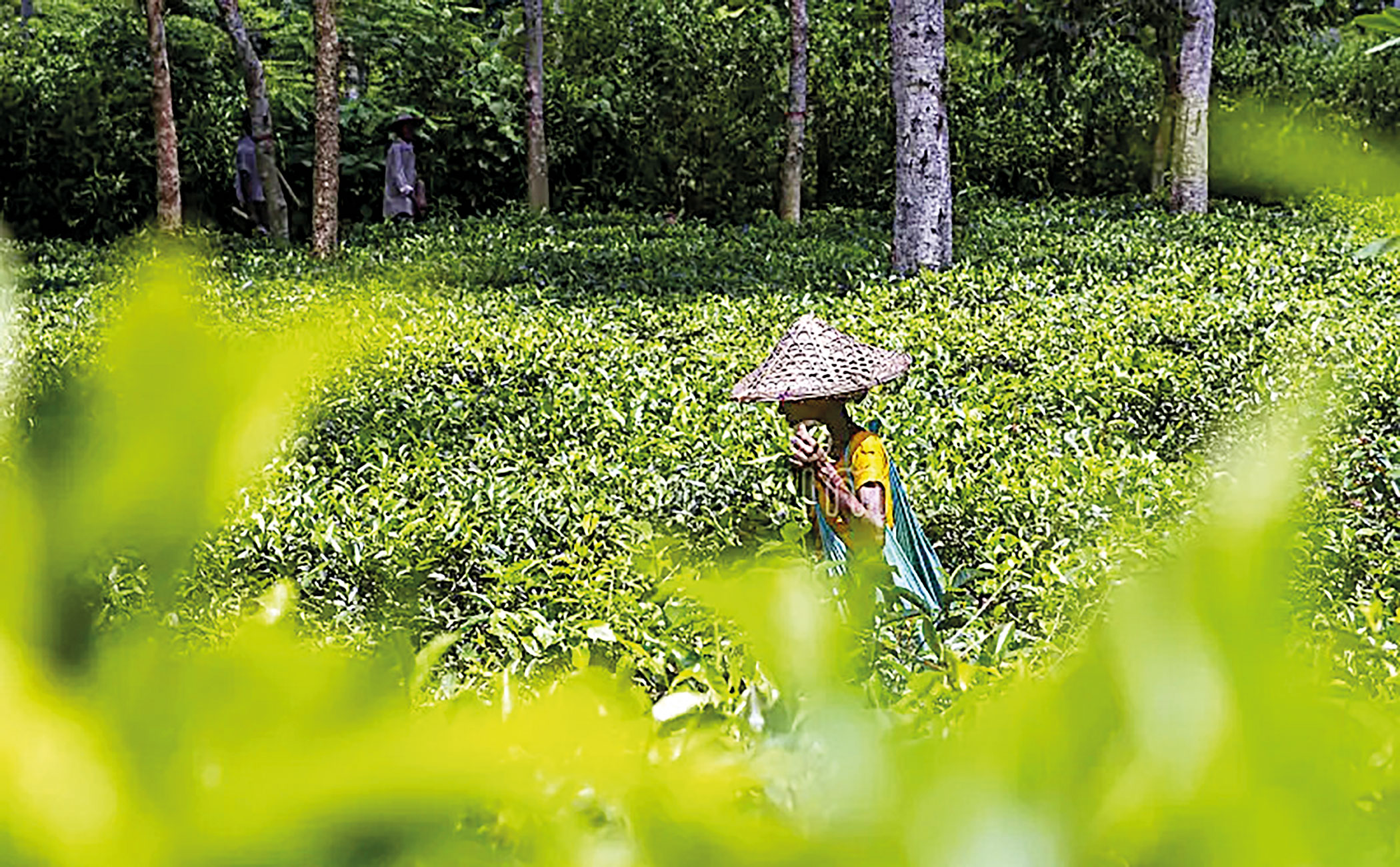
The tea workers are also demanding that the BTWU election, which was last held in 2018, be held immediately. BTWU’s long-serving leadership has faced allegations of serving tea garden owners’ interests instead of those of the workers. Recently, police arrested Geeta Rani Kanu, a leader of the Tk 500 wage movement, in a case filed by another union leader, raising concerns regarding possible collusion among some union leaders, tea garden owners, and the government to weaken the movement.
Whenever the issue of raising the tea workers’ daily wage comes up, tea garden owners argue that the monetary value of various benefits that a tea worker receives besides the daily wage exceeds Tk 500. Let’s examine what the tea garden owners consider as part of the workers’ wages, and whether those benefits can actually be treated as wages under the country’s labour law.
The benefits include rations, housing, medical care, pensions, education for workers’ children, welfare programmes such as water supply, mosquito-control spraying, sanitation and the provision of towels, the value of fruits and vegetables grown around workers’ settlements, bonuses for additional plucking, and employers’ contributions to provident funds.
But under the Bangladesh Labour Act, 2006, except for rations, none of these benefits can be counted as part of the wages. Section 2(45) excludes from the definition of wages the value of housing, lighting, water, medical facilities or other amenities, as well as employers’ contributions to retirement or provident funds and payments for work-related expenses.
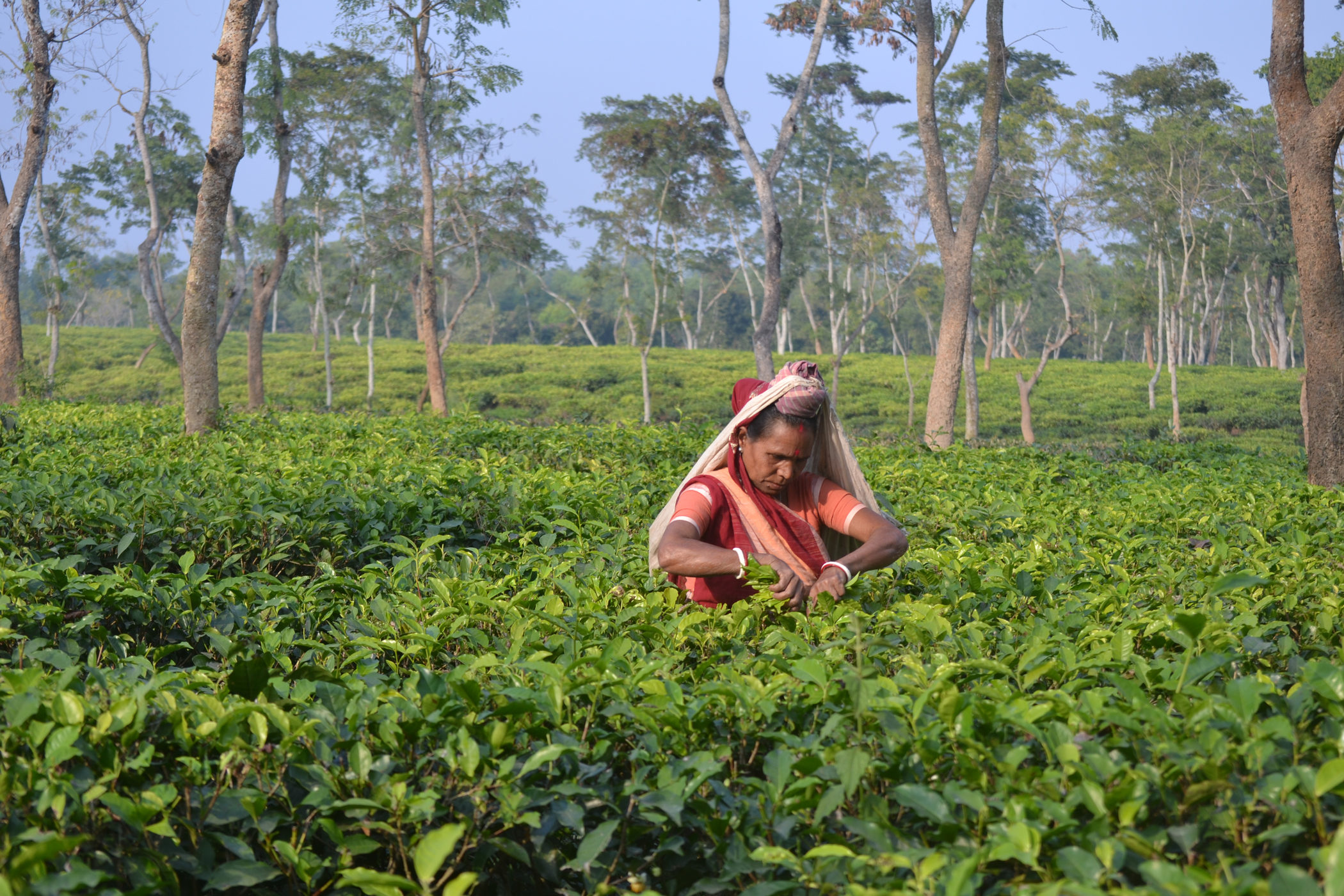
In effect, tea garden owners are seeking to count essential operating costs such as water, mosquito control and sanitation as workers’ wages. This is not only inconsistent with the labour law but unreasonable by any standard.
Because of the particular circumstances of the tea gardens, Section 96 of the Labour Act requires tea garden owners to provide housing for every resident worker and their family. This is a mandatory welfare obligation, not part of a worker’s wage.
Moreover, tea workers live on government, not privately owned, land. Tea garden owners lease these lands from the government at a very low cost: under a land ministry circular on tea garden land, they pay no lease fee and Tk 300 per acre annually as land development tax.
Despite generations of residence, stretching back more than 150 years, tea workers lack formal land rights because historical CS and RS surveys recorded their settlements as khas land. This lack of ownership traps generations in low-wage labour. Workers cannot simply leave these low-paying jobs; doing so means losing ancestral homes that serve as their only address. Because they have no legal rights to the land, families must supply at least one tea garden worker just to retain their housing.
Even including weekly grain rations, basic housing, and limited healthcare, a tea worker’s total compensation remains below Bangladesh’s minimum wage for other sectors and fails to cover a dignified standard of living.
Consequently, poverty is far more prevalent in tea gardens than in the rest of the country. Lack of adequate sanitation hygiene and safe drinking water leads to high rates of tuberculosis, leprosy, malaria, and cervical cancer among tea workers. Malnutrition is rampant, severely impacting children’s health: 45 percent are stunted, 27 percent are wasted, and 47.5 percent are underweight.
Tea bushes are regularly pruned to prevent them from growing beyond a certain height in order to maximise yields. The lives of tea workers are similarly constrained: confined to a small hut in a labour-line settlement, their futures tied to the tea garden. On their meagre wage, some workers begin their with only tea with salt and “chal bhaja”; they cannot afford to drink the tea they produce with milk and sugar. To secure their daily attendance mark (“nirikh”), pluckers must gather 23 kg of leaves, pruners must clear at least 250 bushes, and pesticide sprayers must cover one acre.
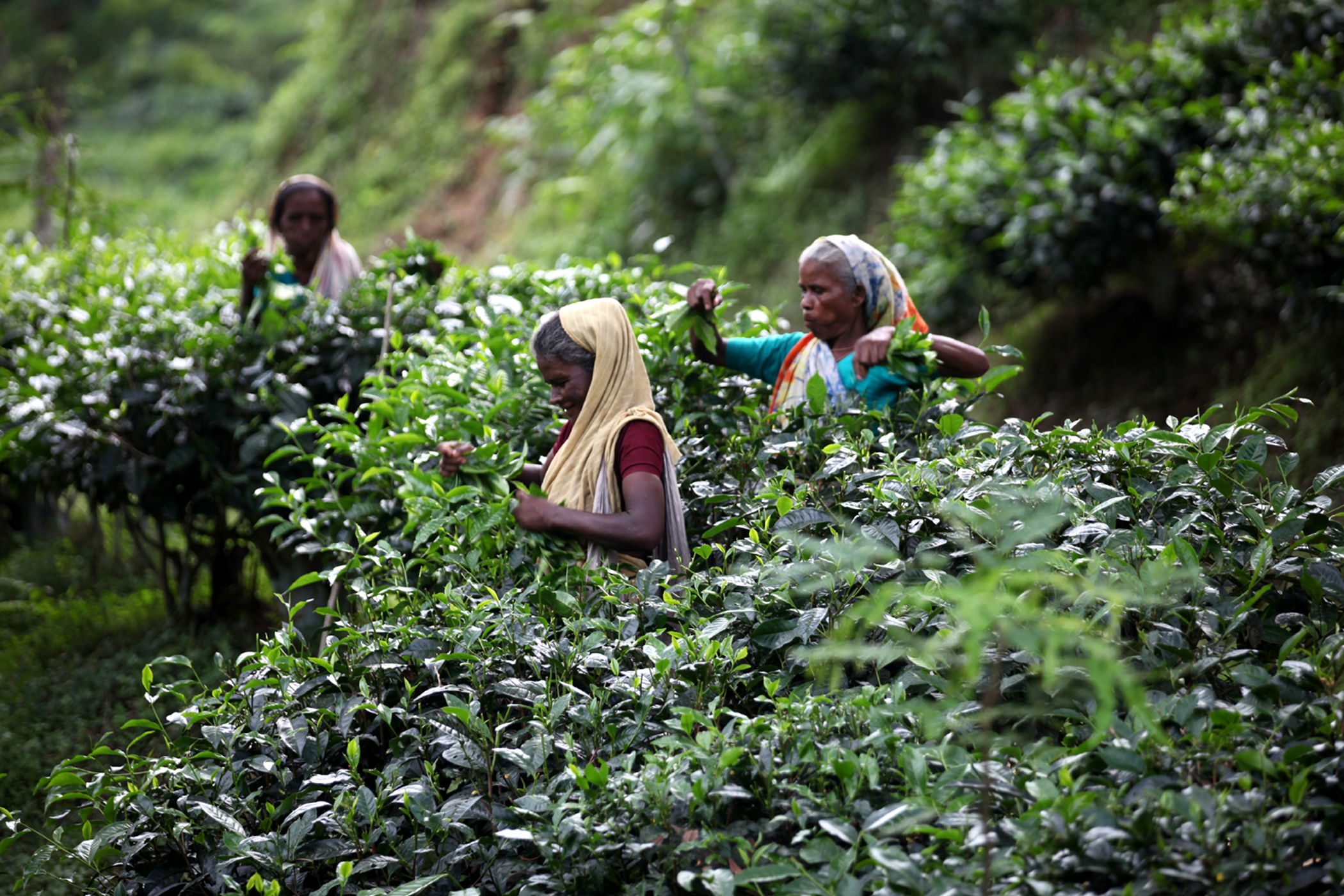
Lunch is often just chilli and tea-leaf chutney. Workers endure swollen limbs, scrapes from dense bushes, scorching sun, heavy rain, and scorpion or snake bites. Their children lack adequate education and healthcare.
Meanwhile, British-origin companies, state enterprises, and private corporations lease this government khas land at a cheap rate and receive subsidised fertiliser. Yet, they always find excuses not to pay a dignified wage.
If Sri Lankan tea estate owners can pay a daily wage of 1,750 rupees (roughly Tk 650) and Kerala businesses in India can pay 546 rupees (Tk 710), why can’t Bangladeshi owners do the same? The excuse of low productivity is unconvincing. If owners fail to invest in modernisation and upgradation, workers should not bear the cost of that failure.
 For all latest news, follow The Daily Star's Google News channel.
 There is also a political commitment at stake. In its election manifesto, the BNP promised to ensure fair, inflation-indexed wages alongside special programmes to reduce income disparities and balanced development of tea communities. BNP candidates made various promises to tea workers, including pledges to raise their wages. Humayun Kabir, now the state minister for foreign affairs, assured voters that the BNP would support tea workers more strongly than any other party. Khandakar Abdul Muqtadir, minister for industries and commerce, promised that the government would prioritise improving the tea workers’ living standards through fair wages, healthcare, education, and vocational training.
Tea workers responded by voting overwhelmingly for BNP candidates, playing a decisive role in several constituencies.
Hence, the BNP-led government should have proactively raised the wages of tea workers. Instead, workers have been protesting for more than a month with no clear sign of government acceptance. Worse, Geeta Rani Kanu, a leader of the Tk 500 wage movement, has been arrested.
The government must honour its electoral commitments. It should accept the workers’ four demands—including a Tk 500 daily wage and land rights—and immediately release Geeta Rani Kanu. The tea that millions of Bangladeshis drink every day should not be produced at the cost of keeping the tea workers trapped in abject poverty.
Kallol Mustafa is an engineer and writer who focuses on power, energy, environment, and development economics. He can be reached at kallol_mustafa@yahoo.com.
Views expressed in this article are the author's own.
Follow The Daily Star Opinion on Facebook for the latest opinions, commentaries, and analyses by experts and professionals. To contribute your article or letter to The Daily Star Opinion, see our guidelines for submission.
Comments