


State minister’s DU remarks and the bigger crisis in higher education

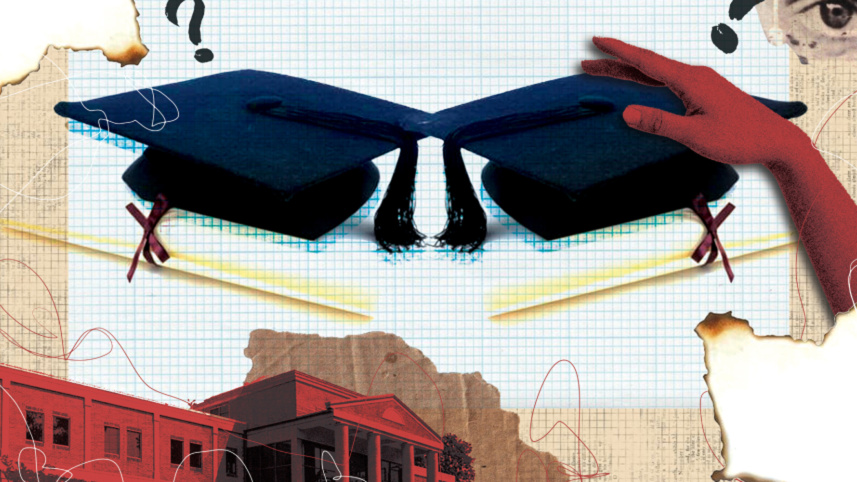
The recent remarks by State Minister for Primary and Mass Education Bobby Hajjaj comparing Dhaka University to a coaching centre triggered predictable outrage. Students protested, teachers condemned the comments, and even pro-BNP teachers associated with Hajjaj’s own political camp publicly distanced themselves from the statement. Faced with mounting criticism, the minister eventually withdrew his remarks.
Yet the controversy may have obscured a more important question. Was the problem merely what was said, or does the intensity of the reaction reflect a deeper discomfort about the state of higher education in Bangladesh? After all, concerns about the purpose, quality, and direction of higher education are hardly new. Major newspapers have carried a steady stream of critical articles that differ in emphasis but converge on a common concern: Bangladesh has expanded higher education, yet its quality, relevance, innovation, and impact continue to lag behind national aspirations.

My own research has reached similar conclusions. Together with a team, I have examined student experiences in public and private universities through the Academic Experience Project, a series of 14 articles based on extensive investigative work. In addition, surveys conducted in 2003, 2013, and 2026 involving nearly 2,000 students from leading public and private universities revealed a consistent pattern: student satisfaction with teaching and courses has not improved much over more than two decades, suggesting that many institutions simply do not care to improve or are struggling to adapt to changing expectations and learning environments. This should concern all of us because universities are not simply degree-granting factories. They are meant to be engines of intellectual growth, innovation, job-readiness, and social mobility.
The uncomfortable reality is that Bangladesh’s higher education system has been drifting for decades. There has been no clear direction for it to pursue. Public investment in education also remains among the lowest in South Asia, hovering around 2 percent of GDP. Leadership positions in many educational institutions are often shaped by political considerations rather than demonstrated academic or managerial competence. Institutional reforms are sporadic, fragmented, and rarely sustained. The absence of substantive research—and the anomalies that persist—reduces these institutions to the level of ordinary colleges rather than true universities. Meanwhile, the expectations from universities continue to grow.
The result is a system that often rewards enrolment stability, fee collection, high GPA and pass rates, and administrative compliance while paying insufficient attention to deep learning, curriculum coherence, classroom engagement, research productivity, and graduate outcomes. We celebrate the production of degrees but devote far less attention to the quality of learning that those degrees are supposed to represent.
Employers know this all too well, with surveys pointing to their growing dissatisfaction with university graduates. Concerns range from weak communication skills and poor analytical abilities to inadequate problem-solving capacity and limited workplace readiness. Some employers openly prefer graduates from a small number of select institutions, while others have become increasingly sceptical of academic credentials altogether. Often, graduates have to sit for additional testing to demonstrate competence. The gap between what universities teach and what employers need appears to be widening.
There is also a persistent complaint from university administrators that their institutions confront a deeper crisis of coherence extending beyond isolated operational deficiencies. They repeatedly returned to concerns regarding governance ambiguity, weakening academic culture, organisational fragmentation, leadership deficits, and growing market pressures.
Problems extend beyond the universities themselves. Higher education reflects broader societal malaise. Governments demand results but often underinvest in the sector. Policymakers announce ambitious visions but fail to provide coherent implementation frameworks and needed support. Media attention tends to focus on controversies rather than long-term reform. Civil society frequently and virulently critiques outcomes without engaging deeply with the structural challenges.
Perhaps most troubling is the marginalisation of many academics in discussions about educational reform. Those who devote their lives to teaching, research, and knowledge creation are often excluded from major policy decisions that concern them. Universities cannot flourish when academic voices are treated as an afterthought, and sometimes with disdain.
All of these matters because the global economy is increasingly driven by knowledge, innovation, technological capability, and competition. Countries that lead the world today do so not merely because of natural resources or cheap labour, but because they have invested consistently in education, research ecosystems, scientific inquiry, and the cultivation of talent. Universities sit at the centre of that process.
Viewed from this perspective, the state minister’s remarks may have been less of an attack on a particular institution than an expression—however imperfectly stated—of frustration with a system that is not performing at the level the country needs. Dhaka University happened to be the focal point of the controversy because of its symbolic status as the nation’s premier public university.
But the larger question remains: where do Bangladesh’s universities stand relative to Asia’s and the world’s leading institutions, and what must be done to close the gap? This is a matter of building, disseminating, using, and archiving knowledge capital, the intellectual, human, and innovative capacity that drives national progress. The question is about promoting meritocracy, because the future will not reward mediocrity. High-quality employment increasingly requires sophisticated analytical skills, creativity, adaptability, and the ability to solve complex problems. These capabilities cannot be developed through rote learning, outdated curricula, or an educational culture that discourages inquiry and experimentation.
So, the challenge before Bangladesh now is to transform higher education, which will require better leadership, greater accountability, stronger research cultures, closer engagement with industry, more meaningful investment, and a renewed commitment to academic excellence.
The controversy surrounding State Minister Hajjaj’s remarks should not end with outrage alone. If his comments touch an uncomfortable reality and provoke a candid national conversation about the weaknesses of our educational system and the reforms necessary to strengthen it, they may ultimately serve a constructive purpose. In that sense, the minister deserves credit—not for the wording of his remarks, which many found objectionable, but for drawing public attention to a challenge that Bangladesh can no longer afford to ignore.
Professor Syed Saad Andaleeb is distinguished professor emeritus at Pennsylvania State University and former vice chancellor of BRAC University. He may be reached at ssa4@psu.edu.
Views expressed in this article are the author's own.
Follow The Daily Star Opinion on Facebook for the latest opinions, commentaries, and analyses by experts and professionals. To contribute your article or letter to The Daily Star Opinion, see our guidelines for submission.
 For all latest news, follow The Daily Star's Google News channel.
Comments