


How the measles vaccine drive exposed gaps in coverage and data

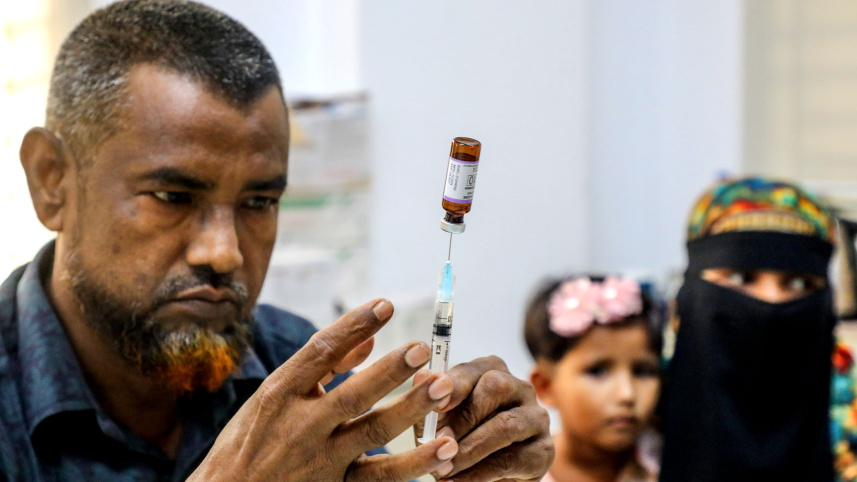
As of September 15, Bangladesh’s measles death toll since the outbreak began earlier this year stands at 1,036. According to the DGHS, a total of 153,279 patients with suspected measles have been hospitalised across the country since mid-March, of whom 147,386 have recovered. The US Centers for Disease Control and Prevention currently lists Bangladesh’s outbreak as the largest active measles outbreak in the world.
A thousand-plus child deaths should already be a national emergency. What makes it worse, however, is that the government’s own figures on how this happened remain contradictory.

The emergency measles-rubella vaccination drive launched in April targeted 1.80 crore children aged six months to 5 years old. The vitamin A campaign that followed in June, covering the same age group, reached more than 2.23 crore children. Based on the inoculation targets set for the two campaigns, more than 40 lakh children appear to have been left outside the measles vaccine drive.
Parental hesitancy alone cannot explain the gap, as the same public health system located 2.23 crore children for the vitamin A drive. So why was the same target capacity not applied for the administration of life-saving measles-rubella vaccines?
Part of the problem predates the current government. Multiple routine vaccination programmes had been disrupted during 2024-2025 and changes made to procurement policies created the shortage we’ve been seeing this year.
But now, five months into the current government’s own emergency response, the coverage gap still exists. Hospitals are still treating children on floors for a lack of beds and running short of paediatric saline. Inheriting a crisis doesn’t make the government any less responsible.
Measured against the vitamin A population baseline, actual measles vaccination coverage reportedly works out to be closer to 77 percent, not the 103 percent the campaign claimed when it wrapped up. For herd immunity to occur, the coverage needs to be at least 95 percent. This is a major reason why transmission hasn’t slowed down even five months after the campaign was declared complete.
Now, more than a thousand new suspected cases are being logged every 24 hours; hospitals built to bear a fraction of the current caseload are running low on basic supplies; children are being treated wherever there is floor space; and the government has announced a measles-rubella “catch-up” vaccination campaign set to begin later this month. A campaign that succeeded doesn’t produce a situation like the current one. More and more, the concluded vaccination drive seems like one which hid how much of the population it never reached.
At this scale, calling it an outbreak “being responded to” undersells the problem. This is now a governance failure, and treating it as one means fixing the basics first. First, there must be a single, reconciled record of which children have had a first dose, a second one, or none at all. At the moment, every figure of coverage the government publishes is measuring against the wrong denominator. Vaccine coverage data should also be published for each district and upazila, instead of a single national figure. There must also be door-to-door outreach for children missed during the last drive, as another blanket campaign would likely result in the repetition undercounting. Given how often the government’s own data have contradicted each other, an independent, standing audit of the daily DGHS figures has become paramount.
Bangladesh once came close to eliminating measles nationally, and is now recording the worst outbreak of the disease worldwide this year. Trying to decide who gets blamed for how this crisis began won’t help us.
Ashish Barua is a fundraising professional and climate justice activist working in Canada’s health sector.
Views expressed in this article are the author's own.
Follow The Daily Star Opinion on Facebook for the latest opinions, commentaries, and analyses by experts and professionals. To contribute your article or letter to The Daily Star Opinion, see our guidelines for submission.
 For all latest news, follow The Daily Star's Google News channel.
Comments