


Dhaka must learn to care for its trees

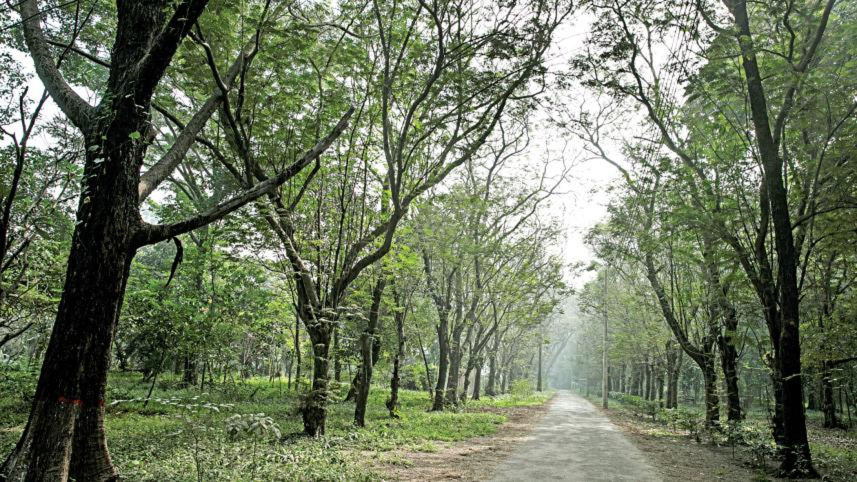
On August 10, a tree fell in the capital’s Dhanmondi area, damaging three parked cars. Fortunately, no one was hurt. But this is not the first time a tree has fallen in the area. On July 31, 2025, a woman was injured when a large tree fell on several vehicles in Dhanmondi during heavy rain. On May 11, 2018, a 54-year-old man died after a tree fell on him near Dhanmondi Lake. And on March 7, 2016, national film award-winning director and artist Khalid Mahmood Mithu died after a tree fell on the rickshaw he was riding in Dhanmondi.
After heavy rainfall, Dhaka sees more than flooded streets. Trees fall over, blocking traffic, damaging property, and sometimes even taking lives. After some coverage on the news and a quick clean-up, life goes back to normal. The rain may have triggered the latest fall, but that might not be the reason why the tree fell in the first place. The health of a tree, which is a living infrastructure unlike a pipe or a bench, depends on the soil, water, space, pruning, and the surrounding environment. But in Dhaka, we often lack systems to care for our existing trees.

A mature urban tree is part of the city’s infrastructure. Trees provide shade, help cool down an area, clean the air, and store carbon. Dhaka’s first full urban tree inventory estimates that its trees provide about $6.74 million in ecosystem benefits each year to the city. According to the inventory, Dhaka has about 13 lakh trees across 110 species, and more than 60 percent of them are non-native. Tree cover is about 11 percent, roughly one tree for every seven people, down from 21.6 percent in the 1980s. Meanwhile, the per capita tree coverage has now fallen to just 3.44 square metres, far below the global minimum standard of 9 square metres. When a city has few mature trees, each should be treated as an asset. A mature tree cannot be replaced with a sapling. Older and larger trees provide much more value to our ecosystem.
We plant saplings during campaigns, take photographs, announce targets, and move on. But we do not check back to see whether a tree has survived, whether its roots have enough space to grow, whether nearby construction has harmed it, or whether its branches need expert pruning. Most importantly, we do not assess whether a tree has become unsafe and is at risk of falling.
Urban forestry research has shown that human activity can damage root systems and reduce tree health and longevity. The US Department of Agriculture’s guidance notes that soil compaction can restrict the air and water that roots need, while prolonged water saturation can weaken root anchorage and increase the risk of windthrow. After years of such stress, when rain falls heavily, the tree falls. Urban forestry therefore requires inventories, long-term plans, regular checks, and maintenance—not just planting.
Dhaka South City Corporation has announced plans to plant 3,00,000 trees between 2026 and 2030. The government has also announced a nationwide programme to plant 25 crore trees over the same time period, prioritising local and environment-friendly species. Bangladesh does need more trees, but planting targets should never replace targets for managing and caring for existing trees.
The first step to protect our trees is creating a digital inventory. Important roadside and public trees should have ID numbers and basic details such as species, age, location, canopy size, health, root condition, and maintenance history, along with a health and risk classification. We also need to change how road and construction work is done. Construction contracts should require root-zone protection, while soil around trees must remain capable of absorbing water and allowing oxygen. Major road and utility projects should ensure affected trees are assessed and protected.
Planting should also come with a maintenance obligation. If a group is hired to plant 10,000 trees, it should also be assigned the responsibility to ensure their survival and health for several years. Species selection matters, too, keeping in mind that urban trees have to coexist with roads, buildings, utilities, people, and the local climate.
Dhaka does not just need more trees. It also needs to know which are healthy, which are struggling, which have damaged roots, which need pruning, and which pose safety risks. The real measure of a greener Dhaka will not be in terms of how many trees we plant, but how many survive, reach maturity, and mature enough to remain part of the city for years to come.
Shafiq R Bhuiyan is vice-president and head of internal communication and CSR at BRAC Bank.
Views expressed in this article are the author's own.
Follow The Daily Star Opinion on Facebook for the latest opinions, commentaries, and analyses by experts and professionals. To contribute your article or letter to The Daily Star Opinion, see our guidelines for submission.
 For all latest news, follow The Daily Star's Google News channel.
Comments