


‘Staying the course is not an option in resolving the Rohingya crisis’

It has been nearly nine years since the largest Rohingya influx into Bangladesh from Myanmar took place in 2017. Where do things stand now?
The overall number of refugees has increased, while funding, which used to be relatively healthy before, has declined. This has created a difficult situation, particularly because the opportunities for the Rohingya’s return are currently lacking. What has not changed is the refugees’ desire to return home. But there is a growing realisation that this is exceedingly difficult because of the precarious and unstable conditions in Myanmar, which continue to drive new arrivals.

What is the most concerning issue in the camps now?
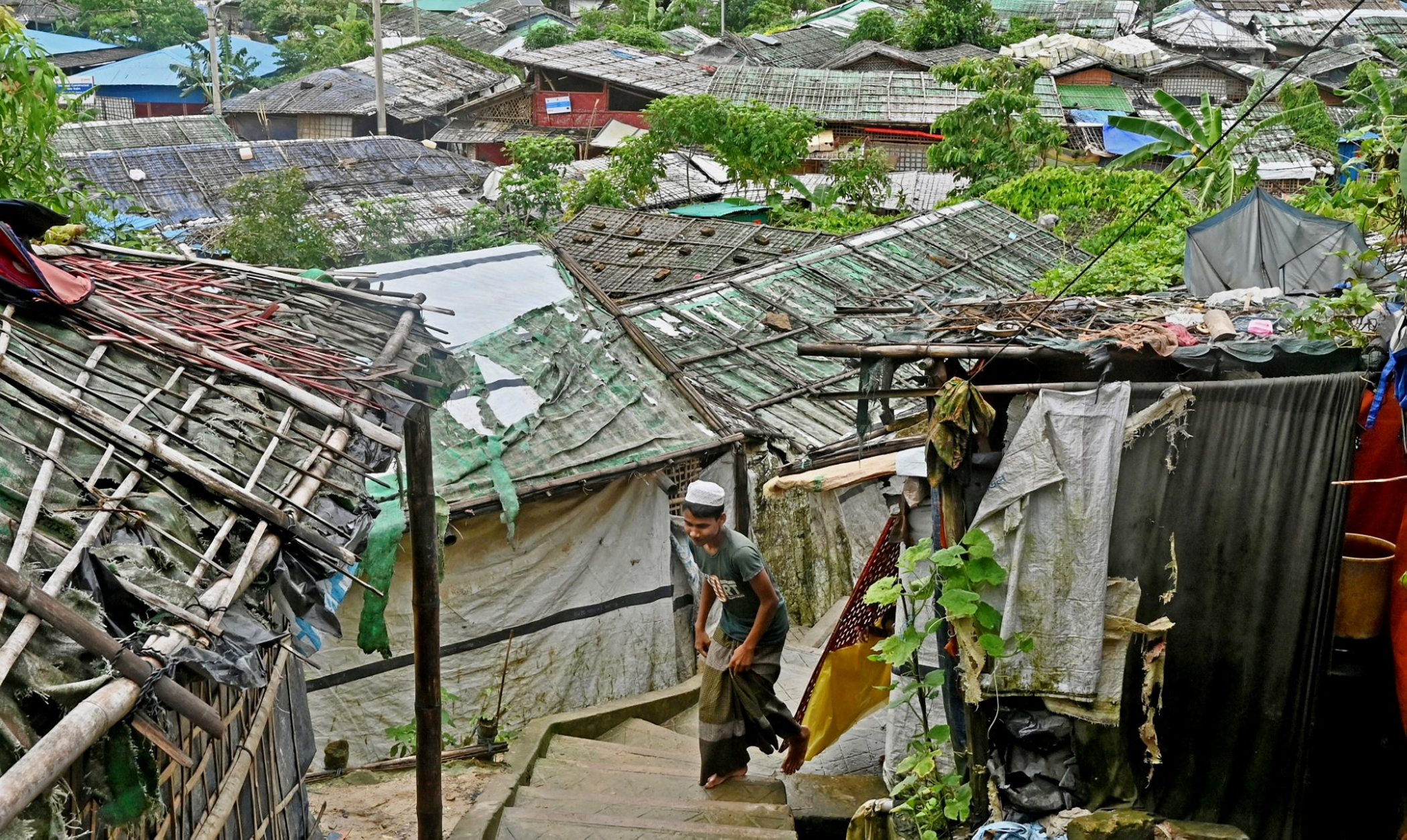
There is a growing concern that the camps’ conditions are deteriorating because needs are increasing while funding is in decline and opportunities for the refugees to support themselves remain limited. This is putting pressure on the existing health, water, sanitation, and shelter services. Without continued humanitarian assistance or better livelihood opportunities, these conditions are expected to worsen further. More concerning is the fact that people are still fleeing Myanmar. Approximately 150 new arrivals are approaching the UNHCR every week. The combination of these factors is creating a precarious situation, which can lead to further negative coping mechanisms, including gambling.
What forms of gambling are taking place?
There are online gambling rings where refugees pay money hoping to make more, but ultimately lose it. Some sell their meagre assets and become indebted. This can force desperate individuals to leave the camps. Some undertake perilous boat journeys to Thailand, Malaysia, Indonesia, or even Australia. Approximately 10 percent of those who embark on these journeys perish. Those who survive often fall into the hands of criminal gangs.
Why did the Joint Response Plan seek a reduced budget of $710 million this year?
This is primarily due to a global shortage of humanitarian financing. Donors requested a scaled-down, hyper-prioritised plan. Previous appeals were around $1 billion. The hope was that this lower request would be fully funded. But funding currently stands at only 66 percent. The UNHCR is appealing to the international community to fund the remainder.
How is the funding shortage affecting the refugees?
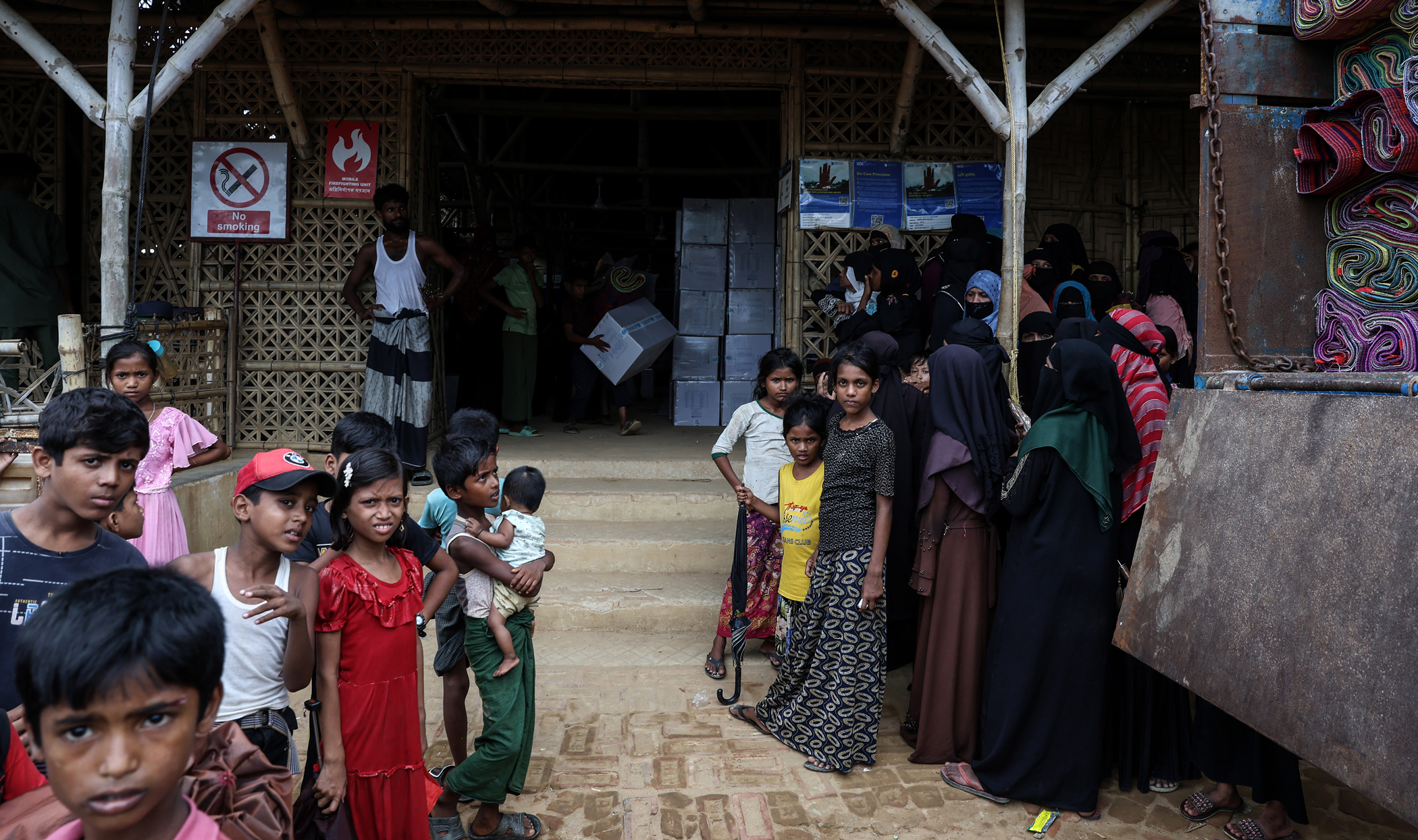
Many activities related to education, health, sanitation, and social awareness have had to be cut. Cuts in educational activities have an immediate knock-on effect. Children may roam the camps, beg, or become exposed to labour and abuse. Education is an investment in hope and in the future return of the Rohingya people. Eroding these services creates more urgent needs later. The Rohingya remain among the most persecuted populations globally and have no choice but to flee. There must, therefore, be greater burden-sharing, including more support for host countries such as Bangladesh, and political re-engagement on Myanmar to create conditions for safe return.
What other sectors are facing shortages?
Some sectors are relatively well-funded, but others face pipeline breaks, including LPG cooking gas. Without LPG, refugees could be forced into forests to collect wood for fuel. Protection is also consistently one of the least-funded sectors. This means there are not enough staff to register refugees or address their concerns in a timely manner. Desperate situations provide a breeding ground for insecurity. People may be forced to leave the camps or engage in illegal activities. We have been advocating for refugees to become less dependent on aid through income opportunities.
How can such opportunities be created?
It is complex and sensitive, but it may become a necessity. The goal would be to facilitate small, formalised businesses inside the camps, such as repair shops or grocery stores. These assets could be produced by refugees, purchased by organisations operating in the camps, and redistributed. They should not necessarily be marketed outside the camps because we must avoid creating undue competition with the local communities.
Is the UNHCR increasingly working with national NGOs due to decreasing operational cost?
Yes, this transition is accelerating. The UNHCR used to work with many international NGOs, but the majority of our partners are now national organisations. There can be tension between the need for speed and scale, which donors often expect from large partners, and the time needed to build the capacity of smaller local NGOs.
Why are people still fleeing Myanmar every week?
 For all latest news, follow The Daily Star's Google News channel.
 Conflict continues in Myanmar, particularly in Rakhine State involving the Arakan Army. People are fleeing aerial bombardments, armed conflict, arrest, discrimination, lack of livelihoods, and restrictions on movement.
Does the UNHCR have operations in Rakhine?
It is very difficult to operate there because of access, bureaucratic, and security constraints. The UNHCR has an office in the capital and other field locations, but we are not on the ground in the specific areas from which people are fleeing. No humanitarian assistance is being provided there through the UNHCR.
What is needed for sustainable repatriation?
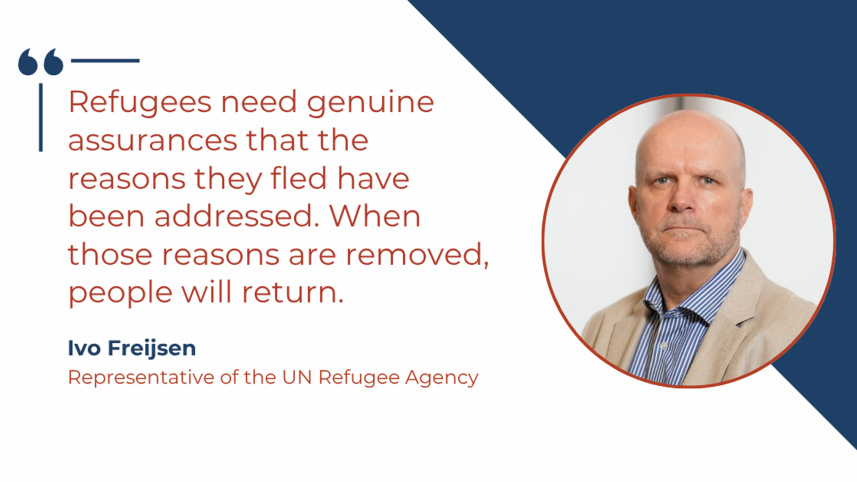
Member states with influence, including the permanent members of the UN Security Council and regional players, must find the right mix of incentives to bring the parties to the table. Dialogue is needed because the conflict now involves both the authorities and the Arakan Army in Rakhine. Refugees need genuine assurances that the reasons they fled have been addressed. When those reasons are removed, people will return. Some may return immediately if they have assets, while others will need more time, documentation support and financial assistance to rebuild homes or restart businesses. But returning the people before the conditions are ready would be counterproductive. They could become displaced again and cross back into Bangladesh. The international community must address the underlying political and security problems.
Is there any scope for civil society or academic dialogue?
Such dialogue would be welcome. Some organisations specialising in mediation are trying to bring the parties together. However, there is currently not enough momentum to raise hope for the refugees to return soon.
What is your final message to the international community and regional partners?
“Staying the course” is not an option. It is a humanitarian imperative, with immediate consequences if ignored. We must maintain adequate conditions in the camps, explore livelihood opportunities, and engage politically on Myanmar. All actors—humanitarians, member states, the host government, and non-state actors in Myanmar—need to work together to create change.
Follow The Daily Star Opinion on Facebook for the latest opinions, commentaries, and analyses by experts and professionals. To contribute your article or letter to The Daily Star Opinion, see our guidelines for submission.
Comments