


Are we reversing course on the UN-backed post-uprising reforms?

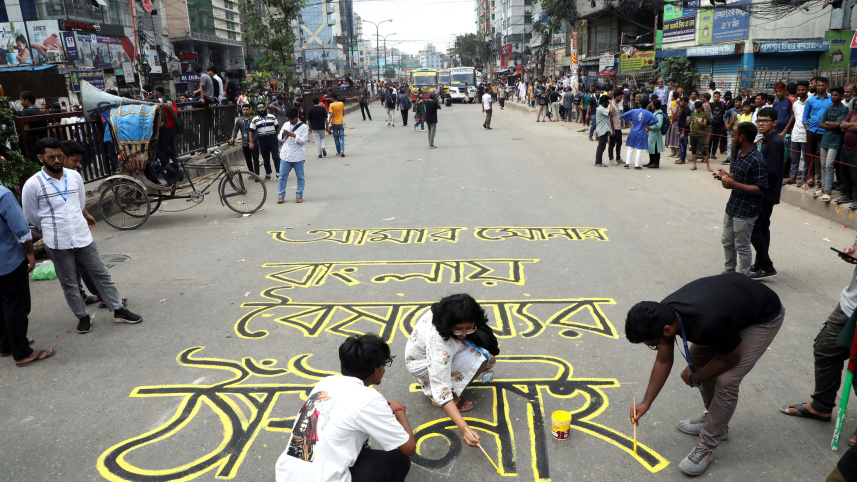
One of the most consequential initiatives of the interim government was Chief Adviser Prof Muhammad Yunus’s invitation to the Office of the United Nations High Commissioner for Human Rights (OHCHR) to conduct an independent fact-finding investigation into human rights violations committed during the July uprising. This was a far-sighted decision on the CA’s part. In Bangladesh, investigations conducted by domestic bodies are almost invariably challenged as politically motivated. An independent international probe was therefore essential both to establish a credible record of what happened and to preserve evidence for future accountability. No institution was better placed to perform that task than the OHCHR.
Following its inquiry, the UN body published its “Fact-Finding Report: Human Rights Violations and Abuses related to the Protests of July and August 2024 in Bangladesh” on February 12, 2025. The report is important not only because it documented grave human rights violations but also because it offered a set of robust recommendations for preventing their recurrence.

UN findings
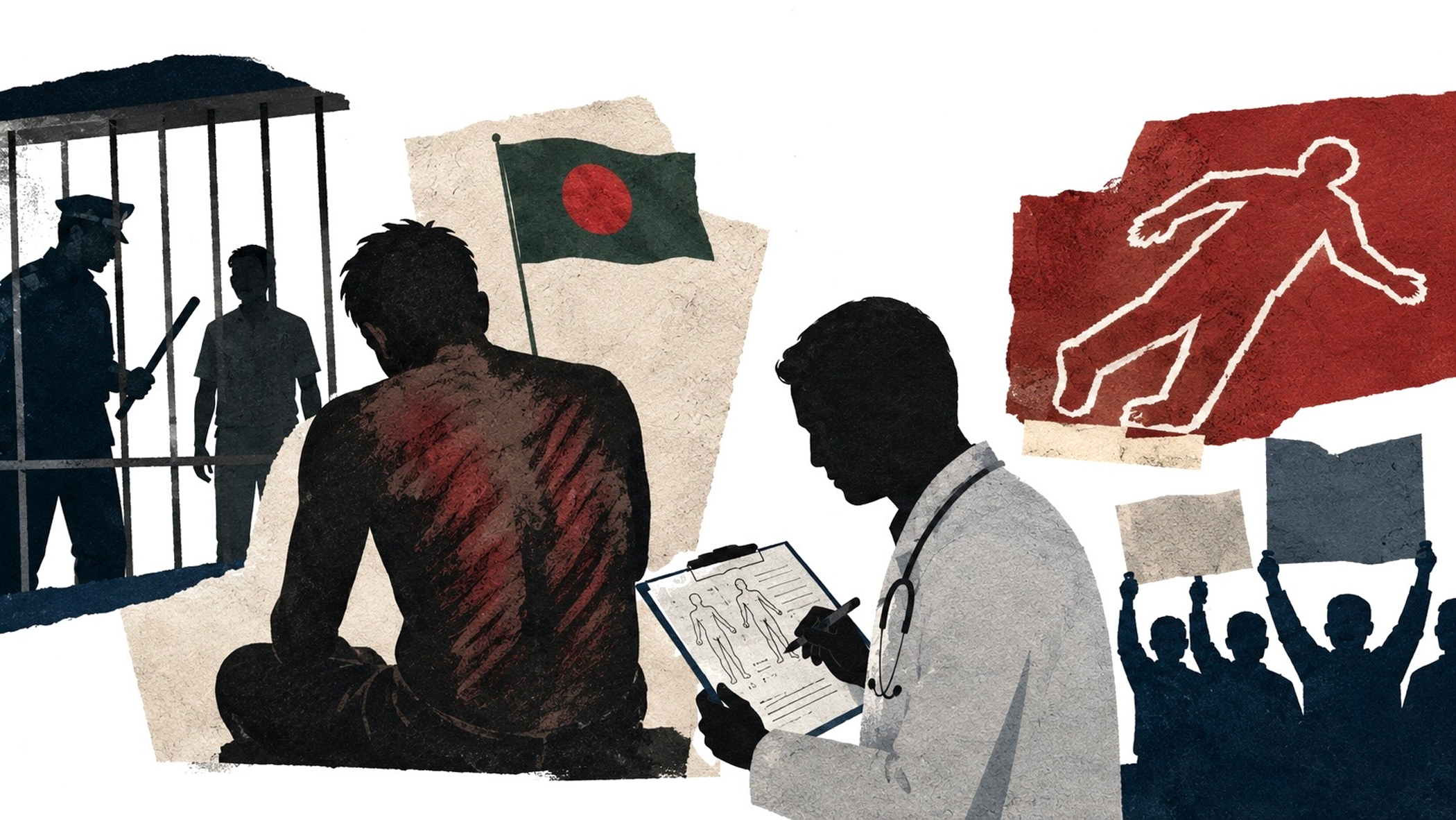
The OHCHR concluded that there were reasonable grounds to believe the Awami League (AL) government, together with security and intelligence agencies and violent elements affiliated with the party, systematically committed serious human rights violations. These included widespread extrajudicial killings, unlawful use of force, arbitrary arrest and detention, torture, and other forms of ill treatment. It found evidence that senior political and security leaders coordinated these abuses as part of a strategy to suppress public dissent.
According to the report, security forces—including the police, Rapid Action Battalion (Rab), Border Guard Bangladesh (BGB), intelligence agencies and, in some instances, the military—used lethal force against protesters. Internet shutdowns, surveillance, media intimidation and obstruction of medical care were employed to suppress resistance and conceal abuses. The OHCHR estimated that as many as 1,400 people had been killed, thousands more seriously injured, and over 11,700 arrested between July 1 and August 4, 2024. It also found evidence of retaliatory violence against AL supporters, police officers and minority communities following the fall of the government.
UN recommendations
The report recommended that victims of serious human rights violations receive justice and redress. In addition, it proposed a set of “profound reforms” designed to address the structural causes of repression, noting that many victims interviewed by the OHCHR emphasised that they had risked their lives “to achieve real change” in the country. However, nearly 18 months after the report was issued, implementation of the recommendations appears to have lost its way.
On accountability and justice
The UN body called for impartial investigations and prosecutions of extrajudicial killings, torture, enforced disappearances and sexual violence, including violations predating the July uprising and cases of revenge violence. It also recommended creating legal and institutional safeguards to ensure independent investigations of public officials, prosecuting military personnel accused of crimes against civilians in regular courts, establishing a transitional justice framework, creating an independent public prosecution service, strengthening judicial independence, and supporting the enforced disappearance commission.
The interim government made progress in some of these areas. The National Human Rights Commission (NHRC) Ordinance, 2025 brought the national human rights watchdog into compliance with the Paris Principles and empowered it to investigate public officials, including members of the disciplined forces, without prior government approval, as recommended by the OHCHR. However, the BNP government repealed the ordinance and restored the 2009 law, which is not compliant with the Paris Principles and therefore prevents the commission from investigating the disciplined forces.
The Supreme Court Secretariat Ordinance, 2025 and the Supreme Court Judges Appointment Ordinance, 2025 would have implemented some recommendations on judicial independence, including adequate funding and staffing for the judiciary, an independent process for disciplining subordinate court judges, and a transparent process for appointing Supreme Court judges. Unfortunately, both laws have been repealed by the current government.
Consistent with the OHCHR recommendations, military personnel accused of crimes against civilians are being prosecuted before regular courts. The July Mass Uprising (Protection and Liability Determination) Act, 2026 incorporates some elements of transitional justice by providing for accountability for revenge violence and enabling victims’ families to seek reparations through the NHRC. However, no comprehensive transitional justice framework has been established. Likewise, no independent public prosecution service has been created, despite recommendations from both the Constitution Reform Commission and the Judiciary Reform Commission established by the interim government.
Continued work on enforced disappearances was underscored by the OHCHR, and the Enforced Disappearance Prevention and Redress Ordinance, 2025 conferred powers on the NHRC in this regard. However, the current government allowed the ordinance to expire, leaving no legal framework for addressing enforced disappearances, other than the provisions of the International Crimes (Tribunals) Act, 1973 relating to widespread or systematic enforced disappearances.
The OHCHR recommendations to impose a moratorium on the death penalty and address concerns surrounding the International Crimes Tribunals (ICT) remain unaddressed.
On police and security
The OHCHR recommendation to prohibit the use of lethal ammunition is being followed so far. Based on the Police Reform Commission’s recommendation, the interim government established a committee on this issue, but no legal measure has been adopted yet.
Mass charges and arrests on the scale seen in 2024 or previous years are no longer occurring. An amendment to the Code of Criminal Procedure introduced Section 173A, allowing police to issue preliminary reports to exclude persons from such cases.
Bangladesh also acceded to the Optional Protocol to the Convention against Torture on August 16, 2025, consistent with the OHCHR recommendation. The NHRC Ordinance was also amended to implement the protocol. However, following the repeal of the ordinance, no domestic legal mechanism remains to ensure compliance with the protocol.
 For all latest news, follow The Daily Star's Google News channel.
 The OHCHR recommendations to replace the Police Act, 1861 and metropolitan police ordinances, and establish an independent police commission, have not been implemented. While the interim government passed the Police Commission Ordinance, 2025, the current government allowed it to lapse.
The OHCHR’s key security sector recommendations remain unimplemented, specifically those calling for accountability mechanisms for the armed forces and BGB, the dissolution of Rab, and limitation of BGB and DGFI strictly to border security and military intelligence, respectively. The accountability measures for these forces introduced by the repealed NHRC and enforced disappearance ordinances no longer exist.
On civic space
To protect civic space, the OHCHR recommended repealing or amending the Cyber Security Act, 2023, the Official Secrets Act, 1923, the Anti-Terrorism Act, 2009, the criminal defamation provisions of the Penal Code, 1860, and the Special Powers Act, 1974. The Cyber Security Act was replaced by a new law, removing some overly broad criminal provisions, but no reform initiatives have been taken regarding the other laws.
The UN body further recommended ending unlawful surveillance, abolishing the National Telecommunication Monitoring Centre (NTMC), and amending the vague provisions of the Bangladesh Telecommunications Act (BTA), 2001, under which the NTMC operates. The relevant BTA provisions have been amended, but the NTMC has not yet been abolished. The recommendation to end internet shutdowns has been addressed through the BTA amendment.
The Foreign Donation (Voluntary Activities) Regulation Act, 2016 was amended in line with the OHCHR recommendation to ensure it is not used to curtail the right to freedom of association.
On political system
Unlike the other areas, the OHCHR recommendations on the political system and economic governance were neither extensive nor, with a few exceptions, specific. Political reforms were recommended to ensure free and fair elections. Although the report found that the AL government, together with violent elements affiliated with the party, systematically committed serious human rights violations, it nevertheless cautioned against banning political parties that would undermine a return to multiparty democracy. Nonetheless, AL’s activities were subsequently banned, pending the completion of the trials of its leaders at the ICT.
Another crucial recommendation was to ensure substantive equality between men and women in political and public life. The small number of women who contested the February 12 election or were elected to parliament demonstrates that equality remains a distant goal.
On economic governance
Recommendations on economic governance included strengthening the Anti-Corruption Commission (ACC), recovering stolen assets, improving labour rights, introducing a fairer tax system, creating opportunities for young people and the unemployed, and ensuring that growth benefits reach the broader population.
The interim government introduced certain reforms of the ACC, including an independent appointment process and the mandatory inclusion of a female commissioner, through the Anti-Corruption Commission (Amendment) Ordinance, 2025. However, the ordinance was allowed to lapse. Initiatives have been taken to recover stolen assets, but it will take time to see whether these efforts result in any actual recovery.
The Bangladesh Labour (Amendment) Ordinance, 2025 introduced some improvements to labour rights, including the right to freedom of association, and these reforms were retained by the current government. As of now, a fairer tax system and ensuring that growth benefits reach the broader population remain distant goals.
Bangladesh is not on track to substantially implement the OHCHR recommendations. Although the interim government introduced certain legal and institutional reforms, some have since been reversed, while the impact of the others remains uncertain. The risk that the country will fall short not only of the OHCHR recommendations but also of the aspirations for justice, accountability, and democratic governance that inspired the July uprising cannot be ruled out.
Dr Sharif Bhuiyan a former visiting fellow at the University of Cambridge, is a senior advocate at the Supreme Court of Bangladesh.
Views expressed in this article are the author's own.
Follow The Daily Star Opinion on Facebook for the latest opinions, commentaries, and analyses by experts and professionals. To contribute your article or letter to The Daily Star Opinion, see our guidelines for submission.
Comments