


The fiscal risk of a pay rise without revenue reform

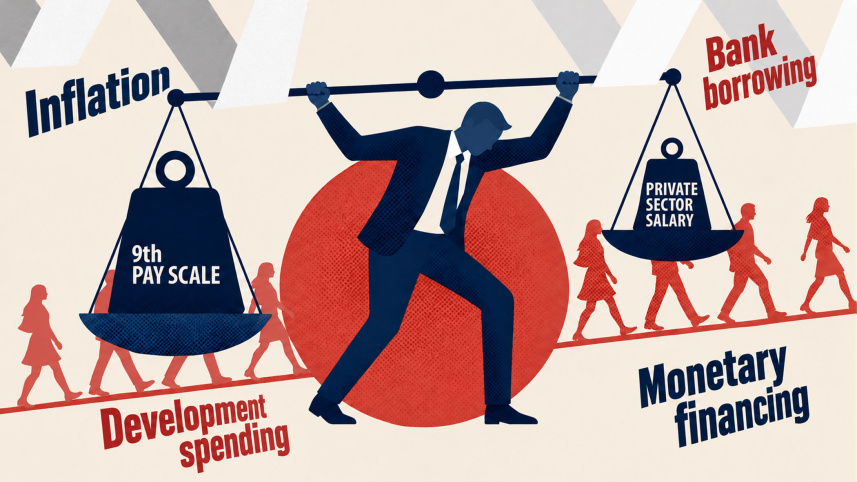
For Bangladesh’s government employees, the new pay scale brings understandable relief after years of high inflation and rising living costs. While salaries needed adjustment, the economic question is whether the state can absorb a permanent additional expenditure of Tk 1,05,580 crore a year without worsening the very pressures that have eroded household purchasing power. At a time of weak revenue mobilisation, persistent elevated inflation, banking-sector stress and limited fiscal space, a salary decision cannot be judged only by what it gives public employees. It must also be judged by who ultimately pays.
The scale of the commitment matters. Around 24 lakh government employees and more than nine lakh pensioners will benefit, while implementation is being phased over time. Yet phasing does not remove the liability. It merely spreads the initial budgetary impact. Once salaries and pensions rise, they become rigid recurrent expenditures. Unlike many development projects, they cannot easily be postponed when revenue falls short. This means future budgets will have less room to respond to energy shocks, natural disasters, banking-sector restructuring, social protection needs, or new public investment. Fiscal flexibility will shrink precisely when Bangladesh may need more of it.


The first test, therefore, is financing. The safest source is higher and more efficient revenue collection. Bangladesh has repeatedly failed to meet ambitious revenue targets. In FY2025-26, the gap was enormous. Against this background, adding a large permanent expenditure before establishing a credible financing base is risky fiscal sequencing. The government should expand the tax base, reduce evasion, review unjustified exemptions, strengthen taxation of high incomes and wealth, and accelerate digital enforcement. Without these reforms, the pay scale could end up being financed through borrowing, expenditure compression elsewhere, or a larger deficit. None is costless.
Cutting productive expenditure would be the wrong answer. Financing higher salaries by squeezing education, health, social protection or infrastructure would simply transfer the problem from one budget line to another. Bangladesh already underinvests in several of these areas. A government that pays more to its employees but spends less on classrooms, hospitals, climate resilience or logistics may improve the welfare of one group while weakening the quality of public services and the economy’s productive capacity. A pay reform should not become an excuse for retreating from development spending.
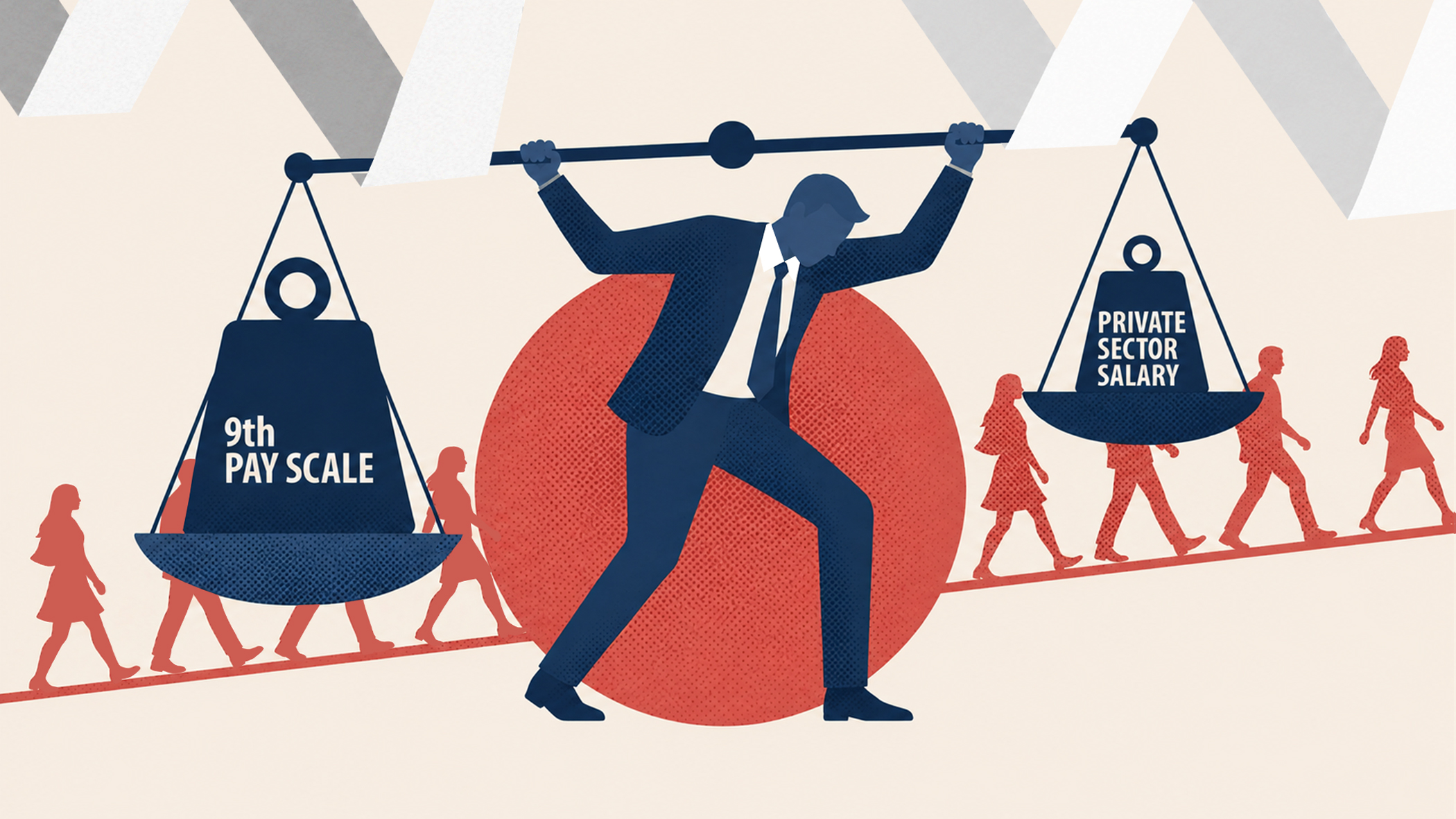
Greater reliance on bank borrowing is equally concerning. When government borrowing expands sharply, banks have stronger incentives to lend to the state rather than to firms, especially when private investment is already weak, and financial-sector risks remain high. This can raise financing costs and crowd out private investment. The political economy is uncomfortable: the state raises the incomes of its own employees, while businesses face tighter credit and higher interest costs. If investment slows, future employment and growth will suffer. Today’s salary relief may, therefore, be partly financed by tomorrow’s weaker private-sector expansion.
There is also an inflation risk. Higher salaries will raise consumption demand, which can support domestic businesses. But that benefit depends on supply response. If production, imports and distribution cannot expand at a similar pace, additional demand may spill into prices. In that case, inflation will erode part of the nominal wage increase, while millions of households outside government service will face higher living costs without receiving a comparable income adjustment. Monetary financing—such as printing money—would make this danger far worse and should be ruled out.
This brings us to the distributional question. Public employees are visible, organised and politically influential. Most private-sector workers are not. Their wages depend on productivity, profitability, competition and the financial health of firms. Many businesses, especially smaller ones, cannot simply match a large government pay increase. The result could be a widening gap between public and private employment, particularly for lower- and middle-income workers. That is not merely a matter of perceived unfairness. It can distort labour-market incentives, create retention problems for firms and deepen frustration among workers already squeezed by inflation.
The contrast is sharper because much of Bangladesh’s workforce remains outside formal wage protection. In many private firms, there is no meaningful minimum salary structure, while informal workers face even greater insecurity. A fourth-class public employee may now earn more than many young graduates, junior professionals and skilled workers in private institutions. Government cannot mechanically set private salaries. But it can create conditions for higher wages by supporting productivity, investment, competition, skills and formalisation. Wage inequality cannot be solved through public pay policy alone.

The government also needs to be careful about the claim that higher salaries will automatically reduce corruption or improve service quality. Bangladesh heard the same argument during earlier pay revisions. Better compensation may reduce some pressures, but corruption is also shaped by discretion, weak monitoring, poor internal controls and low accountability. If pay rises without administrative reform, citizens may simply face a more expensive bureaucracy rather than a more effective one. Salary reform should, therefore, be linked to performance management, audit systems, service standards, digital processes and credible sanctions for misconduct.
There is a better way to manage public pay. The Farashuddin Pay Commission had recommended annual increments with inflation adjustment rather than waiting a decade and then making very large jumps. That approach deserves reconsideration. A transparent, rules-based mechanism linking periodic salary adjustment to inflation, productivity, fiscal capacity and revenue performance would reduce political bargaining and avoid sudden shocks to the budget. It would also make medium-term expenditure planning more credible.
The new pay scale should, therefore, be treated not as the end of a wage debate but as the beginning of a fiscal test. Government employees deserve protection from prolonged inflation. But that protection cannot come at the expense of taxpayers, private workers, investment and future public services. The immediate priority must be revenue reform, expenditure discipline, tighter control of borrowing and stronger administrative accountability. Without these, the new pay scale may bring relief to some while quietly transferring the bill to many others. That is the difference between a defensible pay reform and a fiscally costly political settlement for Bangladesh today.
Dr Selim Raihan is professor in the Department of Economics at the University of Dhaka, and executive director at South Asian Network on Economic Modeling (Sanem). He can be reached at selim.raihan@gmail.com.
Views expressed in this article are the author's own.
Follow The Daily Star Opinion on Facebook for the latest opinions, commentaries, and analyses by experts and professionals. To contribute your article or letter to The Daily Star Opinion, see our guidelines for submission.
 For all latest news, follow The Daily Star's Google News channel.
Comments