

We must prepare for a harsher climate
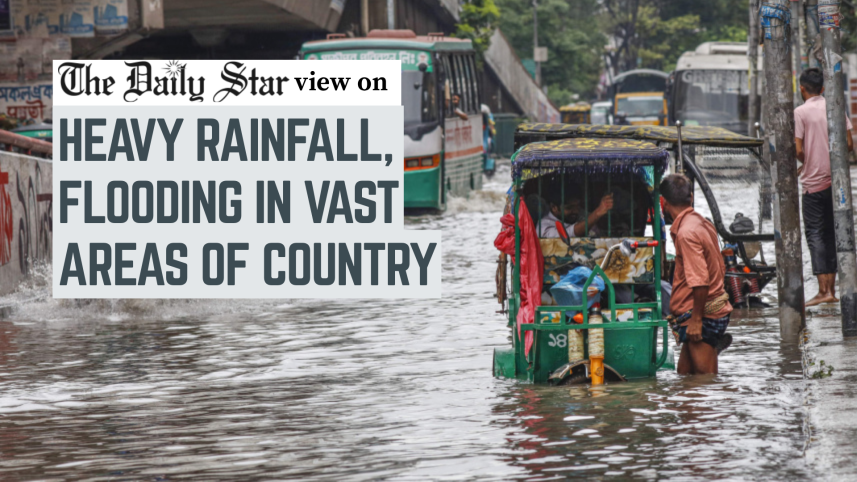
It is disturbing to see the monsoon wreak such havoc across large parts of Bangladesh. Almost half the country, including the capital, has been submerged by torrential rain. More than a million people reportedly remain marooned in a number of districts. With the rain forecast to continue, the situation may take a turn for the worse. Already, landslides, flash floods, and waterlogging have combined to cause the death of at least 44 people since last week.
The rain has upended lives everywhere. Thousands in the southeast have lost their homes; many are struggling to access fresh water, food, and even dry land to bury deceased loved ones. Since Wednesday, some areas have lost electricity and cellular connectivity. Reaching remote areas with aid, especially in the hills, has therefore become a challenge. Meanwhile, waterlogging has brought the port city to a halt, a situation that Dhaka has also experienced since early Sunday after incessant rain left roads inundated. While HSC exams had to be postponed in the southeast, some educational institutions in the capital on Sunday had the good sense to move classes online.

Flooding and waterlogging are nothing new, yet we never seem to be prepared for them. Preparedness becomes a response that follows after, often as a last-minute response, and never in a manner commensurate with the scale of an otherwise routine threat. This is worsened by our inefficiency, lack of foresight, and disregard for rules. The prolonged flooding in South Chattogram and Cox’s Bazar is a case in point. According to Bangladesh Water Development Board officials, some influential owners of fish and shrimp enclosures have kept the sluice gates of several rivers and channels shut, preventing floodwater in the hills from draining into the Bay of Bengal. Moreover, illegal embankments built by land grabbers have restricted the natural flow of floodwaters.
In the two biggest cities of the country, waterlogging is mainly a result of unplanned urbanisation. Over the decades, authorities have allowed the destruction of the cities' natural drainage systems to a point where million-dollar projects, even when finally completed, cannot fix the problems caused by heavy rainfall. Instead, some projects undertaken by city authorities during the monsoon only add to residents’ misery. In Dhaka, for instance, rainwater accumulates and conceals numerous potholes and pits dug by public agencies, causing vehicles to become stuck and exposing pedestrians to various risks. Ironically, in lakeside neighbourhoods such as Dhanmondi and Hatirjheel, blocked sewers often prevent water from flowing into adjacent water bodies.
We cannot control natural phenomena but, by now, we should have mastered the means to mitigate their impact. Heeding weather warnings, taking timely measures, protecting natural systems from land grabbers, and rebuilding cities to withstand extreme weather events can no longer be delayed. We urge the government to incorporate these measures into every phase of infrastructure planning and disaster preparedness going forward. Undoubtedly, the ongoing disasters call for emergency interventions, including proper delivery of aid. However, such measures cannot prepare us for increasingly intense climate change in the long term. That is where our main focus should be: being prepared for a worse monsoon.
 For all latest news, follow The Daily Star's Google News channel.


Comments