


Stop the rise in secondary school dropout

While Bangladesh has over the years achieved notable success in attaining high completion rates at the primary level, the situation appears to be the opposite at the secondary level. Our report on the recently conducted Multiple Indicator Cluster Survey 2025 shows a steady decline in completion rates as students move from primary to lower secondary and then to upper secondary across all divisions. Although around 84 percent of children complete primary school nationwide, less than half manage to finish secondary education. The survey further reveals that children from low-income households—particularly girls—are more likely to drop out before completing secondary school. Experts attribute this situation to socio-economic conditions and structural weaknesses within the education system.


The survey divides secondary education into two levels—lower (classes six to eight) and upper (classes nine and ten)—and reveals a sharp fall in completion rates at each level. While 83.7 percent of children complete primary school, only 69.3 percent complete lower secondary, and a mere 43.9 percent complete upper secondary. The rich-poor divide in secondary education is particularly alarming: only 21 percent of children from poor families finish upper secondary, compared to around 66 percent from wealthier households. An urban-rural divide also persists, with 49 percent of urban students completing upper secondary against 42 percent of rural students. Additionally, certain divisions are performing worse than others. Sylhet, for instance, reports the lowest completion rates at both lower and upper secondary levels.
Early marriage remains a major reason for girls dropping out, particularly outside Dhaka. Meanwhile, many low-income families are forced to prioritise immediate household income over education, pushing boys into work instead of keeping them in school. This partly explains why only 63 percent of boys complete lower secondary, compared to 76 percent of girls. Educationists also note that the teaching-learning process in mainstream schools often fails to engage students, further contributing to dropout rates.
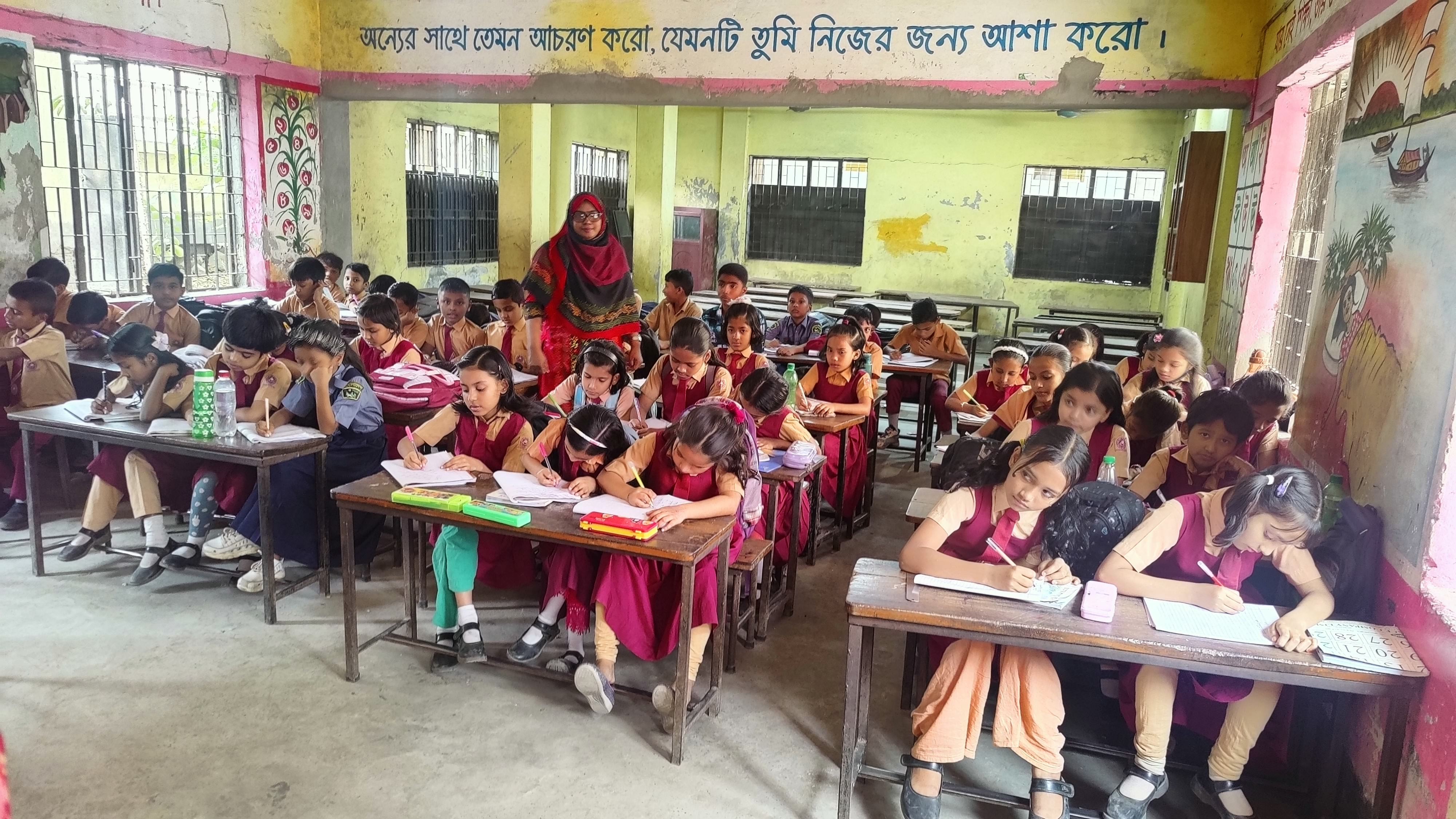
Therefore, we urge the government to address the underlying causes of high dropout rates at the secondary level. While existing laws aimed at preventing child marriage and labour must be strictly enforced across all divisions, targeted interventions are needed for the more vulnerable groups and regions. Measures such as inflation-adjusted stipends and free or subsidised educational materials should be considered for secondary students. The government must also expand vocational training opportunities for students who are unable to continue in mainstream education. Equally important is the need to make classroom teaching more engaging and to improve the overall standard of education. Finally, increased investment in both primary and secondary education is essential to ensure quality learning and prevent dropouts.
 For all latest news, follow The Daily Star's Google News channel.
Comments