


Plastic producers must clean up their own mess
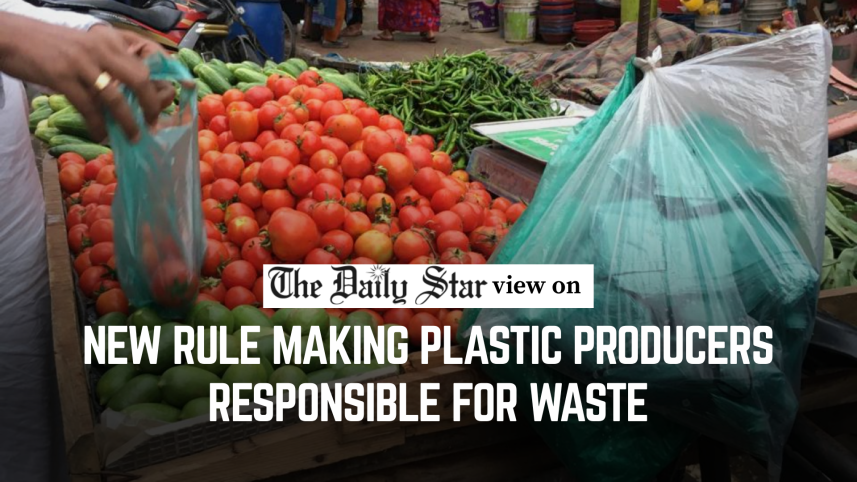
Every year, Bangladesh produces around 800,000 tonnes of plastic waste, of which only about 40 percent is recycled. The remaining 60 percent can be found clogging drains, scattered on the streets, or stagnating in water bodies, thus poisoning the environment and even entering our food chain. Against this backdrop, the government’s Extended Producer Responsibility (EPR) Guidelines 2026 come as a much-needed intervention as they place responsibility for plastic waste management on the manufacturers, brand owners, and importers.
This, however, can only work if there is a practical collection system in place, and if the rules are enforced fairly and consistently. The rules have set specific targets for the amount of waste companies will be responsible for. Initially, they must collect 15 percent and recycle 7.5 percent of their plastic waste, with these targets increasing to 30 percent and 15 percent, respectively, in subsequent years. This is a good starting point, but it cannot be the end goal. The government must progressively raise the targets to ensure a meaningful impact on the environment.

But how realistic is it to expect producers to retrieve individual sachets or wrappers from millions of households by themselves? The most practical solution would be to establish a shared collection system through which companies can jointly take on this task. This means involving the existing informal recycling sector. There are hundreds of recycling plants and a large informal network of waste collectors. The government, through municipal corporations, can formally register them and pay them for their services, with the companies financing collection and recycling through these networks.
That said, while big companies can afford such measures, the cost may be too high for smaller companies. So, the government can help those firms through technical assistance or access to shared collection and recycling schemes. It can create a common fund by making all manufacturers pay a fee based on the amount and type of plastic they produce. The harder the plastic is to recycle, and the more it is used for single-use products, the higher the fees should be. The fund can then be used for collection, sorting, and recycling.
It is also crucial to make it mandatory for companies to report how much plastic they produce. A digital reporting system can be set up through which companies notify the government of how much they produce, collect, and recycle. Monitoring and verifying these figures are equally important. The EPR rules will work only if the government penalises those who do not comply through fines, withdrawal of environmental clearance and, ultimately, suspension of operations. Of equal importance is having a proper system for waste segregation at the household level, such as separating organic waste from plastic waste, with designated collection points for plastic.
The EPR framework can work if every stakeholder takes responsibility for managing plastic waste and minimising its devastating consequences. For those who produce and put tonnes of plastic into the market, that responsibility is greatest. So, it is only fair that they clean up the waste they create.
 For all latest news, follow The Daily Star's Google News channel.
Comments