


Hurrah for some, pain for many
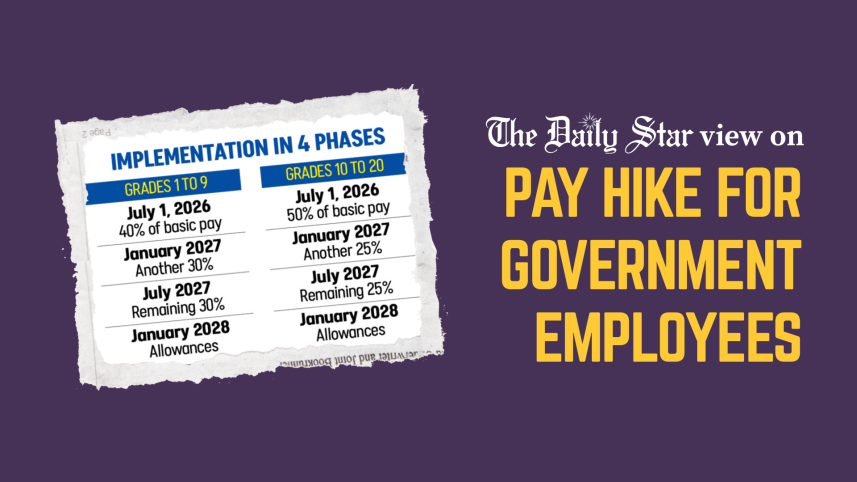
The much-anticipated salary hike for government employees, approved by the cabinet on Monday, once again raises critical questions about the government’s economic prudence. Undoubtedly, the new pay increase, coming after an 11-year wait, will be welcomed by around 24 lakh government employees and nine lakh pensioners.
Economists, however, view the pay award as a bold but highly challenging undertaking for the government, as Tk 1,05,580 crore will be required to implement it. Given the government’s poor record of revenue collection—the shortfall last year was Tk 88,000 crore against a target of Tk 5,03,000 crore—the new pay scale could widen the fiscal deficit and increase government borrowing. Inevitably, this could intensify inflationary pressure and cause the rest of the population to bear the economic burden.
Announcing the phased implementation of the new pay scale, the cabinet secretary said it was approved, taking into account the government’s financial capacity, the country’s overall economic situation, the cost of living, and the need for a balanced and rational pay structure. His statement appears remote from economic realities since major economic indicators point in the opposite direction. Similarly, the government’s decision to expand mobile phone allowances to all employees, a benefit previously restricted to the top five grades, fails logic given the current fiscal crisis. We recall the government’s earlier retreat from austerity measures that could have saved crores by restricting fuel allowances and interest-free loans for personal vehicles provided to mid- and senior-level officials.

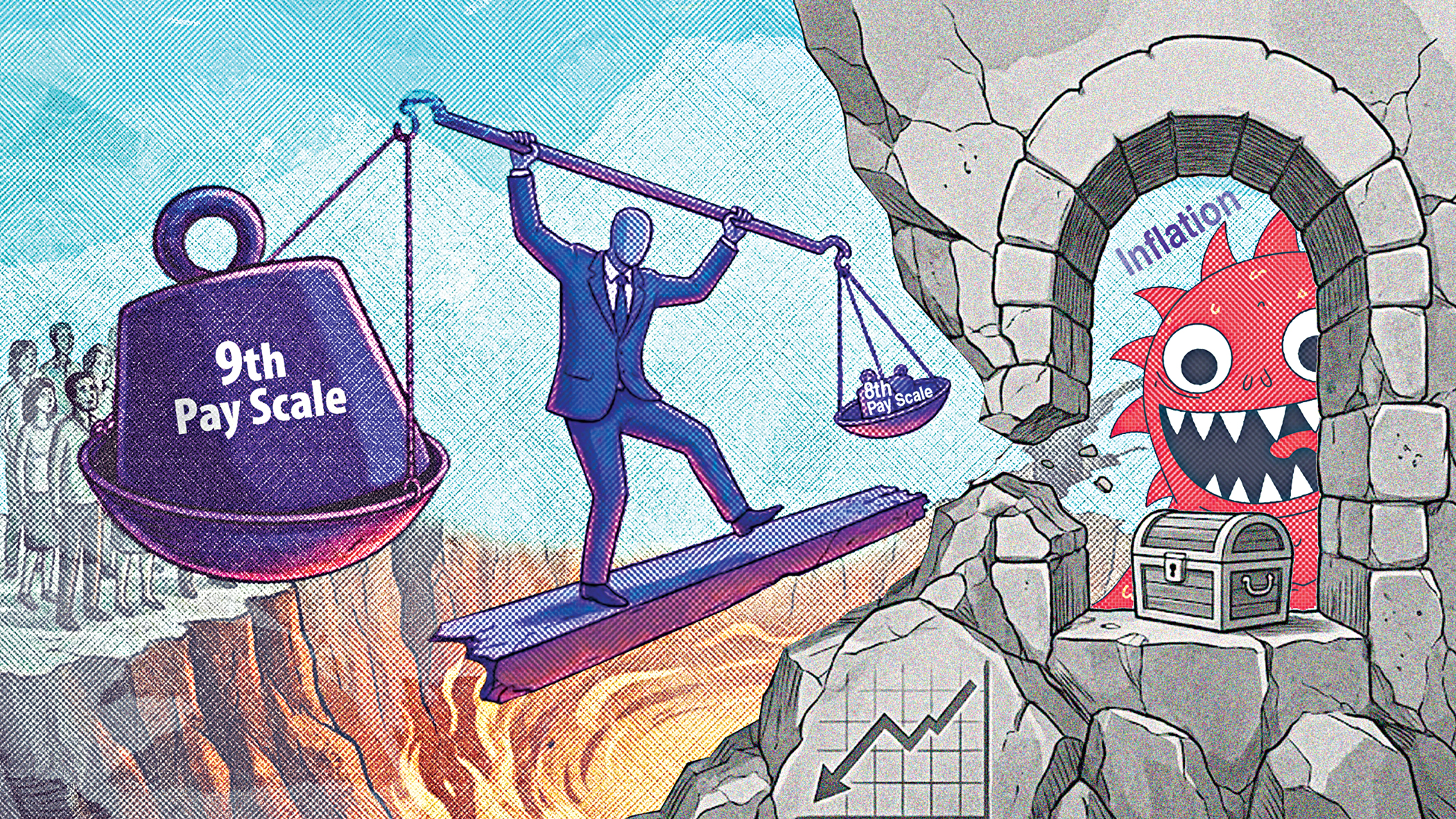
According to the World Bank’s latest development update, issued just a week ago, the US-Israel war against Iran and the broader crisis in the Middle East could cost Bangladesh around 6,00,000 jobs and push an additional 14 lakh people into poverty. Global supply disruptions have already driven up fuel prices sharply, while government subsidies for energy are expected to continue rising. Weaker exports, higher import costs, and declining remittances could put further pressure on the current account balance and foreign exchange reserves. The World Bank has also revised Bangladesh’s growth forecast downward to 3.9 percent from 4.5 percent. Against such a dismal economic backdrop, the government must restrain itself from pursuing the shortsighted option of printing money and fuelling inflation further.
We understand that the new government found itself in a precarious position because the new pay scale was effectively committed to by the last administration. On February 3, just about a week before the national election, the interim government announced that it would make budgetary provisions to implement the new pay scale for public employees, even though the responsibility for executing it would fall on the next elected government. This unwise announcement had already fuelled restlessness among civil servants.
Had successive governments implemented the recommendations of the pay commission chaired by Mohammad Farashuddin, under which government employees would have received annual increments adjusted for inflation, neither an 11-year wait for a pay rise nor such a large increase would have been necessary. The government should therefore review its strategy for determining public-sector salaries and, at the same time, create conditions that allow the private sector to align its pay structures without putting additional strain on the economy.
 For all latest news, follow The Daily Star's Google News channel.
Comments