


Address the gaps in family planning services
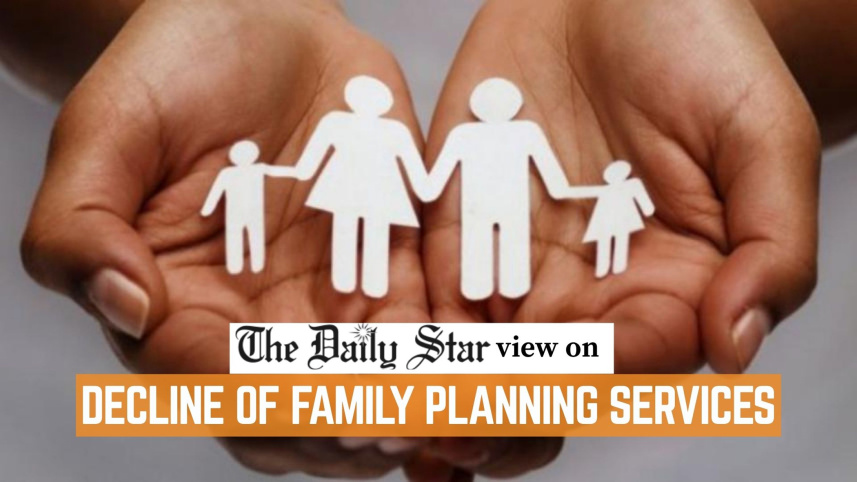
We are shocked to learn that due to the weakening of the country’s family planning programme, an estimated 15.8 lakh unintended pregnancies and nine lakh abortions could not be prevented in 2025, compared with the 2022 baseline. Furthermore, at least 3,300 preventable maternal deaths could not be averted in the same year. These figures, presented at a recent roundtable, reveal a serious systemic failure that threatens to undo decades of hard-earned progress in our reproductive health and population management.
Reportedly, contraceptive procurement has largely stalled since 2023, while family planning has lost priority during and after the Covid pandemic. The expiry of the Fourth Health, Population and Nutrition Sector Programme in 2024 has made the situation even worse. Policy failure and administrative delays under the interim administration have also severely disrupted the primary healthcare system, allowing a problem to turn into crisis. As a result, the contraceptive prevalence rate has fallen from 64 percent to 58 percent, while the total fertility rate has risen from 2.3 in 2019 to 2.4 in 2025—the first increase in five decades. Officials at the Directorate General of Family Planning say even if contraceptive supplies arrive within the next few months, a severe staff shortage could hamper their distribution as over half of the frontline posts, particularly Family Welfare Visitor positions, remain vacant.

Experts warn that poorer households, which rely most heavily on free government supplies, will bear the brunt of this situation. Unintended pregnancies place additional financial and social burdens on families, particularly poorer households with limited access to private healthcare. Experts have warned that rising fertility rates, coupled with child marriage and gaps in reproductive healthcare, could undermine the country’s demographic dividend and make multiple Sustainable Development Goals harder to achieve. Equally worrying is the loss of women’s ability to make informed decisions about their own reproductive health and families.
We urge the government to urgently address these gaps in family planning services. Procurement procedures must be streamlined to prevent future disruptions, accountability must be established for the failures that have led to the crisis, and vacant frontline positions must be filled without delay. Training for healthcare providers, particularly in permanent contraceptive methods, also needs renewed attention. At the same time, efforts to curb child marriage, improve reproductive health awareness, and expand access to services in marginalised communities must remain a priority. The government must act to restore public confidence in the family planning system and ensure that every individual can exercise an informed reproductive choice.
 For all latest news, follow The Daily Star's Google News channel.
Comments