


Address health-sector staffing shortages urgently

According to a recent report by this daily, based on the latest official data, the country’s three key health agencies—the Directorate General of Health Services (DGHS), the Directorate General of Family Planning (DGFP), and the Directorate General of Nursing and Midwifery (DGNM)—are undergoing severe staff shortages. Around 31.21 percent of 2,34,024 posts remain unfilled across these agencies. While the staffing shortage is relatively less severe at the DGNM (with 13.51 percent of posts being unfilled), the situation is dismal at the DGHS and DGFP. For the latter, 36 percent of around 1.27 lakh posts are vacant, even after 3,200 doctors and dentists were appointed through a special BCS earlier this year. Meanwhile, 37 percent of the DGFP’s 53,390 posts remain unfilled. Viewed alongside recent reports of medicine shortages, falling functionality of labs, a dire shortage of nurses and midwives, and highly overburdened public hospitals, these numbers reflect a situation in our health sector which requires urgent and sustained government intervention.

Due to the shortage of health workers, existing staff are overburdened, with most being assigned duties besides their own. At the DGHS, for instance, while a health assistant is only meant to cover a single ward, many now have to look after multiple wards. The vacancies at the DGFP, coupled with the severe shortage in contraceptive supply (especially at the upazila-level), sound the alarm for a boost in fertility. For a country which recently recorded an uptick in the total fertility rate, Bangladesh cannot afford to keep more than half the doctors’ posts at maternal and child welfare centres vacant. We are already seeing the pioneering Kapasia Maternal Death Free Model failing, as union health centres in Gazipur’s Kapasia remain nearly unstaffed. The initiative, which combines two methods to safeguard expectant mothers, was set to be scaled across 100 upazilas. Instead, the initiative has remained stunted since 2024, with upazila health officials having to ration a month’s allocation of drug and dietary supplement kits across three months.
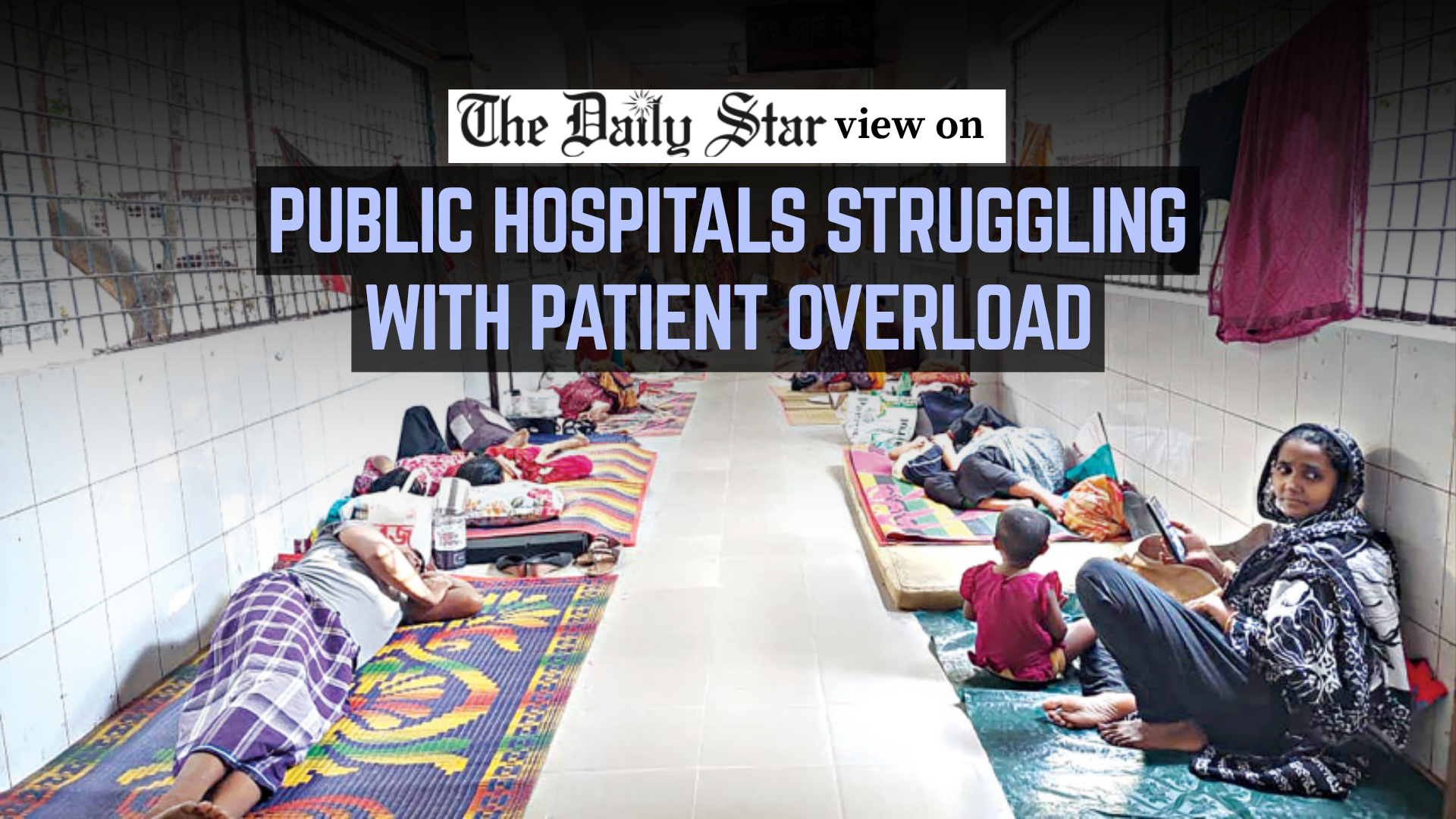
In terms of the staffing shortage within the DGNM, a study conducted last year highlighted how the country faces an acute shortage of nurses and midwives, with the doctor-nurse-midwife ratio standing at 1:0.75:0.74, far below the WHO’s recommended 1:3:5. Nurses and midwives provide essential care services. Overburdening them means compromising quality of care, especially in rural areas. Therefore, urgent interventions are required not only to address the prevailing staff shortages across health agencies, but also to improve overall service delivery. With dengue becoming a year-round crisis and measles cases showing little sign of going away, such shortages will compound health services even further. Regardless of how many years these crises have built up over, the current government’s first year in office should not be remembered as one of the country’s worst health years, too.
 For all latest news, follow The Daily Star's Google News channel.
Comments